

♥ Wishlist
Compare 18 Heating, Cooling and Air Quality Products for Canadian Homes products in Canada. Reviews, ratings, pros, cons and buying advice updated for October 2026.


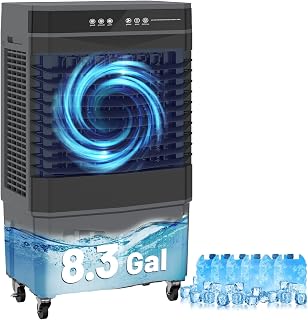


Choosing heating, cooling and air-quality equipment in Canada requires more than comparing a product's headline price. Canadian homes can experience very different conditions throughout the year, from sub-zero winter temperatures and dry indoor air to summer heat, humidity and periods of poor outdoor air quality caused by wildfire smoke. The right purchase therefore depends on the room, climate, building characteristics, operating costs, controls and the specific problem you are trying to solve.
This buying guide is designed to help Canadian shoppers compare products on meaningful criteria rather than relying solely on star ratings or promotional claims. Before choosing any item, compare its specifications, intended room size, operating requirements, energy use, noise level, replacement-filter or maintenance requirements and compatibility with your home.
A smart buy is not necessarily the cheapest product available. A better purchase balances purchase cost with performance, efficiency, usability, durability considerations, maintenance and suitability for the intended space.
Heating equipment covers several different product categories, and each solves a different problem. A portable heater can provide supplemental warmth in one room, while a heat pump can provide both heating and cooling. Smart thermostats can improve control of an existing heating system rather than directly producing heat themselves.
Portable electric heaters can be useful when additional heat is needed in a particular room without changing the home's primary heating system. Common designs include ceramic heaters, fan heaters, oil-filled radiators and infrared heaters.
When comparing portable heaters, look beyond wattage. Examine thermostat controls, heat settings, timer functions, tip-over protection, overheat protection, portability and noise. A heater that is easy to control can be more practical than a model with additional features that are rarely used.
Oil-filled electric radiators heat a thermal fluid inside the appliance and generally provide steady radiant and convective warmth. They can be useful for bedrooms, offices and other spaces where relatively quiet operation is desirable.
Because these heaters can become hot during operation, placement is important. Keep them away from curtains, bedding, furniture and other combustible materials, and follow the manufacturer's clearance and electrical-use instructions.
Ceramic heaters commonly use an electric heating element combined with a fan to distribute warm air. They can warm a room relatively quickly and are often compact enough for desks, offices or small living areas.
The trade-off is fan noise. If the heater will be used while sleeping or working, compare published noise information where available and consider whether continuous fan operation will be comfortable.
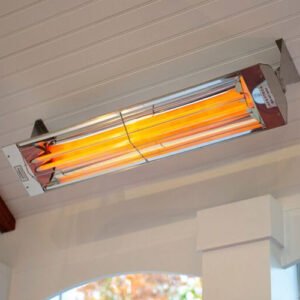
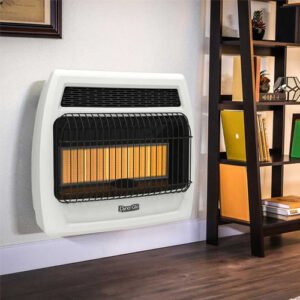
Infrared heaters transfer heat through infrared radiation rather than relying exclusively on heated air circulation. They can be useful when the goal is to provide warmth directly to occupants or a defined area.
Consider the intended coverage carefully. A product marketed for personal or spot heating should not automatically be treated as a substitute for a properly sized whole-room heating system.
Heat pumps can provide both heating and cooling by transferring heat rather than generating it directly through a conventional electric resistance element. This makes them an important category for homeowners considering year-round climate control.
For Canadian buyers, cold-weather performance deserves particular attention. Do not judge a heat pump solely by its maximum heating output or a generic efficiency figure. Check the manufacturer's specifications for performance at low outdoor temperatures and determine whether supplemental heat is required under the conditions expected in your area.
Although Canada's climate is known for cold winters, many homes experience uncomfortable summer temperatures. Portable air conditioners, window air conditioners, fans and heat pumps can all play a role in maintaining comfortable indoor conditions.
Portable air conditioners can be useful for renters, rooms without permanent cooling equipment and homes where only selected spaces need cooling. Their practical performance depends on room size, insulation, outdoor temperature, ventilation and installation of the exhaust system.
When comparing models, examine cooling capacity, operating noise, exhaust configuration, hose design, water-management requirements, controls and energy consumption. A larger capacity is not automatically better if it is unsuitable for the room or creates uncomfortable cycling.
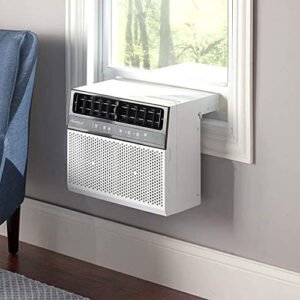
Window units can provide dedicated cooling for individual rooms. Before purchasing one, confirm that the window configuration can safely accommodate the unit and that the electrical supply is appropriate.
Look at cooling capacity, energy efficiency, noise, thermostat functionality, fan speeds and installation requirements. In apartments or rental properties, also check whether window-mounted equipment is permitted.
Fans do not lower the actual temperature of a room in the same way as air conditioning. Instead, they improve air movement and can make occupants feel cooler by increasing evaporation from the skin.
For bedrooms and workspaces, blade size, oscillation, speed control, timer functions and noise can be more important than a long list of smart features.
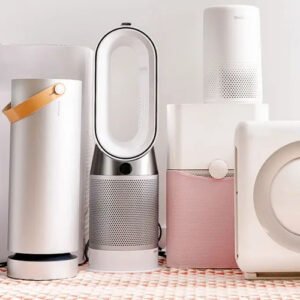
Air purifiers are designed to remove selected airborne particles or pollutants from indoor air. Their effectiveness depends on the filtration technology, airflow, room size, operating time and maintenance.
For shoppers concerned about dust, pollen, smoke particles or fine particulate matter, particulate filtration should be one of the first specifications to examine.
HEPA filtration is widely used in residential air cleaners because it can capture a high proportion of airborne particles when used as part of a properly designed filtration system. However, the presence of the word HEPA alone does not tell you how much clean air the complete appliance can deliver.
Compare the filtration specification with airflow performance and the manufacturer's recommended room size. A highly efficient filter in a device with inadequate airflow may not provide the same practical result as a well-balanced system.
Clean Air Delivery Rate, commonly abbreviated as CADR, can help shoppers compare how quickly an air cleaner delivers filtered air for particular particle categories. Where comparable CADR information is available, it can be more useful than judging an air purifier by filter type alone.
Also consider the room's actual size, ceiling height, open-plan layout and how frequently doors are opened. A recommendation based on a small enclosed room may not translate directly to a large open living area.
Wildfire smoke is an important air-quality consideration for Canadian households. During smoke events, portable air cleaners with effective particle filtration can be useful for reducing indoor particulate concentrations when operated appropriately.
Look for strong particle-removal performance, sufficient airflow for the room, a replaceable filter and a control system that makes it easy to operate the appliance continuously when required. During a smoke event, also consider reducing the entry of outdoor air through open windows and doors when appropriate for the building and circumstances.
Particle filtration and odour or gas filtration are not identical functions. Activated carbon and other sorbent materials can be incorporated into air-cleaning systems to address certain gases and odours.
If odour control is important, examine the quantity and construction of the carbon or sorbent media rather than assuming that every carbon-labelled filter offers the same performance. A thin carbon-coated filter may have very different capabilities from a system containing a substantially larger amount of sorbent material.
Cold winter conditions can contribute to low indoor relative humidity, particularly when outdoor air is brought indoors and heated. Humidifiers add moisture to indoor air and can be useful when humidity levels are consistently low.
However, adding excessive moisture can create its own problems. A humidifier should be selected and operated with indoor humidity monitoring in mind rather than being left at maximum output continuously.
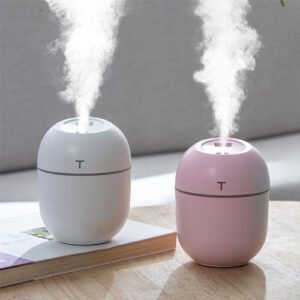
Cool-mist humidifiers are available in several designs, including ultrasonic and evaporative models. Ultrasonic units can operate quietly, while evaporative humidifiers use airflow through a wet wick or similar medium.
Water quality and maintenance are particularly important. Follow the manufacturer's cleaning instructions, replace filters or wicks when required and avoid allowing stagnant water to remain in the tank.
Warm-mist and steam humidifiers heat water to produce moisture. They may be useful in particular applications, but the presence of heated water introduces burn and hot-surface considerations.
Families with young children should pay particular attention to safe placement and manufacturer instructions.
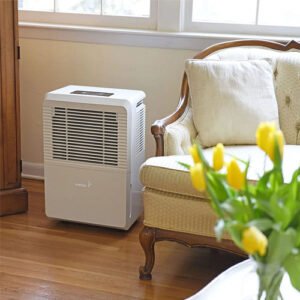
Basements, laundry rooms and poorly ventilated areas can experience elevated humidity. A dehumidifier removes moisture from indoor air and can help maintain a more controlled environment when humidity is persistently high.
When comparing dehumidifiers, consider moisture-removal capacity, recommended room size, noise, tank capacity, continuous-drain capability, automatic shutoff and restart behaviour. Energy consumption is also worth examining because dehumidifiers may run for extended periods.
A smart thermostat can improve control over an existing heating or cooling system by providing scheduling, remote access, temperature monitoring and, depending on the model and system, additional automation features.
Compatibility is the most important consideration. A sophisticated thermostat is not a smart purchase if it cannot correctly control the home's heating or cooling equipment.
Smart technology can be useful when it solves a real household problem. Remote control is valuable for people who want to adjust settings before returning home. Scheduling can reduce unnecessary operation when a home is empty. Temperature or humidity sensors can provide more useful information than a basic thermostat located in only one part of a house.
Voice-assistant compatibility, app notifications and automation integrations can also be useful, but they should not outweigh fundamental performance, reliability considerations and compatibility.
Canadian households often benefit from thinking about indoor climate control as a system rather than choosing each appliance independently. Heating, cooling, ventilation, humidity and filtration influence one another.
A useful top-10 comparison should not simply rank products from one to ten without explaining why. Different households have different priorities, so use a consistent evaluation framework.
Start with the primary job the product is designed to perform. A heater should deliver appropriate heat for its intended space. An air conditioner should provide suitable cooling capacity. An air purifier should combine effective filtration with adequate airflow.
Capacity must match the application. Consider room dimensions, ceiling height, insulation, windows, sunlight exposure and whether the space is open to other rooms.
Energy efficiency becomes increasingly important when a device operates for long periods. Compare the appropriate efficiency metric for the product category instead of comparing unrelated ratings across different types of equipment.
Noise can significantly affect user satisfaction. Bedrooms and offices generally require different noise priorities from garages or utility rooms.
Compare thermostats, timers, programmable modes, remote controls, displays, sensors and smartphone features. A straightforward control panel can sometimes be preferable to an unnecessarily complicated interface.
Check how frequently filters require cleaning or replacement, whether water tanks need regular emptying and whether important components are accessible for routine maintenance.
For air purifiers, humidifiers and some other appliances, the long-term cost of filters, wicks or other consumables can be significant. Include these expenses when comparing otherwise similar products.
Determine whether the product is genuinely plug-and-play or requires professional installation. Heat pumps, permanent HVAC equipment and certain thermostats may involve electrical, refrigerant or system-specific considerations.
Measure the available area before buying. Portable appliances still need adequate clearance for safe airflow and operation.
Review the manufacturer's stated warranty terms, exclusions and service arrangements before purchase. Warranty length alone does not tell you how easy it will be to obtain service or replacement components.
Canadian shoppers will encounter established manufacturers such as Dyson, Honeywell, Levoit, Blueair, Coway, Vornado, De'Longhi, Danby, Frigidaire, Midea, LG, Samsung, GE, Bosch, Carrier, Lennox, Trane, Rheem, Ecobee and Google Nest across various heating, cooling, thermostat and air-quality categories.
Brand recognition should be treated as one comparison factor rather than proof that a particular product is the best choice. Product specifications, compatibility, maintenance requirements and independent customer feedback should still be checked for the exact model under consideration.
Customer ratings can provide useful feedback, but a rating does not replace technical specifications. A product may receive positive feedback from users whose rooms, climate conditions and expectations are very different from yours.
More capacity is not automatically better. Oversized cooling or dehumidification equipment may behave differently from appropriately sized equipment, while an undersized unit may have to operate continuously to meet demand.
A product can perform well but become frustrating if it is too loud for the room. Always consider where the appliance will operate and whether it will run overnight.
The purchase price of an air purifier is only part of the ownership equation. Check filter availability, replacement intervals and the manufacturer's recommended maintenance procedure.
Smart thermostats, connected HVAC controls and home-automation devices can have specific compatibility requirements. Verify the system configuration before purchasing.
Portable heaters, fans, air purifiers and dehumidifiers are often designed for individual rooms or defined areas. Do not assume that one portable device can provide the same result as appropriately designed whole-home equipment.
Prioritise low noise, accurate temperature control, timers and safe operation. For air purification, consider filtration performance and whether replacement filters are easy to obtain.
A larger shared space may require greater airflow or heating and cooling capacity. Open-plan layouts deserve particular attention because the nominal room-size recommendation may not reflect the actual volume being conditioned.
Noise, compact dimensions and precise temperature control can be especially important. A quiet fan, personal heater or appropriately sized air purifier may be more useful than a high-capacity appliance designed for a much larger space.
Humidity control is often a major consideration. Look for a dehumidifier with appropriate moisture-removal capacity, automatic humidity control and a practical drainage solution.
Safety, stable temperature control, noise and secure placement should take priority over unnecessary smart features. Portable heaters and appliances containing hot water should be positioned carefully and operated according to the manufacturer's safety instructions.
Energy consumption depends on the appliance, operating mode, capacity, local conditions and how frequently it runs. Do not assume that a device with a lower purchase price will necessarily cost less over its useful life.
For products with published electrical consumption information, compare the relevant wattage or energy-use specification and consider expected operating hours. For HVAC systems, use the appropriate seasonal efficiency ratings and professional sizing information rather than attempting to compare a large central system directly with a small portable appliance.
Autumn is a sensible time to inspect heating equipment before sustained cold weather arrives. Check heaters, thermostats, filters and other components before they are needed continuously.
During the coldest period, focus on efficient operation, appropriate temperature settings, humidity monitoring and safe heater placement. Portable heaters should never be treated casually simply because they are compact.
Spring is a useful period to prepare cooling equipment. Clean appropriate filters, inspect portable air conditioners and fans and confirm that cooling equipment is ready before the first extended hot spell.
During warmer weather, cooling performance, indoor humidity and air quality become more important. During wildfire-smoke events, air-cleaning strategies may need additional attention.
A discount is only valuable when the product is appropriate for your needs. Compare the exact model number rather than relying on a retailer's shortened product name. Check whether accessories are included, whether replacement filters are readily available and whether a seemingly cheaper model has higher long-term operating costs.
It is also useful to compare the current price with the product's specifications rather than comparing discounts alone. A large percentage reduction does not necessarily make an unsuitable product a better purchase.
Use the following checklist when comparing any heating, cooling or air-quality product featured in a 2026 buying guide.
If the primary problem is cold indoor temperatures, concentrate on heating capacity, thermostat control, efficiency and safe operation. If the problem is excessive summer heat, compare cooling capacity, airflow, noise and energy consumption. If the problem is dust, pollen or smoke particles, focus on air-cleaning performance, filtration and clean-air delivery. If the issue is excessive moisture, a properly sized dehumidifier may be more appropriate than an air conditioner alone.
Likewise, low humidity calls for a different solution. A humidifier can add moisture, but it should be used with sensible humidity monitoring and regular cleaning.
There is no single best option for every Canadian household. The right choice depends on the climate, room size, building characteristics, existing HVAC system, budget, noise tolerance and the problem you are trying to solve. Compare products using capacity, efficiency, maintenance, safety and operating requirements rather than price alone.
Smart features can be worthwhile when they provide useful scheduling, remote control, sensors or automation. They are less valuable when they add complexity without improving everyday operation. For thermostats in particular, compatibility with the existing HVAC system should be confirmed before purchase.
For airborne smoke particles, look for effective particle filtration combined with sufficient airflow for the room. CADR or comparable performance information can help when available. Filter replacement requirements and the ability to operate the unit for extended periods are also important considerations.
Not necessarily. Filter efficiency is important, but practical performance also depends on airflow, room size, filter loading, operating time and the design of the complete appliance. Compare the full performance specifications rather than relying on the filter label alone.
The correct interval depends on the specific appliance, filter type, operating hours and indoor air conditions. Follow the manufacturer's instructions and inspect the filter when appropriate. Heavy dust or smoke exposure can affect filter loading.
Choose according to the humidity problem. A humidifier adds moisture to dry indoor air, while a dehumidifier removes excess moisture. Measuring indoor relative humidity can help determine which type of equipment is appropriate.
Operating cost depends on the heater's electrical consumption, electricity rate and how long it runs. Portable electric heaters can consume substantial electricity when operated continuously, so compare wattage and expected usage rather than judging running cost from the purchase price.
Compare cooling capacity, recommended room size, noise, energy consumption, exhaust arrangement, drainage requirements, controls and installation compatibility. Room conditions and insulation can affect real-world cooling performance.
Not necessarily. A lower purchase price can be offset by higher electricity consumption, frequent filter replacement, unsuitable capacity or poor compatibility. A better deal is the product that provides the required performance with acceptable ownership and maintenance costs.
Heating, cooling and air-quality products can change throughout the year as manufacturers introduce new models, retailers adjust pricing and specifications change. Before purchasing, verify the exact model, current specifications, current customer feedback and current retailer terms.
The strongest heating, cooling and indoor-air-quality purchase is the one that fits the actual conditions of your home. Start by identifying the problem, measure the space, determine the required capacity and then compare efficiency, noise, controls, maintenance and long-term costs.
For Canadian buyers, seasonal conditions deserve special attention. Winter heating requirements, summer cooling, low indoor humidity and wildfire smoke can each create very different priorities. A portable heater is not a substitute for a properly designed heating system, just as an air purifier does not replace adequate ventilation or address every type of indoor-air-quality problem.
Use product specifications as the foundation of your comparison, then supplement them with current customer feedback and retailer information for the exact model. Brands such as Dyson, Honeywell, Levoit, Blueair, Coway, Vornado, De'Longhi, Danby, Frigidaire, Midea, LG, Samsung, Carrier, Trane, Ecobee and Google Nest offer products across relevant categories, but the best choice should always be determined at the individual model level.
Ultimately, a smart buy in 2026 is not simply the product with the biggest discount or the highest number of features. It is the product that delivers the right performance for your space, operates safely, fits your existing setup, has manageable maintenance requirements and provides good overall value over the period you expect to use it.