

♥ Wishlist
Compare 67 Furnace Filters for Cleaner Indoor Air and Efficient Heating products in Canada. Reviews, ratings, pros, cons and buying advice updated for October 2026.


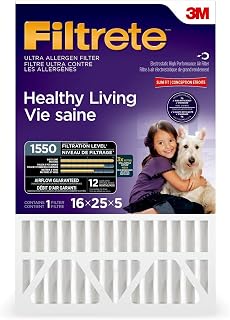


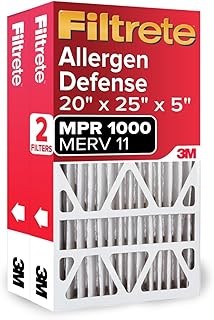
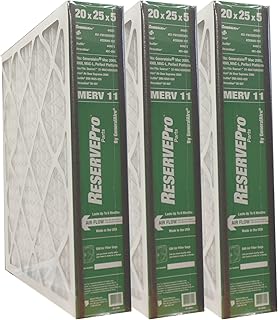


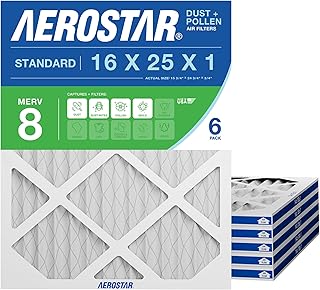


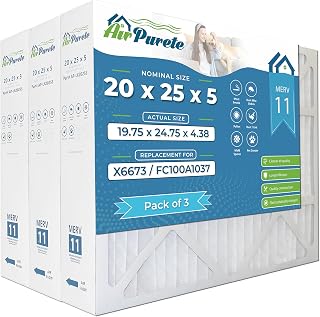


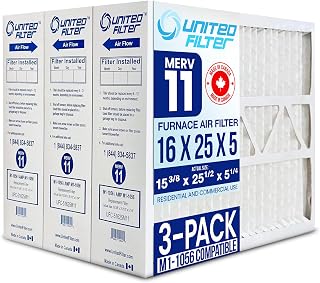


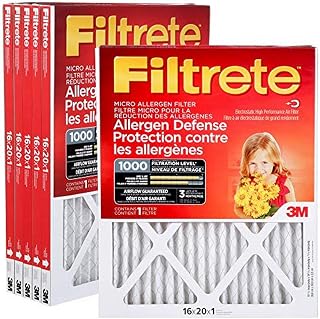


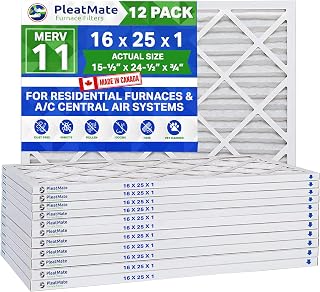


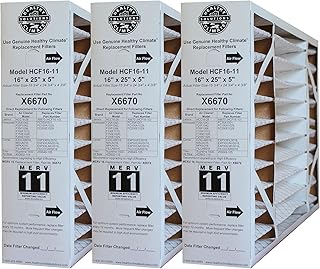


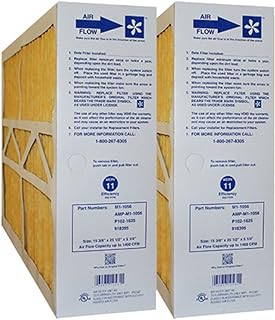


Choosing a furnace filter is about more than finding a replacement that fits the slot. The right filter needs to match the furnace or HVAC system, provide an appropriate level of particle filtration, maintain suitable airflow, and fit the household's indoor-air needs. Canadian homes can face very different heating conditions, from long winter heating seasons in colder regions to mixed heating and cooling demands in milder areas. That makes filter selection a practical balance between filtration performance, airflow, replacement frequency, and cost.
Before comparing deals, check the exact filter dimensions, the filter's thickness, the furnace manufacturer's recommendations, and the filtration rating. A filter that looks similar to the old one may still be the wrong size or unsuitable for the system. Common residential furnace filter dimensions include 16 x 20 inches, 16 x 25 inches, and 20 x 25 inches, but many other sizes are available.
For Canadian shoppers, brands such as 3M, Filtrete, Nordic Pure, Honeywell Home, Lennox, Aprilaire, MERV-rated aftermarket manufacturers, and other established HVAC filter brands can be useful starting points for comparison. However, brand recognition should not replace checking the actual specifications and compatibility of the individual filter.
A smart purchase is not necessarily the filter with the highest filtration rating or the lowest advertised price. It is the product that provides an appropriate combination of filtration, airflow, compatibility, service life, and overall ownership cost.
One of the most important specifications to understand before buying is the filter's performance rating. MERV, or Minimum Efficiency Reporting Values, is a commonly used rating system for comparing the ability of filters to capture particles under standardized conditions. Higher MERV numbers generally indicate greater particle filtration capability, but that does not automatically mean a higher rating is the best choice for every residential furnace.
Some products are marketed using proprietary rating systems rather than MERV. For example, certain consumer air filters use brand-specific performance labels. These should not automatically be treated as directly equivalent to a MERV rating unless the manufacturer clearly provides a comparison or standardized information.
MERV 8 filters are commonly considered a practical option for many standard residential HVAC applications. They can provide useful filtration of common household airborne particles while generally offering a moderate level of airflow resistance. They may be suitable for households looking for a straightforward everyday filter, provided the furnace manufacturer permits the selected specification.
MERV 11 provides a higher level of particle filtration than many basic residential filters. It can be attractive to households that want stronger filtration without automatically moving to the most restrictive filter available. Compatibility and airflow requirements should still be checked before purchasing.
MERV 13 is a popular higher-filtration specification for households seeking improved particle capture. However, a MERV 13 filter should not be selected simply because the number is higher. HVAC systems vary in their ability to maintain adequate airflow through more restrictive media. Always follow the furnace or HVAC manufacturer's guidance and consider the system's filter housing and blower specifications.
Comparing furnace filters becomes difficult when one product displays a MERV rating while another uses a proprietary rating system. Do not assume that two products with similar-sounding marketing claims have identical performance.
When comparing products, look for a clearly stated standardized rating, particle-size information where available, filter dimensions, and manufacturer documentation. If a listing provides only phrases such as "premium air cleaning" or "maximum protection" without measurable specifications, there may not be enough information for a meaningful technical comparison.
Filter dimensions are another common source of purchasing mistakes. A filter advertised as 16 x 25 x 1 inches may have slightly different actual dimensions. The nominal size is often used for convenient product identification, while the physical dimensions can vary between manufacturers and product designs.
Before ordering a replacement, remove the existing filter and inspect the dimensions printed on its frame. If possible, measure the physical filter as well. Check all three dimensions: length, width, and thickness.
A small gap around a filter can allow unfiltered air to bypass the filter media. Conversely, a filter that is too large can be difficult to install and may become damaged during insertion or removal.
Filter thickness is not simply a measure of quality. Thicker filters can provide more filter-media area within a suitably designed housing, potentially allowing the system to achieve useful filtration with manageable airflow resistance. However, the HVAC system must be designed to accept that thickness.
One-inch filters are widely used in residential furnace and HVAC systems. They are convenient and commonly available in many dimensions. Because they have relatively limited depth, replacement intervals can vary substantially depending on filter quality, household activity, pets, construction dust, and system usage.
Two-inch filters provide more media depth than many standard 1-inch options. They can be a suitable choice where the existing housing is specifically designed for that size.
Deep-pleated filters can provide a larger amount of media area and are commonly associated with dedicated filter cabinets or HVAC systems designed for deeper cartridges. They should never be forced into a 1-inch filter slot. Confirm the required thickness before purchasing.
Pleated filters use folded filter media to increase the available surface area. Flat-panel filters generally use a simpler construction and may provide less media area. The appropriate choice depends on the HVAC system and the desired level of filtration.
Pleated filters are often appealing for residential applications because their greater media area can support more effective particle capture than very basic flat filters. However, pleat density, media material, filter depth, and overall construction all influence airflow resistance and filtration performance.
Fibreglass filters are commonly associated with basic filtration and are often chosen when the primary objective is protecting the HVAC equipment from larger airborne particles. Synthetic media can offer different filtration characteristics and is used across a wide range of pleated residential filters.
Rather than choosing solely based on media material, compare the complete specification. A well-designed filter should be considered in terms of filtration rating, dimensions, pressure drop or airflow characteristics where provided, construction quality, and compatibility with the HVAC system.
Some furnace filters use electrostatic properties to enhance particle capture. These products may be marketed as electrostatic, charged-media, or self-charging filters. They can be attractive to shoppers looking for enhanced particle filtration without installing a separate electronic air cleaner.
However, "electrostatic" is not a substitute for a standardized performance rating. Look for measurable specifications and verify that the product is appropriate for the furnace. Washable electrostatic filters also require regular cleaning and complete drying before reinstallation.
Disposable filters are designed to be removed and replaced when dirty. They are convenient and available in a broad range of sizes and filtration levels.
Washable filters are reusable and can reduce the number of disposable filter replacements. However, they require routine cleaning, adequate drying, and careful maintenance. Their initial purchase price may also be higher than a basic disposable filter.
There is no single replacement schedule that works for every Canadian home. Filter life depends on the filter's size, thickness, filtration level, household conditions, furnace usage, and the amount of airborne material entering the HVAC system.
A heavily used furnace during a long Canadian winter may accumulate debris faster than a system used occasionally. Homes with pets, frequent indoor activity, renovation work, or significant dust may also require more frequent filter inspection.
A visibly dirty filter is the most obvious warning sign, but it is not the only consideration. A filter that becomes loaded with dust can increase resistance to airflow. If you notice unusual HVAC behaviour, reduced airflow, or other operational problems, check the filter and consult qualified HVAC service personnel when appropriate.
Canadian heating requirements vary considerably by region. In colder areas, a furnace may operate extensively during winter, increasing the amount of air passing through the filter. In regions with more moderate temperatures, heating demand may be lower, although the HVAC system may still operate frequently for cooling or ventilation depending on the home's setup.
Seasonal changes make regular inspection particularly important. A filter that appears clean after a period of limited HVAC use may become significantly dirtier during sustained winter operation.
Use the following process before purchasing a replacement filter or comparing 2026 deals.
Record the nominal size printed on the existing filter. If the information is unclear, measure the filter physically. Record length, width, and thickness separately.
Consult the furnace or HVAC documentation for recommended filter specifications. If the manufacturer specifies a maximum filtration rating or particular filter configuration, treat that information as more important than generic buying advice.
Consider household conditions and HVAC compatibility. Avoid selecting an extremely high filtration rating solely because it appears more premium.
When manufacturers provide pressure-drop or airflow information, use it as part of the comparison. Two filters with the same nominal dimensions and MERV rating can have different designs and airflow characteristics.
For multi-packs, divide the total purchase price by the number of filters. This provides a more useful comparison than looking only at the package price.
Consider how frequently the filter is likely to require replacement. A cheaper filter that needs more frequent replacement is not necessarily less expensive over time.
Check the current product listing for exact dimensions, thickness, quantity, rating, compatibility information, and manufacturer details. Product specifications can differ between similar-looking versions within the same brand.
A higher filtration rating is not universally better. If the HVAC system is not designed for the filter's resistance characteristics, the result may be an unsuitable setup. Always prioritize system compatibility.
A filter can have the correct length and width but still be unusable because it is too thick for the housing.
A large multi-pack can look like a bargain, but first confirm that every filter has the required size and rating. Buying several unsuitable filters creates more waste rather than better value.
Replacement frequency depends on real-world conditions. Treat manufacturer guidance as a starting point and inspect the filter regularly.
Many disposable filters have an arrow showing the correct airflow direction. Install the filter according to that marking and the furnace manufacturer's instructions.
Do not install filters with crushed frames, torn media, severe deformation, moisture damage, or other defects that could prevent proper installation.
When comparing deals, the lowest price is not necessarily the best value. A useful comparison considers the complete cost and specification of the filter.
Brand selection can help narrow the search, but the exact product specification remains more important than the logo on the package. Depending on the application, Canadian shoppers may encounter brands including 3M, Filtrete, Honeywell Home, Nordic Pure, Lennox, Aprilaire, and other established HVAC filtration manufacturers.
When comparing brands, look beyond general reputation. Examine the individual filter's MERV rating, nominal and actual dimensions, thickness, media construction, airflow information, package quantity, and manufacturer's installation recommendations.
3M and Filtrete products are widely recognized in the consumer filtration market. When comparing a Filtrete filter with another brand, focus on the individual product's published specifications rather than assuming all filters under the brand have the same performance.
Honeywell Home offers HVAC-related products across multiple filtration configurations. When considering a Honeywell Home filter, verify the exact model, size, rating, and housing compatibility because product families can have different specifications.
Nordic Pure is another brand shoppers may encounter when comparing residential replacement filters. Product selection should be based on the required dimensions, filtration rating, thickness, and system requirements rather than brand name alone.
Lennox and Aprilaire are also associated with residential HVAC filtration solutions. Some systems use dedicated filter cabinets or proprietary configurations, so compatibility is especially important when comparing replacement products for these systems.
A furnace filter can capture airborne particles as air passes through the HVAC system, but it should not be viewed as a complete indoor-air-quality solution. Filtration effectiveness depends on the filter design, airflow, installation, maintenance, and the type and concentration of particles present.
Indoor air quality can also be influenced by ventilation, humidity, combustion appliances, outdoor air infiltration, cleaning practices, source control, and other factors. A furnace filter is one component of a broader indoor-air strategy.
Dust is a mixture of many materials, including fibres, soil particles, skin flakes, and other debris. A suitable HVAC filter can capture a portion of airborne particulate matter, but it cannot prevent all dust from entering a home or settling on surfaces.
If excessive dust remains a concern despite regular filter maintenance, consider other potential sources such as inadequate cleaning, gaps in the HVAC system, construction activity, outdoor air entry, or problems with the ductwork. Professional HVAC assessment may be appropriate when there is a persistent system-related concern.
Homes with dogs, cats, and other pets can place additional demands on HVAC filters because airborne hair, dander, and household dust can accumulate on the filter. A filter suitable for the furnace and capable of capturing relevant airborne particles may be helpful, but pet owners should also expect to inspect filters more frequently.
Do not assume that choosing the most restrictive filter is automatically the best solution for pet-related air-quality concerns. Balance particle filtration with the furnace's airflow requirements.
Home renovations can generate unusually high levels of dust and fine particles. During renovation work, protect the HVAC system from unnecessary contamination by following appropriate construction and HVAC precautions. Inspect the filter afterward and replace it if it has become heavily loaded.
For significant renovation projects, a qualified professional can advise whether the HVAC system should be isolated or protected during particular stages of the work.
Installation is straightforward for many residential systems, but the manufacturer's instructions should always take priority.
Never force a filter into a housing. If it is too large, too thick, or otherwise incompatible, forcing it can damage the filter or housing and may prevent correct airflow.
If a filter is unexpectedly loose, check whether the nominal and actual dimensions differ from the previous filter. A significant gap may allow air to bypass the filter media. If you cannot determine the correct size, consult the HVAC documentation or a qualified HVAC professional.
If you purchase filters in bulk, store unused filters in a clean, dry location away from excessive humidity, dust, direct physical damage, and contaminants. Keep filters in their original packaging where practical until they are needed.
Do not install a filter that has become damp, contaminated, crushed, or structurally damaged during storage.
Package price alone can make two products difficult to compare. Calculate the cost per filter and then consider the expected replacement frequency.
For example, a six-filter package should be evaluated as the total package cost divided by six. Then compare the resulting cost per filter with other products that have the same dimensions and comparable filtration specifications.
This approach becomes particularly useful when comparing single filters, three-packs, six-packs, and larger household quantities.
Customer reviews can provide useful information, but they should be interpreted carefully. Reviews are most useful when they repeatedly identify specific product characteristics rather than simply stating that a filter is "good" or "bad."
Always give greater weight to current, specific reviews and manufacturer specifications than to isolated comments about unrelated HVAC systems.
Start with the manufacturer's recommended filter size and filtration level. A moderate-rated pleated filter can be a practical choice where it is compatible with the system.
Consider a suitable particle filtration level and monitor the filter more frequently. Pet hair and airborne debris can cause filters to load faster.
Look for a suitable pleated filter with an appropriate filtration rating, but confirm that the furnace can handle its airflow characteristics.
Prioritize convenient replacement and consider buying an appropriate multi-pack so that a clean replacement is available when inspection shows that the current filter needs changing.
Use the filter configuration specified for the cabinet. Deep filters should not be substituted with thinner filters unless the system documentation specifically permits the alternative.
Furnace filters are part of the HVAC airflow path. As a filter becomes loaded with particles, airflow resistance can increase. Filter selection therefore needs to balance filtration goals with the system's ability to move air effectively.
Do not make claims about a specific filter reducing energy costs unless the manufacturer provides appropriate evidence for the exact product and application. Household HVAC performance depends on many factors, including equipment condition, duct design, thermostat settings, insulation, outdoor temperature, maintenance, and airflow.
A filter replacement is usually a routine maintenance task, but some situations require professional advice. Consider contacting a qualified HVAC technician if you cannot identify the correct filter specification, the filter housing is damaged, airflow appears unusually weak, the furnace repeatedly shuts down, unusual noises occur, or the system behaves differently after a filter change.
Professional advice is especially valuable when considering a significant change in filtration level, such as moving from a basic filter to a substantially higher-resistance filter.
Canadian shoppers should compare the product specification rather than simply searching for the phrase "best furnace filter." The best filter for one furnace may not be appropriate for another because HVAC systems differ in filter housing, blower capacity, recommended filtration level, and maintenance requirements.
Before buying, confirm the size printed on the old filter, check the furnace documentation, compare standardized ratings, and calculate the cost per filter. If you are buying a multi-pack, make sure the quantity matches your expected usage without compromising storage conditions.
It is also sensible to compare several reputable manufacturers rather than limiting the search to one brand. 3M, Filtrete, Honeywell Home, Nordic Pure, Lennox, and Aprilaire are examples of names shoppers may encounter, but the exact model specifications should always determine the final comparison.
There is no single best furnace filter for every Canadian home. The right choice depends on the furnace manufacturer's requirements, filter dimensions, thickness, desired particle filtration, airflow characteristics, household conditions, and replacement budget.
No. A higher MERV rating generally indicates stronger particle filtration under the relevant testing conditions, but a more restrictive filter may not be suitable for every HVAC system. Check the manufacturer's requirements before increasing the filtration rating.
The appropriate rating depends on the HVAC system. Many residential systems use moderate MERV-rated filters, while some systems can accommodate higher-efficiency filtration. Follow the furnace manufacturer's recommendations rather than choosing a rating based only on the number.
Check the size printed on the existing filter and verify its length, width, and thickness. If necessary, measure the physical filter and compare those dimensions with the replacement product's specifications.
Only if the furnace or filter housing is designed to accept that thickness. A thicker filter should not be forced into a housing intended for a thinner filter.
Not necessarily. Value depends on filtration performance, airflow characteristics, construction, replacement frequency, and compatibility. A more expensive filter is not automatically better for every HVAC system.
Replacement frequency varies by filter and household conditions. Inspect the filter regularly, especially during periods of heavy furnace use, and follow the manufacturer's recommendations. Homes with pets, renovation dust, or high HVAC usage may require more frequent replacement.
Neither option is universally better. Washable filters can be reused but require proper cleaning and drying. Disposable filters offer convenient replacement and are available in many filtration levels and sizes.
A suitable filter can capture airborne particles that pass through the HVAC system, but it cannot eliminate all household dust. Dust also settles on surfaces and can enter the home through doors, windows, ventilation, outdoor air, and other pathways.
A suitably rated filter can capture some airborne particles associated with pet dander. However, results depend on the filter, HVAC airflow, particle size, and household conditions. Regular filter inspection remains important in homes with pets.
Bulk purchasing can be practical when you know the exact size and specification required. Compare the cost per filter and make sure unused filters can be stored in a clean, dry environment.
Check the exact dimensions, thickness, filtration rating, product quantity, manufacturer, compatibility information, and current customer feedback. Do not rely solely on product photographs because similar-looking filters can have different specifications.
The smartest way to compare furnace filter deals in Canada is to begin with compatibility and then evaluate filtration performance, airflow, construction, replacement frequency, and total cost. A filter is an HVAC component, so choosing the highest advertised filtration level without considering the furnace can be counterproductive.
Start by identifying the exact filter size and thickness. Next, check the furnace manufacturer's recommendations and determine the appropriate filtration level. Then compare reputable brands and individual models using measurable specifications. For multi-packs, calculate the cost per filter and consider how frequently replacements are likely to be needed.
Whether you are comparing 3M, Filtrete, Honeywell Home, Nordic Pure, Lennox, Aprilaire, or another established manufacturer, the individual product specification matters most. Read the current product details, compare verified customer feedback, and confirm compatibility before purchasing. That approach makes it easier to find a furnace filter that represents good value while supporting the needs of your Canadian home and HVAC system.