

♥ Wishlist
Compare 54 Air Conditioner Accessories for Canadian Homes and Cooling Systems products in Canada. Reviews, ratings, pros, cons and buying advice updated for October 2026.


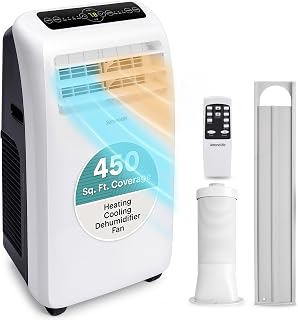


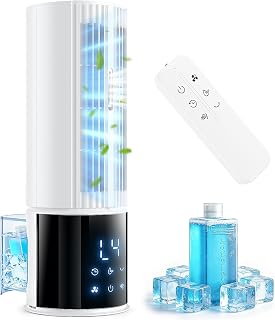


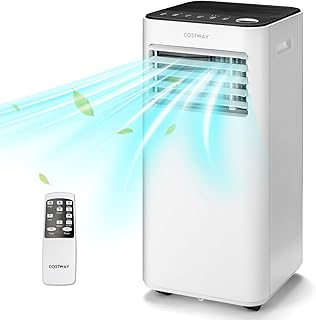


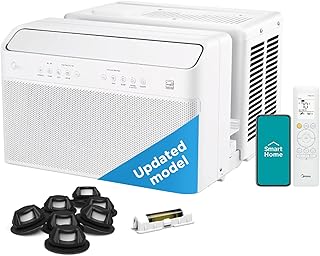


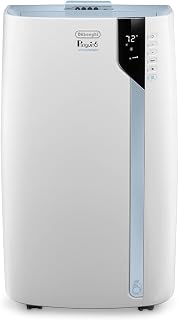


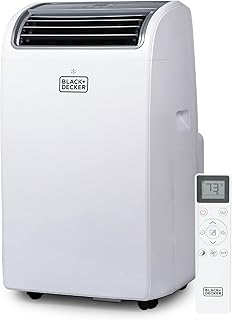
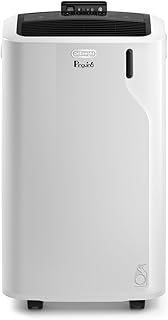


The right air conditioner accessories can make a meaningful difference to installation quality, operating convenience, seasonal maintenance and everyday comfort. However, an accessory that works well for a portable air conditioner may be completely unsuitable for a window unit, ductless mini-split or central air conditioning system. Before comparing deals, identify the type of air conditioner you have, the accessory you actually need and the environmental conditions in which it will be used.
Canadian buyers also need to account for seasonal use. An accessory may spend several months exposed to cold temperatures, moisture, dust or storage conditions even when the air conditioner itself is not operating. For that reason, material quality, fit, weather resistance, compatibility and ease of removal can be just as important as the initial purchase price.
There is no single accessory category that is best for every Canadian home. The most useful options depend on the air conditioner configuration and the problem you are trying to solve.
One of the most common buying mistakes is choosing an accessory based only on appearance or a generic product description. Air conditioner accessories are often highly dependent on dimensions and connection standards. Two products can look nearly identical while using different hose diameters, connectors, mounting systems or control protocols.
Before purchasing, locate the air conditioner's model number and check the manufacturer's documentation. Record the dimensions that matter for the accessory rather than assuming that a product described as “universal” will fit every system.
Portable air conditioners have a different accessory profile from conventional window units. Their performance can be affected by the quality of the exhaust installation, particularly when hot air can escape back into the room through gaps around a window panel or poorly fitted connections.
A good window kit should provide a secure connection between the portable air conditioner's exhaust system and the window opening. Compare the panel dimensions, adjustment range, sealing method and connector arrangement rather than choosing solely on price.
For Canadian homes, consider whether the window kit can be removed easily when the cooling season ends. A reusable installation system can be more practical than an accessory that is difficult to store or reinstall.
Exhaust hoses should be matched carefully to the air conditioner. Diameter, length, connector design and flexibility can all matter. An excessively long or poorly supported hose may create installation challenges, while an incompatible connector can prevent proper attachment altogether.
Look for specifications that clearly identify the supported models or connection dimensions. Avoid cutting or modifying a hose unless the manufacturer's instructions specifically permit it.
Sealing material can improve the overall quality of a portable AC installation by limiting unwanted openings around the exhaust panel. When comparing products, examine adhesive quality, flexibility, thickness, removability and suitability for the window material.
Window-mounted air conditioners rely heavily on a secure and appropriately sealed installation. Accessories can include side-panel insulation, mounting hardware, weather seals, support components and covers designed for compatible units.
When selecting a window AC accessory, check the window style as well as the air conditioner dimensions. Sliding windows, double-hung windows and other configurations may require different installation approaches. Never assume that an accessory designed for one window configuration will work safely with another.
Side insulation panels can close spaces created when a window air conditioner does not occupy the full width of the opening. Compare panel thickness, dimensions, flexibility and attachment method. Materials should also be appropriate for the location and expected seasonal conditions.
Weather-resistant sealing materials can help close small gaps around compatible window installations. The best choice depends on whether the material needs to remain permanently installed, be removed seasonally or withstand repeated opening and closing of the window.
Ductless mini-split systems have different accessory requirements from portable and window air conditioners. Installation quality, condensate management, line-set protection and outdoor-unit maintenance are particularly important considerations.
Mini-split installation often involves refrigerant circuits and electrical work. Accessories that affect refrigerant connections, electrical components or structural mounting should not be treated as simple DIY add-ons unless the manufacturer's instructions and applicable Canadian requirements allow it.
Central air conditioning systems generally require a different approach to accessory selection because the equipment is connected to ductwork, electrical systems and a broader HVAC installation. Useful accessories may include compatible filters, condensate-management components, equipment pads, protective components and smart thermostats.
For central systems, compatibility with the existing HVAC equipment is particularly important. A thermostat, filter or control component should not be selected solely because it has attractive smart features or a low price. Verify compatibility with the furnace, heat pump, air handler and control wiring where applicable.
Smart control accessories can be appealing for Canadian households because they may provide scheduling, remote adjustment and integration with other home systems. However, “smart” does not automatically mean universally compatible.
There are two broad approaches. Some controllers communicate directly with HVAC equipment through dedicated control wiring, while others operate compatible air conditioners through infrared remote-control commands. These systems have different compatibility requirements.
Brands such as Midea, LG, GE, Honeywell Home, ecobee, Sensibo and Cielo offer products across different air-conditioning control and climate-management categories. Brand familiarity alone is not sufficient reason to choose one model; compatibility and required features should determine the final selection.
Filters are among the most frequently overlooked air conditioner accessories. A dirty or unsuitable filter can restrict airflow and may cause the system to work harder. The correct filter depends on the equipment design and manufacturer specifications.
Before buying replacement filters, check the actual dimensions rather than relying on a nominal size alone. For reusable filters, verify whether the manufacturer permits washing and determine the correct cleaning procedure.
Disposable filters offer straightforward replacement, while washable filters can be reused when properly maintained and specifically designed for that application. Neither option should be judged solely by the number of times it can be used. Airflow resistance, filtration requirements, maintenance effort and manufacturer compatibility are more useful comparison factors.
Air conditioners remove moisture from the air during cooling. Depending on the equipment design, that water may collect in an internal reservoir, discharge through a drain hose or require a condensate pump.
When comparing drainage accessories, consider hose diameter, routing distance, vertical lift, connection type and the location where condensate will be discharged. The drainage path should be designed to avoid unwanted leaks and should follow the equipment manufacturer's instructions.
A condensate pump can be useful when gravity drainage is impractical. Compare pump capacity, lift capability, reservoir design, noise considerations, installation requirements and compatibility with the equipment producing the condensate.
Because condensate equipment can involve electrical components and water, installation should be approached carefully. Where the installation is complicated or permanent, professional HVAC assistance may be appropriate.
Material selection matters because accessories can encounter heat, moisture, sunlight, vibration and seasonal temperature changes. The best material depends on the accessory's location and purpose.
Do not assume that a heavier material is automatically better. An accessory should be evaluated according to its intended application, required flexibility, dimensions, exposure conditions and manufacturer's specifications.
Technical specifications provide more useful information than marketing language. When comparing two similar products, focus on measurable characteristics that directly affect compatibility and installation.
A low purchase price does not necessarily represent good value if the accessory fits poorly, deteriorates quickly or requires replacement. Compare the total ownership experience, including durability, installation effort and seasonal reuse.
Universal accessories still have physical and technical limits. Always check dimensions and connection details before ordering.
Window kits and sealing accessories can depend on the window design. Verify compatibility with the specific opening rather than choosing an accessory based only on the air conditioner size.
Smart-home compatibility and air-conditioner compatibility are separate questions. A controller can support a particular smart platform while still being unsuitable for your air conditioner.
Canadian climate conditions make seasonal storage especially relevant for portable and window AC accessories. Consider whether the accessory can be removed without damage and stored without taking excessive space.
Cutting panels, altering electrical components, changing connectors or modifying drainage systems can create compatibility or safety problems. Follow the applicable manufacturer's instructions instead of assuming a modification is harmless.
Customer reviews can be useful during commercial research, but review counts alone do not establish that an accessory is suitable for a particular installation. Read reviews for information that relates directly to your use case.
For higher-value HVAC accessories, customer feedback should complement rather than replace the manufacturer's specifications.
Recognized HVAC and home-appliance brands can be useful starting points because their product documentation may make compatibility easier to establish. Depending on the accessory category, Canadian shoppers may encounter brands such as LG, Midea, GE, Frigidaire, Danby, Honeywell Home, ecobee, Sensibo, Cielo and other established manufacturers.
The strongest choice is not necessarily the most recognizable brand. Compare the individual accessory's dimensions, compatibility, construction, installation method, maintenance requirements and available documentation.
Installation conditions vary substantially between apartments, detached homes, condos, older houses and newer energy-efficient buildings. A solution that works in one property may require a different approach elsewhere.
Window-mounted and portable AC accessories should be installed so that the air conditioner's intended airflow is not unnecessarily obstructed. Drainage components should be routed carefully, and outdoor accessories should not interfere with ventilation or service access.
For electrical modifications, permanent HVAC installation, refrigerant-related work or structural mounting, follow the manufacturer's requirements and applicable local rules. When the work goes beyond a simple accessory installation, professional assistance can be the safer choice.
Accessories deserve maintenance just like the air conditioner itself. Dust, condensation and repeated installation can gradually affect seals, filters, hoses and mounting components.
Replacement is generally worth considering when an accessory can no longer perform its intended function reliably. Physical deterioration is particularly important for sealing and drainage components because small defects can create larger installation problems.
A deal should be evaluated against the accessory's specifications rather than its percentage discount. A discounted product that does not fit your air conditioner is not a saving.
When comparing Canadian retailers and marketplaces, record the model number, dimensions and required connection specifications first. Then compare equivalent accessories using the same criteria. Pay attention to the complete listing details, including what is actually included in the package.
Use this checklist when narrowing down the options in a 2026 Canadian air conditioner accessory comparison:
There is no single best accessory for every household. The appropriate choice depends on whether you use a portable AC, window unit, ductless mini-split or central air conditioner. For portable systems, installation and exhaust accessories are often important, while central systems may benefit more from compatible filters and control equipment.
Universal accessories can be useful when their dimensions and connection specifications genuinely match the equipment. Always verify measurements and compatibility instead of relying on the word “universal” alone.
Commonly useful accessories include window installation panels, sealing materials, compatible exhaust hoses, hose connectors, drainage components and replacement filters where supported by the unit.
Some accessories can improve the quality of an installation or reduce unwanted heat and air leakage, but their effect depends on the air conditioner, installation and accessory design. Accessories should not be treated as a substitute for correctly sizing, installing and maintaining the air conditioner.
Compare both options using compatibility, dimensions, construction quality, documentation and price. A manufacturer-branded component can be advantageous when exact fit is important, while a third-party accessory may provide value when its specifications clearly match the equipment.
No. Compatibility depends on the air conditioner's control system and the controller's communication method. Check the manufacturer's compatibility information before buying.
Check the hose diameter, length, connector type, flexibility and supported air conditioner models. The hose should be compatible with the equipment without requiring unsafe or unauthorized modifications.
It depends on the type of equipment and the manufacturer's recommendations. An outdoor cover should never interfere with required airflow, drainage or service access, and equipment should be operated only according to the manufacturer's instructions.
The appropriate interval depends on the filter type, air conditioner and operating conditions. Follow the equipment manufacturer's maintenance instructions rather than using one universal replacement schedule.
Some simple accessories, such as compatible removable window panels or filters, may be straightforward to install. Electrical modifications, refrigerant-related work, permanent HVAC installation and complicated drainage or structural work can require specialized knowledge or professional assistance.
Good value combines correct compatibility, appropriate construction, useful features, manageable installation, durability and reasonable total cost. A low price should not outweigh poor fit or questionable suitability.
The smartest way to compare air conditioner accessories in Canada is to start with the equipment rather than the deal. Identify the exact air conditioner model, determine the installation problem you want to solve and record the relevant measurements. Then compare accessories based on compatibility, materials, installation method, maintenance, durability and total cost.
For portable and window air conditioners, installation quality and sealing deserve particular attention. For ductless and central systems, compatibility with the existing HVAC equipment becomes even more important. Smart controllers should be evaluated according to both HVAC compatibility and the smart-home features you actually intend to use.
Before purchasing, compare current specifications and customer feedback from reputable Canadian retailers and marketplaces, and verify the manufacturer's instructions for your specific equipment. The best accessory is ultimately the one that fits correctly, performs its intended function, remains practical through Canada's seasonal conditions and provides useful value over its expected service life.