

♥ Wishlist
Compare 61 Trash Compactors for Canadian Homes and Businesses products in Canada. Reviews, ratings, pros, cons and buying advice updated for October 2026.


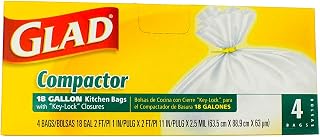

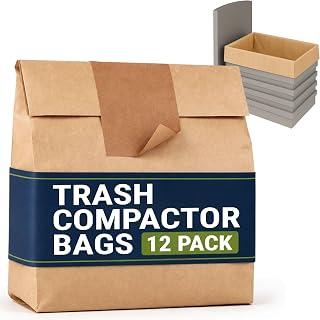


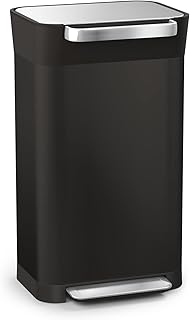


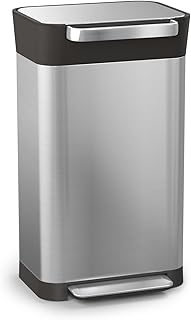


Choosing a trash compactor is less about finding the machine with the most features and more about matching capacity, compression performance, installation requirements, noise level, and ongoing operating costs to your household. Canadian buyers should also consider kitchen dimensions, electrical requirements, waste habits, and the type of garbage the appliance is designed to handle.
A well-selected compactor can reduce the volume of ordinary household waste and make garbage storage more manageable between collection days. However, not every model suits every kitchen. Built-in compactors, freestanding units, and compact specialty machines differ considerably in installation, capacity, controls, and intended use.
A trash compactor is an appliance that uses mechanical force to compress household waste into a smaller volume. Most residential models use a motor-driven ram or pressing mechanism that moves downward into a removable container. The pressure reduces the amount of space occupied by suitable household garbage.
The basic process is straightforward. Waste is placed inside the compactor drawer or container. When the appropriate cycle is activated, the internal mechanism applies pressure to the contents. Once the cycle finishes, the compressed material remains in the container until it is removed.
Compaction does not eliminate waste. It simply reduces its volume. Buyers should therefore continue following their municipality's requirements for garbage, recycling, organics, hazardous materials, and other waste categories.
Built-in compactors are designed to integrate with kitchen cabinetry. They are often considered when a homeowner wants a cleaner, more permanent appearance. Installation dimensions are particularly important because the available cabinet opening must accommodate the selected appliance.
Before buying a built-in model, measure the available width, height, and depth. Also consider door clearance and access to the electrical connection. A product that looks suitable in photographs may not fit correctly once surrounding cabinets, flooring, trim, and ventilation requirements are considered.
Freestanding models provide greater placement flexibility. They may be suitable for utility rooms, workshops, garages, cottages, or kitchens where permanent cabinetry integration is unnecessary.
The main advantage is easier placement. The trade-off can be a larger visible footprint and a different appearance compared with an integrated appliance. Buyers should check the manufacturer's installation instructions rather than assuming that any standard household location will be suitable.
Compaction force indicates how strongly the mechanism presses the waste. Higher force can be useful for households that regularly generate bulky packaging and other compressible waste. However, force should not be considered in isolation. The construction of the ram, container, motor, and overall mechanism also matters.
Compare the manufacturer's stated specifications rather than judging performance solely by a marketing description. A suitable compactor should be selected according to the type and volume of waste your household actually produces.
Container capacity affects how frequently the compactor needs to be emptied. Larger capacity can be convenient for busy households, while a smaller unit may make more sense where kitchen space is limited.
Look beyond the headline capacity figure. Check the actual container dimensions and determine whether bags or liners compatible with the model are readily available in Canada.
A trash compactor contains a motor and moving mechanical components, so some operating noise is normal. Noise becomes more important when the appliance is installed close to living areas, open-plan kitchens, bedrooms, or other frequently occupied spaces.
If the manufacturer publishes a noise specification, compare models using that information. Customer feedback can also help identify recurring comments about operating noise, but individual perceptions can vary.
Because compactors can hold waste for longer periods, odour control deserves attention. Some models may incorporate features intended to help contain odours, while others rely primarily on suitable bags, liners, cleaning, and responsible waste management.
Do not treat an odour-control feature as a substitute for cleaning. Food waste, liquids, and other unsuitable materials can create unpleasant conditions inside almost any waste container.
Control design can affect everyday convenience. Look for clearly marked controls and a straightforward operating sequence. Depending on the model, features may include automatic operation, start controls, drawer mechanisms, cycle indicators, or safety interlocks.
More controls are not automatically better. For a household appliance used frequently, simple and predictable operation can be more valuable than a long list of rarely used functions.
Installation requirements should be checked before purchasing a compactor. Built-in appliances require particular attention because the available opening must correspond with the manufacturer's specified dimensions.
Canadian homes can vary significantly in age and construction. A kitchen renovation may also introduce cabinet or electrical constraints that are not obvious from product dimensions alone. When in doubt, have the installation requirements assessed before committing to a particular model.
Trash compactors are intended for suitable household waste, but not every material belongs inside them. The exact restrictions depend on the appliance and the waste-management rules in your municipality.
Ordinary dry household waste and suitable packaging may be appropriate, while liquids, hazardous substances, sharp objects, pressurized containers, and materials requiring separate disposal may create safety or waste-management problems.
When comparing compactors, check the instruction manual for prohibited materials before buying. This is more reliable than assuming that any household rubbish can be compacted safely.
The correct liner can make a significant difference to convenience. Trash compactor bags need to fit the container properly and withstand the pressure created during operation.
Check whether the manufacturer specifies proprietary bags, compatible liners, or particular bag dimensions. A cheaper liner is not necessarily better if it tears during removal or does not fit securely inside the container.
For long-term ownership, investigate replacement-bag availability and typical ongoing costs. An appliance can appear inexpensive initially but become less economical if compatible consumables are difficult to source or unusually expensive.
Construction quality matters because a trash compactor contains moving mechanical components that experience repeated cycles. Examine the materials used for the cabinet, drawer, container, ram assembly, controls, and internal components.
Stainless steel surfaces can be attractive in kitchens and may be relatively easy to wipe clean, while other finishes may better suit particular cabinetry. The exterior finish should be evaluated alongside structural construction rather than treated as the primary indicator of durability.
Pay particular attention to the drawer mechanism. Smooth movement, secure closure, and a robust locking system can have a major impact on everyday usability.
The term “smart” can describe very different capabilities. Some appliances use the word to highlight electronic controls or convenience features, while genuinely connected appliances may offer additional monitoring or control functions.
If a trash compactor includes connected features, consider whether they solve a real problem for your household. Remote notifications may sound attractive, but they are less important than reliable compaction, suitable capacity, easy cleaning, and dependable mechanical operation.
Technology should therefore be considered an added convenience rather than the main reason to purchase a particular compactor. A straightforward appliance with strong fundamental specifications may be the better choice for many households.
When researching residential trash compactors, buyers may encounter established appliance brands such as Whirlpool, GE, KitchenAid, Broan-NuTone, and Gladiator, depending on the product category and Canadian market availability. Brand selection should not replace product-level research.
Compare the specifications of individual models rather than assuming that every appliance from a familiar manufacturer offers the same construction, capacity, controls, or installation requirements.
Brand names can help narrow a search, but the final decision should be based on the exact model and its documented specifications.
The cheapest option may not offer the best overall value. Consider installation, bags, electricity, cleaning, replacement parts, and long-term usability alongside the initial purchase price.
One of the most avoidable mistakes is purchasing a model without measuring the installation area. Always compare the appliance's published dimensions with the actual space available.
Maximum compaction is not the only measure of a good appliance. Capacity, cycle operation, bag removal, noise, cleaning, and suitability for your waste stream all matter.
Not every compactor is intended for wet or food-heavy waste. Always consult the manufacturer's instructions and your local waste rules.
Check the availability and cost of compatible liners before purchasing. This is particularly important if the compactor uses a specific bag format.
A compactor is a mechanical appliance. Dirt, residue, overloaded containers, and improper materials can interfere with normal operation. Basic maintenance should be part of the ownership plan.
Prioritise compact dimensions, practical capacity, simple controls, and a suitable installation configuration. A smaller household may gain little from paying for a much larger container.
Focus on capacity, reliable compression, durable construction, and easy bag removal. Higher waste volume makes efficient container use more important.
Built-in models can provide a more integrated appearance. Measure the cabinet opening before comparing finishes or features.
Freestanding models can provide more flexibility. Consider floor space, electrical access, ambient conditions, and the type of waste generated in the area.
Look beyond the purchase price. A sensible long-term comparison includes construction, consumables, energy use, maintenance requirements, installation, and the availability of replacement components.
Customer reviews can provide useful information, but they should be interpreted carefully. Instead of focusing only on the average rating, look for repeated comments about specific aspects of ownership.
A single negative review does not necessarily establish a product defect, just as a single positive review does not prove long-term reliability. Patterns across many detailed reviews are generally more informative.
Regular maintenance can help keep a trash compactor clean and functional. The exact procedure depends on the model, so the manufacturer's instructions should take priority.
Energy consumption should be evaluated alongside purchase price. A compactor may not operate continuously, but its motor and operating cycles still contribute to household electricity use.
Where available, compare the manufacturer's electrical specifications and consider how frequently the appliance will be operated. A household that runs a compactor occasionally will have a different operating profile from one that uses it several times each day.
Consumables can also affect ownership costs. Include compatible bags and liners in your long-term comparison instead of evaluating only the appliance's upfront price.
A smart purchase is not necessarily the model with the longest feature list. For Canadian households, the strongest value proposition generally comes from a combination of appropriate capacity, dependable construction, suitable installation dimensions, practical controls, manageable noise, compatible consumables, and clear manufacturer documentation.
Before choosing from a list of top-rated trash compactors, compare the exact specifications of the models currently under consideration. Product configurations, retailer pricing, availability, and included accessories can change, so current listings should always be checked before purchase.
They can be useful for households that want to reduce the physical volume of suitable household garbage. Whether one is worthwhile depends on available space, waste volume, collection schedules, operating habits, installation requirements, and the cost of ownership.
There is no universal best model. The right choice depends on your household's capacity requirements, installation space, preferred features, budget, waste type, and expectations for noise and maintenance.
Neither configuration is automatically better. Built-in units can suit integrated kitchens, while freestanding models provide greater placement flexibility. Choose the configuration that matches the available space and intended use.
Do not assume that recyclable materials should be compacted. Follow your municipality's recycling requirements and the manufacturer's instructions for acceptable materials.
Food waste requires particular caution because moisture and organic residue can contribute to odours and cleaning problems. Check the specific appliance instructions and local waste-management requirements before putting food waste into a compactor.
Many models use bags or liners designed for their particular container. Check the manufacturer's recommended dimensions and compatibility before buying replacement bags.
Noise varies by model and operating mechanism. Because compactors use motors and mechanical components, some operating sound is expected. If noise is important, compare published specifications where available and examine recurring customer feedback.
There is no single schedule for every household. Emptying frequency depends on capacity, household size, waste volume, compression performance, and the type of materials being placed inside.
No. A compactor reduces the volume of suitable waste but does not replace recycling or other municipal waste programs. Materials that must be separated should continue to be handled according to local requirements.
Check the exact model number, dimensions, capacity, electrical requirements, compaction specifications, accepted materials, compatible bags, installation instructions, warranty information, current Canadian price, retailer policies, and recent customer feedback.
The best smart buy trash compactor for 2026 is the one that fits your actual waste habits rather than simply the model with the most impressive specifications. Start with installation space and capacity, then evaluate compaction performance, construction, noise, controls, consumables, maintenance, and long-term ownership costs.
For Canadian buyers, always verify the current product specifications, retailer information, availability, warranty conditions, and local waste-management requirements before placing an order. Comparing these details carefully can help you avoid installation problems and choose a trash compactor that remains practical long after the initial purchase.