

♥ Wishlist
Compare 52 Heating And Cooling Products for Comfortable Canadian Homes products in Canada. Reviews, ratings, pros, cons and buying advice updated for October 2026.


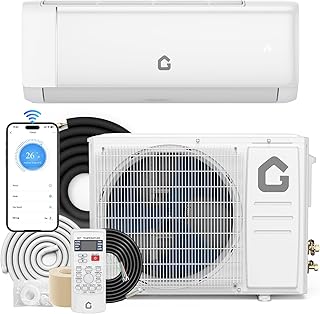
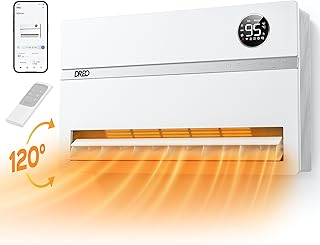
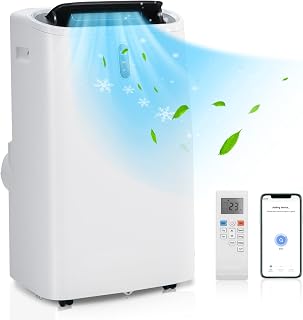


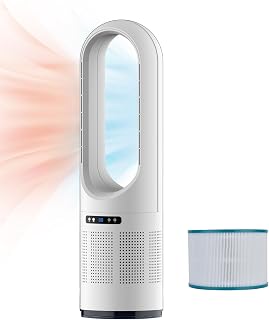




Choosing heating and cooling equipment in Canada requires more than comparing the advertised price. A product that looks inexpensive at first may consume more electricity, provide less useful coverage, create more operating noise, or lack the controls needed for your particular room. Smart buying means comparing the complete ownership picture, including heating or cooling performance, energy use, controls, installation requirements, maintenance, room size, seasonal conditions and long-term practicality.
This guide is designed to help Canadian shoppers evaluate smart heating and cooling products across different categories. Depending on your home and climate, suitable options may include portable air conditioners, window air conditioners, tower fans, air circulators, space heaters, infrared heaters, ceramic heaters, oil-filled radiators, evaporative coolers and other temperature-control appliances.
Product specifications can vary substantially between models, even when two appliances appear similar. Before buying, compare the manufacturer's specifications, applicable safety information, dimensions, electrical requirements, included accessories and current retailer information. Customer reviews can also reveal recurring usability issues, but they should be considered alongside technical specifications rather than used as the only selection criterion.
A genuine smart buy balances purchase cost with useful performance and suitability. The cheapest appliance is not automatically the best value, while the most expensive model is not necessarily the right choice for every Canadian household.
The phrase "heating and cooling" covers several different types of appliances. Comparing products within the correct category is essential because a portable heater and a portable air conditioner solve different problems and use different performance measurements.
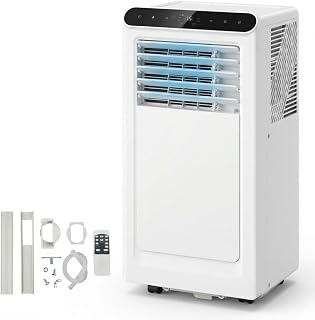
Portable air conditioners can be useful where permanent cooling equipment is impractical or where cooling is needed in selected rooms. Many models require an exhaust hose and window installation arrangement. Before purchasing, check whether the supplied window kit is suitable for your window configuration.
When comparing portable air conditioners, pay attention to cooling capacity, electrical requirements, operating noise, exhaust arrangement, condensate management, fan modes and physical size. Do not assume that a higher numerical capacity automatically makes a model better. An appliance should be appropriately matched to the room and operating environment.
Window air conditioners can provide targeted cooling without occupying floor space. Their suitability depends heavily on window dimensions, installation configuration and building requirements. Measure the available opening before selecting a model.
Consider cooling capacity, controls, operating noise, airflow direction, filter access and installation requirements. In rental properties or multi-unit buildings, check whether window-mounted equipment is permitted before purchasing.
Fans do not cool a room in the same way as an air conditioner. Instead, they move air across the room and over occupants, which can improve perceived comfort. This makes them a useful option when the objective is air movement rather than actively reducing indoor air temperature.
When comparing fans, examine airflow settings, oscillation, speed control, timer functions, remote operation, noise and ease of cleaning. A well-positioned air circulator may also help distribute conditioned air more evenly through a room.
Ceramic heaters are commonly used for supplemental heating in individual rooms. They can be convenient for offices, bedrooms and other spaces where localized heating is preferred instead of heating an entire property.
Look for adjustable temperature settings, multiple heat levels, a thermostat, automatic shutoff functions and a design appropriate for the intended location. Always maintain the clearances specified by the manufacturer and avoid using a heater as a substitute for a properly designed central heating system when whole-home heating is required.
Infrared heaters transfer heat through infrared radiation and can provide localized warmth. Their effectiveness depends on placement, room conditions and the type of space being heated.
When comparing infrared models, consider heating area guidance, controls, mounting or placement options, electrical requirements and safety functions. A compact infrared heater can be useful for targeted comfort, but shoppers should distinguish between supplemental heating and equipment designed for primary heating.
Oil-filled electric radiators are designed to provide steady supplemental heat. They generally have a larger physical footprint than compact fan heaters and can remain warm after the heating element cycles off.
Useful comparison points include thermostat control, heat settings, portability, wheels or handles, dimensions, cord storage and safety features. Their relatively quiet operation can make this category attractive for rooms where fan noise is undesirable.
Evaporative cooling products work differently from refrigerated air conditioners. They rely on water evaporation and therefore perform differently depending on humidity and ventilation conditions.
Before choosing one, consider local climate, room ventilation, water-tank capacity, cleaning requirements and the level of cooling actually required. An evaporative cooler should not automatically be treated as a replacement for an air conditioner.
Cooling capacity is one of the most important specifications when evaluating an air conditioner. Compare the stated capacity using the measurement and testing information provided by the manufacturer. Different rating conventions can make simple numerical comparisons misleading.
Room size is also only one part of the equation. Sun exposure, ceiling height, insulation, window area, occupancy and heat-producing electronics can influence cooling requirements. If a manufacturer's guidance provides a recommended room size or operating range, use that information as a starting point rather than relying on a generic room-size formula alone.
For electric heaters, compare the stated heating output and recommended coverage. A heater intended for supplemental use in a small room should not be evaluated in the same way as equipment designed for a larger space.
Remember that a heater's stated maximum output does not guarantee identical comfort in every room. Drafts, insulation, outdoor temperature, room layout and thermostat placement can affect the result.
A thermostat can help an appliance cycle according to the selected temperature instead of operating continuously at maximum output. However, thermostat performance depends on sensor placement, room airflow and the appliance's control system.
For a smart buy, look beyond the word "thermostat." Compare the available temperature range, adjustment increments, automatic modes and whether the appliance remembers settings after power interruption.
Energy consumption deserves particular attention in Canada because heating and cooling can represent meaningful household operating costs. Compare the electrical specifications and any available energy information for the exact model rather than assuming that two similarly sized appliances have identical operating costs.
A useful way to evaluate value is to consider how frequently the appliance will operate. A small price difference at purchase can become less important if one product better matches the intended application or provides more practical control over operating time.
Noise is easy to overlook when shopping online. A product can have strong performance specifications while still being unsuitable for someone who is sensitive to operating noise.
For bedrooms and home offices, look for manufacturer-provided noise information where available. Also examine customer feedback for recurring comments about compressor cycling, fan noise, rattling or vibration. Individual perceptions vary, so reviews should supplement rather than replace published specifications.
Smart functionality can improve convenience, but not every connected feature provides meaningful value. The best smart appliance is one whose controls solve a real problem rather than simply adding another feature to the specification sheet.
Wi-Fi can allow compatible appliances to be monitored or controlled remotely. This may be useful when you want to adjust settings before returning home or manage a unit without physically reaching its control panel.
Before choosing a connected appliance, check app compatibility, supported operating systems, account requirements, network requirements and the functions available through the app. A Wi-Fi label alone does not tell you how useful the connected experience will be.
A traditional remote control can be more useful than advanced connectivity in some rooms. It allows users to change temperature, fan speed or operating mode without getting up.
Check which functions are actually accessible from the remote. Some appliances provide comprehensive remote controls, while others limit remote functionality to basic adjustments.
Scheduling can be valuable when your daily routine is predictable. It can help prevent an appliance from running unnecessarily when a room is normally unoccupied.
Compare the scheduling flexibility. Some products allow multiple daily periods, while others provide only a simple countdown timer or delayed start.
Some smart heating and cooling products can integrate with compatible voice assistants or smart-home platforms. This can be convenient for hands-free operation, but compatibility should be confirmed before purchase.
Do not select a product solely because it supports a particular ecosystem. The core heating or cooling performance, controls, safety and suitability should remain the primary criteria.
For bedrooms, operating noise, temperature control and nighttime convenience are particularly important. A heater with adjustable thermostat control or a cooling appliance with a suitable low-speed mode may be preferable to a product designed primarily for maximum output.
Also consider display brightness, remote control functionality and timer settings. A product with excessive indicator lights or intrusive operating noise may be less comfortable during sleep.
A home office benefits from consistent comfort without excessive noise or floor-space consumption. Compact heaters, fans and appropriately sized cooling appliances can work well when selected for the room.
Placement matters. Avoid positioning airflow directly against papers, monitors or other objects that could be disturbed by strong air movement.
Living rooms often require greater airflow and coverage than small bedrooms. Open-plan layouts present additional challenges because the effective area may be larger than the appliance's recommended application.
Before purchasing, assess the complete area that needs to be comfortable rather than focusing on the dimensions of only one section of the room.
Basements can have different temperature and humidity characteristics from upper floors. Cooling products may need to deal with moisture, while heating appliances may be used to address localized cold areas.
For any appliance intended for a basement, consider ventilation, drainage, electrical access, humidity and safe placement. Follow all manufacturer requirements, especially for portable cooling equipment that produces condensate.
Garages and workshops require additional care because dust, moisture, flammable materials and unusual temperature conditions can affect appliance suitability. Not every household heater or cooler is designed for these environments.
Read the manufacturer's permitted-use information before placing an appliance in a garage, workshop or other non-living area.
A low purchase price can be attractive, but price alone provides little information about suitability. A cheaper product that is too small, inconvenient to maintain or poorly suited to the room may represent weaker value.
Many online purchases fail because shoppers do not measure the available space. This is especially important for window air conditioners, portable air conditioners, tower heaters and larger floor-standing appliances.
Oversizing can be just as inappropriate as undersizing. The correct appliance depends on the application, room characteristics and manufacturer's recommendations. Avoid selecting a product simply because its headline capacity is higher.
Heating appliances can draw substantial electrical power. Always check voltage, wattage, plug type and circuit requirements before use. Never bypass electrical safety instructions to accommodate an appliance.
Filters, water reservoirs, air inlets, exhaust components and other serviceable parts can accumulate dust or debris. Neglecting maintenance may affect performance and can create avoidable problems.
Portable and window air conditioners can require specific installation arrangements. Measure the window and review the supplied installation components before committing to a model.
A unit that seems suitable during the day may become distracting at night. Where noise matters, make it a primary comparison criterion rather than an afterthought.
A fan can make occupants feel cooler without lowering the actual room temperature in the same manner as an air conditioner. Understanding this distinction prevents unrealistic expectations.
When reviewing a shortlist of ten products, use the same criteria for every model. This creates a more useful comparison than selecting products based on different features from one listing to another.
Brand reputation can be useful as a starting point, but it should never replace model-specific research. Different brands offer different appliance categories, features and price levels, and the quality of an individual model should be evaluated using its own specifications.
Depending on the category, Canadian shoppers may encounter brands such as Dyson, De'Longhi, Honeywell, Dreo, Midea, LG, Frigidaire, Danby, BLACK+DECKER, Vornado, Lasko, GE, Hisense and TOSOT. Availability and model selection can change, so verify the exact model and specifications before making a purchase.
For heating products, compare the safety features and operating controls of the individual model. For cooling products, pay close attention to capacity, installation requirements and condensate management. For fans, airflow control, noise and oscillation can be more important than brand name alone.
Customer reviews can provide valuable information about everyday ownership, but they need to be interpreted carefully. A single enthusiastic or negative review does not establish that a product is universally good or bad.
Look for recurring themes across multiple reviews. Useful observations may include ease of installation, control usability, noise, portability, filter access, remote-control operation and whether the product behaves as expected in the reviewer's particular environment.
Separate subjective preferences from objective problems. For example, one shopper may consider a fan loud while another finds the same sound level acceptable. A recurring complaint about a broken control or difficult installation is more useful when assessing potential risk.
Energy efficiency should be considered alongside comfort. The appropriate strategy depends on the building, existing heating and cooling system, room occupancy and local climate.
For supplemental heating, targeted use can make sense when only one occupied room needs additional warmth. For cooling, closing doors or managing solar heat gain may help a room remain comfortable, depending on the building and existing HVAC setup.
Programmable controls and timers can also be useful because they give users greater control over when an appliance operates. However, automation should not be treated as a substitute for selecting appropriately sized equipment.
Always compare the exact energy information provided for the product you are considering. Marketing language such as "energy saving" should be assessed against measurable specifications and the appliance's intended operating conditions.
Heating appliances require careful use. Keep portable heaters away from curtains, bedding, furniture and other combustible materials. Place them on a stable surface and maintain the clearances specified by the manufacturer.
Do not cover a heater while it is operating. Do not use damaged cords, plugs or appliances. Follow the manufacturer's instructions concerning extension cords and electrical connections, and stop using equipment that shows signs of damage or abnormal operation.
Never leave a portable heater operating unattended when the manufacturer's instructions advise against it. Automatic shutoff and tip-over protection can provide additional safety, but these features do not eliminate the need for responsible operation.
Portable air conditioners should be installed and operated according to the manufacturer's instructions. Exhaust hoses need appropriate routing, and ventilation arrangements should not be improvised in ways that conflict with the installation instructions.
Keep air intake and exhaust areas unobstructed. Clean filters according to the recommended schedule and monitor condensate requirements. If a unit requires drainage, make sure the drainage arrangement is secure and appropriate for the model.
Dust accumulation can restrict airflow and reduce the effectiveness of appliances that rely on air circulation. Follow the manufacturer's instructions for filter cleaning or replacement and use only compatible replacement components where required.
Do not block vents, grilles or intake openings. Furniture, curtains and stored items can restrict airflow if an appliance is placed too close to them.
Dust exterior surfaces and accessible grilles as recommended by the manufacturer. Disconnect electrical equipment when performing cleaning procedures that require it.
Cooling and evaporative appliances that use or collect water require appropriate maintenance. Empty reservoirs, clean components and manage drainage according to the manufacturer's instructions.
When an appliance is not required for an extended period, follow the manufacturer's storage procedure. This may include cleaning filters, draining water, securing accessories and storing the unit in an appropriate dry location.
Smart connectivity is not automatically beneficial. If an appliance will be controlled manually and placed in a small room, paying substantially more for advanced connectivity may not provide meaningful value.
Likewise, a basic fan can be the sensible choice when the primary requirement is air movement. There is little benefit in purchasing a sophisticated cooling appliance if the room does not need active temperature reduction.
Consider the actual problem first. Then select the simplest product that solves it effectively and safely.
When comparing deals, avoid judging value from the discount percentage alone. Compare the current price of the exact model with its specifications, features and intended use.
Canadian shoppers should consider regional climate, home construction, electrical requirements and seasonal use. A cooling appliance that is sufficient for occasional summer use in one location may not be the best choice for a hotter or more humid environment.
Winter conditions also vary widely. A small electric heater can provide useful supplemental warmth in an occupied room, but it should not automatically be considered a replacement for a home's primary heating system.
Apartment and condominium residents should also consider building rules. Window-mounted equipment, exterior exhaust arrangements and other installations may require approval or have specific restrictions.
Portable appliances can be particularly useful for renters, people who need room-specific temperature control, households that do not require whole-home conditioning and shoppers looking for a seasonal supplemental solution.
They may be less appropriate when the objective is comprehensive whole-home climate control. In those circumstances, a properly designed central HVAC system or other permanent solution may be more suitable.
Start with the actual comfort problem. If the room is too cold, a suitable heater is the relevant category. If the room temperature is acceptable but stagnant air is uncomfortable, a fan or air circulator may be sufficient. If the goal is to actively reduce room temperature, an appropriately sized air conditioner is generally the more relevant category.
This simple distinction prevents one of the most common shopping errors: comparing products that have fundamentally different purposes based only on their price or advertised features.
There is no single best option for every Canadian household. The right choice depends on whether you need heating, cooling or air circulation, as well as room size, climate, electrical requirements, noise preferences, controls and budget. Compare products according to the application rather than selecting one solely because it has the highest rating or lowest price.
Focus on appropriate heating capacity, thermostat control, heat settings, electrical requirements, safety features, operating noise and the intended room. If smart functionality matters to you, also verify app compatibility, scheduling features and remote-control capabilities.
They can be worthwhile when remote control, scheduling or smart-home integration solves a genuine convenience problem. If you rarely use those features, a simpler heater with good temperature control and appropriate safety features may provide better value.
Portable air conditioners can provide room-specific cooling when properly selected and installed. Performance depends on the appliance's capacity, room characteristics, exhaust arrangement and operating conditions. Follow the manufacturer's installation requirements and compare the rated capacity of each model.
No. A fan primarily moves air and can improve perceived comfort, while an air conditioner actively removes heat from the indoor environment. A fan may be sufficient when air movement is the primary requirement, but it should not be treated as equivalent to refrigerated cooling.
The appropriate heater depends on room characteristics and the manufacturer's recommended coverage. Consider room dimensions, insulation, drafts, ceiling height and whether the heater is intended for supplemental or primary use. Avoid relying solely on a generic wattage-per-square-foot rule.
Use the manufacturer's stated cooling capacity and room-size guidance as your starting point. Consider factors such as sunlight, insulation, ceiling height, occupancy and heat-producing equipment. Do not assume that the largest available unit is automatically the best choice.
Operating cost depends on the appliance's electrical consumption, operating duration, settings, local electricity rates and environmental conditions. Compare the exact model's power information and consider how often you expect to operate it before making a value judgment.
Customer ratings are useful but should not be the only factor. Compare specifications, installation requirements, safety information and recurring review themes. A high rating does not guarantee that a product is suitable for your particular room or climate.
A suitable bedroom heater should provide appropriate capacity, controllable temperature settings and relevant safety features. Low operating noise, a timer and a clear thermostat can also be valuable. Always follow the manufacturer's instructions for safe placement and overnight operation.
The answer depends on whether you need active cooling or simply better air circulation. A fan may be sufficient for air movement, while a properly sized air conditioner may be appropriate when reducing room temperature is necessary.
It depends on the individual model. Some connected appliances retain physical controls and can operate normally without internet access, while certain smart functions may require an active connection. Check the manufacturer's specifications for the exact model.
Follow the cleaning or replacement schedule supplied by the manufacturer. The appropriate interval can vary according to appliance type, operating frequency and environmental conditions. Homes with higher dust levels may require more frequent attention where the manufacturer's instructions permit it.
Seasonal promotions can provide opportunities to compare prices, but a sale does not automatically make a product a good purchase. Check the exact model, specifications, included accessories, current retailer terms and suitability for your requirements before buying.
The smartest way to compare heating and cooling deals in Canada is to start with your room, climate and intended use rather than with a product's headline discount. Establish the type of appliance you need, determine the appropriate capacity, verify electrical and installation requirements, then compare controls, noise, maintenance, safety and smart functionality.
When reviewing a Top 10 shortlist, avoid treating every product as interchangeable. A portable air conditioner, tower fan and ceramic heater have different purposes, performance characteristics and buying criteria. The best choice is therefore the model that fits your specific application, not necessarily the product with the most features.
Before purchasing, verify the exact model number, current specifications, customer feedback and current retailer information. Prices, stock, promotions and product configurations can change throughout 2026, so always check the latest information at the point of purchase.
For Canadian shoppers, a smart deal is ultimately one that delivers the right level of comfort, control and convenience without paying for features or capacity that you do not need. Use the comparison criteria in this guide to narrow your shortlist and make a more informed purchasing decision.