

♥ Wishlist
Compare 50 Dehumidifiers for Comfortable, Drier Indoor Spaces products in Canada. Reviews, ratings, pros, cons and buying advice updated for October 2026.


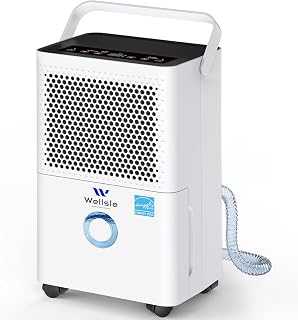
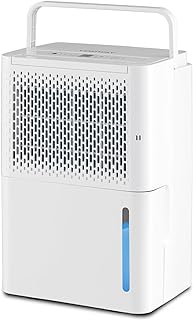


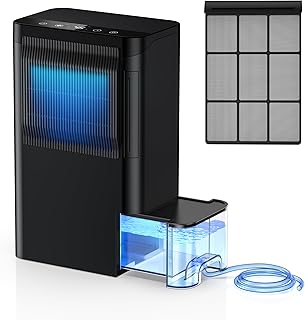


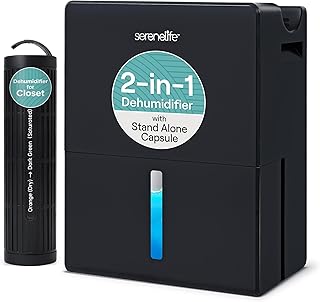


Choosing a dehumidifier for a Canadian home is about more than selecting the highest moisture-removal number on a product page. The right model needs to match the room size, humidity level, temperature, drainage arrangement, noise expectations, operating schedule and the type of smart controls you will actually use. A basement that stays damp throughout the year has very different requirements from a bedroom, bathroom-adjacent area, laundry room or seasonal cottage.
Smart dehumidifiers add another layer to the decision. Depending on the model, connected features may include Wi-Fi control, smartphone notifications, humidity monitoring, scheduling, automatic operation and integration with a broader smart-home system. These features can be useful, but they should complement effective moisture control rather than distract from the fundamentals.
For Canadian shoppers, it is also important to check the exact model configuration offered in Canada. Product names can be similar across markets while capacities, electrical specifications, included accessories, controls and certification information differ. Always compare the specifications for the Canadian version before making a purchase.
A smart dehumidifier generally combines conventional humidity-control hardware with electronic monitoring and some form of connected control. The exact feature set varies considerably between models, so “smart” should not automatically be treated as a quality rating.
Capacity is one of the most important specifications to compare because a dehumidifier must be capable of removing enough moisture for the environment in which it will operate. Capacity is commonly expressed as the amount of water the appliance can remove over a 24-hour period under specified testing conditions.
Do not select a unit solely because its advertised capacity is larger. A very large model can be unnecessary for a small, relatively dry room, while an undersized appliance may run frequently without adequately controlling humidity in a damp basement.
A compact model may be appropriate where the moisture load is modest and the space is relatively enclosed. Bedrooms can benefit from quieter operation and accurate humidity control because excessive fan or compressor noise can become noticeable overnight.
Bathrooms and laundry areas can experience temporary humidity spikes. Ventilation should remain the first line of defence where appropriate, while a dehumidifier can help manage persistent moisture elsewhere in the home. Consider drainage carefully if the appliance will be operating for extended periods.
Basements are among the most demanding applications because moisture can enter through the surrounding structure, floors, foundations, air leakage and outdoor air. A basement model should be evaluated for sufficient capacity, continuous drainage, low-temperature operation and reliable automatic humidity control.
Open-plan homes require more careful capacity selection because air can move between several connected spaces. The nominal floor area on a product specification is only a starting point. Ceiling height, insulation, ventilation, outdoor conditions and moisture sources can all change the actual requirement.
Humidity conditions vary significantly across Canada. A product that performs well in a warm, humid environment may have a different workload in a cooler Canadian basement or during shoulder seasons.
Summer can bring substantial moisture into homes through outdoor air, especially when doors and windows are frequently opened. During spring and fall, basements can remain cool while still having humidity-management requirements. Winter presents a different situation because indoor air is often much drier in heated homes, making continuous dehumidification unnecessary or undesirable in many spaces.
For this reason, a smart model can be particularly useful when its humidistat and automatic operating mode are well implemented. Rather than running the appliance continuously, the user can establish a suitable humidity target and allow the appliance to respond to changing conditions.
Relative humidity describes the amount of water vapour in the air relative to the maximum amount the air can hold at a given temperature. It is normally expressed as a percentage.
The ideal indoor humidity level is not identical in every Canadian home or season. Extremely high humidity can contribute to condensation and moisture-related problems, while unnecessarily low humidity can make indoor air uncomfortable and contribute to dryness. A practical buying approach is to choose a dehumidifier with a reliable humidistat and adjustable target rather than relying exclusively on a fixed operating cycle.
A separate digital hygrometer can also be useful when you want to compare the appliance's displayed humidity reading with humidity elsewhere in the room. Measurements can differ because humidity is not always uniform throughout a building.
Most full-size household dehumidifiers use a refrigeration-based compressor system. Warm, humid air passes across a cold surface, moisture condenses, and the collected water is directed into a tank or drainage system. The drier air is then returned to the room.
Desiccant-based systems use a moisture-absorbing material rather than the same refrigeration process. Their characteristics can make them useful for particular temperature conditions, but shoppers should compare their energy consumption, capacity, operating noise and intended environment with those of compressor models.
For a typical Canadian basement or larger living area, the key question is not which technology sounds more advanced. It is which technology and model specification are appropriate for the temperature, moisture load and operating schedule of the intended space.
Basements can be substantially cooler than the main living areas. A dehumidifier designed primarily around warmer conditions may not be the best choice for a consistently cool space.
When operating temperatures fall, frost can form on the cooling components of some compressor dehumidifiers. A model with an appropriate defrost system can manage this condition, but the precise operating range varies by appliance.
Before buying a basement dehumidifier, check the manufacturer's stated minimum operating temperature and any low-temperature or automatic-defrost specifications. Do not assume that two units with similar moisture-removal capacities will behave identically in a cool basement.
The water tank is convenient when occasional emptying is acceptable, but it can become a limitation when a dehumidifier needs to run for long periods. A full tank can cause the appliance to stop until the water is removed.
Continuous drainage can solve this problem when the model supports it. A hose is connected to the appropriate drain outlet so collected water can flow away without requiring repeated manual emptying.
A connected app is only useful if it provides practical control and reliable information. Before choosing a smart dehumidifier, examine the app-related specifications rather than assuming that every Wi-Fi appliance provides the same functionality.
One of the easiest mistakes is to treat connectivity as a substitute for core appliance performance. Wi-Fi does not determine how effectively a dehumidifier removes moisture, how quietly it operates or how well it performs in a cool basement.
When comparing smart models, evaluate them in this order: appropriate capacity, operating-temperature suitability, humidity control, drainage options, energy considerations, noise, physical size, maintenance requirements and reliability features. Treat Wi-Fi and app functionality as an additional convenience layer.
A dehumidifier can consume meaningful electricity when operated for many hours, making energy performance an important part of the long-term buying decision.
Compare the manufacturer's energy information for the specific Canadian model and consider how often the appliance is likely to operate. A unit that reaches the desired humidity efficiently and then cycles off can have a very different real-world energy profile from an undersized unit that runs for long periods.
Where energy-efficiency certification or ratings are advertised, verify the current certification information and applicable Canadian criteria rather than relying on an old product description. Standards and product configurations can change.
Noise matters more in bedrooms, offices, nurseries and living rooms than it may in an unfinished basement. Dehumidifiers contain moving components, including a fan and, on compressor models, a compressor, so completely silent operation should not be expected.
When comparing products, look for a manufacturer-published noise specification if one is provided. Also consider whether the appliance offers a lower fan setting or sleep mode. A lower setting may reduce perceived noise but can also affect moisture-removal performance and airflow.
For a basement where noise is less important, drainage and capacity may deserve higher priority. For a bedroom, noise and automatic humidity control may be more important than maximum capacity.
Even a capable dehumidifier can perform poorly if airflow around the appliance is restricted. Follow the manufacturer's clearance requirements and avoid placing the unit where curtains, furniture or walls obstruct the intake or exhaust.
Most household dehumidifiers use an air filter to reduce dust and airborne particles entering the internal components. A dirty filter can restrict airflow and reduce effective performance.
Before buying, check how the filter is removed, whether it is washable, how easy it is to access and whether replacement-filter information is clearly provided by the manufacturer. A model that is difficult to maintain can become inconvenient even if its specifications look excellent.
Tank capacity is easy to overlook when comparing dehumidifiers. A larger tank can mean fewer emptying trips, but it also adds weight when full.
Look for a tank with a practical handle, secure positioning and a clear full-tank indication. If the appliance will be used in a basement while you are away from home, continuous drainage can be more valuable than a very large tank.
Automatic shutoff is an important convenience and protection feature on tank-based dehumidifiers. When the water container reaches its maximum level, the appliance should stop according to its operating design rather than continuing to collect water into an already full container.
Review the exact safety and operating features listed by the manufacturer. Do not assume that a feature is included merely because it is common on other models in the same category.
Physical dimensions matter when a dehumidifier must fit beneath a counter, beside a wall or within a compact utility area. Weight matters as well if the unit needs to be moved between rooms.
Many full-size models include caster wheels or carrying handles. These can make repositioning easier, but they do not eliminate the need for careful handling, particularly when the water tank contains collected moisture.
Brand recognition can be a useful starting point, but it should never replace model-level comparison. Product lines from manufacturers such as Frigidaire, Midea, Danby, Honeywell, GE, Hisense and De'Longhi can differ substantially in capacity, controls, drainage, noise, connectivity and intended use.
When comparing a recognizable brand with a less familiar alternative, focus on the exact specifications, manufacturer documentation, Canadian support information, operating requirements and verified customer feedback for the specific model.
Frigidaire is a familiar name in household climate appliances. When evaluating a Frigidaire dehumidifier, compare the specific capacity, humidity controls, tank arrangement, drainage provisions, operating-temperature information and any connected features rather than judging the product line as a whole.
Midea offers a broad range of home-appliance products, including connected appliance categories. For shoppers considering a Midea smart dehumidifier, pay particular attention to the exact app functionality, Wi-Fi requirements, drainage setup, capacity and low-temperature operating specifications.
Danby is a Canadian-market household appliance brand with products across several compact and home-appliance categories. A Danby model can be worth considering where local-market specifications, physical dimensions and drainage requirements align with the intended installation.
These brands also appear across home climate and appliance categories. The strongest buying approach is to compare individual models rather than assuming that brand reputation alone establishes which dehumidifier is best.
Not every smart feature has equal practical value. For most households, the most useful connected functions are those that reduce unnecessary trips to the appliance or help maintain a consistent humidity level.
A connected model is not automatically the best purchase. If the dehumidifier will sit in a rarely accessed utility area and you are comfortable using physical controls, basic automatic humidity control may provide nearly all the functionality you need.
Likewise, if the wireless network in the installation area is unreliable, an app-based feature set may provide less practical value. In these situations, investing more in capacity, drainage, energy performance, build quality or ease of maintenance can make more sense than paying primarily for connectivity.
A large capacity figure does not guarantee suitability. Temperature, room conditions, moisture sources and intended operating environment all matter.
If the unit will run for long periods, repeatedly emptying a small tank can become one of the biggest inconveniences. Check drainage options before purchase.
A cool basement can place different demands on a compressor dehumidifier than a warm living area. Check the manufacturer's stated operating range.
Connectivity, scheduling, notifications and smart-home integration vary between manufacturers and models. Confirm the exact supported functions.
Measure the available floor space and clearance before ordering. Remember to account for airflow, tank removal, filter access and hose routing.
Specifications that look excellent on paper can be less attractive if the appliance is going beside a bed or workstation. Check published noise information when available.
Do not assume that a model shown on a foreign website has identical specifications, electrical requirements or accessories to the Canadian version.
Customer feedback can be helpful, but a review from someone using a unit in a small bedroom may not tell you much about how the same model suits a cool, damp basement. Look for feedback relevant to your intended application.
When two models appear similar, create a simple side-by-side comparison using the same criteria for both products.
Customer reviews are most useful when they reveal practical information that specifications do not fully explain. Instead of focusing only on the average rating, look for recurring observations across multiple verified purchases.
A high customer rating can be encouraging, but ratings should be interpreted alongside the number and recency of reviews, the exact model number and the use case described by reviewers. A product can receive positive feedback for being compact and quiet while being unsuitable for a large basement simply because it was never designed for that workload.
Pay particular attention to recurring complaints rather than isolated comments. Multiple independent reports concerning drainage, noise, sensor accuracy, app connectivity or premature performance problems may deserve more consideration than a single enthusiastic review.
A standard dehumidifier can provide effective humidity control without an internet connection. A smart model adds remote management and potentially greater visibility into operating conditions.
Air conditioners can remove moisture while cooling a room, but they are designed primarily for temperature control. A dedicated dehumidifier is designed specifically to remove moisture and can be useful when humidity remains high without a corresponding need for substantial cooling.
For a basement or cooler area, a dedicated dehumidifier may be more appropriate than running an air conditioner solely to address moisture. The correct solution depends on the building, ventilation, temperature and source of the humidity.
A dehumidifier treats moisture in the air, but it cannot correct every underlying moisture problem. Persistent dampness can sometimes be associated with plumbing leaks, foundation water intrusion, inadequate drainage, condensation, poor ventilation or other building-envelope issues.
If a room remains unusually damp despite appropriate dehumidification, investigate the source rather than simply purchasing a larger appliance. A continuously running dehumidifier may be masking a problem that needs a different solution.
Place the unit where it can circulate air effectively and where collected water can be drained safely. Avoid squeezing it tightly into a corner merely because that is the most convenient location.
In a basement with several enclosed rooms, one centrally positioned appliance may not provide uniform humidity control throughout every area. Closed doors can restrict air movement, and a single humidity sensor measures conditions only around the appliance.
Seasonal properties can benefit from automatic humidity management, particularly when the owner is not present every day. However, remote monitoring should not be treated as a replacement for appropriate winterization, plumbing precautions, ventilation and property maintenance.
Before leaving a dehumidifier operating unattended, follow the manufacturer's requirements for temperature, drainage and continuous operation. Confirm that the installation is appropriate for the property and that the drainage arrangement cannot create water damage if a hose becomes disconnected.
Bedroom use places greater emphasis on sound, physical size and predictable humidity control. A compact appliance may fit more easily, but capacity should still be appropriate for the room and moisture load.
Sleep mode, lower fan settings and programmable operation can be useful where supported. However, a lower operating setting may reduce the rate of moisture removal, so the actual humidity response should be monitored rather than assuming that the quietest mode is always sufficient.
Laundry activities can temporarily increase indoor moisture, especially when drying clothes indoors. A dehumidifier can assist with humidity management, but it should not be positioned where water from sinks, washing machines or other equipment can contact the appliance.
Continuous drainage may be particularly convenient in this environment if an appropriate drain is available and the manufacturer permits the arrangement.
For an office, noise, footprint and energy use can be more important than maximum moisture-removal capacity. A smart model can be convenient when the appliance is positioned away from the desk and you want to check humidity without interrupting work.
The built-in humidity sensor is central to automatic operation because it determines when the appliance should run or stop. Sensor readings can be affected by the appliance's location and local airflow.
For critical humidity management, it can be useful to compare the dehumidifier's reading with an independent hygrometer positioned elsewhere in the same room. A difference does not necessarily mean the appliance is defective; different positions can experience different temperature and humidity conditions.
There is no single price point that represents the best value for every Canadian household. Instead, determine which features solve an actual problem for you.
Dehumidifier pricing can change during seasonal promotions, clearance events and retailer-specific sales. A lower advertised price is not necessarily a better deal if the discounted model has unsuitable capacity or lacks an important feature.
Compare the exact model number rather than comparing product names alone. Check current specifications, included accessories, retailer terms and verified customer feedback before deciding that one offer represents better value.
For affiliate shoppers, it is also sensible to compare the current price across trusted Canadian retailers because pricing and availability can change independently of the product's underlying specifications.
Demand can be seasonal, particularly during periods of humid weather when homeowners become more aware of basement and indoor-air moisture. However, the best time to buy depends on your actual need, available promotions and inventory rather than a fixed calendar rule.
If you already know that your home needs humidity control, waiting for a particular sale can be less important than choosing an appropriately sized model before moisture becomes a persistent problem.
No. Capacity needs to match the moisture load and environment. A larger appliance can be advantageous for a particularly damp area, but capacity should be evaluated alongside energy use, physical size, noise and operating conditions.
It can be valuable if you want remote control, humidity monitoring, scheduling or notifications. If the appliance will be manually controlled and rarely accessed remotely, the additional connectivity may provide little practical benefit.
It is highly useful when the appliance will operate for extended periods. It can be less important when the unit is used occasionally and the tank is easy to empty.
If the appliance will spend most of its time in a basement, prioritize specifications relevant to basement conditions, especially operating temperature, drainage, capacity and automatic humidity control.
Some models are designed for automatic operation, but always follow the manufacturer's instructions. Continuous unattended operation requires particular attention to drainage, temperature, electrical requirements and the possibility of water escaping if a drainage connection fails.
There is no universal best model. The right choice depends on room size, humidity level, temperature, drainage requirements, noise tolerance, budget and the smart features you actually need. Compare the exact Canadian models against these criteria rather than selecting solely by brand or rating.
Not necessarily. Smart models are better suited to shoppers who value remote monitoring, scheduling, notifications or smart-home integration. A conventional model can be the better value when those features are unnecessary.
Look for an appropriately sized model with suitable low-temperature operating specifications, automatic humidity control and a practical continuous-drain option. Basement conditions vary, so the manufacturer's stated operating range and installation guidance should be checked carefully.
Start with the manufacturer's room-size and moisture-condition guidance, then consider factors such as basement temperature, visible condensation, laundry activity, ventilation and other moisture sources. A particularly damp environment may require more capacity than a similarly sized dry room.
Connected features generally depend on a wireless network and compatible application, but the appliance's basic physical controls and dehumidification functions may continue to operate independently depending on the model. Check the manufacturer's documentation for the exact appliance.
Some models provide continuous or dedicated operating modes, but continuous operation should always be used according to the manufacturer's instructions. Proper drainage becomes especially important because a tank can fill quickly in a damp environment.
Cleaning frequency depends on dust levels, operating conditions and manufacturer instructions. Inspect the filter regularly and clean it according to the maintenance guidance supplied with the exact model.
Low temperatures can cause frost formation on some compressor-based systems. Models designed with appropriate defrost functionality can better manage cooler conditions. Check the stated operating-temperature range rather than assuming every dehumidifier is suitable for a cold basement.
A separate hygrometer can be useful when you want an independent humidity reading. It can also help determine whether humidity varies significantly between locations in a larger room or basement.
Canadian shoppers may encounter brands including Frigidaire, Midea, Danby, Honeywell, GE, Hisense and De'Longhi. Compare the exact models rather than assuming every product from a particular manufacturer has the same capabilities.
For most buyers, appropriate moisture-removal capacity and reliable humidity control should come before smart features. Drainage, temperature range, energy use, noise and maintenance are also important. Connectivity is most valuable when it solves a real convenience problem.
The best smart dehumidifier deal is not necessarily the model with the biggest capacity, the most connected features or the lowest current price. It is the model whose specifications match the conditions in your Canadian home.
For a damp basement, focus on capacity, low-temperature suitability, automatic humidity control and continuous drainage. For a bedroom or office, give greater weight to noise, size and convenient automatic operation. For a frequently unattended property, remote monitoring and reliable drainage can become more important. For shoppers primarily interested in value, compare the total feature set rather than paying extra for smart functionality that will never be used.
Before purchasing, verify the exact Canadian model number, current specifications, supported smart-home features, drainage requirements, energy information and verified customer feedback. Product availability and pricing can change throughout 2026, so check the latest information from trusted Canadian retailers before making the final decision.