

♥ Wishlist
Compare 38 Humidifiers for Comfortable Indoor Air products in Canada. Reviews, ratings, pros, cons and buying advice updated for October 2026.


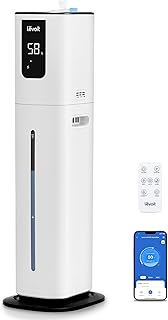


Choosing a smart humidifier for a Canadian home involves more than comparing mist output or the number of app features. Indoor humidity can change considerably with outdoor temperature, heating use, room size, ventilation and the season. A suitable model should therefore match the space where it will operate, the type of water available, the desired humidity range and the level of maintenance you are prepared to handle.
This expanded guide helps Canadian shoppers compare smart humidifiers by looking beyond headline specifications. It covers room coverage, humidification technologies, smart controls, humidity sensors, tank capacity, noise, cleaning requirements, water quality, energy considerations and practical features that can make a difference during everyday use. Brands such as Levoit, Honeywell, Dreo, Govee, Philips, Crane, Vicks, TaoTronics and Everlasting Comfort are among the names shoppers may encounter when comparing humidification products, although individual models and specifications should always be checked before purchase.
A smart humidifier is a humidification appliance that combines conventional moisture output with electronic controls, sensors, connectivity or automation. Depending on the model, it may allow users to adjust mist levels, set a target humidity, create schedules, monitor conditions from a smartphone app or connect with a broader smart-home system.
The term “smart” does not automatically mean a humidifier is more effective at adding moisture. The underlying humidification system still determines how efficiently the appliance produces mist or evaporates water. Smart functions mainly improve monitoring, convenience and automation.
For example, a basic humidifier may require manual adjustment whenever the room becomes too dry. A connected model with a humidity sensor can potentially monitor relative humidity and automatically adjust its operation according to the selected settings. The usefulness of that feature depends on sensor placement, calibration, room conditions and the individual product's control system.
Canadian homes can experience substantial indoor humidity changes throughout the year. During colder periods, indoor heating can make the air feel noticeably dry, particularly in tightly heated living spaces. Bedrooms, offices, nurseries and living rooms may all have different humidity conditions depending on heating patterns and ventilation.
Adding moisture is not always the answer, however. Excessive indoor humidity can encourage condensation on cold surfaces and may contribute to an environment where mould and other moisture-related problems become more likely. A smart humidifier with an adjustable target and humidity monitoring can therefore be more useful than a device that simply operates continuously at maximum output.
Instead of selecting a humidifier solely because it produces a large amount of mist, consider whether it can maintain an appropriate indoor humidity level for the room and whether its controls make that process straightforward.
When comparing smart humidifiers for 2026, consider the following criteria together rather than relying on one specification.
One of the most important technical comparisons is the method used to add moisture to the air. Smart features are secondary to the humidification technology itself.
Ultrasonic humidifiers use high-frequency vibrations to break water into extremely small droplets that are dispersed into the surrounding air. They are often associated with quiet operation and compact designs.
One consideration is mineral content. Depending on the water quality and design of the appliance, minerals from tap water can become part of the fine mist or accumulate inside the humidifier. This can contribute to visible residue on nearby surfaces and increase cleaning requirements.
Users considering an ultrasonic model should check the manufacturer's water recommendations and maintenance instructions. Some products may recommend filtered or distilled water, while others are designed with features intended to manage mineral deposits.
Evaporative humidifiers generally use a fan to move air through a wet wick, filter or evaporative element. Moisture evaporates into the moving air rather than being dispersed as a visible cool mist.
Evaporative systems can be attractive for shoppers who prefer a self-regulating style of humidification, because evaporation tends to slow as the surrounding air becomes more humid. However, filters or wicks can require periodic replacement, creating an ongoing maintenance cost.
Warm-mist humidifiers heat water to produce moisture. The heating process distinguishes them from ultrasonic and conventional cool-mist designs, but it can also increase energy use and create hot surfaces or hot water.
For homes with children or pets, placement and safety deserve particular attention. Always follow the manufacturer's safety instructions and keep hot-water appliances away from areas where they can be knocked over.
Room coverage is one of the easiest specifications to misunderstand. A manufacturer may provide a maximum coverage figure under particular conditions, but real-world performance can vary according to ceiling height, doors, ventilation, insulation, heating systems and the desired humidity level.
For a small bedroom or office, a compact humidifier may provide sufficient moisture without occupying much space. A larger living area may require a higher-capacity appliance or a model designed for larger rooms.
Do not automatically choose the largest humidifier available. Oversizing can increase water consumption, require more frequent cleaning and occupy valuable floor or table space. Instead, compare the manufacturer's coverage recommendation with the dimensions and layout of your intended room.
For a small enclosed room, prioritize quiet operation, compact dimensions, simple cleaning and accurate humidity control. A large tank is convenient, but it may not be necessary if the appliance can operate for the desired period between refills.
Larger rooms typically benefit from higher moisture output and a larger reservoir. Smart scheduling can also be useful because the appliance can be configured to operate during selected periods rather than running continuously.
Open-plan areas can be more difficult to humidify evenly. A humidifier positioned in one corner may not produce the same humidity throughout the entire space. Air movement, room geometry and HVAC operation can affect distribution.
A built-in humidity sensor can be one of the most useful smart features. Instead of manually selecting a mist level and leaving the humidifier running, automatic control can use measured relative humidity to determine when the appliance should increase, reduce or stop humidification.
Sensor accuracy is important, but so is placement. A humidifier positioned immediately beside a sensor can create a local environment that differs from the rest of the room. Likewise, placing the appliance directly beside a heat source, window, exterior door or strong airflow can affect readings.
For the most meaningful comparison, look at whether the humidifier offers a target humidity setting, an automatic mode and clear humidity information rather than simply checking whether the product description contains the word “sensor.”
Not every app feature provides equal value. A well-designed smart humidifier app should make everyday control easier rather than adding unnecessary complexity.
Connectivity type can influence how convenient a smart humidifier is. Wi-Fi-enabled products can generally communicate through a home network, making remote access possible when the manufacturer's system supports it. Bluetooth-based products typically focus on shorter-range communication with a nearby phone.
Before buying, check the exact connectivity requirements. Some devices may require a 2.4 GHz Wi-Fi network, a particular app account or permissions during setup. Compatibility can change between product generations, so confirm the current requirements for the exact model rather than relying on the brand name alone.
Some smart humidifiers can integrate with voice-controlled smart-home platforms. This can be convenient for simple actions such as turning the appliance on or off or changing supported settings.
Voice compatibility should be treated as a convenience feature rather than a primary buying criterion. If a humidifier has poor capacity, difficult cleaning or unsuitable room coverage, voice control will not compensate for those shortcomings.
Tank capacity affects how frequently you need to refill the humidifier. A larger reservoir can be convenient during overnight operation or extended periods of use, while a smaller tank may be easier to carry and clean.
Do not compare tank capacity alone. Runtime also depends on mist output and operating mode. A large tank operated at maximum output can empty sooner than expected, while a smaller reservoir may last considerably longer at a lower setting.
When comparing models, consider how often you realistically want to refill the appliance. For a bedroom used overnight, overnight runtime may be more meaningful than the tank's capacity in isolation.
Top-fill humidifiers allow water to be poured directly into the upper reservoir. This can be convenient and may eliminate the need to carry a full inverted tank from a sink to the appliance.
Bottom-fill designs typically use a removable tank that is carried to a sink, filled and returned to the base. Some shoppers prefer this arrangement, particularly when the tank has a comfortable handle and a stable filling design.
The best choice depends on the user's physical space, sink configuration and cleaning routine. A theoretically larger tank is less convenient if it is awkward to remove or difficult to carry when full.
Noise becomes much more important when a humidifier operates while people sleep. Fans, pumps, airflow and water movement can all contribute to sound.
If quiet operation is a priority, compare the manufacturer's stated noise information where available and look closely at verified customer feedback for comments about operating sound. Avoid assuming that every ultrasonic humidifier is completely silent or that every evaporative model is loud. Individual designs vary.
For bedrooms, also consider display brightness, button sounds and notification behaviour. An appliance can have a low mechanical noise level while still being inconvenient if its lights or alerts disturb sleep.
Water-based appliances require regular care. A humidifier that is difficult to clean can become frustrating even if its smart controls are excellent.
Before purchasing, inspect the tank opening, base design and removable components. Look for areas where water can remain trapped and check whether the manufacturer's instructions provide clear cleaning procedures.
Water quality can affect humidifier maintenance. Hard water contains dissolved minerals that may accumulate inside the tank, base and other water-contact components.
Mineral deposits can be particularly noticeable with some ultrasonic designs because the humidifier disperses water droplets directly into the room. The resulting residue can appear on nearby furniture or surfaces under certain conditions.
If your local water is mineral-rich, check whether the manufacturer recommends distilled or filtered water and determine the likely ongoing cost before choosing a model. A humidifier that appears inexpensive initially may require more frequent maintenance or consumables depending on the water used.
Some humidifiers use filters or wicks as part of their operating system. These components can collect minerals and other material from the water and air, depending on the design.
Replacement availability and cost should form part of the buying decision. A lower purchase price does not necessarily represent better value if replacement components are expensive, difficult to source or require frequent replacement.
Before ordering, identify the exact replacement part number and check current availability through trusted retailers. Product generations can use different filter designs even when the brand name remains the same.
Safety should take priority over connectivity or appearance. A well-designed humidifier should include practical protections appropriate to its technology.
Always follow the safety instructions supplied with the specific humidifier. Do not place a water appliance where accidental spills could reach electrical equipment.
Placement affects performance, maintenance and safety. A humidifier should be positioned on a stable, level surface suitable for the appliance and away from materials that could be damaged by moisture.
Avoid positioning the unit directly against walls, curtains, books, electronics or furniture unless the manufacturer's instructions specifically allow it. Fine moisture or condensation can affect nearby surfaces.
Do not hide the humidifier behind furniture simply to keep it out of sight. Restricted airflow can reduce effective distribution and may interfere with sensor readings.
For bedroom use, position the humidifier so that the mist is not directed straight at bedding or people. The exact recommended clearance and placement should come from the manufacturer's instructions.
Bedroom shoppers generally benefit from prioritizing quiet operation, automatic humidity control, timer functions and a tank that can comfortably cover the desired operating period.
App control can also be useful if you want to adjust settings without getting out of bed. However, a physical control panel remains worthwhile because it provides a backup if the phone, network or app is unavailable.
For a nursery, simplicity and safety should outweigh novelty features. Look for a design that is straightforward to clean, has dependable low-water protection and can maintain a suitable humidity level without requiring constant manual intervention.
Place the appliance well away from the crib and other areas where a child could reach it. Avoid directing mist directly toward the sleeping area, and follow all manufacturer safety guidance.
Parents should also be careful not to assume that maximum humidity is better. The goal is controlled indoor humidity rather than continuously increasing moisture.
An office humidifier should be quiet, compact and easy to manage during working hours. A timer or schedule can prevent unnecessary operation when the room is empty.
For desks, pay close attention to footprint and mist direction. Water droplets or excessive moisture should not be directed toward computers, monitors, printers, power strips or other electronic equipment.
Large rooms require greater attention to output and coverage. If the space is open to other rooms, compare the manufacturer's coverage information carefully rather than assuming a single appliance will humidify an entire floor evenly.
A larger tank can reduce refill frequency, while automatic humidity control can help prevent unnecessary continuous operation. Where possible, consider the room's HVAC airflow because forced-air heating and ventilation can influence humidity distribution.
Brand comparison can help narrow the field, but the exact model matters more than the logo on the front. Levoit offers a range of connected home-appliance products, while Honeywell is a long-established name in indoor air and climate-related appliances. Dreo has become a recognizable consumer brand in home climate products, including connected humidification models.
Other brands shoppers may encounter include Govee, Philips, Crane, Vicks, TaoTronics and Everlasting Comfort. Product lines vary considerably, so compare individual models for tank capacity, output, sensor functionality, app support, filter requirements, cleaning access and room coverage.
Rather than asking which brand is universally “best,” identify which manufacturer and model combination provides the features that matter for your room and maintenance preferences.
An impressive app cannot compensate for poor room coverage, difficult cleaning or insufficient water capacity. Start with the physical requirements of the room, then evaluate connectivity.
Water appliances need regular care. Before buying, check how the tank and base are cleaned and whether filters or wicks require replacement.
A large reservoir is not automatically better. Consider how heavy it becomes when filled and whether you can comfortably remove and clean it.
Mineral-rich water can increase deposits and maintenance requirements. Check the manufacturer's recommendations before deciding which humidification technology is appropriate.
Coverage claims depend on operating conditions. An open-plan room with high ceilings and significant airflow may behave differently from a small enclosed bedroom.
Filters and wicks can become ongoing expenses. Include them in the total cost of ownership instead of comparing only the initial purchase price.
Ratings can help identify recurring issues, but they should be interpreted alongside specifications and the circumstances of each review. A humidifier that works well in a small bedroom may not meet the needs of someone trying to humidify a large open living area.
Product listings can contain numerous measurements and marketing terms. Focus on specifications that directly affect your intended use.
Energy consumption varies according to humidification technology, operating mode, output level and runtime. Warm-mist products generally involve heating water, while cool-mist technologies use different mechanisms.
If energy consumption matters, compare the rated power of competing models and consider how many hours per day the appliance will operate. A smart schedule can also reduce unnecessary runtime when the room does not require additional humidity.
Remember that lower electrical consumption is only one aspect of value. Maintenance requirements, filters, water consumption and the appliance's ability to operate effectively in your room can also influence long-term ownership.
Scheduling is particularly useful when humidity needs follow a predictable pattern. For example, a user may prefer the humidifier to operate during selected overnight hours or while the home office is occupied.
Automatic humidity control can go further by responding to measured conditions rather than following a fixed timetable alone. When both functions are available, scheduling can define when the appliance is allowed to operate while humidity control determines how much operation is actually required.
A basic humidifier can be sufficient if you simply need occasional moisture and are comfortable adjusting the appliance manually. A smart model becomes more compelling when you value remote control, scheduling, humidity monitoring or automated operation.
Consider a smart humidifier if:
A basic model may be preferable if:
Start by identifying the room and its dimensions. Next, decide whether you need cool mist, evaporative operation or another technology. Then compare the tank capacity, output, sensor functionality and maintenance requirements.
Once the core specifications match your requirements, compare smart features. Look for reliable app control, useful scheduling, humidity monitoring and compatible smart-home integration. Avoid paying extra for connected features that you will never use.
Finally, consider ownership. Check cleaning access, replacement filters, water recommendations, operating noise, dimensions and current retailer pricing. This process usually produces a more meaningful comparison than choosing the product with the longest feature list.
A “deal” is only worthwhile when the product fits your requirements. When comparing smart humidifier deals in Canada, look at the complete specification sheet rather than choosing the lowest advertised price.
Prices, promotions and stock can change quickly during 2026. Always verify the current offer and the exact product configuration before making a purchase.
There is no universal replacement interval that applies to every humidifier. Replacement should depend on condition, performance, maintenance history and the availability of compatible replacement components.
Consider replacing a unit if it develops persistent leaks, damaged electrical components, structural cracks, unreliable controls or performance problems that cannot be resolved through appropriate cleaning and maintenance.
If a model requires replacement filters or other consumables that are no longer readily available, the lack of parts may also affect its practicality as a long-term appliance.
There is no single best smart humidifier for every Canadian home. The right choice depends on room size, humidification technology, desired humidity control, noise preferences, tank capacity, water quality, maintenance requirements and smart-home features. Compare the exact specifications of shortlisted models before purchasing.
They can be worthwhile when automatic humidity control, remote access, scheduling or smart-home integration provides genuine convenience. If you only need occasional humidification and prefer simple controls, a basic humidifier may offer better value.
Ultrasonic humidifiers can work well in many homes, particularly where quiet operation is important. However, water quality and mineral accumulation should be considered. Follow the manufacturer's water and cleaning recommendations for the specific model.
Many models offer automatic shutoff or automatic humidity control, but the exact behaviour varies. Check the specifications for the specific product rather than assuming every smart humidifier has the same safety or control functions.
Some smart humidifiers include built-in humidity sensors. Others may provide limited monitoring or rely on external sensors. Check whether the exact model provides real-time humidity measurement and whether it can use that measurement for automatic control.
It depends on the model and water quality. Some manufacturers allow tap water, while others recommend filtered or distilled water. Always follow the instructions for the exact humidifier you are considering.
Cleaning frequency depends on the product, water quality and frequency of use. Follow the manufacturer's maintenance schedule and inspect the water-contact components regularly rather than relying on a single universal cleaning interval.
Many humidifiers are designed for extended operation and may include automatic shutoff or humidity-control functions. However, safe use depends on the exact appliance and correct placement. Follow the manufacturer's instructions and keep the humidifier away from bedding, electronics and areas where it could be knocked over.
Electrical consumption varies considerably by technology and operating mode. Compare the rated power and expected runtime of the models you are considering. Smart scheduling and automatic humidity control can also help avoid unnecessary operation.
Choose a model whose manufacturer-stated coverage matches or appropriately exceeds the bedroom's size, while also considering ceiling height, airflow and room layout. A compact bedroom does not necessarily require a high-output whole-home-style humidifier.
Prioritize appropriate room coverage, sufficient moisture output, a practical tank capacity and effective humidity control. Consider how the humidifier will distribute moisture through the room, especially in open-plan spaces.
Canadian shoppers may encounter smart or connected humidification products from brands including Levoit, Honeywell, Dreo, Govee, Philips, Crane, Vicks, TaoTronics and Everlasting Comfort. Availability and model selection can vary, so compare the specifications of the exact product rather than choosing solely by brand.
No. Higher-priced models may include additional sensors, connectivity options, larger reservoirs or more advanced controls, but those features are only valuable when they match your needs. A simpler model can be the better choice for a small room or occasional use.
The best smart humidifier deal is not necessarily the model with the biggest tank, highest mist output or most connected features. The strongest choice is the one that provides appropriate humidification for your room while remaining easy to operate, clean and maintain.
For Canadian shoppers, pay particular attention to room coverage, winter indoor conditions, water quality, cleaning access, filter requirements and operating noise. Smart functions such as humidity sensors, automatic modes, schedules and app control should then be used to refine the shortlist.
Before buying, compare the exact model number, current specifications, verified customer feedback and today's price from trusted Canadian retailers. Product specifications, promotions, availability and app compatibility can change during 2026, so confirm the latest information at the time of purchase.