
♥ Wishlist
Compare 27 Ceiling Heaters for Efficient, Space-Saving Heating products in Canada. Reviews, ratings, pros, cons and buying advice updated for October 2026.


Choosing a ceiling-mounted heater for a Canadian home, cottage, workshop, bathroom, office or other enclosed space requires more than comparing wattage and price. The right model needs to match the room size, electrical supply, mounting location, heat distribution requirements, controls and intended frequency of use. A heater that looks attractive on a product page may not be the right choice if its installation requirements, voltage or heating capacity do not suit the space.
This buying guide is designed to help Canadian shoppers compare ceiling heaters more carefully. Rather than treating one specification as the deciding factor, consider the complete combination of heating output, installation requirements, thermostat controls, construction, safety features, operating convenience and long-term practicality.
A ceiling heater is an electric heating appliance designed to deliver warmth from a ceiling-mounted position. Depending on the design, the heating element may warm air that is circulated through the room, or radiant heat may provide warmth directly to people and surfaces below the unit. Some models combine heating with a fan, while others are dedicated heating appliances.
Ceiling installation can be useful when wall and floor space are limited. It can also keep the heating appliance away from furniture, storage areas and normal floor traffic. However, ceiling mounting introduces additional considerations because the unit must be installed in a suitable location and connected to the correct electrical supply.
Common applications include bathrooms, utility rooms, workshops, garages, basements, offices, entrances, recreational rooms and other areas where supplemental heat is required. The appropriate heater depends heavily on the characteristics of the particular room.
Fan-forced models use an electric heating element and a fan to distribute warm air. This design can help move heated air away from the ceiling and into the occupied portion of a room. A fan-assisted heater may be particularly useful where relatively quick circulation of warm air is important.
When comparing these heaters, look beyond the wattage. Fan noise, airflow direction, controls, installation method and the ability to maintain a comfortable temperature can all affect everyday usability.
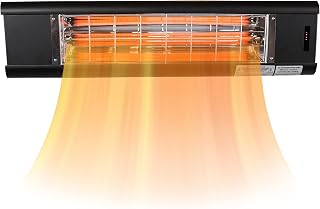
Radiant heaters transfer heat primarily through infrared radiation rather than relying entirely on heated air circulation. They can be useful in situations where direct warmth is desirable, particularly when heating a specific occupied area rather than attempting to raise the temperature of a large volume of air.
Radiant and fan-forced heaters should not automatically be judged as better or worse than one another. They solve somewhat different heating problems, so the intended use should determine which approach makes more sense.
Some ceiling-mounted bathroom appliances combine heating with lighting and ventilation. These multifunction units can save ceiling space and provide several functions from one installation point.
For a combination unit, compare every component rather than focusing only on the heater. Consider the lighting specification, ventilation performance, controls, noise characteristics, installation requirements and replacement considerations. A multifunction appliance is most useful when all of its functions suit the room.
Bathroom installations require particular attention to moisture exposure and electrical safety. Not every ceiling heater is appropriate for a bathroom simply because it can be mounted overhead. Always verify that the specific model is intended for the proposed location and follow the manufacturer's installation instructions and applicable Canadian electrical requirements.
Wattage is one of the most visible specifications when comparing electric heaters, but wattage alone does not tell you whether a model is appropriate for a particular room. Room dimensions, insulation, ceiling height, exterior walls, windows, climate, air leakage and the amount of existing heating all influence the required heating capacity.
A small, well-insulated room may require substantially less supplemental heating than a similarly sized poorly insulated space. A garage with an uninsulated overhead door can behave very differently from an interior room of the same floor area.
Use manufacturer guidance as the starting point for sizing. If the heating requirement is uncertain, particularly for a permanent installation, a qualified heating or electrical professional can help determine an appropriate solution.
Two rooms with the same floor area may have very different heating requirements. Consider the following factors before choosing a heater:
Electrical compatibility is a critical buying consideration for ceiling heaters. Some models are designed for one voltage while others require a different electrical supply. Never assume that a higher-wattage heater can simply replace an existing lower-wattage unit without checking the electrical requirements.
Before purchasing, check the manufacturer's specifications for voltage, wattage, current requirements, wiring configuration and installation method. The existing circuit should be suitable for the appliance, and permanent electrical work should comply with applicable local requirements.
Canadian electrical installations can be subject to provincial, territorial and municipal requirements. Where a heater requires hardwiring or other permanent electrical work, consult a qualified electrician when appropriate rather than relying on assumptions based on a product listing.
Some residential electric heaters use standard household voltage, while higher-output appliances may require a different electrical configuration. The correct choice depends on the heater and the electrical infrastructure available at the installation location.
Check the product's exact electrical specifications before ordering. A plug-in appliance and a hardwired ceiling heater should not be treated as interchangeable simply because they have similar wattage ratings.
The word “smart” can describe several different features in modern heating products. It may refer to a built-in electronic thermostat, programmable temperature control, remote operation, Wi-Fi connectivity, scheduling, automatic temperature regulation or compatibility with a smart-home ecosystem.
Do not assume that every heater described as smart provides app control or internet connectivity. Read the actual specifications to determine what the product supports.
A thermostat can automatically regulate heating based on the selected temperature. This can be more convenient than manually switching a heater on and off, especially in a room that requires supplemental heating at predictable times.
When comparing thermostat-equipped models, look for clearly stated temperature settings, control type and operating modes. A basic adjustable thermostat may be preferable if you want straightforward operation without depending on a mobile app or wireless network.
Programmable heating controls can allow different temperature settings at different times. This may be useful in bathrooms, offices, workshops or other spaces with predictable occupancy patterns.
However, more programming options can also mean greater setup complexity. Consider whether you will actually use the available scheduling functions before paying more for them.
Connected heaters may provide remote monitoring or control through a smartphone application. Before choosing one, investigate whether the required app, wireless connection and smart-home integration are compatible with your setup.
Also consider what happens if the internet connection or application is unavailable. A heater should remain practical to operate locally when the product design provides local controls.
Safety should take priority over convenience or appearance when comparing electric heating equipment. Look for clearly documented safety features and follow the manufacturer's installation, clearance and operating instructions.
Depending on the product, useful safety features may include overheat protection, thermal cutoffs, automatic shutoff functions, enclosed heating elements, appropriate mounting hardware and controls designed for the intended environment.
Overheat protection can help prevent the appliance from continuing to operate if internal temperatures become excessive. The exact mechanism varies by design, so consult the manufacturer's documentation rather than assuming that every model provides the same level of protection.
Clearance is especially important for ceiling-mounted heaters. Never assume that because a heater is mounted overhead it can be positioned close to any object. Lighting fixtures, insulation, ductwork, cabinetry and other building components may have specific clearance requirements.
Review the installation instructions before deciding where a heater will be installed. If the proposed location does not meet the manufacturer's requirements, choose another location or another product.
Moisture can change the suitability of electrical equipment. A product intended for a dry interior space should not automatically be installed in a damp or wet environment.
For bathrooms and other moisture-prone locations, verify the manufacturer's stated application and required installation conditions. Pay particular attention to any location restrictions and electrical protection requirements specified for the installation.
Ceiling heaters are exposed to repeated heating and cooling cycles, so construction quality matters. Look at the materials used for the housing, grille, heating components and mounting hardware, as well as the quality of the controls and overall construction.
Metal housings can provide a durable enclosure and are common in heating equipment, while the exact material and finish should be evaluated according to the installation environment. A bathroom, garage and finished bedroom may each place different demands on the appliance.
The heating element is central to the heater's operation. When comparing products, consider the stated element design, rated output, expected operating conditions and manufacturer's maintenance instructions.
Do not judge element quality solely by appearance. A technically appropriate heating element, correct installation and suitable controls are more important than cosmetic differences.
The grille or cover affects both appearance and airflow. A well-designed grille should allow the heater to perform as intended while providing an appropriate protective enclosure.
Check whether the grille can be removed for cleaning and whether replacement parts are documented by the manufacturer. Easy access can make routine maintenance simpler.
Fan-forced ceiling heaters produce some level of operating noise. In a workshop or garage, that may be insignificant. In a bedroom, bathroom or home office, it may be much more noticeable.
When comparing models, look for a manufacturer-stated noise specification if one is provided. If no standardized noise figure is available, do not assume that two heaters with similar wattage will sound identical.
Consider the location of the heater as well. A ceiling appliance installed directly above a quiet workspace may be more noticeable than the same appliance installed farther away in a larger room.
For fan-assisted models, airflow direction can influence how effectively warm air reaches the occupied area. A heater mounted in an inconvenient position may leave some parts of the room cooler even when the appliance is operating correctly.
Consider furniture placement, doorways, ceiling height and the normal location of people in the room. In a bathroom, for example, the preferred position may differ from a workshop where the occupant moves between several work areas.
Installation requirements should be checked before purchasing, not after the heater arrives. Ceiling construction varies considerably between homes, apartments, cottages, garages and commercial-style spaces.
Determine how the heater attaches to the ceiling, whether a suitable junction box is required, what clearance is needed and whether additional structural support is necessary. The manufacturer's installation manual should be treated as the primary reference for the specific model.
Recessed heaters can provide a cleaner appearance because part of the appliance is integrated into the ceiling. They may, however, require more preparation and sufficient ceiling cavity space.
Surface-mounted units are often more visible but can be simpler where recessed installation is impractical. Compare installation complexity, available ceiling space and appearance rather than choosing based solely on aesthetics.
Electric resistance heating converts electrical energy into heat, but the amount you spend operating a heater depends on its power consumption, runtime and local electricity rate. A higher-wattage heater can provide more heat but can also consume electricity at a higher rate while operating.
A useful way to compare operating cost is to examine the heater's rated power and estimate how long it is likely to run. Thermostatic control can reduce unnecessary runtime by switching heating according to the selected temperature, but the actual savings depend on the room and usage pattern.
A basic estimate can be made by converting the heater's wattage to kilowatts and multiplying by the number of operating hours and the applicable electricity rate.
For example, a 1,500-watt heater uses 1.5 kilowatts while operating at its rated output. If it operates continuously for one hour, its energy consumption at full rated output would be 1.5 kilowatt-hours. Actual consumption can be lower when thermostatic controls cycle the heating element on and off.
Your electricity bill depends on the applicable utility rate structure, so use your own current rate when estimating operating expenses.
Not every premium feature provides meaningful value for every buyer. Prioritize features that solve a genuine problem in the intended room.
Additional features can increase purchase price and complexity without improving the heating experience. A shopper who simply wants dependable supplemental heat may not need Wi-Fi, multiple programmable schedules, elaborate displays or unnecessary integrations.
Before choosing a premium model, ask whether the feature will be used regularly. If the answer is no, allocating that budget toward better installation compatibility, appropriate capacity, stronger construction or a better thermostat may provide more practical value.
Prioritize suitability for the bathroom environment, safe installation, effective heat distribution, practical controls and acceptable operating noise. Combination heater-light-ventilation units may be attractive when ceiling space is limited, but compare all three functions before choosing one.
Consider the size and insulation of the space, ceiling height, electrical requirements, mounting location and desired heat distribution. A garage door opening can introduce substantial cold air, so simply choosing a higher wattage does not necessarily solve every heating problem.
Basements can have different insulation, moisture and airflow characteristics from above-ground rooms. Consider whether the ceiling heater is supplemental or the primary heat source and whether the room has existing heating infrastructure.
Low operating noise and accurate temperature control may be especially important. A heater that provides adequate warmth but produces distracting fan noise may be less suitable for long periods of desk work.
Look closely at electrical requirements, control methods and the conditions under which the appliance is intended to operate. If remote control is important because the property is unoccupied for periods of time, verify exactly what connected features the product provides rather than assuming that “smart” means remote operation.
Product listings can contain many numbers and technical terms. Use a consistent comparison method so that important differences are not overlooked.
The cheapest heater is not necessarily the best value. A low purchase price can become less attractive if the unit lacks suitable controls, creates excessive noise, has inconvenient installation requirements or is poorly matched to the intended space.
More power is not automatically better. The heater must be appropriate for the electrical circuit and the room. Oversizing can also be unnecessary when the space already has adequate primary heating.
Electrical compatibility should be checked before purchase. Never rely on the physical appearance of a heater or another product's specifications when determining whether a particular model is suitable for your electrical supply.
Ceiling-mounted appliances have installation requirements that can affect their placement. Failing to check clearance requirements can turn an otherwise suitable product into an unsuitable choice.
Some products use “smart” terminology to describe electronic thermostatic control rather than internet connectivity. Read the specification carefully to determine whether the model actually supports Wi-Fi, smartphone control or smart-home integration.
A fan that seems insignificant in a product description can become noticeable in a quiet room. Noise should be part of the comparison whenever the heater will operate near sleeping, working or relaxing areas.
A heater can have excellent specifications and still be unsuitable for a particular ceiling. Check dimensions, mounting requirements, electrical connections and clearance conditions before making the final purchase decision.
Brand reputation can be useful, but it should not replace specification-level comparison. Established names such as Broan-NuTone, Panasonic, Cadet, Stelpro, King Electric and Dimplex offer products across various heating categories, but individual models can differ substantially.
When comparing a specific model, examine its manufacturer documentation, electrical requirements, installation instructions, control features and stated intended applications. A familiar brand name does not automatically make every model appropriate for every installation.
A detailed product listing may summarize the most attractive features, but installation manuals and technical documentation can reveal important information that is easy to miss in a short description.
Before purchasing, look for information covering dimensions, wiring, mounting, clearances, operating conditions, maintenance, replacement components and applicable safety instructions. If critical installation information cannot be confirmed, consider another model with clearer documentation.
Customer reviews can help identify practical issues that specifications do not fully describe, but they should be interpreted carefully. Individual experiences may depend on room size, installation quality, electrical supply, climate and expectations.
Look for recurring themes rather than relying on a single review. Useful review observations may involve noise, thermostat behaviour, installation difficulty, control usability, airflow, durability or clarity of the instructions.
Reviews should supplement, not replace, manufacturer specifications. A customer comment cannot establish that a heater is electrically compatible with your installation or approved for a particular environment.
A sale price can make a heater look attractive, but the best deal is the product that provides the required functionality at an appropriate total cost. Compare the same specifications across models before deciding that a discount represents better value.
Routine maintenance can help keep a ceiling heater operating as intended. Always disconnect or otherwise safely isolate the appliance according to the manufacturer's instructions before performing maintenance.
Dust accumulation can restrict airflow in fan-assisted equipment. Follow the manufacturer's cleaning instructions for the grille, intake and other accessible components. Do not disassemble electrical components unless the manufacturer specifically permits it and you are qualified to perform the work.
If a heater develops abnormal electrical behaviour, repeated overheating, burning odours, damaged wiring or another potentially hazardous condition, stop using it and seek appropriate professional assistance.
Replacement can make sense when an older heater no longer performs reliably, develops persistent mechanical or electrical problems, has controls that no longer meet your needs or becomes difficult to maintain.
Before replacing an existing appliance with a newer model, do not assume that the new heater can use the same electrical connection or mounting arrangement. Confirm the replacement unit's requirements independently.
Use this checklist before placing an order or selecting a model for further consideration.
When two models have similar wattage and broadly similar features, focus on the differences that affect your particular installation. A small difference in controls, noise, mounting design or environmental suitability can matter more than a minor difference in headline specifications.
Start by eliminating any model that does not meet the electrical or installation requirements. Next, eliminate models that are unsuitable for the intended environment. Among the remaining options, compare thermostat quality, controls, noise, construction, maintenance and overall value.
This approach prevents a common buying mistake: selecting the product with the longest feature list rather than the product that best fits the actual room.
It can be suitable when the model's heating capacity, installation method, electrical requirements and environmental rating match the room. The specific application should always be checked against the manufacturer's instructions.
Some are designed for bathroom applications, while others are intended for dry locations. Check the specific manufacturer's instructions and installation requirements before using a heater in a bathroom or other moisture-prone area.
Choose based on the type of heat distribution you want. Fan-forced models circulate warm air, while radiant models are designed around direct radiant heat. Room layout and intended use should guide the decision.
A higher-rated heater can deliver more heat while operating, but actual room warm-up depends on many factors, including room size, insulation, outdoor conditions, air leakage and existing heating. Higher wattage must also be compatible with the electrical installation.
No. Wi-Fi can be useful for people who want remote or scheduled control, but a conventional thermostat may be more appropriate for a simple installation where remote access is unnecessary.
There is no single specification that is most important for every installation. Electrical compatibility, appropriate heating capacity, safe installation and suitability for the room should be resolved before comparing secondary features.
The best option depends on the room, electrical supply, installation conditions, desired controls and budget. A suitable model should provide the required heating capacity while meeting the manufacturer's installation and safety requirements.
Operating cost depends primarily on the heater's electrical consumption, runtime and applicable electricity rate. Thermostatic control may reduce unnecessary operation, but actual energy use varies according to the room and heating requirements.
Installation requirements vary by model. Some ceiling heaters involve permanent electrical connections or other installation considerations that may require a qualified professional. Follow the manufacturer's instructions and applicable Canadian electrical requirements.
A ceiling heater may provide supplemental or localized heating, but whether it can serve as a primary heat source depends on the room, heater capacity, insulation, climate and overall heating design. Do not assume that one ceiling unit is sufficient for an entire property.
Some models can be appropriate for garage or workshop applications, provided the specific product is designed for the environment and the installation meets all applicable requirements. Garage size, insulation, air leakage and electrical supply should be considered before selecting a model.
Use a correctly sized heater, maintain appropriate thermostat settings, keep air intakes and outlets unobstructed, maintain the appliance according to manufacturer instructions and address obvious sources of heat loss such as excessive drafts or inadequate insulation where practical.
Verify the exact model number, voltage, wattage, dimensions, installation method, intended environment, thermostat features and manufacturer's documentation. Compare the specifications rather than relying exclusively on photographs, review scores or promotional descriptions.
The strongest ceiling heater purchase is not necessarily the model with the highest wattage, the most smart features or the lowest advertised price. It is the model that fits the electrical supply, room requirements, installation location and everyday usage pattern without introducing unnecessary complexity.
For Canadian shoppers, begin with the fundamentals: determine the heating requirement, verify electrical compatibility, confirm installation and clearance requirements, and make sure the heater is suitable for the intended environment. Then compare thermostat controls, noise, construction, maintenance and smart features.
When reviewing the top ceiling heater options for 2026, compare the exact model specifications rather than assuming that products within the same category are interchangeable. Check current Canadian retailer pricing and availability before purchasing, read recent customer feedback for recurring practical observations, and consult manufacturer documentation for installation and safety requirements.
A careful comparison at the buying stage can help you avoid the most expensive mistakes: purchasing an incorrectly sized heater, choosing an incompatible electrical configuration, selecting a product unsuitable for the installation environment or paying extra for features that you will never use.