
Best Calipers for Precision Measurement Products online Canada
Explore our real-time updated product directory index curated for performance, verified star metrics, and historical consumer trust rankings.
Verified Deal Selections
53 Items Indexed


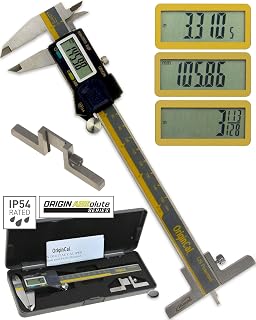


Choose Calipers for Accurate Everyday Measurement
When a ruler or measuring tape is not precise enough, calipers provide a practical way to measure small dimensions with greater control. A caliper can be used to check the thickness of an object, the diameter of a shaft, the internal size of a hole or the depth of a recess. This makes calipers useful across workshops, garages, fabrication areas, laboratories, technical education and home projects.
Different calipers are designed for different measurement preferences. Digital calipers are popular when measurements need to be easy to read, while vernier calipers offer a traditional mechanical approach. Dial calipers display measurements through a graduated dial and can be convenient when taking repeated measurements. The best choice depends on the level of precision required, the working environment and how you prefer to read and record dimensions.
Types of Calipers to Consider
Digital Calipers
Digital calipers display measurements on an electronic screen, making them convenient for users who want quick readings. Many designs can support multiple measurement modes, such as millimetres and inches, which can be helpful when working with specifications from different sources. Their straightforward display also makes them suitable for general workshop and DIY measurement tasks.
Vernier Calipers
Vernier calipers use graduated scales rather than an electronic display. They are a familiar choice for technical training, engineering and users who prefer a mechanical measuring instrument. Reading the vernier scale takes practice, but it provides a dependable method of measuring dimensions without relying on batteries.
Dial Calipers
Dial calipers use a mechanical dial to indicate the measured dimension. The analogue display can be useful for quickly monitoring changes during repeated measurements. They are commonly associated with workshop and mechanical applications where a robust, familiar measuring format is preferred.
What Can You Measure with Calipers?
A versatile caliper can perform several types of measurements. The outside jaws are used for external dimensions such as material thickness, object width and shaft diameter. The inside jaws can measure internal dimensions, including the diameter of holes or openings. A depth rod or blade can be used to check recesses, slots and other depth measurements. Some calipers also allow step measurements between surfaces. This versatility is one reason calipers remain useful in both professional and home workshops.
Features to Compare Before Buying
Consider measurement range, readability, construction and measurement resolution before choosing a caliper. The required range should comfortably cover the objects you expect to measure. For digital models, check the display format and measurement units. Users who work between metric and imperial specifications may appreciate a model that makes unit changes convenient. Construction is also important if the instrument will be used regularly in a busy workshop.
Think about the surfaces and materials you will measure as well. Smooth, clean contact surfaces can help provide more consistent readings. A locking mechanism may be useful when a dimension needs to be held for reference. For portable use, consider the size, storage case and overall handling of the instrument. If measurements are part of a repeatable production or inspection process, choose features that support the way you normally record and compare dimensions.
Calipers for Canadian Workshops and DIY Projects
Canadian shoppers may encounter both metric and imperial measurements depending on the project, product specifications or equipment being serviced. A caliper that accommodates the units you regularly use can simplify measurement work. For home repairs, woodworking, hobby projects and general maintenance, a versatile caliper can help check dimensions that are difficult to measure accurately with conventional tools.
For technical, engineering or fabrication work, consider the required level of precision and repeatability before purchasing. A professional environment may place greater emphasis on measurement range, resolution, durability and ease of verification. For occasional household or hobby use, a simpler model may provide the functionality needed without unnecessary features.
How to Use Calipers Effectively
Before taking a measurement, make sure the measuring surfaces are clean and free from debris. Close the jaws gently when checking the starting position, then place the object between the appropriate measuring surfaces without applying excessive force. Keep the caliper aligned with the dimension being measured and avoid tilting it, as poor alignment can affect the reading. For repeated measurements, use a consistent technique and compare results rather than relying on a single reading.
Proper care can also help maintain reliable performance. Store the caliper in a suitable protective case when it is not being used, especially if it is a precision instrument. Keep measuring surfaces clean and avoid dropping or forcing the jaws. For applications where measurement accuracy is critical, periodic inspection or calibration according to the instrument and workplace requirements can help maintain confidence in readings.
Find the Right Calipers for Your Application
Choosing the right caliper starts with understanding what you need to measure and how often you will use the instrument. Compare caliper type, measurement range, display or scale, units, construction and practical features before making a selection. Whether you need a digital caliper for convenient readings, a vernier model for traditional precision measurement or a dial caliper for mechanical workshop work, selecting an appropriate design can make detailed measurement tasks more efficient.
Introduction
Calipers are precision measuring instruments designed to determine dimensions such as outside diameter, inside diameter, depth and step measurements. Whether you are working in a workshop, handling engineering projects, checking manufactured components or completing detailed DIY tasks, the right caliper can make measurements faster and more consistent. Explore calipers with different designs, measurement methods and features to find an option suited to your application in Canada.
Frequently Asked Questions
What are calipers used for?
Calipers are used to measure dimensions such as outside diameter, inside diameter, thickness, depth and step distances. They are useful for workshop, engineering, fabrication, maintenance, education and DIY applications.
What is the difference between digital and vernier calipers?
Digital calipers show measurements on an electronic display, while vernier calipers use graduated mechanical scales. Digital models can be convenient for quick readings, whereas vernier models do not require batteries.
Can calipers measure both inside and outside dimensions?
Yes. The outside jaws can measure external dimensions such as thickness and diameter, while the inside jaws can measure internal openings such as holes and recesses.
Can calipers measure depth?
Many calipers include a depth rod or blade that can be used to measure the depth of holes, slots, recesses and other features.
Should I choose metric or imperial calipers in Canada?
The appropriate choice depends on the specifications used for your projects. If you regularly work with both measurement systems, a caliper that supports convenient switching between metric and imperial readings can be practical.
How can I get more consistent caliper measurements?
Keep the measuring surfaces clean, align the caliper correctly with the object, apply gentle and consistent pressure, and use the same technique for repeated measurements.
How should calipers be stored?
Keep calipers clean and protected from impacts, moisture and unnecessary wear. A protective case can help prevent damage when the instrument is transported or stored between uses.
Frequently Asked Questions (FAQ)
❓ How are these Calipers for Precision Measurement options ranked?
Our custom data engine continuously scans product entries to verify high-performing items that carry a consistent rating above 4.2 stars, filtering out unreliable listings or items with artificial review jumps.
❓ Does clicking outbound links increase my checkout price?
Absolutely not. All generated product buttons use standard, secure commercial tracking tags. The item cost values reflect the official live marketplace catalog pricing identically.
❓ How often are the pricing deals updated on this page?
Our data tables utilize automated cache transients refreshed continuously throughout the week to fetch the freshest inventory nodes, live pricing metrics, and tracking structures.
❓ Are these products backed by standard consumer warranties?
Yes. Because our directory routes you directly to the verified official listing pages on Amazon, your purchases qualify for complete merchant protections, returns, and original brand manufacturing warranties.