
Best Calculators for School, Work and Everyday Use Products online Canada
Explore our real-time updated product directory index curated for performance, verified star metrics, and historical consumer trust rankings.
Verified Deal Selections
3 Items Indexed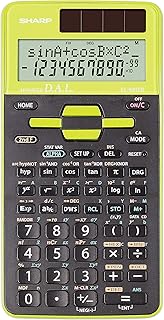

Find the Right Calculator for Your Needs
Calculators remain useful tools for students, professionals, businesses and households across Canada. While a basic calculator can handle everyday arithmetic, different tasks may require scientific, financial, graphing or other specialised functions. Choosing the right type starts with understanding what you need to calculate, where you will use it and which functions matter most.
For general household and office use, a basic calculator can be a convenient choice for addition, subtraction, multiplication, division, percentages and other routine calculations. These models are useful for checking totals, preparing simple budgets, working with invoices or handling quick calculations at a desk. If the calculator will be used frequently, a clear display and comfortable keys can make repeated data entry easier.
Calculators for Students and Education
Students may need more advanced functionality as they move from basic arithmetic into mathematics, science, engineering and other technical subjects. Scientific calculators can support functions such as trigonometry, logarithms, powers, roots and fractions, making them suitable for a wider range of mathematical problems. Before buying one for school, check course or examination requirements because permitted calculator functions can vary by institution, grade level and assessment.
Graphing calculators provide another level of functionality for subjects that involve equations, functions and visual representations of mathematical concepts. They can be particularly useful for advanced secondary-school and post-secondary studies when graphing and data analysis are part of the coursework. A model with an intuitive interface can also reduce the learning curve for students who are new to more sophisticated calculator functions.
Office, Business and Financial Calculators
Calculators designed for office and business environments can make routine numerical work more convenient. A large, easy-to-read display is useful when checking figures, while dedicated percentage or memory keys can speed up common operations. Some users may also prefer desktop-style models with larger key layouts for frequent use at a workstation.
Financial calculators are intended for calculations involving concepts such as interest, loans, cash flows and investments. They can be useful for students studying finance as well as professionals who regularly work with financial formulas. If you are selecting a financial calculator, focus on the functions required for your particular work rather than choosing a model based only on the number of available buttons.
What to Consider When Choosing a Calculator
Functions and Intended Use
Start by matching calculator functionality to your typical tasks. A basic model is often sufficient for everyday arithmetic, while scientific, graphing and financial calculators provide additional capabilities for specialised work. Avoid paying for functions you are unlikely to use, but leave enough room for your future requirements if your studies or work are likely to become more advanced.
Display and Key Layout
Display readability can have a major impact on usability. Consider the size of the screen, number of lines displayed and visibility of characters. Key spacing and button response also matter when entering longer calculations. For office or classroom use, a layout that lets you quickly locate frequently used functions can make the calculator more comfortable during extended sessions.
Power and Portability
Think about where the calculator will be used. A compact model can be convenient for students who carry supplies between home, school and other locations. Desktop calculators can be more comfortable for a permanent workspace. Depending on the model, power may come from batteries, solar cells or a combination of power sources, so consider convenience and expected usage when comparing options.
Calculators for Canadian Shoppers
Canadian shoppers may use calculators for education, household budgeting, workplace tasks, retail calculations and specialised professional applications. When comparing products, pay attention to the calculator's intended purpose and the functions you actually need. For school-related purchases, it is especially important to confirm requirements before ordering, as a calculator that offers extensive features may not be permitted for every test or examination.
It is also useful to consider the environment in which the calculator will be used. A student may prioritise portability and a protective case, while an office user may value a large display and full-size keys. Someone working with financial formulas may need specialised functions instead. By defining the use case first, you can narrow the selection without relying solely on brand names or unnecessary features.
Shop Calculators by Use Case
Explore calculators according to the type of work you need to complete. Basic calculators can cover everyday arithmetic, scientific calculators can support advanced mathematics, graphing models can help with functions and visualisation, and financial calculators can assist with specialised financial problems. Comparing calculator types this way makes it easier to identify features that genuinely support your school, work or personal requirements.
Whether you are replacing an old calculator, preparing for a new school year or adding a dependable calculation tool to your workspace, consider functionality, readability, key design, portability and power requirements before choosing. The right calculator is the one that matches your calculations and fits naturally into the way you work.
Introduction
Find practical calculators for school, work, business and everyday tasks. Whether you need a straightforward basic calculator, a scientific model for advanced coursework, or a specialised option for financial calculations, this category helps you explore different types and features in one place.
Frequently Asked Questions
What type of calculator is best for everyday use?
For everyday arithmetic such as totals, percentages and basic calculations, a basic calculator is generally sufficient. Look for a clear display, comfortable keys and functions that match your routine tasks.
What is the difference between a basic and scientific calculator?
A basic calculator is designed primarily for everyday arithmetic, while a scientific calculator provides additional mathematical functions such as trigonometry, logarithms, powers, roots and fractions.
Are scientific calculators suitable for students in Canada?
Scientific calculators can be useful for mathematics and science students, but permitted features depend on the school, course or examination. Check the applicable requirements before purchasing one for an assessment.
What should I look for in an office calculator?
Consider a readable display, comfortable key layout, responsive buttons and frequently used functions such as percentage and memory operations. A desktop-style design may be useful for regular workstation use.
What are financial calculators used for?
Financial calculators are designed for specialised calculations involving areas such as interest, loans, cash flows and investments. They can be useful for finance students and professionals who regularly use financial formulas.
Should I choose a portable calculator or desktop calculator?
Choose based on where you use it most. Portable calculators are convenient for students and people who carry their calculator between locations, while desktop models can provide larger keys and displays for a permanent workspace.
Do calculators require batteries?
Power options vary by calculator. Some models use batteries, some use solar power, and some combine solar cells with battery backup. Check the specifications of the individual model before purchasing.
Frequently Asked Questions (FAQ)
❓ How are these Calculators for School, Work and Everyday Use options ranked?
Our custom data engine continuously scans product entries to verify high-performing items that carry a consistent rating above 4.2 stars, filtering out unreliable listings or items with artificial review jumps.
❓ Does clicking outbound links increase my checkout price?
Absolutely not. All generated product buttons use standard, secure commercial tracking tags. The item cost values reflect the official live marketplace catalog pricing identically.
❓ How often are the pricing deals updated on this page?
Our data tables utilize automated cache transients refreshed continuously throughout the week to fetch the freshest inventory nodes, live pricing metrics, and tracking structures.
❓ Are these products backed by standard consumer warranties?
Yes. Because our directory routes you directly to the verified official listing pages on Amazon, your purchases qualify for complete merchant protections, returns, and original brand manufacturing warranties.