

♥ Wishlist
Compare 17 Range Hoods for Kitchen Ventilation products in Canada. Reviews, ratings, pros, cons and buying advice updated for October 2026.

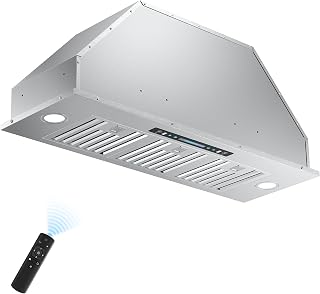


Choosing a range hood is about more than finding an appliance that looks good above the cooktop. The right hood should suit the size of the cooking area, the kitchen layout, the ventilation setup, the type of cooking you do, and the installation requirements of your home. For Canadian shoppers, it is also important to consider ducted versus recirculating installation, cabinet dimensions, noise levels, filter maintenance, and the availability of compatible replacement parts.
This buying guide focuses on smart purchasing decisions rather than simply selecting the most expensive model. A useful comparison should consider ventilation performance, controls, lighting, filtration, construction, installation flexibility, cleaning requirements, and long-term practicality. Product specifications can vary between models and configurations, so always check the manufacturer's current documentation and the exact model number before purchasing.
A smart buy is not necessarily the cheapest range hood or the model with the largest motor. It is the option that provides the features you actually need while fitting your kitchen and ventilation system correctly. A well-matched hood can make cooking more comfortable and help manage smoke, steam, grease, and cooking odours.
When comparing range hoods, consider the complete ownership experience. A model may have strong ventilation but be unsuitable for a kitchen that cannot accommodate external ducting. Another model may have convenient controls and attractive lighting but require more frequent filter cleaning. The best choice depends on the balance between performance, installation requirements, design, maintenance, and budget.
One of the most important decisions is how the hood handles extracted air. Ducted systems move cooking air through ductwork and discharge it outside the building. Recirculating systems draw air through filters and return the filtered air to the kitchen.
A ducted hood can be an excellent choice when the kitchen already has suitable ventilation ductwork or when an appropriate installation can be completed. Because cooking air is exhausted outside, ducted systems can be particularly useful for managing smoke, moisture, and strong cooking odours.
However, installation is more involved. The duct route, diameter, exterior termination, bends, and building configuration can all influence the final result. A high-capacity hood does not automatically perform at its rated potential if the duct system is poorly matched or restrictive.
Recirculating models can be useful where external ducting is impractical. Instead of exhausting air outdoors, they pass air through grease filtration and, where supported, an additional odour-control filter before returning it to the room.
This configuration can simplify installation, but shoppers should understand its limitations. Filtration is not equivalent to physically exhausting air outside. Filter condition also matters, so maintenance becomes an important part of performance.
Airflow is one of the most frequently discussed specifications when comparing range hoods. Canadian shoppers may encounter airflow figures expressed in cubic feet per minute, commonly abbreviated as CFM. The number can help compare models, but it should not be considered in isolation.
Higher airflow can be useful for demanding cooking, but the appropriate capacity depends on the cooking surface, kitchen layout, installation method, and duct configuration. Excessively prioritising maximum airflow can lead shoppers to overlook noise, energy use, installation complexity, and everyday usability.
Your cooking habits should influence the ventilation level you need. Someone who mostly prepares low-smoke meals may have different requirements from a household that regularly uses high-heat cooking, frying, grilling, wok cooking, or other methods that generate substantial heat, grease, steam, or odours.
Correct sizing is fundamental. A hood should provide appropriate coverage for the cooking area rather than being selected purely according to appearance or available cabinet space.
Before purchasing, measure the cooktop or range and the space where the hood will be installed. Width, depth, height, and mounting position all need to be considered. A hood that is too small may provide less effective capture across the cooking surface, while an oversized model may create unnecessary installation complications.
Do not assume that two range hoods with the same advertised width will fit identically. Their canopy shape, mounting hardware, duct connection, depth, and clearance requirements can differ considerably.
Range hoods are available in several configurations. The best style depends on the kitchen design and the location of the cooking surface.
Under-cabinet hoods are designed to sit beneath a kitchen cabinet. They can be practical where cabinet space is already built around the cooking area. Their relatively compact format makes them a common choice for kitchens where space efficiency is important.
Wall-mount hoods are installed against the wall above a cooking surface and can become a prominent visual element in the kitchen. They are available in a wide variety of shapes and finishes, from conventional chimney designs to more streamlined contemporary models.
Island hoods are intended for cooking surfaces positioned away from a wall. Because the hood is exposed on multiple sides, appearance and installation planning are particularly important. Duct routing can also require more careful consideration.
Insert-style ventilation systems can be integrated into custom cabinetry or a purpose-built hood enclosure. They can provide a more concealed appearance, but compatibility between the insert and the enclosure must be confirmed before purchasing.
Downdraft systems use a different approach by drawing cooking vapours downward or near the cooking surface. They may be considered for particular kitchen designs where an overhead hood is undesirable or impractical. Installation requirements can be substantially different from conventional overhead ventilation.
Construction materials affect appearance, cleaning, durability, and the overall feel of the appliance. Stainless steel remains a popular choice because it works with many kitchen designs and is generally straightforward to maintain when cleaned according to the manufacturer's instructions.
Glass elements can provide a contemporary appearance, while painted or coated finishes can coordinate with other appliances. The important consideration is not simply the finish but how easily the accessible surfaces can be cleaned after repeated exposure to cooking grease and vapour.
Grease filtration is central to everyday range hood maintenance. Filters capture grease particles before they reach the internal components and ducting. A filter that is easy to remove and clean can make routine maintenance significantly less frustrating.
Common filter materials include aluminium and stainless steel, although exact designs vary. Some filters are designed to be washed, while others may have specific cleaning instructions. Always follow the manufacturer's recommendations rather than assuming a filter is dishwasher-safe.
Neglecting filters can reduce effective airflow and allow grease to accumulate inside the ventilation system. Regular cleaning should therefore be treated as part of normal ownership rather than an optional task.
A range hood can be powerful yet uncomfortable to use if its operating noise is excessive for your kitchen. This consideration becomes particularly relevant in open-concept homes where the kitchen shares space with a dining or living area.
Manufacturers may provide noise information using different measurements or operating conditions, so direct comparisons should be made carefully. A single maximum noise figure does not always describe how the hood sounds at the lower and medium settings most commonly used during cooking.
When comparing models, consider whether you are likely to operate the hood at maximum speed frequently. If the answer is yes, noise should carry more weight in your purchasing decision.
Integrated lighting can improve visibility across the cooking surface and reduce the need for separate task lighting. LED lighting is common on modern range hoods because of its compact format and low-maintenance design.
Compare the number and position of lights, their controls, and how evenly they illuminate the cooking area. A bright light positioned poorly may be less useful than a moderately bright system that covers the entire surface effectively.
Modern range hoods may use push buttons, electronic controls, touch-sensitive panels, remote controls, timers, or other convenience features. Some models may include smart-home connectivity or automatic ventilation functions, depending on the manufacturer and model.
Smart features should be evaluated according to whether they solve a genuine everyday problem. A connected appliance can be attractive, but basic controls, reliable ventilation, easy cleaning, and straightforward installation remain more important for many kitchens.
No. A smart range hood can provide useful connected functions, but it does not require every other kitchen appliance to be smart. Depending on the model, smart features may include remote control, status monitoring, integration with compatible appliances, or automated functions.
However, connected features can introduce additional setup requirements. Before choosing a connected hood, check the supported network requirements, compatible devices, mobile operating systems, account requirements, and privacy information provided by the manufacturer.
Brand reputation can be a useful starting point, but it should not replace model-level research. Different product ranges from the same manufacturer can have very different specifications and installation requirements.
Depending on the configuration you need, shoppers may encounter brands such as Broan-NuTone, Zephyr, Bosch, KitchenAid, Whirlpool, GE, Samsung, Frigidaire, Hauslane, Cosmo, and Ancona when researching range hoods. These names should be treated as comparison starting points rather than automatic recommendations.
Always compare the exact model number, dimensions, ventilation configuration, controls, filter design, installation instructions, and applicable manufacturer information before making a final decision.
A sleek stainless-steel hood can look excellent in a showroom or product photograph, but appearance does not tell you whether it matches your ventilation requirements. Performance specifications and installation compatibility should come first.
Buying a high-capacity ducted hood without examining the existing duct route can create installation problems. The hood and duct system need to work together.
Maximum airflow is only one specification. Noise, duct restrictions, cooking habits, installation requirements, and overall usability should also influence the decision.
A filter that is difficult to remove or difficult to identify as a replacement component can make long-term maintenance less convenient. Check maintenance instructions before purchasing.
Never rely on a product's advertised width alone. Review the complete dimensional drawing and installation requirements.
Electrical specifications and installation requirements vary between models. Confirm the requirements before purchase and use a qualified professional when electrical work is required.
When two models appear similar, use a consistent comparison process. Start with the fundamentals and then move to convenience features.
Product specifications can seem technical, but several fields deserve particular attention. Width and depth determine physical compatibility. Airflow provides a reference point for ventilation capacity. Noise information helps estimate operating comfort. Filter type indicates maintenance requirements. Duct size and configuration help determine installation compatibility.
Also examine the product's installation guide rather than relying exclusively on a retailer's summary. Retailer listings can simplify specifications, while the manufacturer's documentation normally provides more detailed information about installation, clearances, electrical requirements, and compatible configurations.
Installation conditions can vary considerably between homes, apartments, condominiums, and renovated kitchens. A range hood should be selected with the actual installation environment in mind.
Before purchasing, determine whether the kitchen has an existing external ventilation duct, whether the duct route is suitable, and whether building or property rules impose additional requirements. In shared buildings, modifications to exterior walls or common structures may require approval.
Installation height is another critical factor. The correct distance between the cooking surface and hood can vary by product and cooking appliance. Follow the exact manufacturer's instructions for the selected model rather than applying a generic measurement.
Regular maintenance helps keep a ventilation system functioning as intended. Maintenance frequency depends on cooking habits, but frequent cooking involving grease generally requires more attention than occasional light cooking.
Clean removable grease filters according to the manufacturer's instructions. Allowing grease to build up can make cleaning more difficult and may affect ventilation performance.
Use cleaning products and techniques appropriate for the hood's finish. Stainless steel may require a suitable stainless-steel cleaner or a manufacturer-approved method. Avoid abrasive techniques that could damage the surface.
For ducted installations, periodic inspection can help identify excessive grease accumulation, damaged components, or other problems. The appropriate inspection and cleaning schedule depends on the installation and usage.
Recirculating systems may use additional odour-control filters that require replacement rather than washing. Check the exact model's instructions for replacement intervals and compatible components.
Prioritise compact dimensions, suitable ventilation, accessible controls, and straightforward installation. An oversized hood may not provide practical benefits if the kitchen cannot accommodate it properly.
Noise becomes especially important in an open-plan environment. Consider the sound produced at the fan speeds you are likely to use most often, not just the maximum setting.
Focus on ventilation capacity, effective grease filtration, durable construction, accessible filters, and practical cleaning. If you regularly use high heat, make sure the hood is properly matched to the cooking appliance and installation configuration.
Design-focused shoppers can consider wall-mount, island, integrated, or streamlined under-cabinet designs. However, visual coordination should remain secondary to proper sizing and ventilation performance.
During a kitchen renovation, plan ventilation before cabinets and finishes are finalised. This can make it easier to accommodate ductwork, electrical requirements, mounting points, and the desired hood configuration.
Customer reviews can provide useful information about everyday ownership, but they should be interpreted carefully. Look for patterns rather than relying on one unusually positive or negative comment.
Reviews are particularly useful for identifying recurring observations about installation difficulty, control usability, noise perception, filter cleaning, packaging damage, fit, or long-term convenience. Always distinguish between comments about the exact model and comments referring to a different size or configuration.
Verified customer feedback can complement technical specifications, but it should not replace manufacturer documentation. A review describes an individual experience, while the specification sheet describes the product's stated design and requirements.
A low advertised price does not always represent the lowest overall cost. Compare the complete purchase and installation picture before deciding that one model is a better deal.
Prices, promotions, stock status, and retailer policies can change. For that reason, shoppers should verify current information at the time of purchase rather than relying on an old deal description.
A higher-priced hood can make sense when it provides features that genuinely match your needs. Premium pricing may be associated with particular construction materials, advanced controls, specialised ventilation designs, quieter operation, integrated features, or distinctive styling.
However, premium does not automatically mean better for every kitchen. If your cooking habits are light and your installation requirements are simple, a well-specified mid-range model may be more practical. The goal should be to pay for useful performance and features rather than unnecessary specifications.
A budget-friendly hood can be a sensible option when the primary requirements are straightforward ventilation, suitable dimensions, basic lighting, and easy controls. Not every kitchen requires extensive smart connectivity or premium design features.
The important distinction is between low price and poor suitability. A less expensive model that fits correctly and satisfies your ventilation needs may be a better purchase than an expensive model that creates installation or maintenance problems.
Use this checklist before choosing from a list of range hood deals:
There is no single best type for every Canadian kitchen. The right choice depends on the cooking surface, available space, ducting, kitchen layout, cooking habits, and installation requirements. Ducted models can be attractive when suitable external ventilation is available, while recirculating models may be practical where ducting is not feasible.
Start by measuring the cooking surface and available installation area. Then compare the manufacturer's recommended hood dimensions and mounting requirements. Do not select a model based solely on cabinet width or appearance.
No. Higher airflow is not automatically the best choice. Ventilation capacity should be considered alongside duct configuration, noise, cooking habits, installation requirements, and the manufacturer's specifications.
They serve different installation situations. A ducted hood exhausts air outside, while a recirculating hood filters and returns air to the kitchen. A ducted system can be preferable when appropriate external ventilation is available, but a recirculating configuration can be useful when ducting cannot reasonably be installed.
The appropriate schedule depends on the manufacturer's instructions and how frequently and heavily you cook. Frequent grease-producing cooking generally requires more regular filter cleaning.
They can be straightforward to maintain when cleaned using suitable methods. Cleaning products and techniques should be matched to the manufacturer's instructions and the specific finish.
They can be worthwhile if connected controls, automation, monitoring, or compatibility with other devices provide meaningful convenience. If those features are unlikely to be used, prioritising ventilation, installation compatibility, noise, filtration, and cleaning may offer better value.
Check the exact model number, dimensions, airflow specifications, installation type, duct requirements, electrical requirements, filter design, noise information, warranty documentation, and current customer feedback. Also confirm that the configuration is appropriate for your kitchen.
Compare models using the same criteria instead of focusing only on price. Consider ventilation capacity, dimensions, installation requirements, noise, filters, lighting, controls, construction, maintenance, and the total installation requirements.
Installation requirements vary by model and home. Some installations may be straightforward, while ducted or electrically complex installations can require professional assistance. Always follow the manufacturer's installation instructions and applicable local requirements.
The smartest range hood purchase is the one that fits your kitchen, cooking habits, ventilation configuration, and maintenance expectations. Start with measurements and installation constraints before comparing design or connected features. Then evaluate airflow, noise, filtration, lighting, controls, construction, and long-term maintenance.
For Canadian shoppers comparing range hood deals in 2026, it is also important to verify current specifications and retailer information because prices, promotions, product configurations, and availability can change. Compare the exact model rather than relying on a brand name or product category alone.
Whether you are replacing an older hood, renovating a kitchen, or choosing ventilation for a new cooking area, a careful specification-based comparison can help narrow the choices. Focus on the features that solve your actual cooking and installation requirements, read current customer feedback for the exact product, and confirm the manufacturer's documentation before making the final purchase decision.