

♥ Wishlist
Compare 11 Cordless Heat Guns for Portable Heating and DIY Projects products in Canada. Reviews, ratings, pros, cons and buying advice updated for October 2026.




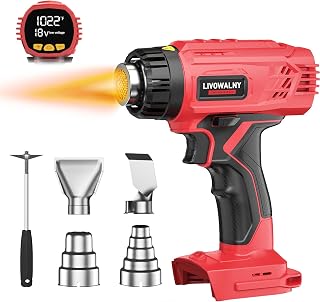


A cordless heat gun can be a particularly useful tool when you need concentrated heat without being tied to a wall outlet. For Canadian buyers, however, the right model is not simply the one with the highest advertised temperature. Battery platform, heat-up time, airflow, runtime, temperature control, included nozzles, ergonomics and the availability of compatible batteries can have a much greater effect on day-to-day usefulness.
This buying guide is designed for shoppers comparing cordless heat guns in Canada. The goal is to help you understand the specifications that matter, identify meaningful differences between models and avoid paying for features that do not match the jobs you actually intend to perform.
A cordless heat gun is a portable electric heating tool that uses a rechargeable battery rather than a mains power cord. A heating element raises the temperature of the air, while an internal fan pushes that heated air through a nozzle. Depending on the design, the tool may offer one or more temperature or airflow settings.
Compared with a corded heat gun, a battery-powered model provides greater freedom of movement. That can be valuable when working outdoors, inside vehicles, around construction sites, in workshops or anywhere a suitable electrical outlet is inconvenient.
The trade-off is that cordless operation depends on battery capacity and platform compatibility. A compact cordless heat gun may also have different heating performance from a high-powered corded model. Buyers should therefore compare the complete specification rather than assuming that cordless automatically means equivalent power.
Heat guns are versatile tools, but their suitability depends on the material, temperature and technique being used. Typical applications include:
Always check the manufacturer's instructions for the intended material and application. Heat can damage plastics, electronics, coatings, adhesives and finished surfaces, and some materials can release hazardous fumes when overheated.
Portability is the main advantage. A cordless heat gun can be carried directly to the workpiece without arranging an extension cord. This can make short jobs faster and reduce cable clutter.
Battery-powered tools can also make sense for shoppers who already own tools from a compatible battery family. A buyer who already has several batteries and a charger from a platform such as Makita, DeWalt, Milwaukee, Bosch or Ryobi may find a compatible bare-tool heat gun more practical than purchasing an entirely separate battery ecosystem.
For occasional users, the calculation is different. A kit containing a battery and charger may cost more initially, while a bare tool can be less useful if the buyer has no compatible batteries. Always compare the complete ownership cost rather than the tool-only price.
Battery compatibility should be near the top of your comparison list. Cordless heat guns can consume substantial energy because generating high temperatures requires electrical power, so the battery system can have a noticeable effect on usable runtime.
If you already have cordless tools, staying within the same battery family may simplify ownership. The advantages can include using existing batteries and chargers, reducing duplicate equipment and making it easier to rotate batteries between tools.
Do not assume that batteries from different generations or product families are interchangeable simply because they have the same brand name. Confirm compatibility with the specific tool model before purchasing.
A bare tool normally includes the heat gun but excludes the battery and charger. It can be a sensible option for existing users of a compatible platform.
A kit generally includes the components needed to begin using the tool, although the exact contents vary. When comparing two listings, check whether each includes a battery, charger, carrying case, nozzles and other accessories before comparing prices.
Battery capacity is commonly expressed in ampere-hours, or Ah. A higher Ah rating generally represents greater stored energy within the same battery voltage family, although actual runtime depends on the tool's power demand, operating mode, temperature and battery condition.
Do not treat an advertised Ah figure as a guaranteed number of minutes of operation. Heat guns can draw significant power, and high-temperature operation may reduce practical runtime compared with lighter-duty cordless tools.
Temperature control is more important than simply looking for the highest possible temperature. Different materials and applications require different levels of heat, and excessive temperature can damage the workpiece.
A model with multiple temperature settings can be easier to use for mixed applications because it provides greater control. Some heat guns use fixed settings, while others provide variable control. The most useful arrangement depends on whether you mainly perform simple household tasks or need finer control for workshop projects.
A very high maximum temperature may sound impressive, but it does not necessarily make a heat gun better for every job. Controlled lower-temperature operation can be more valuable when working near plastics, wiring, painted surfaces or sensitive components.
When comparing specifications, consider minimum temperature, maximum temperature, the number of settings and how easily the controls can be adjusted while working.
Temperature and airflow work together. The heating element determines how hot the air can become, while airflow affects how quickly heated air reaches the work surface and how broadly heat is distributed.
A higher airflow setting can be useful for jobs where you need to warm a larger area. A lower airflow setting may provide more controlled heating for smaller workpieces. If specifications list airflow in litres per minute or another unit, compare models using the same measurement conditions and operating mode.
Heat-up time is particularly relevant for cordless tools because convenience is one of their main selling points. A tool that reaches its operating temperature quickly can be more convenient for short jobs where repeatedly starting and stopping the tool is common.
Manufacturers may quote heat-up times under specific conditions. Treat these figures as specification information rather than a guarantee of performance for every task. Ambient temperature, battery condition and operating mode can affect actual results.
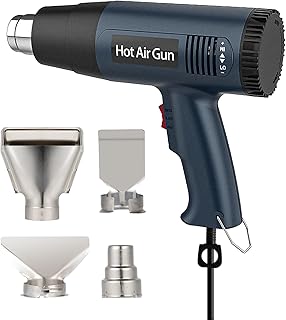
Included accessories can significantly change how useful a heat gun is. A basic nozzle produces a general stream of heated air, while specialised nozzles can change the shape and concentration of the airflow.
Check exactly which accessories are included rather than assuming that a product image represents the standard package. Some accessories may be sold separately.
A heat gun may look simple, but ergonomics can become important during extended use. Battery placement, grip shape, tool balance, trigger design and overall weight can affect comfort.
A heavier battery mounted at the rear can change the balance of the tool. This may be comfortable for some users but tiring for others, especially when the heat gun must be held at arm's length or in awkward positions.
Different cordless heat guns can use different control layouts. A trigger can provide intuitive momentary control, while a lock-on or electronic switch arrangement can be more convenient when the tool needs to operate continuously.
The best configuration depends on the application. For short bursts of heat, easy on-off control can be particularly useful. For longer tasks, a stable operating mode may reduce hand fatigue.
Some cordless tools include an LED work light, electronic controls, battery indicators or other convenience features. These should be treated as secondary considerations rather than substitutes for adequate temperature control, battery performance and build quality.
An integrated battery gauge can be useful because heat guns may consume energy relatively quickly under demanding conditions. Knowing the remaining charge can help prevent an unexpected interruption in the middle of a job.
For a workshop tool, durability involves more than the outer housing. Pay attention to the construction of the handle, nozzle area, controls, battery interface and ventilation system.
The nozzle operates at high temperature, so its construction and attachment mechanism deserve particular attention. A secure accessory connection is preferable to a loose or awkward fitting system.
For frequent professional use, consider whether the manufacturer provides replacement accessories and service information for the particular model. For occasional household use, a simpler design may provide sufficient value without the cost or complexity of a professional-grade platform.
When comparing several models side by side, use the same criteria for each product. This prevents attractive packaging or a single impressive specification from dominating the buying decision.
Several established power-tool manufacturers offer cordless platforms that may include heat guns or related heating tools. Brand selection should be based on the specific model and battery ecosystem rather than brand reputation alone.
Makita is widely known for its cordless power-tool ecosystem. Buyers already invested in a compatible Makita battery platform may want to compare its cordless heat-gun options based on temperature control, battery requirements, accessories and ergonomics.
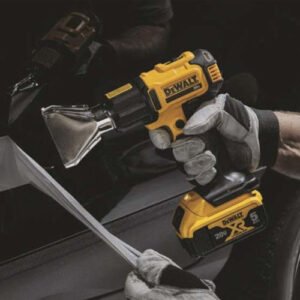
DeWalt has a broad cordless tool range and is another brand worth considering for buyers who already use compatible batteries. Compare the exact heat-gun model, included accessories and battery requirements rather than assuming that every product within the platform has identical capabilities.
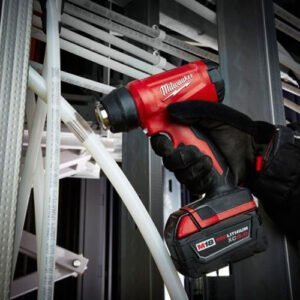
Milwaukee's cordless ecosystem includes a wide range of trade-oriented tools. A Milwaukee-compatible heat gun can be particularly relevant for users who already have the appropriate battery platform and charger. Check model-specific operating specifications before buying.
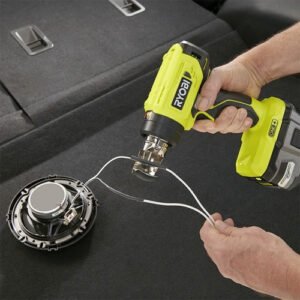
Ryobi is another major cordless platform that can appeal to DIY users because of its broad tool ecosystem. If considering a Ryobi heat gun, compare the complete kit contents, battery requirements and operating controls with competing models.
Bosch offers cordless tools across several product categories and is worth including in a broader comparison. Battery compatibility is especially important because Bosch battery systems and product families are not necessarily interchangeable across every tool.
The best cordless heat gun for a professional tradesperson may not be the best choice for a homeowner. Professional users may place greater emphasis on durability, battery availability, fast operation, ergonomics and compatibility with an existing fleet of tools.
A DIY user may care more about purchase cost, ease of operation, compactness and whether the tool can handle occasional household projects.
Canadian buyers should pay attention to battery storage and operating conditions, particularly when cordless tools are transported or stored in colder environments. Lithium-ion batteries can behave differently at low temperatures, and manufacturers commonly provide operating and charging guidance that should be followed.
A battery that has been stored in a cold vehicle should not automatically be placed on a charger. Follow the battery manufacturer's instructions regarding temperature, charging and storage.
For outdoor work during colder months, keeping batteries within the manufacturer's recommended operating conditions can help avoid unexpected performance limitations.
A heat gun should be treated as a high-temperature power tool. Useful safety-related design features can include thermal protection, controlled electronic operation, stable positioning and a well-insulated grip. The exact features vary by model.
Safety features should never replace safe operating practices. Keep the hot nozzle away from skin, combustible materials and unintended surfaces. Allow the tool to cool according to the manufacturer's instructions before storage.
Before applying heat, identify the material you are working on. Some plastics can soften, deform or release fumes when overheated. Painted surfaces can also behave unpredictably, and old coatings may contain hazardous substances depending on the age and history of the material.
Maximum temperature is only one specification. A model with better control may be more useful than one with a higher maximum rating but fewer operating options.
A low bare-tool price can become less attractive when a compatible battery and charger must be purchased separately. Compare the complete setup you actually need.
Battery compatibility should be confirmed for the exact tool and battery models. Similar-looking battery packs do not necessarily indicate electrical or mechanical compatibility.
If a specific nozzle is important to your application, confirm that it is included or officially compatible. Product photographs may show accessories that are not part of every package.
Battery-powered tools can become noticeably heavier when a large battery is installed. Compare the working weight rather than considering the bare tool alone.
The least expensive model may not provide the temperature control, battery compatibility or accessories you need. Conversely, the most expensive model may offer features that provide little value for occasional use.
Look for controllable heat, suitable airflow and a nozzle configuration that concentrates or distributes heat appropriately. A reflector-style accessory may be useful for certain cylindrical applications when the manufacturer recommends it.
Precise temperature control is often more important than maximum heat. The objective is to soften the adhesive without unnecessarily damaging the underlying surface.
Temperature consistency and controllability are particularly important. Different plastics respond differently to heat, so identify the material and follow appropriate handling guidance before applying a heat gun.
Portability can be valuable around vehicles, but caution is essential around fuel, solvents, wiring, painted surfaces and other heat-sensitive components. Select the temperature and nozzle configuration appropriate to the specific application.
A compact tool with straightforward controls may be preferable to a larger professional model. Accessory compatibility can be more important than raw output for detailed work.
The decision between cordless and corded operation depends primarily on portability, runtime and available power.
If you already own a compatible cordless battery system, the cordless option may become more compelling. If you frequently perform long-duration heating tasks at a fixed workbench, a corded model may be more practical.
When browsing Canadian retailers or marketplace listings, read beyond the headline and product photography. Product titles can emphasise a single specification while leaving out important kit details.
A useful comparison starts by translating specifications into practical consequences.
A smart buy is not necessarily the cheapest cordless heat gun or the model with the longest specification sheet. It is the model whose capabilities match your actual workload without unnecessary expenditure.
For an existing cordless-tool user, battery compatibility can be one of the strongest reasons to choose a particular model. For a first-time buyer, a complete kit may provide better practical value if purchasing a battery and charger separately would substantially increase the total cost.
For frequent use, controllability, ergonomics, durability and accessory support may matter more than a small difference in headline temperature. For occasional jobs, simplicity and reasonable total ownership cost can take priority.
Good results depend on controlled application rather than simply holding the tool close to the workpiece at maximum temperature. Start with a suitable lower setting when the material allows it and increase heat gradually if necessary.
Keep the nozzle moving when the application calls for even heating. Concentrating high heat on one location for too long can damage or deform the workpiece.
Use the appropriate nozzle for the task and maintain a sensible working distance according to the manufacturer's guidance. The correct distance varies with the tool, temperature, airflow and material.
Basic maintenance can help preserve the tool and battery system. Keep ventilation openings free of dust and debris, inspect the power tool for visible damage and check that accessories remain secure.
Do not operate a damaged tool simply because it still switches on. Unusual smells, abnormal noise, damaged housings, compromised battery interfaces or other signs of malfunction should be addressed according to the manufacturer's service guidance.
Store batteries and the heat gun under the conditions specified by their manufacturers. Keep the tool clean, dry and protected from unnecessary impacts. The hot nozzle should always be allowed to cool before storage.
Customer reviews can provide useful information, but they should be interpreted alongside official specifications. Look for recurring observations rather than relying on a single enthusiastic or negative review.
For purchasing decisions, verified customer feedback is most useful when combined with the exact model number and current product specification.
For shoppers comparing cordless heat guns in Canada during 2026, start by identifying the jobs you need the tool to perform. Then narrow the selection according to battery platform, temperature control, airflow, accessories and ergonomics.
Once you have a shortlist, compare the complete kit contents rather than only the advertised tool price. Check whether the battery and charger are included, whether the required nozzles are supplied and whether the product belongs to a battery system you already own.
Finally, verify the current specifications and retailer information before purchasing. Product prices, bundles, inventory and promotional offers can change, so a deal that looks attractive at one point may not represent the same value later.
The best option depends on your intended applications, existing battery platform, desired temperature control, runtime requirements and budget. A homeowner doing occasional adhesive-removal work may need a different tool from a tradesperson using a heat gun regularly.
Many cordless heat guns are designed for common DIY and workshop applications, but performance varies by model. Compare the manufacturer's temperature, airflow, battery and application specifications rather than assuming every cordless model has the same output.
No. Voltage is only one part of the tool's electrical and thermal design. Temperature control, airflow, battery capacity, heating-element design and intended application all affect practical usefulness.
If you already own compatible batteries, a bare tool may be sufficient. If you do not own the required battery system, compare the cost of a complete kit with the combined cost of the bare tool, battery and charger.
There is no universal runtime. Battery capacity, temperature setting, airflow, ambient conditions, battery condition and tool design all affect operating time. Manufacturer specifications should be used for model-specific expectations.
A heat gun can be suitable for certain heat-shrink applications when the tool and material are appropriate. Use the correct temperature, airflow and nozzle arrangement and follow the instructions for the heat-shrink product.
Yes. Excessive heat can soften, warp, discolor or otherwise damage plastics. Different plastics have different thermal properties, so use controlled heat and follow material-specific guidance.
They can be used indoors for suitable applications when operated according to the manufacturer's safety instructions, but ventilation, combustible materials and fumes must be considered. Never assume that an indoor application is safe simply because the tool is cordless.
There is no single temperature suitable for every job. Select the lowest effective temperature for the material and application, increase gradually when appropriate and follow the manufacturer's guidance.
They can be worthwhile when the additional features solve a real requirement, such as compatibility with an existing professional battery platform, improved control, ergonomics or accessories. For occasional use, a simpler model may provide better value.
Neither specification should be considered in isolation. Temperature determines the thermal intensity while airflow affects how heated air is delivered. The best combination depends on the application.
Some models include multiple nozzles, while others provide fewer accessories or require additional purchases. Always verify the exact contents of the product package you are considering.
Yes. Battery availability is particularly important for cordless tools because the battery is an essential part of the operating system. Consider whether you can easily obtain compatible batteries and whether the platform fits the rest of your cordless tools.
The strongest cordless heat gun choice is the one that balances heat control, airflow, battery compatibility, runtime, accessories, ergonomics and price for your particular jobs. Avoid choosing solely from a maximum-temperature figure or headline discount.
Before buying, compare the exact model specifications, determine whether the listing includes the battery and charger, inspect the accessory package and consider the long-term battery ecosystem. For Canadian shoppers, also verify current retailer pricing and availability because offers and product bundles can change throughout 2026.
Whether your priority is DIY repair, automotive work, heat-shrink tubing, adhesive removal, crafting or regular workshop use, a careful specification-by-specification comparison makes it easier to identify a cordless heat gun that provides useful performance without paying for features you do not need.