
♥ Wishlist
Compare 51 Ryobi Cordless Heat Gun products in Canada. Reviews, ratings, pros, cons and buying advice updated for October 2026.






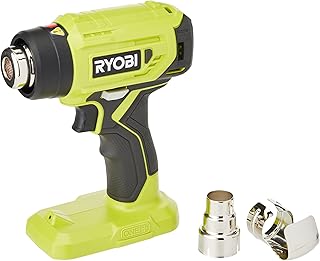










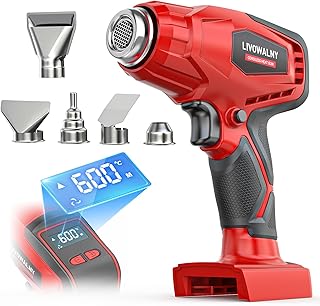


A cordless heat gun can be a useful addition to a workshop when portability matters as much as heating performance. For Canadian buyers considering the RYOBI 18V ONE+ Heat Gun P3150, the most important decision is not simply whether the tool reaches a high temperature. You should also consider battery compatibility, airflow, nozzle design, heat-up time, handling, application requirements, and whether a cordless design genuinely improves your workflow.
The RYOBI P3150 is an 18V ONE+ cordless heat gun designed for spot-heating applications. RYOBI Canada lists a maximum temperature of 875°F and airflow of 6 CFM, while the tool is designed to reach operating temperature in less than 10 seconds. It includes a concentrator nozzle and a deflector nozzle.
These specifications make the P3150 particularly relevant for DIY users, hobbyists, maintenance work, electrical projects, automotive tasks, workshop repairs, and applications where a power cord would make positioning inconvenient. However, a cordless heat gun should be selected according to the job rather than the brand name alone.
The primary advantage of a cordless heat gun is freedom of movement. A conventional corded model requires access to a suitable electrical outlet and leaves a cable running through the work area. A battery-powered model removes that restriction.
This can be useful when working outdoors, inside a vehicle, around a renovation site, in a garage, or in locations where extension cords are inconvenient. It can also make short jobs quicker because there is no need to position an extension lead before starting.
The trade-off is that cordless performance depends on the battery and operating conditions. A buyer who already owns compatible RYOBI batteries may find the tool-only configuration particularly attractive, while someone starting from scratch should calculate the cost of the heat gun, battery and charger together.
Specifications should be checked against the exact Canadian product listing before purchase because product configurations and regional listings can change. The current Canadian RYOBI listing identifies the P3150 as an 18V ONE+ heat gun with 6 CFM airflow and a maximum temperature of 875°F.
The Home Depot Canada listing also identifies the P3150 as a cordless 18V ONE+ tool with 6 CFM airflow and a maximum temperature of 875°F. Its Canadian listing specifies that the battery and charger are sold separately for the tool-only configuration.
A high maximum temperature can expand the range of materials and applications a heat gun can handle, but maximum temperature should not be treated as a universal measure of performance.
Different materials require different amounts of heat. Excessive heat can damage plastic, discolor surfaces, deform components, soften adhesives too aggressively, or create a fire hazard. For many jobs, controlled positioning and the correct nozzle are more important than simply reaching the highest possible temperature.
The P3150's 875°F maximum specification is useful for demanding spot-heating applications, but users should always follow the instructions for the material being heated.
The practical lesson is simple: buy for the temperature range and control your applications, rather than assuming the highest temperature automatically means the best heat gun.
Heat temperature tells you how hot the tool can become, while airflow indicates how much heated air the tool can move. These characteristics work together.
RYOBI specifies 6 CFM airflow for the P3150. A concentrated stream can deliver heat to a smaller area, while a deflector nozzle changes how the heat is distributed around the workpiece.
For buyers comparing cordless heat guns, avoid looking only at the advertised maximum temperature. A useful comparison should include temperature, airflow, nozzle options, heat-up time, battery platform, runtime expectations and physical ergonomics.
Nozzle selection can significantly affect how a heat gun behaves at the work surface. The P3150 includes both a concentrator nozzle and a deflector nozzle.
The concentrator nozzle directs heat toward a more specific area. RYOBI describes it as a way to intensify heat for particular areas.
This design can be useful when you need to focus heating rather than broadly warming a large section of material. It may be particularly helpful for targeted workshop tasks where surrounding surfaces need to receive less direct heat.
The deflector nozzle spreads or redirects heat around a larger section of the workpiece. RYOBI specifically identifies applications such as shrink tubing and pipe thawing for this nozzle.
For buyers who regularly work with heat-shrink tubing, nozzle versatility can be more valuable than having a long list of accessories that are rarely used.
A cordless heat gun is a versatile heating tool, but it should be used only for materials and applications that are appropriate for controlled hot-air heating.
For every application, check the material manufacturer's recommendations and the heat gun's operating instructions. Some materials can release harmful fumes when heated, while others can ignite or become permanently damaged.
Heat guns can reach temperatures high enough to cause burns, ignite combustible materials and damage surfaces. The P3150's maximum temperature is 875°F, so safe handling should be treated as essential rather than optional.
A heat gun should also be kept moving when the application calls for broad heating. Holding concentrated heat against one point for too long can damage the workpiece even when the selected material appears heat resistant.
One of the most important buying questions is whether you already own compatible RYOBI 18V ONE+ batteries.
If you already have ONE+ tools and charged batteries, a tool-only heat gun can be a straightforward addition to the system. If you do not own the battery platform, the total cost of entry includes the battery and charger, not just the advertised tool price.
Before ordering, confirm whether the specific Canadian listing is tool-only or a kit. The Home Depot Canada listing for the P3150 identifies its configuration as tool-only and states that the battery and charger are sold separately.
Battery selection involves a balance between runtime, weight and convenience. Larger-capacity batteries can be useful when performing repeated tasks, while smaller packs may be preferable when portability and reduced weight are more important.
There is no single battery size that is ideal for every user. Consider how long you typically work, whether you already own several ONE+ batteries, and whether the same batteries are needed for other tools during the project.
The phrase “best deal” can be misleading when comparing cordless tools. A lower tool-only price may not represent the lowest overall cost if you still need to purchase a battery and charger.
When comparing offers in Canada, calculate the complete setup cost rather than comparing only the headline price of the bare tool.
If you are comparing the RYOBI P3150 with other cordless heat guns, use a consistent checklist. This prevents attractive marketing claims from overshadowing the specifications that actually matter for your projects.
Heat-up time is particularly important for users who perform many short jobs. Waiting several minutes for a tool to become usable can make small repairs unnecessarily inconvenient.
RYOBI states that the P3150 reaches operational temperature in less than 10 seconds. That specification makes quick-start performance one of the more relevant features to consider when comparing it with slower-heating alternatives.
However, heat-up time should not be confused with total job time. The time required to complete a project also depends on the material, surface area, temperature requirements, nozzle selection and operator technique.
The P3150 includes an integrated LED work light intended to illuminate the workspace.
A work light does not improve the heat output itself, but it can make positioning the tool easier in dim areas. This can be useful when working inside cabinets, around machinery, under vehicles or in other areas where overhead lighting does not directly illuminate the workpiece.
A heat gun is often used while the other hand holds, supports or positions the workpiece. That makes balance and control important.
When comparing models, look beyond weight alone. Consider the position of the handle, trigger or switch, battery placement and the distance between the grip and heated front section. A well-balanced tool can feel easier to control during repetitive tasks even when two models have similar specifications.
The P3150's compact cordless design is intended to make it practical for spot jobs and work in tighter spaces.
A high temperature is useful, but it does not automatically make one heat gun superior to another. Airflow, control, nozzle design and handling can be equally important.
A tool-only listing can look inexpensive until the cost of a compatible battery and charger is added. Always compare complete ownership cost.
A compact cordless heat gun can be excellent for portable spot heating but may not be the right choice for prolonged high-volume heating where a different tool configuration is more appropriate.
Different nozzles distribute heat differently. Using a concentrated attachment for an application that needs broader heating can increase the risk of localized overheating.
Plastic, paint, adhesive, insulation and other materials can respond very differently to heat. Always determine the appropriate temperature and technique before starting.
RYOBI is not the only brand worth considering. Depending on the buyer's existing tool collection, alternatives from brands such as DEWALT, Milwaukee, Makita and Bosch may also be relevant.
The strongest choice often depends on the battery ecosystem already present in the workshop. Someone heavily invested in another manufacturer's cordless platform may save money and reduce battery duplication by purchasing a compatible heat gun from that ecosystem.
Rather than choosing a brand in isolation, compare the complete tool ecosystem, battery availability, accessory options, warranty terms, ergonomics and the specifications required for your actual applications.
The P3150 makes the most sense for buyers who value cordless portability and already use or plan to use the RYOBI 18V ONE+ system. Its listed 875°F maximum temperature, 6 CFM airflow, quick heat-up and two included nozzles provide a useful combination for general spot-heating applications.
It may be less suitable for someone who rarely needs a cordless tool, does not own compatible batteries, or requires highly specialized temperature control beyond the capabilities of this model.
Proper care can help keep a heat gun ready for future jobs. Maintenance begins with allowing the tool to cool completely before storage.
Restricted airflow can interfere with proper operation. If the tool behaves unusually, becomes excessively hot, or does not produce expected heat, stop using it and consult the manufacturer's support documentation rather than attempting an improvised repair.
Canadian shoppers should pay attention to the exact listing rather than assuming that every P3150 offer has identical contents. Confirm the model number, included accessories, battery configuration, warranty information, seller details and applicable return conditions before completing an order.
Retailer listings can also differ in whether they display a tool-only package or a battery-and-charger bundle. The Home Depot Canada listing identifies the P3150 as a tool-only product with the battery and charger sold separately.
When checking a deal, compare the final delivered cost rather than relying only on the displayed product price. For Canadian buyers, also verify whether the listing is intended for the Canadian market and whether the stated warranty and support arrangements apply to the specific purchase.
A smart buying decision requires more than finding the lowest advertised number. A cheaper listing may have fewer accessories, a different package configuration or no battery, while a higher-priced kit may include equipment you would otherwise need to purchase separately.
The RYOBI 18V ONE+ cordless heat gun discussed in this guide is the P3150. RYOBI Canada currently lists it as an 18V ONE+ heat gun.
RYOBI lists a maximum temperature of 875°F for the P3150.
The listed airflow is 6 CFM.
RYOBI states that the tool reaches operational temperature in less than 10 seconds.
Yes. The listed package includes a concentrator nozzle and a deflector nozzle.
The Canadian tool-only listing does not include a battery or charger. The Home Depot Canada listing specifically identifies the battery and charger as sold separately. Always verify the exact package configuration before buying because kit contents can vary by listing.
Yes. The P3150 is part of the RYOBI 18V ONE+ platform. This can be a significant advantage for existing ONE+ users because the battery ecosystem can reduce the need to purchase a separate battery platform for every cordless tool.
Neither design is automatically better. Cordless models provide portability and eliminate the power cord, while corded models can be convenient for prolonged stationary use where mains power is readily available. Choose based on the environment, frequency of use and required runtime.
RYOBI identifies the deflector nozzle as suitable for applications such as pipe thawing. However, thawing should be performed cautiously because excessive localized heat can damage plumbing materials or create unsafe conditions. Follow appropriate manufacturer and plumbing safety guidance.
Check the exact model number, maximum temperature, airflow, battery compatibility, package contents, included nozzles, retailer conditions, warranty information and total cost. If you already own RYOBI ONE+ batteries, also compare the tool-only price against complete kits.
The best smart-buy decision is the one that matches the heat gun to the work rather than simply choosing the product with the most impressive specification. For the RYOBI P3150, the combination of an 18V cordless platform, 875°F maximum temperature, 6 CFM airflow, less-than-10-second heat-up time, LED work light and two nozzle options makes it a practical candidate for many portable DIY and workshop applications.
For Canadian buyers, the strongest reason to choose it may be platform compatibility. If you already own RYOBI 18V ONE+ batteries, the tool-only configuration can make more sense than starting with an entirely new battery ecosystem. If you do not own the platform, compare the total cost of the heat gun, battery and charger against competing cordless options.
Before purchasing, verify the current Canadian listing, package contents, retailer terms, warranty information and customer feedback. Prices, promotions and availability can change, so the most useful comparison is always based on the exact product configuration available when you are ready to buy.