

♥ Wishlist
Compare 52 Bathtubs for Canadian Bathrooms products in Canada. Reviews, ratings, pros, cons and buying advice updated for October 2026.


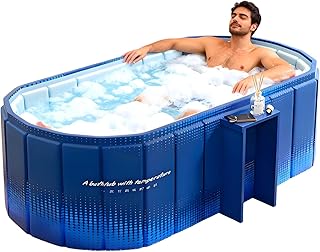


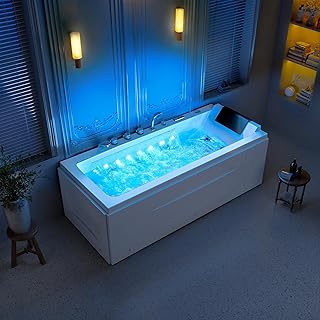


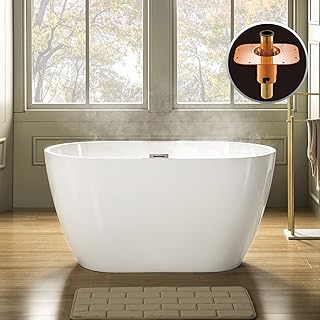


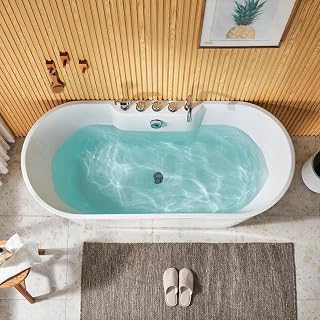


Choosing a bathtub is more involved than comparing appearance and advertised dimensions. A suitable model needs to work with the available bathroom space, plumbing configuration, floor structure, bathing preferences and installation method. Canadian buyers should also consider the room's ventilation, winter climate where relevant, local plumbing requirements and the practical availability of replacement components.
For an independent buying comparison, start by separating the features that affect everyday usability from those that are primarily cosmetic. A deep soaking tub may be preferable for relaxation, while a compact alcove bathtub can make better use of a smaller bathroom. A freestanding model can become a major design feature, but it may require more planning around plumbing and floor clearance.
Alcove bathtubs are designed to fit into a three-wall enclosure and remain one of the most practical choices for bathrooms where floor space matters. They can combine bathing with a shower and usually make efficient use of a standard bathroom layout.
Freestanding tubs are primarily chosen for their appearance and bathing experience. They can work particularly well in larger bathrooms where the tub can be positioned away from the walls. However, the surrounding clearance, faucet arrangement and plumbing route need to be considered before purchase.
A drop-in bathtub is installed into a prepared deck or platform. This arrangement offers considerable flexibility in the surrounding finish, but the installation structure can add labour, materials and design complexity.
Corner models can make use of an otherwise difficult area, although their footprint can be larger than expected. Compare the actual floor dimensions rather than judging capacity from photographs.
Soaking tubs are designed around depth and immersion rather than combining the bathtub with a shower. If relaxation is the main objective, compare interior bathing dimensions as well as the external dimensions.
Walk-in bathtubs provide a low-entry door rather than requiring the user to step over a conventional tub wall. They can be useful where easier entry and exit are important, but buyers should pay particular attention to door sealing, drainage time, seating configuration and installation requirements.
Acrylic is widely used for residential bathtubs because it can provide a smooth surface, relatively manageable weight and a broad range of shapes. Quality varies between products, so compare construction details rather than assuming that every acrylic bathtub has the same rigidity or finish.
Fibreglass models can be economical and relatively lightweight. However, construction quality, surface finish and reinforcement are important comparison points. A lower purchase price should not automatically be treated as better value if the construction is less robust for the intended use.
Cast iron tubs are substantially heavier than many acrylic or fibreglass alternatives and are valued for their solid construction and enamelled surface. The weight makes floor support, delivery and installation planning especially important.
Enamelled steel can provide a durable, smooth surface while remaining lighter than cast iron. Compare insulation characteristics, surface finish, thickness and the manufacturer's installation requirements when evaluating different models.
One of the most common purchasing mistakes is treating the listed length and width as a complete description of bathing space. Two tubs with similar external dimensions can feel substantially different because of differences in wall thickness, slope, interior length, basin width and usable depth.
Before buying, record the available bathroom space and compare it with the manufacturer's complete dimensional drawing. Measure doorways, stairways, hallways and other access points if the bathtub will be carried through an existing home.
For a compact bathroom, prioritise usable floor space and installation compatibility over oversized bathing dimensions. An alcove tub can often provide the most efficient combination of bathing and shower functionality. A shorter tub may also create more room for a vanity, toilet or circulation path.
Do not rely solely on a product photograph. Use masking tape on the bathroom floor to mark the proposed footprint and consider how doors, drawers and shower screens will operate around it.
The right choice depends on how the bathroom will be used rather than which style looks more premium.
Installation requirements should be reviewed before purchasing, particularly when replacing an existing bathtub. A tub that appears to fit the room may still be unsuitable if its drain, overflow or plumbing connections do not align with the existing configuration.
Check the manufacturer's installation documentation for required framing, support, levelling, wall attachment, drain assembly and access provisions. When structural or plumbing modifications are necessary, professional installation can help ensure that the finished installation complies with applicable local requirements.
Drain location is one of the most important compatibility checks. Common configurations include left-hand, right-hand and centre-drain arrangements, although terminology and product configurations vary. Never assume that a replacement tub uses the same drain position as the existing model.
The overflow opening and associated drain assembly need to match the tub design. If the product requires a particular waste-and-overflow configuration, verify compatibility before ordering.
Consider the combined weight of the bathtub, water and occupants. This is particularly important with heavier materials such as cast iron. Existing floors may require assessment when installing a substantially heavier tub.
Comfort depends on body position rather than simply on maximum tub size. Compare the angle of the backrest, interior width, soaking depth, bottom shape and location of the drain and overflow.
A larger bathtub can require considerably more water than a compact model, particularly when filled for deep soaking. This matters in households where hot-water capacity is limited.
When comparing models, distinguish between advertised tub capacity and the amount of water required for normal bathing. A manufacturer's stated capacity may represent the total volume of the tub rather than the typical fill level used by an occupant.
Heat retention can influence the comfort of a long bath. Construction material, tub thickness, ambient room temperature and the amount of exposed surface area can all affect how quickly bath water cools.
Some bathtub designs offer additional insulation or reinforced construction. Treat these features as comparison points rather than assuming that one material will always outperform another in every installation.
An overflow helps manage water that rises toward the upper part of the tub. Verify the overflow design and drain compatibility rather than selecting a tub based only on its appearance.
Some freestanding tubs use adjustable support systems to assist with levelling. Check whether the feet or support components are included and whether the installation surface must meet specific requirements.
A sloped backrest can make a noticeable difference during extended bathing. If comfort is a priority, pay attention to the internal geometry rather than relying on external styling.
Hydrotherapy-style tubs add pumps, jets, controls and additional plumbing or electrical considerations. These systems require more maintenance than a conventional soaking bathtub and should be evaluated for cleaning access, noise, component replacement and installation requirements.
Some premium bathtub systems may include electronic controls or additional heating features. When considering these products, look beyond the feature list and determine how the system is powered, maintained and serviced.
If a bathtub is marketed as smart or connected, investigate the actual function behind the technology. A digital control panel, lighting system, water-temperature feature or remote control can be convenient, but additional electronics introduce more components that may eventually require maintenance.
The faucet is not always included with the bathtub. Before purchasing, determine whether you need a wall-mounted, deck-mounted or floor-mounted faucet and whether the selected bathtub supports the intended arrangement.
Freestanding tubs frequently require separate faucet planning. A floor-mounted filler can become a major visual element, but its position needs to be established accurately before final flooring and plumbing work.
For an alcove tub, consider how the surrounding walls will be finished. A dedicated tub surround can simplify cleaning and water management, while tiled walls provide more design flexibility but require careful waterproofing and installation.
The finished wall assembly should be planned around the bathtub's flange, rim and installation instructions. Small dimensional differences can affect how neatly the finished surround meets the tub.
A bathtub should be evaluated for long-term maintenance as well as initial appearance. Smooth, accessible surfaces are generally easier to clean than complicated designs with numerous recesses and exposed fittings.
A bathtub can look excellent in product photography but still be uncomfortable, difficult to install or poorly suited to the available space. Always compare dimensions and installation documentation.
A large bathtub needs to reach the bathroom before it can be installed. Measure the route from the delivery entrance to the installation area, including tight corners and staircases.
Product packages vary. Confirm exactly what is included and identify any required drain, overflow, faucet or support components before comparing total project cost.
Greater depth is not automatically better. Consider entry height, occupant comfort, water usage and the ability to get in and out safely.
A replacement tub may have different drain or overflow positioning from the existing bathtub. Compatibility should be confirmed before purchase.
Some bathtubs are relatively straightforward replacements, while others require framing, plumbing relocation, floor preparation or electrical work. The product price is only one part of the overall project.
A useful comparison should place specifications side by side rather than relying on star ratings alone. Customer feedback can provide useful clues about assembly, packaging and everyday usability, but specifications and installation documentation should determine whether a model is technically suitable for your bathroom.
Brand familiarity can be useful when researching bathroom fixtures, but the brand name should not replace product-level comparison. Depending on the style and product category being considered, Canadian shoppers may encounter established bathroom brands such as American Standard, Kohler, MAAX, Mirolin, Delta, Duravit and Wyndham Collection.
Individual models from the same manufacturer can differ significantly in dimensions, construction, installation requirements and included components. Always verify the specifications for the exact model rather than assuming that all products from a particular brand have the same characteristics.
Customer reviews are most useful when they reveal specific, repeatable information. Look for comments about actual dimensions, installation difficulty, finish quality, drainage, comfort and whether the delivered product matched the published specification.
The lowest advertised price is not necessarily the lowest total cost. A realistic comparison should include the bathtub, compatible drain assembly, faucet where required, surround or wall finish, installation materials and professional labour when applicable.
Higher-priced products can make sense when they solve a specific requirement such as unusual dimensions, a preferred material, accessible entry or a particular installation configuration. Conversely, paying more for decorative features that do not improve the intended bathing experience may provide little practical benefit.
For a renovation, measure the existing opening and identify the current plumbing configuration first. If you want to avoid major structural changes, prioritise replacement tubs that match the existing footprint and drain arrangement.
A new bathroom provides greater freedom because plumbing and framing can be designed around the selected tub. This makes freestanding, drop-in and unusual-size models easier to consider, although their installation requirements should still be incorporated into the design from the beginning.
Prioritise straightforward installation, durable surfaces, readily available components and easy maintenance. Avoid paying for complex features that add maintenance requirements without delivering meaningful value for the intended users.
Bathroom safety deserves attention during product selection. Entry height, interior shape, floor design, grab-bar compatibility and surrounding clearance can influence how easy a bathtub is to use.
If accessibility is a major requirement, evaluate the complete bathroom layout rather than judging the bathtub independently. A low-entry configuration may be more appropriate than a conventional deep tub, while sufficient clearance around the bathing area can be just as important as the tub itself.
Canadian homes can experience substantial seasonal temperature differences. Bathrooms should have appropriate ventilation and moisture management, especially where frequent hot baths and showers create elevated humidity.
In colder regions, consider the room's heating and ventilation characteristics when selecting a bathtub. A well-planned bathroom should allow moisture to be removed efficiently and should avoid creating persistent condensation problems around walls, windows and fixtures.
Before deciding between the shortlisted models, work through the following checklist. It helps prevent an attractive product from winning the comparison simply because of its appearance or headline feature count.
A useful top-10 comparison should not simply rank tubs from one to ten. Different bathrooms require different solutions, so begin by identifying the purpose of each model. One bathtub may be especially suitable for a compact alcove installation, another for a freestanding luxury bathroom and another for deep soaking.
For each shortlisted bathtub, compare the same core criteria. Consistency makes it easier to identify genuine differences and prevents marketing features from dominating the decision.
At a lower budget, focus on correct dimensions, suitable construction, straightforward installation and easy maintenance. Avoid sacrificing basic compatibility simply to obtain decorative details.
At the mid-range level, buyers can compare material quality, improved comfort, better finishing and additional design choices. This is often where specification-based comparison becomes particularly useful because several products may appear similar while differing in construction and installation requirements.
Premium models can justify their cost through specialised materials, distinctive designs, advanced bathing systems or unusual configurations. The additional expense should correspond to a feature or construction characteristic that matters to the intended user.
There is no single best bathtub for every Canadian home. The right choice depends on bathroom dimensions, installation configuration, bathing preferences, budget and the home's plumbing and floor conditions.
Acrylic can be a practical choice because it is available in many designs and is generally straightforward to clean. Compare the construction, reinforcement and manufacturer specifications of individual models rather than judging material alone.
They can require more planning than a straightforward alcove replacement because the plumbing, faucet position, floor clearance and finished surroundings must all be considered. The exact difficulty depends on the bathroom layout and selected model.
Buy according to the available bathroom footprint and the dimensions of the intended users. Measure both the exterior space and interior bathing area, and confirm that the tub can physically enter the property.
No. A deeper tub can provide greater immersion, but it may require more water and can make entry and exit less convenient. Compare depth with accessibility, comfort and household hot-water capacity.
Not necessarily. Package contents vary considerably, so check the exact product specification before assuming that a faucet, drain assembly, overflow components or other accessories are included.
Measure the existing tub opening, drain position, overflow position, wall-to-wall dimensions and access route. Also determine whether the replacement will require plumbing changes or additional structural support.
Reviews can be useful for identifying recurring practical issues, but they should be considered alongside manufacturer specifications and installation documentation. Reviews should not replace technical compatibility checks.
They can be worthwhile when the additional controls, lighting, heating or hydrotherapy functions provide meaningful benefits. However, powered features can increase installation and maintenance complexity, so compare the complete system rather than focusing only on the feature list.
Routine cleaning is preferable to allowing soap residue, mineral deposits and moisture to accumulate. Follow the surface manufacturer's cleaning recommendations and use non-abrasive products suitable for the specific material.
The smartest bathtub purchase is the one that fits the bathroom, suits the intended users and remains practical after installation. Start with measurements and plumbing compatibility, then compare construction, comfort, maintenance, features and total project cost. Use current Canadian specifications and customer feedback to narrow the shortlist, but do not allow ratings or appearance to substitute for technical compatibility.
Before making a final decision, verify the exact model number, dimensions, installation requirements, included components and current Canadian pricing. Product specifications, retailer information and availability can change, so confirm these details at the time of purchase.