

♥ Wishlist
Compare 41 Smart Home Lighting products in Canada. Reviews, ratings, pros, cons and buying advice updated for October 2026.
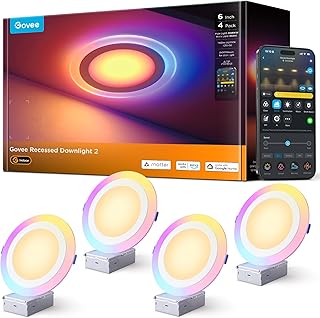


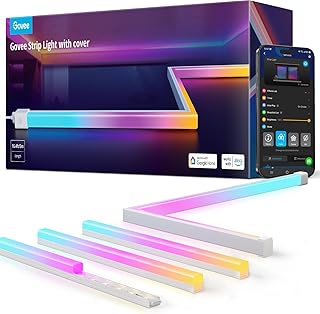

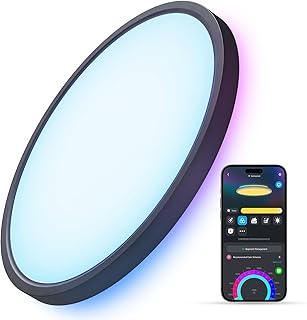


Smart home lighting has moved well beyond simple app-controlled bulbs. In 2026, Canadian shoppers can choose from connected LED bulbs, colour-changing lamps, smart light strips, recessed lighting, outdoor fixtures, motion-activated lights and complete lighting systems. The right choice depends on more than brightness or a low advertised price. Compatibility, wireless standards, colour quality, controls, installation requirements, energy use and long-term reliability can all affect whether a lighting purchase represents good value.
This buying guide is designed for shoppers comparing smart home lighting products in Canada. Rather than focusing only on headline features, consider how each product fits into your existing home, network and daily routines. A relatively inexpensive bulb may not be the best deal if it requires a separate hub, lacks the controls you need or does not work with the smart-home platform you already use.
A strong smart lighting deal combines useful functionality, appropriate performance, dependable compatibility and a sensible overall cost. The lowest purchase price is not automatically the lowest total cost. Accessories, hubs, bridges, replacement bulbs and installation requirements can change the value equation.
Smart LED bulbs are often the easiest entry point for connected lighting. They can replace compatible standard bulbs while adding app control, scheduling, dimming and, depending on the model, adjustable white or full-colour lighting.
Brands such as Philips Hue, Govee, Sengled, Nanoleaf and TP-Link offer products across different smart-lighting categories. Specifications vary significantly between individual models, so brand recognition should not replace checking the exact product requirements.
For bedrooms, living rooms and accent lighting, colour-changing bulbs can provide flexibility. For kitchens, offices and work areas, adjustable white lighting may be more important than extensive colour effects. Always check the bulb base, physical dimensions, voltage requirements and fixture compatibility before purchasing.
Smart LED strips are useful for accent lighting behind televisions, under cabinets, around desks, inside entertainment areas and along architectural features. They can provide colour effects and dynamic scenes that are difficult to achieve with conventional bulbs.
When comparing light strips, look beyond the advertised length. Check whether extensions are supported, how the strip is powered, whether sections can be cut, how replacement sections are handled and whether the adhesive mounting system suits the intended surface.
For kitchen applications, also consider how the strip will be protected from heat, moisture and cleaning activities. Indoor-rated products should not automatically be treated as suitable for outdoor or wet locations.
Smart table lamps, floor lamps and decorative fixtures can add connected lighting without requiring electrical modifications. They are particularly useful for bedrooms, reading areas, living rooms and entertainment spaces.
The best option depends on the purpose of the lamp. A reading lamp should prioritize useful illumination and adjustable positioning, while an ambient lamp may place greater emphasis on colour effects, scenes and design.
Smart recessed lights and ceiling fixtures can create a more integrated lighting installation. These products may provide adjustable colour temperature, dimming and automation while remaining visually unobtrusive.
However, installation can be considerably more involved than replacing a bulb. Check the required cut-out dimensions, wiring configuration, compatible dimmers, ceiling depth and installation instructions. If electrical work is required, use an appropriately qualified professional rather than treating a hardwired lighting installation as a simple DIY project.
Outdoor smart lighting can improve convenience around entrances, patios, decks, walkways and gardens. Canadian buyers should pay particular attention to weather resistance and the product's stated operating environment.
Do not assume that an indoor smart bulb or light strip is appropriate outdoors. Check the manufacturer's environmental ratings and installation requirements. For exposed locations, the ability to tolerate rain, snow, freezing temperatures and temperature changes can be more important than decorative lighting effects.
Connectivity is one of the most important technical differences between smart lighting products. A product can appear inexpensive and feature-rich yet become inconvenient if its connection method does not suit your home.
Wi-Fi lighting can connect directly to a home network without necessarily requiring a dedicated lighting hub. This can make setup straightforward for smaller installations.
The trade-off is that a large number of Wi-Fi devices can increase the number of connected clients on a home network. Network coverage is also important. A smart bulb installed far from the router may experience connectivity problems even when the product itself is functioning correctly.
Bluetooth can be convenient for local control and initial setup. Depending on the product, remote access and advanced automation may require additional hardware or another connection method.
Bluetooth lighting can work well in smaller spaces where the required control range is limited. Check the exact features supported by the individual product rather than assuming every Bluetooth model provides the same remote-control experience.
Mesh-based smart-home technologies can be useful when multiple compatible devices are installed throughout a home. Devices can communicate through the mesh network, potentially reducing dependence on direct Wi-Fi connectivity for every individual light.
However, compatibility between hubs, controllers and products matters. Before buying several devices, verify that the exact models can operate together in the intended system.
Thread and Matter have become important terms for shoppers building interoperable smart homes. Matter is designed to improve compatibility between supported smart-home ecosystems, while Thread is a low-power networking technology used by some compatible smart-home devices.
Matter compatibility does not mean every feature is automatically identical across every platform. Advanced capabilities can depend on the product, controller and ecosystem. Check the current specification for the exact device before assuming that every advertised function will be available through your preferred platform.
Before purchasing, identify the smart-home ecosystem you already use. Common platforms include Amazon Alexa, Google Home and Apple Home. Some lighting products also operate through proprietary applications.
Compatibility should be checked at the model level. A manufacturer may produce several bulbs that support different platforms or connection standards. Product packaging and specifications can also change over time.
One of the most common smart-lighting buying mistakes is comparing bulbs primarily by wattage. Wattage describes electrical power consumption; it does not directly tell you how much visible light a bulb produces.
For a more meaningful comparison, examine lumens. A higher lumen rating generally indicates greater light output, although the perceived result can also depend on beam angle, diffuser design, fixture placement and room surfaces.
Consider the purpose of the room before choosing brightness. A decorative bedside lamp does not need the same output as a kitchen work area. A hallway may benefit from moderate illumination, while a large living room may require several lights rather than one extremely bright bulb.
Colour temperature can have a major effect on how a room feels. Warm white lighting is commonly associated with a relaxed atmosphere, while cooler white settings can provide a more alert or task-oriented appearance.
Some smart bulbs allow users to adjust colour temperature across a broad range. This can be more useful for everyday lighting than a large selection of novelty colours.
If a product lists colour-rendering specifications, consider them when lighting areas where accurate colour appearance matters. Kitchens, dressing areas, studios and workspaces may benefit from better colour rendering than purely decorative applications.
Not all colour-changing smart lights produce colour in the same way. RGB systems combine red, green and blue light to create different colours. Other designs can incorporate dedicated white LEDs to improve white-light performance.
If the product will primarily be used as normal room lighting, do not select it solely because it offers thousands of colours. Evaluate its white-light capabilities as well. Decorative colour effects can be a useful bonus, but they may not compensate for poor everyday illumination.
Smart lighting can offer several levels of control. Basic models may provide app-based on and off control, while more advanced systems can support dimming, colour adjustment, scenes, schedules, presence-based automation and voice commands.
Physical control remains important. A smart bulb may become inconvenient if household members regularly switch off its power at the wall. When the physical power supply is interrupted, app and automation controls may stop working until the bulb receives power again.
For frequently used rooms, consider how the lighting will be controlled by everyone in the household. A system that combines smart automation with practical physical controls can be easier to live with than one that depends entirely on a smartphone.
Voice control can be useful for turning lights on or off, adjusting brightness and activating scenes without reaching for a phone. Before purchasing, confirm the exact voice assistant compatibility and whether additional equipment is required.
It is also worth thinking about naming conventions. If several lights are installed in the same room, clear device names can make voice commands easier to understand. Grouping lights by room or function can further simplify everyday control.
Automation is where smart lighting can provide value beyond conventional LED bulbs. Useful automation does not need to be complicated.
Automation should improve convenience rather than create unnecessary complexity. A lighting system with fewer features that you actually use can be a better purchase than a feature-heavy product that rarely gets configured.
Living rooms often benefit from layered lighting rather than one intense source. Consider a combination of ceiling lighting, floor lamps, table lamps and accent lighting. Smart dimming and scenes can make it easier to switch between general illumination, reading and entertainment settings.
Bedrooms generally benefit from comfortable low-level lighting and convenient controls. Adjustable white lighting can be particularly useful when transitioning from daytime activity to a calmer evening environment.
Kitchen lighting should prioritize useful illumination over decorative effects. Under-cabinet smart light strips can supplement ceiling lighting, while brighter task-oriented bulbs may be appropriate for work surfaces.
A home office requires lighting that supports sustained visual tasks. Look for appropriate brightness, useful colour-temperature adjustment and placement flexibility. Avoid choosing a product solely because it has elaborate RGB effects.
Bathroom lighting requires additional attention to moisture and installation requirements. Check the fixture's intended environment and follow local electrical requirements. Smart features should never override suitability for the location.
Motion-based automation can be particularly convenient in transitional areas. A compatible motion sensor can activate low-level lighting when someone enters a hallway or approaches stairs.
For exterior installations, prioritize appropriate weather resistance, temperature suitability and installation requirements. Smart control is useful, but the physical construction of the light must match the environment.
Several established brands operate across different segments of the smart-lighting market. Philips Hue is widely associated with connected lighting systems and ecosystem-based products. Govee offers a broad range of smart decorative lighting and light strips. Nanoleaf is known for connected decorative lighting and modular designs. Sengled offers connected bulbs and lighting products, while TP-Link provides smart-home products under its Tapo range.
These brands should be treated as starting points for comparison rather than automatic recommendations. The best product depends on the specific model, specifications, ecosystem compatibility and intended application.
A hub-based lighting system can provide a centralized approach to managing compatible devices. It may be attractive for larger installations where reliability, automation and expansion are priorities.
Hub-free products can simplify setup and reduce the number of components required. They may be a practical choice for a small apartment, a single room or someone experimenting with smart lighting for the first time.
Compare the complete system cost rather than the price of one bulb. If a product requires a bridge for the features you actually want, include that accessory when comparing alternatives.
Reading the specification sheet can reveal differences that are not obvious from product photos. Focus on characteristics that directly affect how the light will be used.
A smart bulb is useless if its base does not match the fixture. Confirm the socket specification before purchasing, especially when replacing an unusual or decorative bulb.
Two bulbs can use the same base while having different shapes or lengths. Check clearance inside enclosed fixtures and lamps.
Compatibility varies. Always check the exact model rather than relying on the manufacturer's overall brand compatibility.
RGB lighting can look impressive in product demonstrations, but everyday lighting quality often matters more. Evaluate brightness and white-light performance if the product will serve as a primary light source.
Wi-Fi devices depend on adequate network coverage. A smart bulb placed at the edge of a home's wireless coverage may be less reliable than expected.
Existing wall dimmers can create compatibility issues with some smart bulbs. Review the product's instructions before combining smart bulbs with conventional dimmer switches.
Outdoor conditions can expose lighting to moisture, snow, freezing temperatures and other environmental stresses. Use only products designed for the intended location.
Advanced scenes, elaborate colour effects and multiple connectivity options can increase cost and complexity. If you only need scheduled dimming, a simpler product may offer better value.
Canadian shoppers should consider the environment in which the lighting will operate. Outdoor products may face substantial seasonal temperature variation, while indoor installations can involve different heating, ventilation and moisture conditions.
For exterior lighting, check the manufacturer's stated operating conditions rather than assuming that a product designed for a mild climate will perform identically in every Canadian environment. The exact suitability of a product depends on its specifications and installation location.
Canadian buyers should also check the electrical requirements and product documentation applicable to their installation. For permanent hardwired fixtures or other electrical work, follow applicable Canadian requirements and use qualified electrical assistance where appropriate.
LED lighting generally provides an efficient alternative to older conventional lighting technologies. Smart functionality can add another layer of potential efficiency by making it easier to switch lights off, schedule operation or reduce brightness when full output is unnecessary.
However, smart features consume some power themselves, and actual energy use depends on the individual product. If energy consumption is an important purchasing factor, compare the manufacturer's stated electrical specifications instead of assuming that every smart LED product consumes the same amount.
Connected lighting can communicate with mobile applications, cloud services, home networks and smart-home platforms. Buyers should consider the data and permissions associated with the ecosystem they choose.
Privacy considerations can become more important as a smart home grows. A single connected bulb may have limited functionality, but a larger ecosystem can involve many devices and services under one account.
There is no universal number of smart lights required for a home. Start with the rooms where connected control provides a clear benefit. Bedrooms, living rooms, offices, entrances and entertainment areas are common starting points.
For a larger installation, think about the system as a whole. Using compatible products within one ecosystem can simplify scenes, automation and device management. Mixing unrelated systems can work, but it may require additional apps, controllers or configuration.
Individual smart bulbs are convenient when you want to upgrade existing lamps without changing the fixture. They are also useful when testing smart lighting for the first time.
A coordinated lighting system makes more sense when you want consistent control across several rooms. A system can make scenes and automation easier to organize, provided the products share compatible technology and controls.
Renters often benefit from solutions that do not require permanent electrical modifications. Smart bulbs, plug-in lamps and removable light strips can provide connected functionality while minimizing installation changes.
Before using adhesive-mounted products, consider the surface and removal instructions. For any permanent fixture replacement or wiring modification, check the terms of the property arrangement and use appropriate professional assistance where required.
Homeowners planning a broader smart-home setup should think about lighting compatibility before purchasing a large number of devices. Choosing a preferred ecosystem and connectivity strategy early can reduce fragmentation later.
It can also be useful to plan lighting by room rather than purchasing individual products without a broader strategy. Decide which areas need task lighting, ambient lighting, motion automation, voice control or colour effects.
Customer reviews can provide useful information, but they should be interpreted alongside specifications. Look for recurring comments about setup, connectivity, app usability, brightness, physical dimensions and compatibility.
Pay particular attention to reviews that describe a use case similar to yours. A complaint about brightness may be meaningful for someone using the product as a primary room light but irrelevant for someone using it as decorative accent lighting.
Also distinguish between comments about the product itself and problems caused by installation, Wi-Fi coverage or incompatible equipment. Reviews are most useful when combined with manufacturer documentation and independent specification comparisons.
A useful comparison should consider the complete cost of ownership. A low-priced bulb may require a separate hub, while a slightly more expensive option could include the connectivity features you need.
For an affiliate buying guide, it is also sensible to compare current retailer pricing before purchase because promotional prices, pack sizes and availability can change.
Multi-packs can reduce the effective cost per bulb, but only if all the bulbs will actually be used. Buying a large pack because the unit price looks attractive can create poor value when several devices remain unused.
Multi-packs are more compelling when you are upgrading several compatible fixtures at the same time. Check whether every bulb in the pack has identical specifications and whether the stated price represents the complete product quantity.
Installation difficulty depends heavily on the product category. A standard screw-in bulb can often be installed by replacing an existing compatible bulb, while ceiling fixtures and hardwired products can require electrical work.
Smart lighting requires relatively little routine maintenance, but connected devices benefit from sensible upkeep. Keep applications updated, review firmware notifications and periodically check whether unused devices remain connected to your account.
Physical fixtures should also be kept clean according to their manufacturer's instructions. Dust and residue can affect the appearance and, for some fixtures, the way light is distributed.
Outdoor lighting deserves additional inspection after severe weather. Check for visible damage, moisture intrusion or loose components when it is safe to do so.
Check that the bulb is receiving power, confirm the required wireless network or pairing mode and follow the manufacturer's reset procedure. Network coverage can also affect setup.
Confirm that Bluetooth or Wi-Fi is enabled as required, check whether the app has the necessary permissions and verify that the light is in pairing mode.
Investigate wireless coverage, router configuration, device distance and potential network congestion. For mesh-based systems, also check whether compatible devices are positioned appropriately to support the network.
Verify that the lighting product is linked to the correct smart-home account and that the exact model supports the desired voice platform. Recheck device names and room assignments if commands are not being interpreted correctly.
Check whether the bulb supports the installed dimmer and whether the manufacturer's instructions specify restrictions on conventional wall dimmers or enclosed fixtures.
Online product pages can contain a large amount of information. Before adding an item to your shortlist, check the complete specification rather than relying only on the headline description.
For a basic smart-home upgrade, start with a small number of compatible LED bulbs. Prioritize reliable app control, useful brightness and compatibility with the smart-home platform already in use.
A larger installation can combine smart bulbs, lamps and accent lighting. At this stage, consistent ecosystem support becomes increasingly important because managing multiple unrelated applications can become inconvenient.
Advanced users may benefit from coordinated lighting scenes, sensors, multi-room automation, Matter-compatible products and mesh-based connectivity where appropriate. Planning the ecosystem before purchasing can prevent compatibility problems later.
Start by identifying the purpose of each light. General lighting should provide sufficient illumination for the room. Task lighting should illuminate specific work areas. Accent lighting can add visual depth, while decorative lighting can provide atmosphere.
Once the purpose is established, select the appropriate smart product. A kitchen may need brighter task-oriented lighting, while a living room may benefit from dimmable ambient sources and accent strips. A hallway may benefit more from motion automation than from extensive colour features.
This room-by-room approach avoids the common mistake of buying the same type of smart light for every fixture regardless of how that fixture is actually used.
Lighting can become one of the most useful parts of a broader smart-home system because lights can respond to time, motion, occupancy and other supported triggers. However, interoperability should remain a priority.
Before committing to a large purchase, consider whether the system can accommodate future devices such as smart switches, sensors, plugs and other compatible home-automation equipment. A lighting ecosystem that works well today may be even more valuable if it provides a practical path for future expansion.
Smart bulbs add intelligence directly to the light source, while smart switches can provide connected control over compatible fixtures and conventional bulbs. The right option depends on the desired functionality and electrical setup.
Smart bulbs are useful when you want colour adjustment or individual bulb control. Smart switches can be attractive when you want a wall-mounted control that operates the fixture while preserving a familiar physical interaction.
Switch installation can involve electrical work, so it should not be treated as equivalent to replacing a bulb. Verify wiring compatibility and obtain professional assistance when appropriate.
A completely app-dependent lighting system can be inconvenient when a phone is unavailable or someone does not want to use an app. Physical buttons, compatible switches and voice control can provide useful alternatives.
When comparing products, think about the people who will use the lights every day. Good smart-home design should make common actions easier, not force every household member to learn a complicated control system.
Compare specifications instead of comparing only brand names. Two products may offer similar brightness and basic controls while differing substantially in ecosystem compatibility or connectivity.
Consider whether premium features will actually be used. If you need a basic dimmable white bulb, paying extra for elaborate RGB effects may not improve your experience. Conversely, someone building an entertainment room may find advanced colour synchronization genuinely useful.
Checking current prices across trusted retailers is also important because smart-home products frequently appear in promotional bundles and multi-pack offers. Compare the effective price per usable light rather than the headline discount alone.
There is no single best smart lighting product for every Canadian home. The right choice depends on the required brightness, fixture type, connectivity, smart-home ecosystem, automation features and budget. Start by identifying the room and the type of lighting you need, then compare compatible products.
Smart LED bulbs can be worthwhile when remote control, scheduling, dimming, voice commands or automation provide genuine convenience. If you only need basic on-and-off lighting, a conventional LED bulb may be sufficient.
It depends on the product. Some smart lights use Bluetooth or other local connectivity methods, while others rely heavily on Wi-Fi or a hub. Check the exact manufacturer's specifications before assuming that a particular bulb will work without an internet or Wi-Fi connection.
Smart lights consume energy while operating, and connected electronics can also use a small amount of power when the light is not actively illuminated. Actual consumption varies by product. Compare the stated power specifications if energy use is important to your decision.
Matter can be valuable for shoppers who want broader smart-home interoperability. However, Matter support alone does not determine overall product quality. Brightness, colour performance, connectivity, controls, installation and other specifications should still be compared.
Not necessarily. Some products connect directly through Wi-Fi or Bluetooth, while others use a hub or bridge. A hub can become more useful as a smart-lighting installation expands, but the best setup depends on the products and ecosystem you choose.
Only when the specific product is designed and rated for outdoor use and the intended installation environment. Check weather resistance, temperature specifications and installation requirements before using any smart light outdoors.
They can be, but compare their white-light performance rather than assuming that a large colour range means better everyday illumination. If the light will be used primarily for reading, cooking or general room lighting, brightness and white-light quality should receive significant attention.
Buy according to your actual lighting requirements. Starting with the most useful rooms can help you determine whether the ecosystem and controls meet your needs before expanding throughout the home.
Compare the complete specification and total system cost. Important factors include lumens, colour temperature, colour capabilities, connectivity, smart-home compatibility, hub requirements, dimming support, physical dimensions, environmental suitability and current retailer pricing.
Not necessarily. Premium products can offer broader ecosystems or additional features, but value depends on whether those features matter to you. A less expensive product with the right brightness, compatibility and controls can be a better choice for a specific installation.
A smart bulb is generally convenient when you want to upgrade an existing compatible lamp or fixture. A smart fixture can provide a more integrated appearance but may require more involved installation. Choose according to the room, installation requirements and desired control features.
The strongest smart home lighting purchase is not necessarily the product with the longest feature list or the biggest advertised discount. It is the option that matches the intended room, works with your existing technology and provides useful lighting performance without unnecessary complexity.
For Canadian shoppers, begin with the fundamentals: correct fit, suitable brightness, appropriate colour quality, compatible connectivity and safe installation. Then consider smart features such as schedules, scenes, voice control, sensors and Matter support. If you are comparing several products, evaluate the complete system cost and read current customer feedback alongside the manufacturer's specifications.
Smart lighting can be introduced gradually. Start with the areas where automation or flexible control offers the clearest benefit, establish which ecosystem works best for your household and expand from there. Taking this approach makes it easier to compare smart home lighting deals in Canada based on practical value rather than marketing claims alone.