

♥ Wishlist
Compare 57 Window Hardware for Canadian Homes & Projects products in Canada. Reviews, ratings, pros, cons and buying advice updated for October 2026.


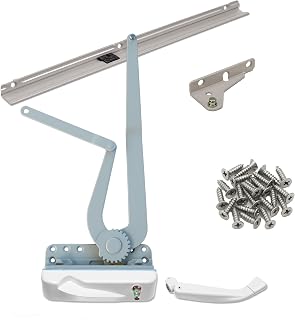


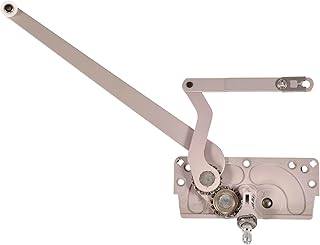


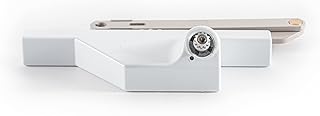


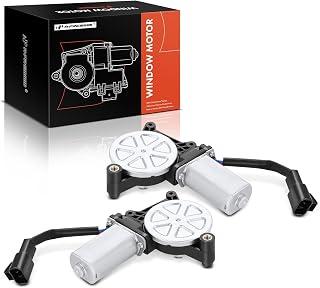




Choosing window hardware is about more than appearance. The right handle, lock, hinge, latch, operator, or replacement fitting should match the window style, dimensions, mounting pattern, material, and intended use. A product that looks compatible may still fail to fit correctly if its screw spacing, spindle length, projection, or operating mechanism differs from the existing hardware.
For Canadian buyers, the choice also deserves attention to seasonal conditions. Windows may experience significant temperature changes, condensation, moisture, and repeated operation throughout the year. Hardware used in bedrooms, kitchens, bathrooms, basements, rental properties, and high-traffic areas can also have very different requirements.
Before comparing deals, identify the exact hardware category you need and measure the existing component. Then compare construction, compatibility, installation method, adjustability, corrosion resistance, security features, and long-term maintenance requirements. Price should be considered alongside these factors rather than used as the only deciding point.
The phrase window hardware covers a broad range of components. Understanding the difference between them makes product comparisons much easier.
Handles are among the most frequently replaced window components. Casement and awning windows commonly use operating handles or crank mechanisms, while other window styles may use lifting handles, pull handles, or locking handles.
When replacing a handle, check the mounting screw pattern, base dimensions, spindle or gear connection, and direction of operation. A universal-looking replacement is not necessarily universal. Matching the original mechanism is often more important than choosing a visually similar design.
Locks and latches help keep a window securely closed. Depending on the window design, you may find cam locks, sash locks, hook-style locks, sliding-window latches, or specialized locking mechanisms.
For replacement hardware, compare the distance between mounting holes and the position of the locking point. Also consider whether the replacement is intended for the same window construction and frame configuration.
Hinges allow certain window sashes to pivot or open while supporting the moving section. Friction hinges are common on many modern window systems and can affect both opening resistance and sash positioning.
When evaluating hinges, pay attention to length, track configuration, fixing-hole positions, stack height, and sash weight compatibility. Installing an incorrectly sized hinge can create alignment problems or excessive strain.
Casement and awning windows may use operators to convert handle movement into controlled sash movement. Different designs include arm operators, gear-driven systems, and other mechanisms designed around particular frame configurations.
A replacement operator should be selected by matching the original mechanism as closely as possible. The appearance of the handle is only one part of the system.
Sliding windows rely on rollers, tracks, guides, and related fittings to move the sash. Worn rollers can make a window difficult to operate even when the frame itself remains in good condition.
For replacement rollers, compare wheel diameter, housing dimensions, adjustment range, axle configuration, and mounting method. Correct measurements are especially important because small dimensional differences can affect how smoothly the sash travels.
Hardware materials influence durability, appearance, corrosion resistance, and operating feel. Common materials include steel, stainless steel, aluminium, zinc-based alloys, brass, and engineered plastics.
Stainless steel can be useful where moisture exposure is a concern, although the exact grade and construction still matter. Aluminium can provide a lightweight option, while steel components can offer substantial mechanical strength. Zinc alloys are also widely used for handles and decorative hardware.
Do not judge quality solely from the material name. Look at the thickness, joints, moving parts, finish, fasteners, and overall construction. Two products made from the same broad material category can have very different designs.
Window hardware is available in finishes such as white, black, bronze, brass, nickel, chrome, and other decorative treatments. The best choice depends on the existing window and surrounding interior.
For replacement projects, matching the finish can make new hardware look integrated rather than added as an afterthought. However, compatibility and mechanical performance should come before colour when the hardware is essential to window operation.
Mounting-hole spacing is one of the most important specifications for replacement hardware. Measure from the centre of one hole to the centre of the other rather than estimating visually.
Also record the number of mounting holes, screw size, base dimensions, and available clearance. These measurements can prevent the common mistake of ordering a product that appears similar but cannot be installed without modification.
Two handles can look nearly identical while using completely different internal mechanisms. Before purchasing, determine whether your window uses a gear mechanism, spindle connection, cam system, crank mechanism, friction hinge, roller assembly, or another design.
If the original hardware is still available, photographing the component and recording its measurements can make comparison easier.
Adjustable hardware can be valuable when windows require precise alignment. Some rollers, hinges, and locking components allow positioning changes that help compensate for minor installation variations.
However, adjustability should not be treated as a substitute for correct sizing. A component that is fundamentally incompatible with the window will not become suitable simply because it offers adjustment.
Canadian homes can experience demanding seasonal temperature changes. Window hardware therefore needs to operate reliably as materials expand and contract and as windows are opened and closed under changing conditions.
Look for appropriate construction and a mechanism suited to the window application. Avoid assuming that the cheapest replacement is automatically the most economical choice if frequent adjustment or early replacement becomes necessary.
Bathrooms, kitchens, laundry areas, and some basement spaces can expose hardware to elevated humidity. Corrosion resistance becomes more relevant in these environments.
Consider finishes and materials designed for the expected environment. Keep moving parts clean and follow the manufacturer's maintenance recommendations instead of applying unsuitable lubricants indiscriminately.
A frequently used kitchen window or bedroom window may experience substantially more operating cycles than a rarely opened decorative window. In these locations, mechanical design and durability deserve greater weight than decorative appearance.
Accurate measurement is one of the simplest ways to improve the chance of buying a suitable replacement.
When specifications are available, compare your measurements directly with the manufacturer's dimensions. Avoid relying only on descriptions such as small, standard, universal, or replacement because those terms can cover many different configurations.
Before purchasing, work through a simple compatibility checklist. This can help prevent returns and unnecessary modifications.
A polished finish can make a product attractive, but appearance says little about mechanical compatibility. A handle with the correct colour may still have the wrong spindle or mounting pattern.
Universal hardware often refers to compatibility across a defined range of applications. It does not necessarily mean that one component fits every window design.
Always read the compatibility information and compare measurements before ordering.
Some components, particularly hinges, operators, and rollers, need to support or move a specific sash configuration. Using an unsuitable component can lead to poor operation and premature wear.
A replacement may include fasteners, while another product may require you to reuse existing screws or select appropriate replacements separately. Check what is included and whether the supplied hardware matches your frame material.
Low purchase cost can be attractive, but a better comparison considers construction, dimensions, mechanism, adjustability, included components, and expected application. A slightly different product may provide better value when it reduces compatibility problems.
Product photographs are not reliable for determining physical size. Always use the listed dimensions and compare them with the hardware you are replacing.
A good deal is not necessarily the product with the lowest displayed price. For an independent buying decision, compare the complete specification and expected use.
Brand recognition can provide a useful starting point, but it should never replace specification checking. Depending on the hardware category, Canadian shoppers may encounter brands such as Prime-Line, Andersen, Truth Hardware, AmesburyTruth, SWISCO, Fasco, and Ideal Security.
Brand ranges can contain multiple product families, and compatibility can vary considerably between models. Use the brand name to locate the appropriate product family, then verify the specific dimensions and mechanism.
For replacement projects involving branded windows, identifying the original window manufacturer and hardware model can also help narrow the search. When exact replacement hardware is unavailable, compare the mechanical specifications rather than selecting a substitute based solely on appearance.
Replacing individual components can be practical when the window frame and sash remain structurally sound. A new handle, roller, lock, or operator may address an operating problem without requiring a complete window replacement.
However, hardware replacement is not appropriate for every problem. If the frame is severely damaged, the sash is distorted, the glass unit has failed, or the window has significant structural problems, replacing one fitting may not resolve the underlying issue.
Diagnose the problem before purchasing. A stiff handle may result from a worn mechanism, but it can also be caused by sash misalignment, frame movement, dirt, or excessive friction elsewhere in the system.
Many basic window hardware replacements involve removing existing screws and installing the replacement component. More complicated mechanisms can require alignment, adjustment, or partial disassembly of the window.
Before beginning, inspect the installation instructions and determine whether special tools are required. Keep the original component until the replacement has been confirmed as compatible.
Do not force a component into position. Excessive force can damage the frame, strip fasteners, deform the hardware, or create alignment problems. If the mounting holes do not line up, stop and verify the specifications rather than improvising a modification.
Professional assistance can be worthwhile when hardware is difficult to access, the window is large or heavy, the mechanism is complicated, or the installation affects security or safe operation.
Older or unusual window systems can also have components that are difficult to identify. In those situations, professional identification and measurement may be more efficient than repeatedly purchasing incompatible replacements.
Regular maintenance can help preserve smooth operation and reveal developing problems before they become more serious.
Window hardware can contribute to the overall security of a window, particularly when it controls whether the sash remains securely closed. Locks, latches, handles, and locking points should therefore be evaluated as part of the complete window system.
For ground-floor windows and other accessible openings, consider the condition of the entire assembly rather than focusing only on one replacement part. Strong hardware cannot compensate for a damaged frame, weak mounting surface, or poorly aligned sash.
When purchasing security-related window hardware, review the manufacturer's stated application and installation requirements. Avoid assuming that a product provides a particular security level unless that claim is clearly supported by the manufacturer's documentation.
When comparing the best window hardware deals in 2026, start with the problem rather than the product category. Identify whether the window is difficult to open, failing to lock, dragging on its track, suffering from a broken handle, or showing another specific issue.
Next, identify the existing component. Record its dimensions, mounting pattern, mechanism, finish, and manufacturer markings. These details create a much more useful search specification than a broad query such as “best window hardware.”
After finding potential replacements, compare at least two or three compatible options where possible. Examine specifications, installation requirements, customer feedback, and current retailer information. Then consider total value rather than simply choosing the cheapest listing.
The best option depends on the window type, existing mechanism, dimensions, operating frequency, environment, and budget. There is no single hardware component that is ideal for every Canadian window. Start by identifying the exact replacement requirement and then compare compatible products.
Compare the product's dimensions and mounting pattern with your existing component. Pay particular attention to screw spacing, spindle or shaft dimensions, overall size, mechanism type, and clearance. Manufacturer compatibility information should also be checked before ordering.
Universal hardware can be useful when its stated compatibility range includes your window. However, “universal” does not mean every product fits every window. Measurements and mechanism compatibility remain essential.
There is no universally best material. Stainless steel, steel, aluminium, zinc alloys, brass, and engineered plastics can all be suitable for different applications. Consider strength, moisture exposure, corrosion resistance, operating requirements, finish, and construction quality.
Not necessarily. If only one component has failed and the remaining hardware is in good condition, replacing the defective part may be sufficient. If several components show wear or the mechanism is outdated, replacing related hardware together may provide a more consistent solution.
Some straightforward replacements can be suitable for DIY installation when the new component matches the original mounting arrangement. More complicated mechanisms may require specialist tools, alignment, or knowledge of the window system. Follow the manufacturer's installation instructions and avoid forcing incompatible parts.
Consider corrosion-resistant materials and finishes appropriate for the environment. Kitchens, bathrooms, laundry rooms, and damp basement areas can place greater demands on hardware. Regular cleaning and suitable maintenance are also important.
No. Price alone does not establish compatibility or quality. A less expensive product can be a better choice when it precisely matches the application, while an expensive component can be unsuitable if its dimensions or mechanism are wrong.
Verified customer reviews can reveal practical information that may not be obvious from a product description, particularly around installation, fit, durability, and missing components. However, reviews should be evaluated alongside manufacturer specifications because individual experiences can involve different window designs.
Before completing a window hardware purchase in Canada, verify the essentials one final time.
The smartest window hardware purchase is the one that solves the actual problem while fitting the existing window correctly. Handles, locks, hinges, operators, rollers, and other fittings can look simple, but their dimensions and mechanisms often determine whether a replacement works properly.
For Canadian shoppers, a careful comparison should consider compatibility, construction, corrosion resistance, operating requirements, installation, maintenance, and long-term value. Trusted brands such as Prime-Line, Andersen, Truth Hardware, AmesburyTruth, SWISCO, Fasco, and Ideal Security can be useful starting points for product research, but the exact model specifications should always be verified.
Use this buying guide as a checklist when comparing current 2026 options. Before purchasing, confirm the latest specifications, verified customer feedback, retailer terms, and current price. Taking a few minutes to measure the existing hardware can make the difference between a straightforward replacement and an unnecessary return.