

♥ Wishlist
Compare 63 Tarps and Tie Downs products in Canada. Reviews, ratings, pros, cons and buying advice updated for October 2026.

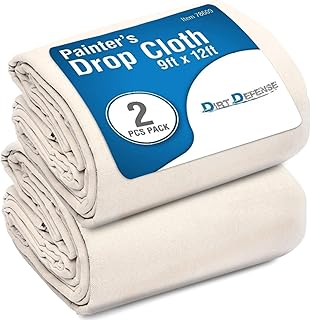


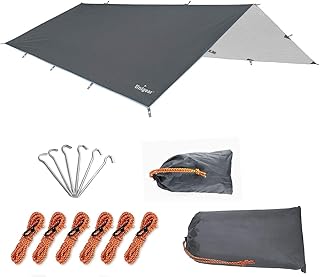

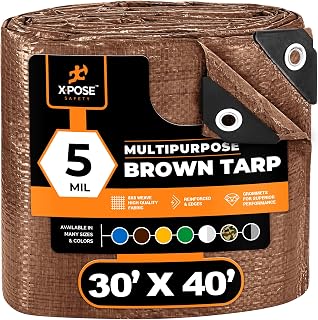


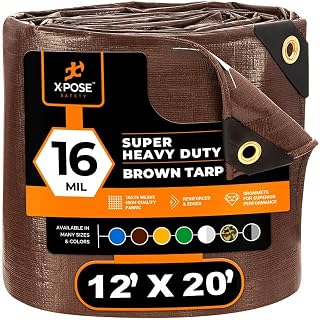




Choosing a tarp or tie-down system is not simply a matter of finding the lowest price. The right combination depends on the load, vehicle, weather conditions, attachment points, storage needs, and how frequently the equipment will be used. For Canadian buyers, seasonal temperature changes, rain, snow, wind, road spray, and long-distance transport can all affect how a product should be selected.
This guide is designed for shoppers comparing smart buy tarps and tie downs in 2026. Instead of focusing only on product appearance, consider construction quality, dimensions, working capacity, fastening design, adjustability, material durability, and compatibility with your intended application.
A tarp primarily provides coverage and protection. It can help shield cargo, equipment, firewood, outdoor materials, landscaping supplies, recreational gear, and other items from precipitation, dust, sunlight, and debris. A tie-down is different: its main purpose is to restrain or secure a load so that it does not shift during handling or transportation.
Using a strong tarp does not automatically make a load secure. Likewise, a high-quality tie-down cannot compensate for an unsuitable cover. For many applications, the best setup combines an appropriately sized tarp with a properly selected restraint system.
The material has a major influence on durability, flexibility, handling, and resistance to outdoor conditions. Before buying, identify the environment in which the tarp will actually be used.
Polyethylene, commonly abbreviated as PE, is widely used for general-purpose tarps. It can offer a useful combination of low weight, flexibility, water resistance, and affordability. PE tarps are often practical for temporary outdoor coverage, yard work, camping, storage, and general household applications.
When comparing PE products, inspect the weave, coating, edge construction, grommet placement, and overall thickness rather than relying solely on the material name.
Canvas is valued for its substantial feel and breathability compared with many coated synthetic covers. Depending on construction and treatment, canvas can be useful for equipment coverage, workshop applications, landscaping, and other situations where a heavier fabric is preferred.
Canvas is not automatically waterproof simply because it is thick. Check the manufacturer's stated treatment and intended application before using it where water resistance is essential.
PVC-coated fabrics are often selected for demanding outdoor or industrial applications because the coating can provide resistance against moisture and abrasion. They may also feel heavier and less flexible than lightweight polyethylene products.
The additional material weight can be an advantage for some applications but a disadvantage when frequent installation and removal are required.
Two tarps with identical dimensions can perform very differently because construction quality varies. Pay close attention to the areas that receive tension during installation.
Grommets provide attachment points around the perimeter. Metal grommets can be useful for repeated fastening, while reinforced grommet areas can help distribute tension around the opening.
Look for consistent spacing and reinforcement around the grommets. A large tarp with insufficient attachment points may be more difficult to tension evenly.
Edges are exposed to significant pulling forces when a tarp is tied down. Reinforced hems or multiple layers around the perimeter can provide additional structure and help the tarp maintain its shape.
For multi-panel or coated tarps, seam construction deserves attention. Depending on the product, seams may be sewn, heat sealed, welded, or otherwise reinforced. Consider whether the manufacturer's specifications match the environmental conditions you expect.
A tarp should cover the intended load without creating excessive loose material. Buying a cover that is too small can leave exposed areas, while an unnecessarily oversized tarp can create folds, wind-catching sections, and difficult-to-manage excess material.
Remember that listed dimensions may represent the approximate finished or cut size depending on the manufacturer. Check the product specifications before assuming the advertised dimensions precisely match the usable coverage area.
Tie-down specifications can be confusing because several capacity terms may appear on packaging or product descriptions. Do not select a strap based only on a large-looking number.
The working load limit, often abbreviated WLL, represents the manufacturer's stated limit for the intended use of the restraint system. This is one of the most important figures to review when comparing tie-downs.
Breaking strength refers to the force at which a component or assembly may fail under specified test conditions. It should not be treated as the amount of load that can safely be restrained during normal use.
A complete tie-down system includes more than webbing. Hooks, buckles, ratchets, stitching, anchor points, and other components can influence overall performance. The rating of the weakest relevant component matters when assessing the complete setup.
Both designs have useful applications, but they serve different preferences and requirements.
Do not assume that a ratchet mechanism automatically means a product is appropriate for heavy loads. The complete assembly and its stated rating still need to match the application.
Webbing is available in different widths, materials, and constructions. Wider webbing can provide a substantial contact area, but width alone does not establish capacity or suitability.
Polyester webbing is commonly used for tie-down applications because of its useful combination of strength and resistance characteristics. Other materials may have different properties. Check the manufacturer's specifications for resistance to moisture, abrasion, chemicals, temperature, and ultraviolet exposure when those factors are relevant.
Inspect the stitching pattern where the webbing connects to hardware. Reinforced stitching is particularly important around hooks, loops, and ratchet assemblies because these areas can experience concentrated forces.
Before each important use, examine straps for cuts, severe abrasion, melted areas, fraying, damaged stitching, chemical contamination, or other visible deterioration. A strap that appears compromised should not be relied upon simply because its original specifications were strong.
Hardware design can influence how easily a tie-down attaches to a trailer, truck bed, roof rack, utility vehicle, or other compatible anchor point.
Never force a hook into an attachment point that does not accommodate it correctly. A convenient connection is not necessarily a secure connection.
Canada presents a broad range of environmental conditions, so buyers should think about where and when the tarp will be used. A product suitable for occasional summer coverage may not be the best choice for prolonged outdoor exposure during a wet or windy season.
If keeping the contents dry is the main objective, check whether the tarp is marketed as waterproof or water resistant and review its construction. Water can enter through seams, damaged areas, poorly positioned edges, or openings around attachment points even when the fabric itself resists water.
A tarp should not automatically be treated as a structural roof. Accumulated snow can place substantial weight on a cover and its attachment points. For winter applications, consider whether the product is actually intended for that environment and avoid creating unsupported pockets where snow can collect.
Wind can transform a tarp into a large sail. Proper sizing, evenly distributed attachment points, suitable tie-downs, and secure anchoring all become more important in exposed areas.
Some materials become less flexible as temperatures fall. If a tarp will be installed, folded, or manipulated during cold Canadian weather, check the manufacturer's stated operating conditions where available.
A low purchase price can be attractive, but replacement frequency, ease of use, hardware quality, and suitability for the application may matter more over time. Compare the complete specification rather than the price alone.
Very short straps may not reach suitable anchor points. Excessively long straps can leave loose webbing that needs to be secured. Measure the distance between realistic attachment points before choosing a length.
The strongest tie-down cannot create a reliable attachment where the vehicle, trailer, rack, or structure does not provide an appropriate anchor point. Inspect the anchoring system before selecting the straps.
A high breaking-strength figure does not mean the same force can be used as the working limit. Always follow the manufacturer's stated working load limit and application instructions.
Estimate the actual coverage required, including the height and shape of the material being protected. Account for how the tarp will be secured rather than buying according to the footprint alone.
A large tarp or collection of long tie-down straps can take up considerable space. If equipment will be used frequently, choose a configuration that can be folded, rolled, and stored without creating unnecessary clutter.
A useful comparison should consider the entire specification rather than a single headline feature.
The most useful feature depends on the job. For occasional household use, easy handling and compact storage may be more valuable than an especially heavy construction. For frequent transportation, dependable adjustment, appropriate capacity, durable hardware, and convenient attachment points may deserve greater priority.
Prioritise correct sizing, secure anchor compatibility, suitable working load limits, durable webbing, and hardware that fits the available attachment points. A tarp should also provide enough coverage to protect the load without creating excessive loose material.
Weight, packability, setup speed, weather resistance, and attachment flexibility can become more important. A compact tarp can be preferable when it needs to be transported with other camping equipment.
Consider abrasion resistance and easy cleaning when covering soil, branches, mulch, tools, or debris. Reinforced edges and adequate attachment points can make repeated handling easier.
Look for dimensions that correspond with the items being covered and a material appropriate for the storage environment. If objects have sharp corners, consider whether additional protection is needed to prevent puncturing or excessive abrasion.
Correct installation can make a significant difference. Avoid pulling a tarp excessively tight over sharp edges. Use appropriate protection around contact points when necessary, and distribute tension rather than concentrating it at only one or two grommets.
Keep attachment points reasonably balanced around the perimeter. If strong wind is expected, pay particular attention to corners and exposed edges. Loose sections should be controlled so they do not flap continuously against equipment or structures.
Tie-down maintenance begins with inspection rather than cleaning. Look at the complete assembly before use.
Allow a tarp to dry appropriately before long-term storage when conditions permit. Folding or rolling a wet cover and leaving it stored for an extended period can create an unsuitable environment for the material.
Remove accumulated dirt before storage and avoid dragging the tarp unnecessarily across rough surfaces. When folding, avoid repeatedly stressing the same crease if the material is already showing signs of wear.
Brand recognition can help shoppers narrow a large selection, but brand name should not replace specification checking. Depending on the product category and intended application, Canadian shoppers may encounter established names such as Erickson, Keeper, CURT, Rhino USA, Reese, and Husky.
Product ranges differ considerably within each brand. Compare the exact model, dimensions, material, capacity, hardware, included quantity, and intended use rather than assuming every product from a familiar manufacturer has the same performance characteristics.
Customer reviews can add useful context, especially when many buyers report the same issue. However, reviews should be interpreted alongside specifications.
For basic outdoor coverage, a correctly sized general-purpose tarp with suitable perimeter attachment points may be sufficient. For transportation, the tarp should be considered the protective layer while the tie-down system performs the restraint function.
For irregular loads, multiple attachment points can help distribute tension. For heavier transportation applications, pay particular attention to the complete restraint configuration rather than simply adding more straps without considering anchor placement and load movement.
There is no single best tarp for every Canadian application. The appropriate choice depends on exposure, temperature, required coverage, frequency of use, and whether waterproofing, abrasion resistance, flexibility, or weight is the main priority.
The best strap is one whose working load limit, length, webbing, hardware, and attachment design match the load and the truck's available anchor points. Ratchet straps are often considered when controlled tensioning is useful, but the correct rating remains essential.
Neither design is universally better. Ratchet straps offer mechanical leverage for tensioning, while cam buckles can provide fast adjustment. Select the design according to the load, required tension, attachment arrangement, and manufacturer's intended application.
Measure the area and height that need coverage, then consider how the tarp will be attached. The final size should provide adequate coverage without leaving excessive loose material that can flap in wind.
Replacement should be based on condition and manufacturer guidance rather than a universal calendar interval. Inspect the webbing, stitching, hardware, and mechanism before use and discontinue equipment that shows significant damage or deterioration.
A general-purpose tarp can handle many everyday jobs, but specialized applications may require different materials, dimensions, coatings, reinforcement, or environmental resistance. Matching the tarp to the job is generally more reliable than expecting one product to cover every situation.
Look beyond the advertised deal price. Compare the exact dimensions, material, construction, working load limit, hardware, quantity, intended use, customer feedback, and long-term suitability. A product that better matches the application can be a smarter purchase even when it is not the least expensive option.
Before choosing a tarp or tie-down set, confirm the application first. Then compare the specifications that directly affect performance. For tarps, focus on material, size, coating, reinforcement, grommets, seams, and weather suitability. For tie-downs, focus on working load limit, webbing, length, hardware, stitching, adjustment mechanism, and anchor compatibility.
Canadian shoppers should also consider seasonal conditions and storage. A product used only occasionally during mild weather has different requirements from equipment exposed regularly to rain, snow, road spray, sunlight, abrasion, or frequent loading cycles.
Finally, compare the exact product specifications and current customer feedback before purchasing. The smartest deal is not necessarily the cheapest option; it is the product that provides the right combination of capacity, construction, usability, durability, and compatibility for the job.