

♥ Wishlist
Compare 50 Storage & Home Organization products in Canada. Reviews, ratings, pros, cons and buying advice updated for October 2026.


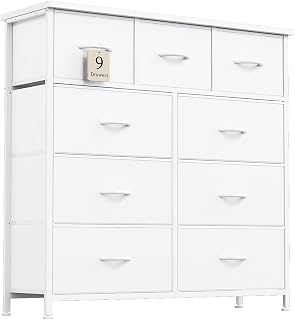


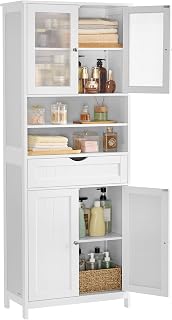


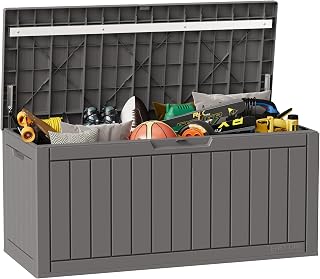


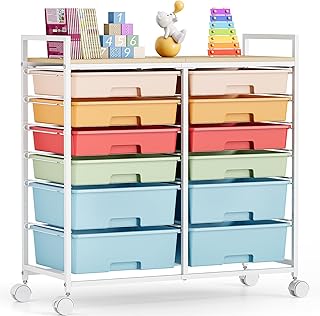


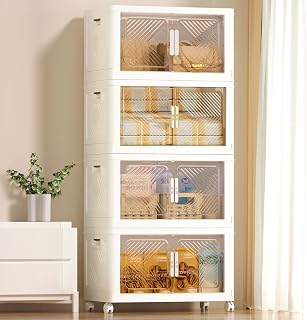


Choosing storage products is rarely just about finding the cheapest option. The right solution should make better use of available space, keep frequently used items accessible, and remain practical for the way a Canadian home is actually used. Room dimensions, seasonal storage requirements, apartment layouts, humidity, cleaning habits, and household size can all affect which organization product makes sense.
For 2026, a smart purchase should balance capacity, construction quality, ease of assembly, accessibility, appearance, and long-term usefulness. A product can look impressive in a photograph yet be unsuitable for a narrow closet, small condo, basement, garage, bedroom, laundry room, or entryway. Measuring the intended space before comparing products is therefore one of the most important steps.
This buying guide focuses on the factors that matter when comparing storage and home organization products in Canada. Product specifications, dimensions, materials, included accessories, customer feedback, and current retailer information should always be checked before purchasing because models, configurations, and availability can change.
A smart buy is not necessarily the product with the lowest purchase price. It is the option that provides useful storage while fitting the available space and meeting the household's practical requirements.
Consider the relationship between price and usable capacity. A large organizer that occupies valuable floor space may provide less practical value than a smaller modular system that uses vertical space efficiently. Similarly, inexpensive plastic containers may be excellent for lightweight seasonal belongings but less suitable for heavy tools, books, or frequently accessed equipment.
Bedrooms often benefit from storage that increases capacity without making the room feel crowded. Under-bed containers can be useful for bedding, clothing, luggage, and seasonal belongings. Wardrobe organizers can divide a large compartment into more manageable sections for folded clothes, accessories, shoes, and smaller items.
Before choosing an under-bed solution, measure the clearance between the floor and bed frame. Check both the container height and the available width. Wheels or handles can make heavier containers easier to access, while lidded designs help protect stored belongings from dust.
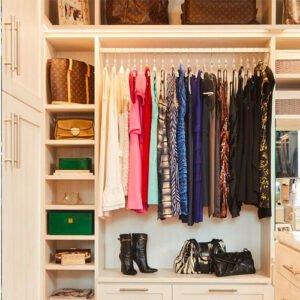
Closet storage works best when it separates different categories of belongings. Hanging organizers, shelf dividers, shoe storage, baskets, and drawer systems can help turn one large compartment into several functional zones.
Do not assume that a closet organizer will fit simply because its advertised width appears suitable. Check the complete dimensions, including depth and height. Doors, baseboards, existing shelves, hinges, and trim can reduce usable space.
Kitchen organization requires particular attention to accessibility and cleaning. Drawer organizers, pantry bins, shelf risers, cabinet organizers, and food-storage containers can make frequently used ingredients and utensils easier to locate.
For food-related storage, consider whether the material is suitable for the intended use and follow the manufacturer's care instructions. Clear containers can improve visibility, while stackable designs can make better use of vertical cabinet space.
Bathrooms often have limited floor area, making vertical and wall-adjacent storage valuable. Narrow shelving, drawer organizers, under-sink solutions, and compact cabinets can provide additional capacity without requiring major changes to the room.
Moisture is an important consideration. Materials and finishes should be appropriate for the environment, particularly when a storage product will be positioned close to a shower, bathtub, sink, or other source of water.
Canadian homes often need practical storage for footwear, outerwear, bags, umbrellas, accessories, and seasonal equipment. Entryway benches with compartments, shoe organizers, coat hooks, baskets, and cabinets can reduce clutter around doors.
For boots and wet footwear, consider drainage, ventilation, cleanability, and floor protection. A visually attractive organizer is less useful if it is difficult to clean during periods of rain, snow, or muddy conditions.
Basements can provide substantial storage capacity, but the environment may differ significantly from an upstairs living area. Before storing valuables, electronics, documents, clothing, or other sensitive belongings, consider local moisture conditions and the manufacturer's recommendations.
For general household storage, stackable bins with secure lids can make seasonal organization easier. Clear labelling is particularly useful when containers remain stored for several months at a time.
Garages require a different approach because stored items can be heavier and more rugged. Shelving units, storage cabinets, bins, pegboard systems, and wall-mounted organizers can help separate automotive supplies, tools, gardening equipment, and household maintenance items.
Always check the manufacturer's stated load capacity before placing heavy objects on shelves. Load ratings should not be treated as interchangeable between different shelf levels or configurations unless the manufacturer specifically says so.
Plastic containers are popular because they are generally lightweight and easy to clean. They can work particularly well for clothing, toys, seasonal decorations, craft supplies, and general household belongings.
Not every plastic container has the same construction. Compare wall thickness, lid design, stacking features, handles, hinges, and overall rigidity. For frequently stacked containers, a secure and stable lid design can be more important than appearance.
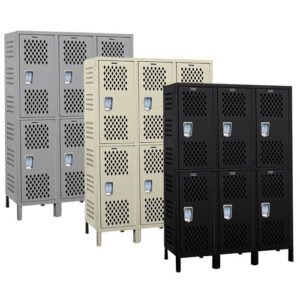
Metal shelving and cabinets can be suitable for garages, workshops, utility rooms, and heavier household items. Steel construction can provide substantial structural strength, although the exact capacity depends on the design, material thickness, supports, fasteners, and configuration.
Check whether the product is intended for indoor, garage, or other environments and follow the manufacturer's installation and maintenance instructions.
Wood and engineered-wood storage furniture can blend more naturally with bedrooms, living rooms, offices, and other visible areas. These products can provide a furniture-like appearance while adding drawers, shelves, or cabinets.
Compare the stated material rather than judging construction solely from photographs. Pay attention to panel thickness, edge finishing, hardware, shelf support, and assembly requirements.
Fabric cubes, collapsible bins, hanging organizers, and soft-sided containers are useful where lightweight storage and easy folding are priorities. They are particularly convenient for clothing, linens, accessories, and low-weight belongings.
For fabric storage, examine the frame, stitching, handles, base reinforcement, and cleaning instructions. Soft organizers are generally better suited to lightweight contents than heavy equipment.
Dimensions are among the most important specifications to compare, but external measurements do not always represent usable internal capacity. Thick walls, structural supports, lids, dividers, drawers, and hardware can reduce the available interior space.
Measure the storage area and compare it with the product's complete dimensions. For shelving, consider the space between shelves rather than only the overall height. For drawers, check internal width and depth. For containers, consider whether the lid or handle design affects stacking or placement.
Stackable containers are useful when the goal is to maximize vertical space. They can be especially effective in closets, basements, utility rooms, and garages. However, stacking can become inconvenient if the bottom container is needed frequently.
Modular systems provide more flexibility because components can often be rearranged or expanded. This can be useful for changing storage requirements, although modular systems may involve a higher initial cost or more complicated assembly.
When comparing the two, think about how often you will access the contents. Everyday items should generally remain within easy reach, while rarely used seasonal belongings can occupy less accessible positions.
Open shelving provides quick visibility and convenient access. It works well for books, baskets, decorative objects, frequently used kitchen supplies, and items that need to be reached regularly.
Closed cabinets and lidded containers provide a cleaner visual appearance and can reduce exposure to dust. They are useful when stored belongings do not need to be visible all the time.
A combination can often provide the most practical arrangement. Use open storage for high-frequency items and closed storage for seasonal, sensitive, or visually distracting belongings.
Adjustable shelves can make a storage unit more versatile because shelf spacing can be adapted to different objects. This is particularly useful when stored items vary significantly in height.
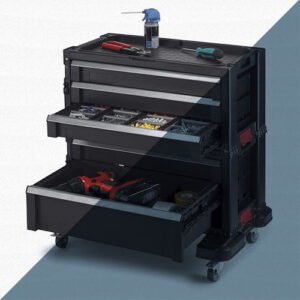
Mobile storage can be useful in laundry rooms, kitchens, workshops, and garages. Before choosing a wheeled product, check wheel construction, locking mechanisms, floor compatibility, and the manufacturer's stated load capacity.
Handles are valuable for containers that will be moved regularly. Check whether they are integrated into the container or attached separately and whether they are designed for the expected load.
A lid can protect contents from dust and help containers stack more securely. Compare lid closure, rigidity, compatibility with stacking, and ease of opening.
Dividers are particularly useful for small objects such as accessories, office supplies, tools, cables, craft materials, and kitchen utensils. Removable dividers offer more flexibility than fixed compartments.
Small homes require careful use of every available area. Instead of automatically buying larger furniture, look for solutions that use vertical space, unused corners, the space beneath beds, cabinet interiors, and other overlooked locations.
Narrow shelving can work where conventional furniture is too deep. Over-door organizers can add capacity without consuming floor area, provided the door and organizer are compatible. Folding storage can also be useful when an item is needed only occasionally.
In compact rooms, visual clutter matters. Storage products with consistent colours, matching containers, or concealed compartments can make a small space appear more organized even when the amount of stored material remains unchanged.
Seasonal belongings can consume considerable space when they remain mixed with everyday items. A better approach is to group items by season or purpose and place less frequently used categories in less accessible storage locations.
Labelling becomes especially valuable when multiple containers have similar dimensions. A simple category label can prevent unnecessary searching and reduce the need to open every box.
Brand reputation can be one useful part of product research, but it should not replace specification checks. Depending on the type of storage solution, Canadian shoppers may encounter brands such as Rubbermaid, Sterilite, IKEA, ClosetMaid, Whitmor, IRIS USA, Simple Houseware, SONGMICS, Seville Classics, and Honey-Can-Do.
Different brands and product lines focus on different categories. A brand known for plastic containers may not necessarily be the strongest choice for heavy-duty shelving, while a furniture-oriented manufacturer may offer better-looking indoor storage but not the same utility as a garage-focused system.
Compare the exact model rather than assuming that every product from a familiar brand has identical construction or capacity.
Customer reviews can reveal practical details that specifications do not always communicate. However, review counts and ratings should be interpreted carefully rather than treated as proof that a product is suitable for every household.
Look for repeated comments about assembly, dimensions, stability, durability, packaging, drawer operation, lid fit, wheel performance, and actual usability. Individual complaints may reflect an isolated issue, while the same concern appearing repeatedly can deserve closer attention.
This is one of the easiest mistakes to avoid. A product that is only slightly too wide or deep may be unusable in the intended location. Measure first and compare the manufacturer's complete dimensions.
A stylish organizer may not have enough capacity, appropriate load support, or convenient access. Consider how the product will be used every day before focusing on its appearance.
Heavy books, tools, appliances, and equipment can place considerable stress on shelves and cabinets. Check the stated load capacity and follow any installation restrictions.
Small bins can improve organization, but an excessive number can make a storage system harder to manage. Use container sizes that match the categories and quantities of items being stored.
Storage is not truly efficient if retrieving an everyday item requires moving several other boxes. Organize according to frequency of use as well as category.
Garage storage, bathroom storage, kitchen storage, bedroom furniture, and basement organization have different requirements. Choose materials and features according to the environment.
When two or more products appear similar, compare the specifications that directly affect your use case. Price should be considered, but it should not be the only deciding factor.
There is no universal budget that makes a storage product a good purchase. The appropriate amount depends on capacity, construction, materials, features, and how frequently the product will be used.
For simple bins and organizers, basic construction may be sufficient. For furniture-style storage or heavy-duty shelving, spending more can make sense when the additional construction quality or functionality directly addresses your needs.
Compare the cost per useful storage capacity rather than simply comparing the ticket price. A slightly more expensive product may offer greater usable space, better access, or stronger construction, while a cheaper product may provide better value for lightweight or occasional storage.
Many home organization products require some degree of assembly. Before purchasing, check the stated assembly requirements, tools required, included hardware, and installation instructions.
For tall shelving and cabinets, stability is particularly important. If the manufacturer recommends anchoring the product to a wall, follow those instructions and use appropriate hardware for the wall construction. Never assume that a tall storage unit is safe simply because it is heavy.
During assembly, verify that shelves, brackets, connectors, screws, and locking mechanisms are correctly positioned. Avoid exceeding the stated capacity while testing a newly assembled unit.
Good organization does not end when the storage product is assembled. Regular maintenance helps keep the system functional and prevents clutter from returning.
Start by identifying the problem rather than immediately buying an organizer. Determine what is creating clutter, where those belongings need to be stored, how often they are accessed, and whether the current space is being used efficiently.
Next, group similar items. Once categories are clear, choose storage that matches each category. Everyday items should be easy to reach. Seasonal belongings can be placed in less accessible areas. Heavy objects should remain on suitable lower shelves where appropriate, while lighter items can occupy higher positions.
Finally, leave some spare capacity. A storage system that is filled completely on the first day may become difficult to manage as new belongings are added.
Storage furniture should be used according to the manufacturer's instructions. Tall or top-heavy furniture may require anchoring, especially in households with children or pets. Follow applicable installation guidance and never exceed stated load limits.
Heavy objects should be placed where they can be handled safely. Avoid creating unstable stacks of boxes or containers, particularly in areas where people regularly walk or work.
For garage, workshop, utility, and basement storage, consider the specific environment. Do not assume that a product intended for a dry indoor room is automatically appropriate for areas exposed to moisture, temperature changes, chemicals, or heavy-duty use.
The best option depends on the room and belongings, but vertical shelving, under-bed containers, compact cabinets, stackable bins, drawer organizers, and modular systems can make efficient use of limited space. Measure the area first and prioritize solutions that provide useful capacity without obstructing movement.
Plastic bins can be practical for many household applications, especially when lightweight, washable, stackable, or lidded storage is useful. Compare construction, capacity, lid design, and intended use rather than choosing solely by appearance or price.
Clear containers are particularly useful for items that are accessed periodically because the contents can be identified without opening the container. They can work well for craft supplies, seasonal decorations, clothing accessories, toys, and household items.
Neither is universally better. Open shelving provides visibility and quick access, while cabinets conceal contents and can create a cleaner appearance. The better choice depends on how often the items are used and whether visibility or concealed storage is more important.
Check external dimensions, internal capacity, shelf adjustability, material, load capacity, doors or drawers, assembly requirements, stability features, cleaning requirements, and the suitability of the product for its intended environment.
Separate clothing by season, use appropriately sized containers, label each container clearly, and place less frequently needed clothing in less accessible storage. Make sure the chosen storage environment is appropriate for the material being stored.
No. A higher price does not automatically mean better value. The right product is the one whose construction, capacity, features, and durability match your requirements. Compare specifications and customer feedback before making a decision.
There is no fixed schedule. Reorganize when storage becomes difficult to access, categories stop making sense, or household needs change. A periodic review can also help identify belongings that are no longer needed.
Before purchasing a storage or home organization product in Canada, use this checklist to make the comparison more practical:
The best home organization purchase is one that solves a specific storage problem without creating another. A successful system should fit the available space, suit the stored belongings, remain accessible, and provide construction appropriate for the intended use.
For Canadian shoppers comparing storage products in 2026, the most useful approach is to begin with measurements and storage requirements, then narrow the options using materials, capacity, features, assembly, durability, and customer feedback. Brand familiarity can help with initial research, but the exact product specifications should remain the deciding evidence.
Whether you are organizing a compact condo, family home, bedroom, kitchen, bathroom, basement, entryway, laundry room, or garage, careful comparison can turn storage purchases into a practical long-term organization system. Always verify the latest specifications, customer feedback, retailer details, pricing, and availability before making a final purchase decision.