

♥ Wishlist
Compare 57 Blank Media for Data Storage, Recording & Archiving products in Canada. Reviews, ratings, pros, cons and buying advice updated for October 2026.





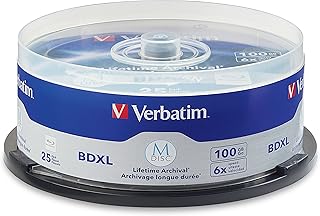


Choosing blank media is less about finding the cheapest spindle and more about matching the disc type, recording capacity, compatibility, intended use and storage requirements to the device and project. For Canadian buyers, the right choice can vary considerably depending on whether the media is being used for music, video, photographs, document archiving, software installation, data backup or another recording task.
This guide is designed to make that comparison easier. Instead of evaluating blank media only by pack size or advertised capacity, consider the complete specification: media format, write speed, storage capacity, compatibility, recording method, surface type, packaging and long-term storage conditions.
Blank media refers to unused recording media that can be written to with compatible hardware. Depending on the format, this can include recordable CDs, DVDs and Blu-ray discs, along with other removable storage media. The important distinction is that different media formats are designed for different capacities, devices and recording technologies.
Before buying, identify exactly what your computer, optical drive, recorder, game console, camera workflow or other equipment supports. A disc with a higher theoretical capacity is not automatically the better choice if the intended hardware cannot write to or read that format.
Compatibility should be the first consideration. Common optical formats include CD-R, CD-RW, DVD-R, DVD+R, DVD-RW, DVD+RW and Blu-ray recordable media. These formats are not interchangeable in every device.
For example, a device that supports standard DVD recording may not support Blu-ray recording simply because both products are optical discs. Similarly, rewritable media may require hardware and software capable of handling the corresponding rewritable format.
Capacity determines how much information can be stored on a disc, but the advertised capacity should be considered alongside the type of content being recorded. A disc intended for a few music tracks has different requirements from one being used for large video files or an archival data set.
CD media generally offers substantially less storage than DVD media, while Blu-ray media provides considerably more capacity. Within some formats, single-layer and dual-layer versions provide different storage capacities.
One of the most important buying decisions is whether you need recordable or rewritable media. Recordable discs are generally designed for writing data to the disc rather than repeatedly replacing the recorded content. Rewritable formats are designed for compatible hardware that supports repeated erasing and recording.
For a permanent distribution copy, recordable media may be the more appropriate option. For temporary projects or situations where content needs to be replaced, rewritable media can be more convenient.
Blank media is often marketed with supported recording speeds. The fastest number on the packaging should not automatically determine your purchase. Actual recording performance depends on the media, optical drive, firmware, recording software and selected recording mode.
For important data, a conservative recording speed supported by both the media and hardware can be preferable to selecting the maximum possible speed simply because it is advertised.
The physical surface can matter depending on how the finished disc will be identified and handled. Some blank media is supplied with printable surfaces, while other discs are intended for conventional labeling methods.
If you plan to identify discs using a printer designed for printable optical media, verify that the media surface is specifically compatible with that printing method. Avoid assuming that every white or light-coloured disc is suitable for printing.
Buying a larger spindle can reduce the effective cost per disc, but only when you actually need the media. Large packs are most useful for projects involving many recordings, regular backups or repeated media creation.
For occasional use, a smaller pack can reduce waste and prevent unused discs from sitting in poor storage conditions for years.
CD-R is a recordable compact-disc format commonly associated with music, small data collections and other projects where CD capacity is sufficient. It is useful when compatibility with CD-reading equipment is the priority.
CD-RW is rewritable compact-disc media. It is intended for compatible drives and recording systems that support repeated writing and erasing. Its usefulness today is more specialized than that of ordinary recordable CD media because many modern systems have moved toward other storage methods.
DVD-R and DVD+R are recordable DVD formats. Both can be useful for compatible DVD recording equipment, but the distinction matters when working with older hardware. Always check the documentation for the specific recorder rather than assuming support.
These are rewritable DVD formats. They can be useful for temporary data, repeated projects and other applications where the ability to erase and reuse the disc is valuable.
Recordable Blu-ray media offers substantially greater optical-disc capacity than CD and standard DVD formats. It can be relevant for larger video projects, photographs, data collections and other files that exceed the practical capacity of smaller optical media.
A Blu-ray writer is required for recording Blu-ray discs. A conventional CD or DVD writer should not be assumed to have Blu-ray recording capability.
For music projects intended for CD-compatible playback equipment, CD-R remains a relevant choice where the playback device expects a conventional audio CD. Check the recorder and playback equipment before purchasing, particularly when working with older stereos or dedicated CD players.
Video requirements vary considerably. DVD media may be appropriate for compatible DVD projects, while Blu-ray provides substantially greater capacity for high-definition video. The correct choice depends on the source files, authoring software, recorder and intended playback device.
Optical media can be useful for offline copies of selected documents, photographs and other files, particularly when the purpose is to keep a physically separate copy. However, optical discs should not automatically be treated as the sole backup of valuable information.
A sensible backup strategy considers multiple copies, different storage locations and periodic verification. Important files should be protected against disc damage, accidental loss and media degradation rather than relying on one physical copy.
For photographs and documents, capacity and organization are particularly important. Use clearly identified discs and maintain a separate record of what each disc contains. For large collections, higher-capacity media can reduce the number of discs required, provided the necessary recording equipment is available.
Occasional users should avoid buying substantially more media than they need. A smaller package from a reputable manufacturer can make more sense when only a handful of discs are required.
Brand selection can help narrow a large number of options, although the exact media specification remains more important than the logo on the packaging. Depending on the format and Canadian availability, buyers may encounter brands such as Verbatim, Sony, Maxell, Philips and TDK.
Brand names alone do not guarantee that every product in a manufacturer's range is appropriate for every application. Always compare the exact format, capacity, recording speed, surface type and compatibility information for the individual product.
Blank media quality should be assessed from several angles rather than from package appearance alone. Look for clearly stated specifications, compatibility information, appropriate packaging and a manufacturer with an established presence in the storage-media market.
This is one of the easiest mistakes to avoid. Before purchasing, identify the exact drive model and review the formats it can write. Compatibility should come before pack size, advertised speed or discount claims.
A very low upfront cost is not necessarily the best value if the media does not perform consistently with your equipment or is unsuitable for the intended application. Compare the exact specifications and intended use before making a price-based decision.
A device may be able to read a particular disc format without being capable of writing to it. Check both functions separately when planning a recording project.
Higher capacity is useful only when you can use it. If your equipment or project does not require additional capacity, a smaller and simpler format may be more practical.
Blank optical media should not be treated as indestructible. Exposure to excessive heat, moisture, sunlight, dust and physical damage can compromise media over time.
A disc is still a physical object that can be lost, scratched or damaged. Important files should have additional copies rather than depending on one optical disc.
Storage is an often-overlooked part of the buying decision. Even good media benefits from sensible handling and a suitable environment.
Small handling habits can make a significant difference to physical media. If a disc needs cleaning, use a soft, lint-free cloth and handle it carefully. Avoid abrasive materials and unnecessary contact with the recording surface.
When wiping a disc, avoid aggressive circular rubbing. If the disc has contamination that cannot be removed safely, it may be better to replace it than risk damaging the surface further.
Printable media is worth considering when appearance and organization matter. It can be useful for photo collections, home video projects, business archives and organized media libraries.
However, the printing method matters. If you intend to use an inkjet disc printer, verify that the product specifically supports that process. If you simply need identification, a suitable labeling approach may be more practical.
Spindle packaging is space-efficient and can be economical for high-volume users. Individual jewel cases or protective cases offer greater convenience for finished discs that will be stored, transported or distributed individually.
Consider what happens after recording. If the discs will remain in long-term storage, appropriate protective cases can make organization and handling easier.
Long-term archiving deserves more care than ordinary file transfer. No consumer storage medium should be assumed to preserve data indefinitely under every condition.
For valuable archives, maintain multiple copies and periodically verify that the data can still be read. Keep at least one copy separate from the primary collection when the information is important enough that loss would be difficult to recover from.
Use descriptive filenames, consistent folder structures and clear physical labels. An unlabeled collection of discs can become difficult to manage even when the data itself remains readable.
When comparing deals, calculate the effective cost per disc and then check whether the media actually meets your technical requirements. A larger package is not a bargain if most of the discs remain unused.
Customer reviews can reveal useful information about packaging, compatibility and recurring problems, but they should be interpreted carefully. A review for one format or package size may not apply to another product from the same manufacturer.
Look for patterns rather than relying on one unusually positive or negative comment. Pay particular attention to reviews that identify the exact media format, recording hardware and intended use.
Modern cloud storage, USB storage and network storage have reduced the everyday role of optical discs, but blank media can still be useful for specific applications. Optical discs can provide a physically separate copy that is not continuously connected to a computer or network.
They can also be useful for sharing media with older equipment, creating physical collections, distributing compatible video or audio projects, or maintaining selected offline records.
Blank discs are not the ideal answer for every storage requirement. Large working files, frequent transfers and continuously changing data may be more convenient on other storage technologies.
If your primary objective is rapid file transfer, frequent editing or maintaining a large active library, compare optical media with suitable USB, solid-state, hard-drive or network-storage options. The best storage method depends on access frequency, capacity, portability, redundancy and the importance of the data.
The best option depends on the recording device, required capacity and intended use. Start by identifying the exact media formats supported by your hardware, then compare capacity, recording speed, pack size, surface type and manufacturer.
Verbatim is a well-known storage-media brand, but the exact product specification still matters. Check the individual disc format, capacity and compatibility rather than selecting a product based only on the manufacturer name.
They are different recordable DVD formats. Many devices support both, but compatibility should always be confirmed for the specific recorder and playback equipment.
R generally identifies recordable media intended for writing, while RW identifies rewritable media designed for compatible systems that support erasing and recording again.
Blu-ray offers substantially greater storage capacity than standard DVD media, but that does not automatically make it the better choice. The recorder, playback equipment, software and project requirements determine which format is appropriate.
Only if you expect to use most of it. Compare the cost per disc, storage requirements and likely usage before choosing a large spindle.
Yes, compatible recordable optical media can be used for selected backups. For important information, however, maintain additional copies because a single disc should not be treated as the only protection against data loss.
Store them in protective cases or suitable packaging away from direct sunlight, excessive heat, moisture, dust and physical damage. Good storage practices are particularly important for discs intended for long-term use.
Price should be considered together with compatibility and intended use. A low-cost product can be attractive for non-critical projects, but for valuable recordings it is sensible to compare specifications and manufacturer information rather than choosing solely by price.
There is no single interval that guarantees reliable preservation because media, storage environments and usage differ. Important archives should be periodically verified and migrated or duplicated when necessary rather than assuming that a disc will remain readable indefinitely.
The smartest blank-media purchase is the one that matches your equipment and project rather than the one with the largest capacity, biggest pack or lowest advertised price. For Canadian shoppers, compare the exact media format, capacity, recording speed, compatibility, surface type, packaging and current retailer pricing before committing to a purchase.
For occasional recording, prioritize compatibility and reasonable pack size. For high-volume projects, compare the effective cost per disc and supported specifications. For valuable archives, prioritize reliable handling, verification and multiple copies. Brands such as Verbatim, Sony, Maxell, Philips and TDK may provide useful starting points for comparison, but the individual product specification should always make the final decision.
Before buying, check the latest product specifications and current customer feedback, then compare today's Canadian prices from trusted retailers. A careful specification-first approach makes it much easier to identify a genuinely suitable blank-media deal instead of simply choosing the most heavily advertised option.