

♥ Wishlist
Compare 67 Solar Power Kits for Canadian Homes, Camping & Off-Grid Power products in Canada. Reviews, ratings, pros, cons and buying advice updated for October 2026.

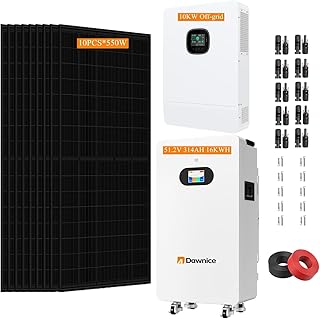


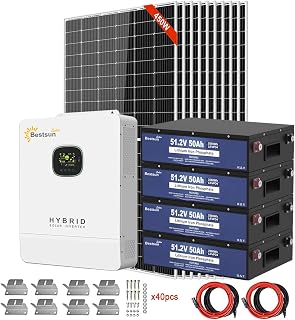

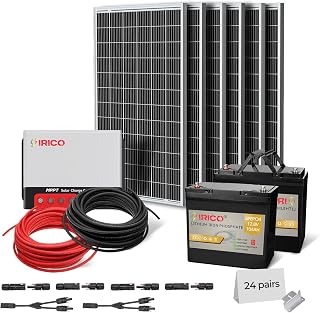


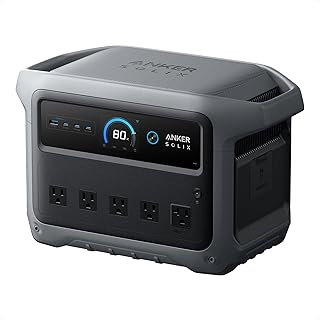


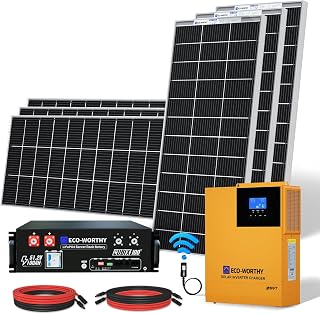


Choosing a solar power kit for the Canadian market requires more than comparing the number of panels included in a package. A useful kit must match your intended application, available sunlight, electrical loads, storage requirements, climate, and installation setup. A compact solar generator kit can be suitable for occasional backup power, while a larger panel-and-battery system may be better for cabins, RVs, remote equipment, or emergency preparedness.
Before comparing deals, identify what you actually need the system to accomplish. A kit designed to recharge phones, lights, cameras, or small electronics has very different requirements from one intended to operate refrigerators, medical equipment, power tools, pumps, or other high-demand appliances. Looking beyond the headline wattage can help prevent an expensive mismatch.
Solar panels are commonly described by their rated wattage under specified test conditions. That rating is useful for comparison, but it does not mean a panel will continuously produce its maximum output outdoors. Actual generation can vary because of sunlight intensity, cloud cover, temperature, shading, panel orientation, snow, dirt, and system losses.
For Canadian buyers, seasonal conditions deserve particular attention. Winter days can provide fewer daylight hours, while snow accumulation can obstruct panels. Cold temperatures can affect different components in different ways, and prolonged periods of limited sunlight may increase dependence on stored energy or another backup source.
For solar kits that include energy storage, battery capacity is one of the most important specifications. Capacity is generally expressed in watt-hours (Wh). In simple terms, a 1,000 Wh battery contains more stored energy than a 500 Wh battery, although usable energy will depend on the battery management system, inverter efficiency, operating conditions, and the manufacturer's stated limits.
Do not confuse battery capacity with inverter output. A battery may store substantial energy while the integrated inverter has a comparatively modest continuous output rating. Conversely, a powerful inverter does not automatically mean the battery can run a large appliance for an extended period.
A useful comparison should therefore consider battery capacity, continuous inverter output, surge capability, charging speed, solar input, battery chemistry, and expansion options together.
Many newer portable power stations use lithium iron phosphate, commonly called LiFePO4. This chemistry is attractive for applications where durability, safety characteristics, usable capacity, and cycle life are important. Other lithium chemistries and traditional lead-acid batteries can also have legitimate applications.
When comparing models, avoid choosing solely on battery chemistry. The complete battery specification matters. Look at rated capacity, usable capacity where provided, charging limits, temperature requirements, warranty terms supplied by the manufacturer, and whether replacement or expansion batteries are supported.
The term “solar power kit” can describe several different product categories. A portable solar generator typically combines a battery, inverter, charging electronics, and multiple output ports in one enclosure. Solar panels can then recharge the internal battery.
A traditional solar power system may instead consist of separate panels, a charge controller, batteries, an inverter, wiring, mounting equipment, and electrical protection. This modular approach can provide greater flexibility but requires more careful system design.
Portable power stations from brands such as EcoFlow, Jackery, BLUETTI, Anker, and Goal Zero are commonly associated with portable energy-storage products. Product capabilities vary considerably between models, so the brand name alone should never replace specification checking.
The continuous AC output indicates how much power the inverter can provide during normal operation. Add up the wattage requirements of the devices you expect to run and leave appropriate headroom rather than selecting a system that operates permanently at its limit.
Some appliances draw substantially more power when starting. Refrigerators, pumps, compressors, and certain power tools are examples of equipment that may have startup demands above their normal running wattage. A kit with a high continuous rating may still be unsuitable if its surge capability is insufficient.
Solar input determines how much photovoltaic power the power station or battery system can accept. A large solar array does not necessarily result in faster charging if the receiving unit has a lower maximum solar-input limit.
Check both the maximum input wattage and the permitted voltage and current range. Compatibility between panels and the charge controller is essential.
Consider the actual ports you need rather than simply counting them. USB-C can be useful for modern laptops, tablets, phones, and other compatible devices. USB-A remains useful for many smaller electronics. AC outlets are needed for conventional household plugs, while DC outputs may suit specific equipment.
Also check whether all ports can operate simultaneously and whether activating certain outputs reduces the maximum available power.
Charging speed can become especially important during emergencies or periods of limited sunlight. Compare the advertised charging methods and determine whether the kit supports solar charging, AC charging, vehicle charging, or combinations of these methods.
Fast charging can be convenient, but it should be evaluated alongside battery capacity and solar-input capability. A system that accepts high charging power may require a compatible charger or sufficiently large solar array to take advantage of its maximum rate.
For emergency preparedness, focus on essential loads rather than trying to power an entire home with a small portable kit. Refrigeration, communication equipment, lighting, networking equipment, and selected electronics may be more realistic priorities than electric heating or large cooking appliances.
Make a list of essential devices, record their approximate wattage, and estimate how long each needs to operate. This provides a more meaningful basis for comparing battery capacity than choosing the largest-looking product.
Camping applications generally prioritize portability, charging flexibility, durability, and low weight. A compact panel and power station can be useful for phones, lights, cameras, laptops, and other moderate loads.
For extended trips, consider whether the panel can be positioned efficiently throughout the day. A smaller battery paired with adequate solar input can sometimes be more practical than carrying a very large battery that is difficult to recharge.
RV applications require a broader assessment because electrical demand can include refrigerators, fans, lighting, electronics, water pumps, and cooking equipment. Determine whether the kit is intended to supplement an existing electrical system or function as the primary portable power source.
Pay particular attention to DC compatibility, inverter output, solar-input limits, battery expansion, and available charging methods.
Remote locations often require more careful system planning. Start by calculating daily energy consumption and then consider how much solar generation is realistically available during the least productive period you expect to rely on the system.
For permanent installations, professional electrical advice may be appropriate. Portable power stations and complete residential solar systems should not be treated as interchangeable products.
Power tools can have substantial startup and operating demands. Before choosing a kit, check the tool's rated wattage and the power station's continuous and surge ratings. Battery-powered tools may also be easier to support than corded equipment when portability is the primary goal.
Canada's varied climate makes environmental specifications particularly important. Before purchasing, review the manufacturer's stated operating and storage temperature ranges. Do not assume that a product designed for general outdoor use is suitable for every weather condition.
Snow and ice can obstruct photovoltaic panels, while moisture can create additional concerns for equipment that is not appropriately protected. Portable units should be stored and operated according to manufacturer instructions, particularly during extreme temperatures.
For winter preparedness, consider the complete energy chain: solar generation, battery storage, charging alternatives, and the equipment required to maintain essential loads during extended periods of poor solar production.
Panel placement can have a major effect on generation. Even partial shading can reduce the output of some photovoltaic configurations. Before installation or regular use, identify potential obstructions and consider how the sun's position changes throughout the day and across seasons.
Portable panels provide positioning flexibility, while permanently mounted panels may provide a more consistent setup. Either approach requires attention to orientation, tilt, shading, accessibility, and safe installation.
A high-wattage panel does not automatically make a complete kit superior. If the battery is small or the receiving unit limits solar input, the extra panel capacity may not provide the expected benefit.
Battery capacity and inverter output solve different problems. Always verify whether the system can start and continuously operate the appliances you intend to use.
Peak output is generally a short-duration capability. It should not be treated as the normal operating power rating. Use the continuous rating when assessing everyday loads and the surge rating when considering motor-driven appliances.
Check voltage, connector type, charging requirements, and supported devices. A system can have many ports yet still be inconvenient if it does not provide the connections your equipment requires.
Larger batteries generally add weight and physical bulk. For camping or mobile use, portability can be just as important as capacity. A very large unit may be difficult to transport even if its electrical specifications appear attractive.
Maximum solar input represents a technical limit rather than a guaranteed everyday charging rate. Weather, panel positioning, temperature, shading, and system losses can reduce actual charging performance.
The lowest advertised price is not necessarily the best value. Compare the complete specification and included equipment before judging a deal. Some packages may include panels, while others sell the power station separately. Accessories, cables, adapters, mounting components, and expansion batteries can also change the effective cost of building the system you need.
Brand reputation can help narrow a large product category, but it should not replace model-level research. Established names in the portable power market include EcoFlow, Jackery, BLUETTI, Anker, and Goal Zero. These manufacturers offer different product ranges, so specifications should be compared between individual models rather than between brands as a whole.
When reviewing a product from any manufacturer, examine the official technical specifications, included accessories, operating limits, charging requirements, warranty documentation, and current customer feedback. Independent reviews can add useful context, particularly when comparing portability, controls, noise, charging behaviour, and everyday usability.
Monocrystalline panels are widely used in modern portable and residential solar products. They can provide strong power output relative to their physical area, making them useful when available space is limited.
Rigid panels are generally designed for more permanent setups and can provide a stable mounting solution. Folding panels prioritize mobility and convenient storage. The better choice depends on whether the system will move frequently or remain in one location.
Examine the manufacturer's information regarding weather resistance, frame construction, connectors, and intended operating environment. For outdoor use, durability should be considered alongside electrical performance.
A modern battery system normally relies on electronic battery-management controls to monitor important operating conditions. Depending on the design, these systems can help manage charging, discharging, temperature, and other electrical parameters.
Look for clearly documented protection features and follow the manufacturer's instructions for charging, storage, transportation, and use. Do not modify wiring or electrical components unless the system is specifically designed for that configuration and the work is performed appropriately.
A practical starting point is to calculate energy consumption in watt-hours. Multiply the power draw of a device by the number of hours you expect to use it. For example, a 60-watt device used for five hours consumes approximately 300 Wh before accounting for conversion losses.
For several devices, add their estimated energy requirements together. Then compare the resulting figure with the usable battery capacity rather than relying on the battery's headline number alone.
Solar production requires a separate calculation. The panel array must generate enough energy to replenish the battery while also accounting for weather and system losses. Because actual solar conditions vary, avoid designing a critical backup system around ideal conditions alone.
There is no single best kit for every Canadian buyer. The right option depends on the required battery capacity, inverter output, solar input, portability, climate, intended appliances, and budget. Compare complete specifications and current verified customer feedback before making a decision.
They can be useful for emergency preparedness, camping, RV travel, remote work, backup electronics, and other applications where portable or renewable power is valuable. Their usefulness depends on matching the system's capabilities with realistic energy requirements.
Some systems can run compatible refrigerators, but the correct choice depends on the refrigerator's running consumption, startup surge, duty cycle, and the power station's inverter and battery specifications. Check both continuous and surge output before relying on a system for refrigeration.
Solar panels can generate electricity during winter, but available production can be reduced by shorter daylight periods, cloud cover, snow, shading, and panel positioning. Always follow the manufacturer's temperature and weather guidelines for both panels and the power station.
The required wattage depends on the equipment you intend to operate. Start with the highest simultaneous electrical load, then check surge requirements and battery energy consumption. A larger number is not automatically better if the system's battery, solar input, or portability does not suit the intended application.
Estimate the total watt-hours required during the period you need backup power. Compare that requirement with the system's usable battery capacity and consider conversion losses and the possibility that the system may not be fully charged when needed.
No. A portable solar generator is generally an integrated battery-and-inverter product designed for portable or backup applications. A home solar installation can involve permanently mounted panels, electrical equipment, battery storage, grid connections, and installation requirements. They serve different purposes.
Check battery capacity, inverter output, surge capability, solar-input limits, charging options, environmental specifications, portability, included accessories, expansion capability, warranty terms, and current customer feedback. These factors provide a more useful comparison than price or panel wattage alone.
Before selecting a solar power kit, confirm that the complete system matches your intended use. A good buying decision should consider the entire energy chain rather than one headline specification.
The strongest solar power kit choice is ultimately the one that fits the job without paying for capabilities you will not use. For Canadian shoppers in 2026, careful comparison of battery storage, inverter performance, solar input, portability, environmental limits, and long-term usability can make it much easier to identify a suitable option among competing deals.