

♥ Wishlist
Compare 56 Recessed Lighting for Modern Canadian Homes products in Canada. Reviews, ratings, pros, cons and buying advice updated for October 2026.


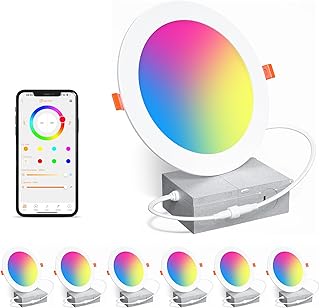


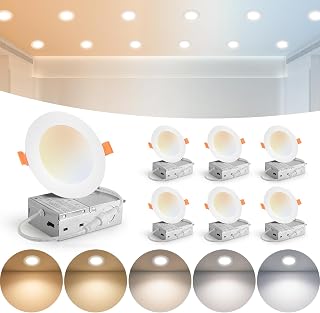


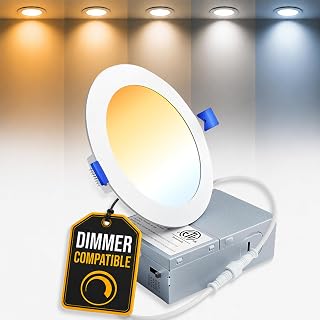


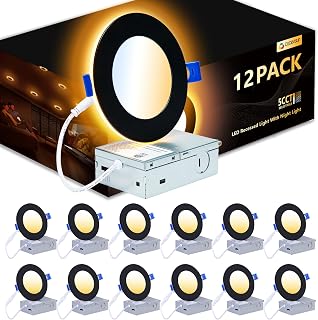


Smart recessed lighting can do much more than replace a conventional ceiling fixture. The right system can provide adjustable brightness, selectable colour temperature, app-based control, voice commands, scheduling, scene creation and, on compatible models, integration with a broader smart home. However, these features vary considerably between products.
For Canadian buyers, the best choice depends on more than the number of smart functions. Ceiling opening size, housing depth, installation method, voltage compatibility, wet-location suitability, colour rendering, dimming performance and smart-home compatibility can all affect whether a recessed light is appropriate for a particular room.
When comparing the best smart recessed lighting deals for 2026, treat the advertised price as only one part of the decision. A lower-cost fixture may become less attractive if it requires additional components, does not fit the existing ceiling opening or cannot integrate with the smart-home platform you already use.
A strong smart recessed lighting option should balance lighting performance, installation requirements, control features and long-term practicality. No single specification determines quality.
Smart recessed lights generally fall into several practical categories. Understanding the differences makes product comparison much easier.
Retrofit models are designed to replace existing recessed lighting components while using an existing ceiling opening. They can be convenient when upgrading an established room without changing the entire ceiling installation.
Before choosing a retrofit model, measure the existing opening and check the current housing or junction-box arrangement. A product advertised as a particular nominal size does not necessarily mean every component will fit every existing installation.
Canless designs do not require a traditional recessed can housing in the same way as older installations. Their relatively shallow construction can make them useful for applications where ceiling depth is limited.
Installation requirements vary. Some models use spring clips, while others require specific junction boxes or mounting arrangements. Always compare the manufacturer's installation instructions with the actual ceiling construction.
Another approach is to use a conventional compatible recessed fixture with a smart bulb. This can provide flexibility because the bulb can potentially be replaced independently of the fixture.
The disadvantage is that the final result depends on compatibility between the housing, bulb, trim and smart-control system. Physical dimensions and heat-management requirements should be checked before purchase.
Nominal sizes such as 4-inch, 5-inch and 6-inch recessed lighting describe common categories, but they should not be treated as universal measurements. The actual cutout diameter, trim diameter, mounting depth and connection arrangement can differ.
Measure the ceiling opening rather than relying solely on the size of an old bulb or trim. If replacing existing recessed lights, also examine the available space above the ceiling.
Light output is commonly expressed in lumens. More lumens do not automatically mean a better fixture. A very bright light can be unsuitable for a bedroom or relaxing living area, while insufficient output can make a kitchen or work area uncomfortable.
Consider the room's size, ceiling height, wall colour, intended activity and number of fixtures. A lighting layout with several moderately bright fixtures can produce a more balanced result than relying on a small number of extremely bright lights.
Colour temperature affects the visual character of a room. Warm white light can create a relaxed atmosphere, while cooler white light may provide a more energetic appearance for work-oriented spaces.
Smart recessed lights with adjustable white settings can be particularly useful in multipurpose rooms. However, if you rarely change lighting settings, a simpler fixture with an appropriate fixed colour temperature may offer better value.
Colour rendering is important when the appearance of surfaces matters. Kitchens, dressing areas, bathrooms, art spaces and rooms with carefully selected finishes can benefit from lighting that reproduces colours more naturally.
Do not evaluate a smart light only by its smart features. A fixture with extensive app functionality is not necessarily the best lighting product if its basic illumination characteristics do not suit the room.
Dimming behaviour deserves special attention. Some fixtures provide smooth adjustment through their dedicated application, while others may also support compatible physical dimmers or smart switches.
Check exactly how dimming works before buying. A fixture that supports app-based brightness control may not automatically be compatible with every conventional wall dimmer.
Smart recessed lighting can use different wireless technologies and ecosystems. The most important question is not which technology sounds most advanced, but whether the fixture works reliably with your existing setup.
Wi-Fi models can connect directly to a home network without necessarily requiring a separate hub. This can simplify setup, although network requirements and app functionality vary between products.
Bluetooth-enabled lighting can be useful for local control and straightforward setups. Range and remote-control capabilities depend on the specific implementation.
Matter is designed to improve interoperability between supported smart-home ecosystems. A Matter-compatible recessed light can be attractive to buyers who want greater flexibility between supported platforms.
Compatibility should still be checked carefully. Matter support does not mean every feature of every product will be available through every smart-home platform.
Some lighting ecosystems use a dedicated bridge or hub. This can add another component to the installation but may provide broader lighting-management capabilities, depending on the system.
Before purchasing, identify the smart assistant or home platform you already use. Common ecosystems include Amazon Alexa, Google Home and Apple Home. Other systems and manufacturer-specific applications may also be supported.
Look beyond simple compatibility statements. Check whether the desired functions include colour adjustment, brightness control, scenes, scheduling, grouping and voice commands. A product can technically work with a platform while offering fewer controls through that platform than through its dedicated application.
Voice control can be convenient for ceiling lighting because it eliminates the need to reach for a phone. Useful commands may include turning lights on or off, changing brightness, selecting colours or activating predefined scenes.
However, voice control should be considered an additional convenience rather than the only control method. A reliable installation should remain practical when the smartphone is unavailable or when another person in the household wants to operate the lights manually.
One of the most important distinctions between smart lights is whether they provide colour-changing RGB functionality, adjustable white light, or both.
RGB fixtures can produce multiple colours and are useful for decorative lighting, entertainment rooms, gaming areas and special occasions. They can also create scenes that change the mood of a room.
RGB capability is not essential for every room. If the primary objective is comfortable everyday illumination, high-quality white-light performance may be more valuable than an extensive colour palette.
Tunable white fixtures allow the user to change the appearance of white light across a specified range. This can provide greater flexibility for rooms that serve different purposes throughout the day.
Combination models can provide both decorative colours and adjustable white light. They are attractive for buyers who want maximum flexibility, but the additional functionality should be justified by actual use rather than treated as a requirement.
Kitchen lighting should prioritize useful illumination and accurate colour appearance. Smart controls can be helpful for changing brightness between cooking, cleaning and entertaining.
For areas near sinks or other sources of moisture, verify the fixture's environmental suitability before installation. Do not assume that every recessed light is appropriate for damp or wet locations.
Living rooms often benefit from dimmable smart lighting because the desired brightness changes between daytime activities, evening relaxation and entertaining.
Grouping several fixtures can also provide more consistent control than operating individual lights separately.
Bedrooms usually benefit from comfortable, lower-intensity lighting and easy dimming. Tunable white functionality can provide additional flexibility, while elaborate RGB features may be unnecessary unless decorative lighting is an important part of the room.
Bathrooms require careful consideration of moisture exposure. Check the manufacturer's location rating and installation requirements rather than choosing a fixture based only on its smart capabilities.
Basements can have different ceiling materials and limited installation depth. Canless designs may be worth investigating when space above the ceiling is restricted, but the exact mounting and electrical requirements must be confirmed.
A home office needs lighting that supports comfortable work. Adjustable brightness and suitable white-light settings can be useful when the room serves as both a workspace and a general living area.
Installation requirements should be reviewed before ordering any recessed light. Existing ceiling construction, electrical boxes, insulation, available depth and the type of existing fixture can affect compatibility.
Electrical work can involve safety risks. If the installation requires changes to fixed wiring, junction boxes or other electrical components, follow the product instructions and applicable Canadian electrical requirements and use a qualified professional where appropriate.
Do not select a fixture solely because its exterior trim appears to match the existing opening. The electrical connection, mounting mechanism and required clearance must also be compatible.
Ceiling insulation is an important consideration for recessed lighting. Some fixtures are designed for particular installation conditions, while others require specific clearances or installation arrangements.
Check whether the selected model is appropriate for the ceiling construction and insulation configuration. Never assume that a shallow fixture automatically has unrestricted installation options.
Location ratings matter when installing lighting in areas exposed to humidity or water. A fixture suitable for a dry ceiling should not automatically be treated as suitable for a bathroom, shower-adjacent area or other moisture-prone location.
Read the manufacturer's stated location rating and installation instructions. If the product documentation does not clearly establish suitability for the intended environment, choose a product with requirements that are clearly documented.
Smart functionality should not distract from everyday energy consumption. LED recessed lighting is generally valued for its efficient operation compared with older lighting technologies, but individual products still differ in power consumption and light output.
When comparing models, consider watts alongside lumens. A fixture producing useful illumination with lower power consumption may be more practical than one that simply advertises a high maximum brightness.
Smart scheduling can also help prevent lights from remaining on unnecessarily. Automated routines may be particularly useful for rooms where lighting is frequently forgotten.
Look at the physical construction as carefully as the software. The trim, diffuser, housing, connectors, mounting clips and electrical components all contribute to the installation experience.
Aluminium components may assist with heat management, while plastic components can reduce weight and may be suitable for certain designs. The material alone does not establish product quality; construction, thermal design and manufacturer specifications matter together.
LED electronics and smart-control components generate heat. Effective thermal management can help support reliable operation over time.
When comparing products, examine the installation requirements, housing design and manufacturer's operating information. Avoid enclosing a fixture in a configuration that is not permitted by its instructions.
The cheapest option is not necessarily the best deal. A better comparison considers the complete installation, control requirements, compatibility and intended use.
A fixture labelled as 6-inch, for example, may still require a particular cutout measurement. Measure before purchasing rather than assuming nominal sizes are interchangeable.
A fixture that looks compact from below may require additional space above the ceiling. Limited depth can make some models unsuitable.
Smart-home compatibility varies. Verify the exact ecosystem support before purchasing, particularly if voice control or centralized automation is important.
Colour-changing features can be appealing, but they may not improve everyday lighting in a kitchen, office or bedroom. Prioritize the features you will actually use.
A smart light should remain convenient for everyone who uses the room. Consider whether the product works with a physical switch, compatible smart control or another practical fallback.
Product photographs cannot reveal every installation requirement. Read the technical documentation before ordering, especially for retrofit projects.
When evaluating several products, use the same criteria for every model. This prevents flashy features from overshadowing important differences.
Package quantity can make apparently similar deals difficult to compare. A lower-priced package may contain fewer fixtures, while a multi-pack may have a higher total price but a lower cost per fixture.
Calculate the effective cost per light only after confirming that the fixtures have the same core specifications. A cheaper unit price is not useful if the package does not provide the required brightness, smart features or installation compatibility.
A single fixture can make sense when replacing one failed light or testing compatibility before upgrading an entire room. Multi-packs are more practical when several ceiling openings need the same lighting configuration.
For a larger installation, using identical fixtures can simplify grouping, colour matching and everyday control. Mixing different generations or product lines can result in inconsistent light appearance or different smart-control behaviour.
Replacing an entire room can provide a more consistent appearance and unified smart control. However, a staged upgrade can reduce upfront spending and allow you to test one fixture before committing to a larger purchase.
Testing one unit can be especially useful when the existing ceiling construction is unusual or when smart-home integration is an important requirement.
Customer reviews can provide useful information that is difficult to identify from a specification sheet, but they should be read critically.
Look for recurring patterns rather than focusing on one unusually positive or negative comment. Repeated reports about installation difficulty, connection stability, premature failures, colour inconsistency or app limitations may deserve further investigation.
Also separate installation problems from product problems. A fixture may receive negative feedback because it was incompatible with a particular ceiling configuration even though the product itself meets its published specifications.
Established smart-lighting brands can be worth considering because ecosystem compatibility, application support and product documentation matter in addition to the fixture itself. Depending on the specific product line and current availability, Canadian shoppers may encounter brands such as Philips Hue, Philips, Govee, Nanoleaf, Feit Electric, GE, Sengled, LIFX and Globe Electric.
Brand recognition alone should not determine the purchase. Compare the exact model, specifications, installation method and supported smart-home features. Product lines within the same brand can have significantly different capabilities.
Before building a room around one smart-lighting platform, consider how you expect your home to evolve. If you already own smart bulbs, switches, sensors or hubs, staying within a compatible ecosystem can simplify automation.
Buyers who prefer flexibility may want to investigate products supporting widely adopted standards such as Matter, while remembering that specific functions can still depend on the product and controlling platform.
The application is part of the user experience. A technically capable fixture can become frustrating if basic controls are difficult to find.
Check whether the features you care about require the manufacturer's application or can be controlled through your preferred smart-home platform.
Smart recessed lighting becomes more useful when automation solves a real household problem. Examples include turning hallway lighting on during selected evening hours, reducing living-room brightness for movie time, or scheduling outdoor-adjacent interior lighting around regular routines.
Motion-based automation can also be useful in suitable areas, although sensors and automation rules should be configured carefully to avoid lights switching on unexpectedly.
Smart lighting is not automatically the best choice for every installation. If a room only needs simple on-and-off illumination and will rarely use automation, a conventional high-quality LED recessed light may be sufficient.
Smart features are most valuable when you will actually use remote control, scheduling, dimming, scenes, colour adjustment, voice commands or integration with other home devices.
Prioritize straightforward app operation, dependable connectivity and basic brightness control. Extra colour features are optional.
Look for RGB or RGB-plus-white functionality, scene control, grouping and integration with the smart-home or entertainment setup you already use.
Prioritize ecosystem consistency, multi-device management, stable connectivity and the availability of suitable multi-packs.
Focus first on physical installation requirements. Canless or shallow designs may be worth considering where ceiling depth is limited.
Tunable white functionality and smooth dimming can be more useful than decorative colour effects when the fixture will serve several everyday purposes.
LED recessed fixtures generally require less routine maintenance than many older lighting technologies, but they should still be inspected periodically.
Keep visible trims and diffusers clean according to the manufacturer's instructions. Dust can affect the appearance of light and make a fixture look less bright even when the light source is functioning normally.
Smart fixtures may also receive firmware updates. Keeping the application and supported devices updated can help maintain compatibility, although update procedures differ between manufacturers.
Check power, network availability, device compatibility and the manufacturer's setup procedure. Some products require a particular pairing mode before they can be added to an application.
Investigate network coverage and the distance between the fixture and relevant wireless equipment. If several devices experience the same problem, the issue may be related to the network rather than one fixture.
Verify that the correct smart-home account is connected and that the fixture is assigned to the appropriate room or device group. Also confirm that the desired command is supported by the integration.
Different models, firmware versions and product generations can produce different light characteristics. For a uniform installation, compare identical models whenever possible.
A deal should be judged by value rather than headline discount language. Compare the current price with the product's specifications, package quantity, installation requirements and compatibility.
Before purchasing, compare the same model across trusted Canadian retailers and check verified customer feedback. Confirm that the product description, model number and package contents match the item you intend to buy.
Prices, promotions and availability can change quickly during 2026. Treat any displayed deal as time-sensitive and verify the current listing before placing an order.
Use this checklist before choosing one of the smart recessed lighting options featured in a 2026 buying guide.
The best option depends on the room, ceiling construction, desired brightness, smart-home ecosystem and budget. A fixture that is ideal for a living room may not be the right choice for a bathroom or kitchen.
They can be worthwhile when you will use features such as dimming, scheduling, remote control, voice commands, scenes or colour adjustment. If you only need basic illumination, conventional LED recessed lighting may provide better simplicity.
Not all smart recessed lights use Wi-Fi. Some rely on Bluetooth, dedicated hubs or other wireless technologies. Check the exact connectivity requirements of the model before purchasing.
Many smart lighting products support Amazon Alexa, but compatibility varies by model. Confirm that the exact fixture supports Alexa and check which functions are available through voice control.
Many models can integrate with Google Home, but support is product-specific. Verify the exact model's compatibility before buying.
Some smart recessed lights support Apple Home directly or through compatible standards and ecosystems. Check the product documentation rather than assuming compatibility from the brand name.
Matter can be useful for buyers who value interoperability between supported smart-home platforms. However, Matter compatibility does not by itself guarantee superior light quality, installation convenience or access to every product feature.
The correct size depends on the existing ceiling opening and the desired appearance. Common categories include 4-inch, 5-inch and 6-inch fixtures, but the actual cutout dimensions should always be checked.
Canless fixtures can simplify certain installations because they do not use a traditional recessed can housing, but installation difficulty depends on the ceiling structure, electrical connection and specific mounting system.
Some can be used in suitable bathroom locations, but the fixture must have an appropriate environmental rating for the intended location. Always follow the manufacturer's installation requirements.
Choose RGB if decorative colour effects are important. Choose tunable white if your priority is flexible everyday illumination. Combination models can provide both when you want maximum versatility.
There is no universal number because lighting requirements depend on room dimensions, ceiling height, fixture output, beam distribution, wall finishes and the intended activity. A lighting plan is preferable to selecting a quantity solely from a general rule.
Check the ceiling opening, housing dimensions, installation depth, electrical connection, insulation conditions, fixture rating and smart-home compatibility. These factors determine whether the replacement is genuinely compatible.
The strongest smart recessed lighting purchase is not necessarily the fixture with the longest feature list or the biggest advertised discount. It is the option that fits the ceiling correctly, provides appropriate light quality, works with your preferred smart-home system and offers functions you will actually use.
For Canadian shoppers, begin with installation compatibility and lighting requirements. Then compare smart connectivity, dimming, colour control, environmental suitability, package size and customer feedback. Once those fundamentals are satisfied, price becomes a much more meaningful way to distinguish competing deals.
Before making a final purchase decision, verify the current specifications, package contents, retailer information, customer reviews, price and availability. Smart-lighting technology continues to evolve, so checking the exact model rather than relying solely on a brand or product category is the safest way to make a well-informed buying decision in 2026.