
♥ Wishlist
Compare 30 Dining Tables for Stylish and Practical Canadian Homes products in Canada. Reviews, ratings, pros, cons and buying advice updated for October 2026.






Finding a dining table that represents a genuinely smart buy involves more than choosing the lowest price. The right table needs to fit the available room, accommodate the household comfortably, suit the way the space is used, and provide a sensible balance of construction quality, durability, appearance and cost. In Canada, shoppers should also consider the practical realities of smaller dining areas, open-concept homes, seasonal indoor humidity changes and the different maintenance requirements of wood, engineered wood, glass and metal.
This buying guide is designed to help Canadian shoppers compare dining tables more intelligently. Instead of judging a table by appearance alone, evaluate its dimensions, construction, tabletop material, base design, seating capacity, stability, maintenance requirements and overall value. Brands such as IKEA, Ashley Furniture, Structube, Simpli Home, Walker Edison and Winsome offer different approaches to dining furniture, so comparing specifications is more useful than assuming one brand or style is automatically better.
A smart buy is a table that meets your actual requirements without paying for features you do not need. A relatively inexpensive table can be excellent value when it has the right dimensions, stable construction and suitable materials. Conversely, a visually impressive table can be poor value if it is too large for the room, difficult to maintain or unsuitable for everyday use.
One of the most common dining-table buying mistakes is choosing a table based on its listed seating capacity without measuring the surrounding space. A table can technically seat six people while still making the room uncomfortable because chairs cannot be pulled out easily or people cannot walk behind seated diners.
Before purchasing, measure the usable dining area rather than simply measuring the entire room. Account for walls, cabinets, islands, door swings, radiators and other furniture. Then consider the depth of the chairs you intend to use.
A useful planning principle is to leave approximately 90 cm of clearance around the table where possible. This provides considerably better circulation than placing a table immediately against walls or other furniture. In compact apartments and condominiums, you may need to prioritize one or more sides for circulation while keeping another side closer to a wall.
Small rectangular, square and round tables are often practical for apartments, breakfast areas and compact dining rooms. A smaller table can also make a room feel less crowded and may be easier to move when the layout changes.
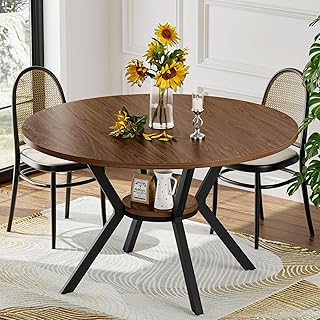
Round tables are particularly useful when circulation around the table matters because there are no sharp corners extending into walking paths. Square tables can provide a balanced appearance in compact rooms but should be matched carefully to the room's dimensions.
A medium rectangular table is a versatile choice for many households. When comparing models, look at both the length and width because a narrow table may provide adequate seating positions while offering limited space for serving dishes, placemats and shared meals.
For everyday family dining, consider how much usable tabletop space each person receives. A table should not merely accommodate chairs; it should provide enough room for comfortable dining.
Larger tables require significantly more attention to room dimensions and circulation. They can work well in dedicated dining rooms or spacious open-plan areas, but a large tabletop can overwhelm a smaller room even when its listed dimensions appear manageable.
For households that only need extra seating occasionally, an extendable dining table can be more practical than purchasing a permanently oversized table.
Most conventional dining tables are designed around standard dining-chair proportions, but dimensions still vary enough to matter. Do not purchase the table and chairs independently without checking their measurements.
These details become especially important with farmhouse-style tables, pedestal tables and tables with thick aprons, where the apparent tabletop dimensions do not tell the whole story about usable seating space.
Rectangular tables are the most adaptable option for many dining rooms. Their shape works naturally with rectangular rooms and provides defined seating positions along the long sides. They are also available in an enormous range of styles, from traditional solid-wood designs to modern engineered-wood models.
The main disadvantage is that corners can interfere with circulation in tight spaces. Measure carefully if the table will sit near a doorway, kitchen island or high-traffic walkway.
Round dining tables encourage a more conversational arrangement because diners face one another without a strong head-of-table hierarchy. Their curved profile can also improve movement around a compact dining area.
The trade-off is that a round tabletop can consume more floor area than expected once sufficient chair clearance is included. Very large round tables may also make it harder to reach shared dishes placed in the centre.
Square tables can work particularly well in square rooms and compact dining zones. They create equal seating positions and a symmetrical appearance.
For larger households, however, a square table can require considerable floor space. It may also be less convenient than a rectangular or extendable design when you frequently need additional seating.
Oval tables combine some of the advantages of rectangular and round designs. They offer a longer central surface while eliminating sharp corners. This can make them attractive for dining rooms where circulation and softer visual lines are important.
Material selection has a major influence on the long-term ownership experience. Solid wood, engineered wood and wood-look finishes can all be appropriate, but they behave differently and should not be treated as interchangeable.
Solid wood dining tables are made from natural wood rather than a wood-based core covered with a decorative surface. Depending on the species and construction, solid wood can provide substantial visual character and may develop a distinctive appearance over time.
Engineered wood includes materials such as medium-density fibreboard and particleboard-based constructions. These materials can provide a consistent surface and allow manufacturers to produce many contemporary designs at accessible price points.
Wood veneer uses a thin layer of natural wood over a supporting substrate. High-quality veneer can provide the appearance and grain character of real wood while allowing manufacturers to control material use and dimensional stability.
When comparing veneer tables, inspect the specifications carefully to determine whether the tabletop is genuinely veneered and what material forms the underlying structure.
Glass dining tables can make a dining area appear visually lighter and can work especially well in modern interiors. Transparent surfaces allow more of the floor and surrounding furniture to remain visible, which can help a compact room feel less visually dense.
The disadvantages include fingerprints, visible smudges and the need for regular cleaning. Tempered glass is generally preferred for furniture applications where safety and impact resistance are important, but shoppers should still verify the manufacturer's specifications rather than assuming that every glass tabletop uses the same construction.
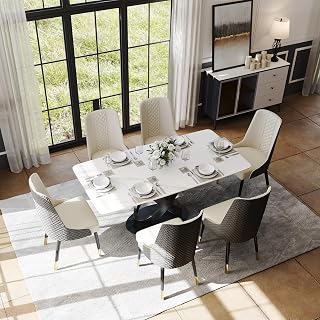
Contemporary dining tables often combine materials rather than using a single construction. Metal frames may be paired with glass, engineered wood, veneer or stone-look surfaces. These combinations can produce modern designs while controlling weight and manufacturing costs.
Marble-look tables deserve particular attention because a printed or manufactured surface is not equivalent to a natural stone slab. Buyers should determine whether a listing specifies natural marble, sintered material, ceramic, engineered stone, laminate or another decorative finish.
Mixed-material furniture can be an excellent choice when you want a particular aesthetic, but evaluate each material separately. A durable metal base does not compensate for a tabletop that is unsuitable for your everyday use, and an attractive surface does not guarantee a stable frame.
Two tables with similar dimensions and appearances can differ significantly in construction. When product information is available, inspect the structural details rather than relying on photographs.
A thicker tabletop can create a substantial appearance, but thickness alone does not establish overall quality. Consider the material, internal structure, edge construction and method used to connect the tabletop to the base.
Leg geometry affects both stability and usable legroom. Four-corner legs are straightforward and can provide good stability, while trestle and pedestal arrangements can offer different advantages for seating flexibility.
Look for information about the hardware used for assembly and how the frame connects to the tabletop. Tables that require assembly benefit from clear instructions and properly fitting components.
Additional supports can improve rigidity but may also interfere with foot placement. Before choosing a table, consider where your legs and feet will naturally rest when seated.
Extendable dining tables can be one of the smartest choices for households with changing seating requirements. The table remains relatively compact during everyday meals and can be enlarged when guests arrive.
There are several extension mechanisms, including removable leaves, butterfly leaves and other integrated systems. The important consideration is not simply whether a table extends, but how the extension system affects everyday usability.
Modern tables commonly use clean lines, restrained profiles and materials such as engineered wood, metal and glass. They can suit contemporary apartments, condominiums and open-plan interiors where visual simplicity is important.
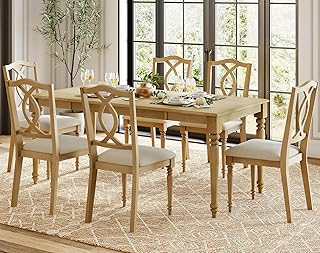
Farmhouse designs typically emphasize substantial wood profiles, visible grain and a more relaxed appearance. They can work well in traditional, transitional and rustic interiors, but their larger visual mass means measurements are especially important in smaller rooms.
Mid-century-inspired tables often feature tapered legs, relatively clean surfaces and warm wood tones. Their elevated leg designs can create an open visual appearance and provide useful clearance beneath the table.
Industrial designs frequently combine metal frames with wood-look or natural wood surfaces. They can provide a strong visual contrast, but check the frame geometry carefully because heavy-looking construction does not necessarily mean superior stability.
Traditional tables may include decorative legs, substantial aprons and more detailed finishes. They can suit formal dining rooms but require additional attention to cleaning and the available legroom underneath the structure.
For a busy household, practicality often matters more than a showroom-perfect appearance. Families should consider how the table will be exposed to food, drinks, children, pets, homework, cleaning and everyday wear.
Customer reviews can provide useful information, but they should be interpreted carefully. A high average rating does not tell you whether a particular table is suitable for your room or requirements.
When reading reviews, look for recurring comments about assembly, stability, dimensions, finish quality, surface durability and whether the delivered product matches its description. Give more weight to detailed reviews that explain the context of use than to very short comments that simply praise or criticize the product.
A promotional price should not automatically determine the buying decision. Compare the specifications and total ownership considerations before deciding whether an offer represents genuine value.
The cheapest table is not necessarily the best value. A low purchase price may be less attractive if the dimensions are unsuitable, the construction is weak for your use or the surface requires more maintenance than expected.
A table can fit inside a room while still failing as a comfortable dining setup. Always account for the space needed to pull chairs away from the table.
Manufacturers may describe a table as seating a certain number of people, but the practical experience depends on chair width, table dimensions, place settings and whether diners need elbow room.
Natural wood still requires appropriate care. Spills, excessive moisture, heat and unsuitable cleaning products can affect finishes and surfaces.
Large dining tables can be awkward to assemble because of their size and weight. Check how many people are recommended for assembly and whether specialist tools are required.
A table should complement the scale of the surrounding furniture. An oversized farmhouse table can dominate a small dining area, while an extremely lightweight-looking table may appear undersized in a large room.
Proper maintenance depends on the material and finish. Always follow the manufacturer's care instructions because different coatings and surfaces can react differently to cleaning products.
Canadian homes can experience meaningful changes in indoor temperature and humidity throughout the year. Natural wood is hygroscopic, meaning it can exchange moisture with the surrounding environment. As a result, solid-wood furniture can experience dimensional movement as environmental conditions change.
This does not mean solid wood is unsuitable for Canadian homes. It means buyers should understand that natural wood is a living material and should be cared for according to the manufacturer's recommendations. Avoid placing wood furniture in locations where it is exposed to extreme heat sources or unusually rapid environmental changes.
For apartments, condominiums and compact homes, prioritize flexibility and circulation. A smaller table that can be expanded when required may be more useful than a permanently large model.
In an open-concept home, the dining table often sits between the kitchen and living area. Because it is visible from multiple directions, both function and visual proportion matter.
Consider how the tabletop finish relates to nearby cabinetry, flooring and seating. A dining table does not need to match the kitchen exactly, but its proportions and material should feel intentional within the larger room.
Also consider traffic patterns. Kitchen islands can create heavy circulation, so a dining table positioned too close to the island may cause repeated collisions between seated diners and people moving through the kitchen.
The ideal number of chairs depends on the table dimensions and the width of the chairs. Do not assume that a table marketed for six people automatically requires six large armchairs.
For family dining, a rectangular table is often easier to configure for larger groups and can provide clearly defined seating positions. A round table can offer a more social arrangement and may work better in a compact area where corners would interfere with movement.
The best choice depends on the room rather than a universal rule. Measure the available floor area, mark the proposed tabletop dimensions and consider the chair positions before ordering.
Weight can provide useful information but should not be treated as a direct measure of quality. A very heavy table may be stable, but stability depends on the entire structure, including the base, leg geometry, joints and centre of gravity.
When specifications are available, compare the stated product weight and any weight-capacity information. If the manufacturer does not publish a weight capacity, avoid assuming one based solely on the table's appearance.
Many dining tables sold online arrive partially or fully disassembled. Assembly can range from attaching a few legs to constructing a multi-part frame and extension mechanism.
A practical shortlist should contain several tables that satisfy your basic requirements before you compare aesthetics and price. Start by eliminating unsuitable dimensions, then compare materials and construction.
Canadian shoppers will encounter dining tables from a wide range of established furniture brands and retailers. The best approach is to compare individual models rather than assuming that every product from a particular brand has identical construction.
Brand recognition should be treated as a starting point rather than a substitute for product-level research. Always compare the dimensions, materials, construction details and current purchase conditions of the exact model you are considering.
Prioritize compact dimensions, flexible seating and easy circulation. Round, square, drop-leaf and compact extendable designs can all be strong candidates depending on the floor plan.
Prioritize generous usable tabletop space, structural stability and a surface that can tolerate frequent use. An extendable model can provide additional flexibility when guests regularly visit.
An extendable rectangular or oval table is often worth considering because it can provide a compact everyday footprint while accommodating additional diners when necessary.
Look for clean proportions, restrained finishes, metal accents, glass or contemporary wood surfaces. The important consideration is how the table's scale and materials interact with the rest of the room.
Consider substantial wood tables, traditional silhouettes and designs with a more formal visual presence. Make sure decorative bases do not compromise legroom.
There is no single best dining table for every Canadian household. The right choice depends on room size, seating requirements, preferred material, style, maintenance expectations and budget. A table that fits comfortably and meets your daily needs is generally a better choice than a larger or more expensive model that does not suit the room.
Start with the available floor area and required seating capacity. Measure the table footprint together with the clearance needed for chairs and movement. The ideal dimensions are determined by the complete dining setup rather than the tabletop alone.
Solid wood can be an excellent choice for shoppers who value natural grain, substantial construction and a material that can develop character over time. However, construction quality, finish, care requirements and price still need to be evaluated on an individual basis.
It can be particularly useful when you need a compact table for everyday meals but occasionally host larger groups. Compare the extension mechanism, storage method, extended dimensions and stability rather than selecting a model solely because it has an extension feature.
Glass can be practical when you prefer a modern appearance and do not mind frequent cleaning. It tends to show fingerprints, smudges and dust more readily than many opaque surfaces, so maintenance preferences should be part of the decision.
Look at the combination of tabletop material, thickness, frame construction, leg design, joints and hardware. Customer feedback can also help identify recurring problems, but specifications and manufacturer information should remain the foundation of the comparison.
Around 90 cm of clearance is a useful planning target where the room allows it. More space can be preferable in high-traffic areas, while compact rooms may require a carefully planned arrangement with different clearance levels on different sides.
They do not have to match exactly. Coordinating proportions, seat height, materials and colours can create a cohesive dining area without using an identical table-and-chair set.
Focus on recurring observations about stability, assembly, dimensions, surface quality, finish, durability and whether the actual product corresponds with its specifications. Detailed reviews are generally more informative than comments that provide no context.
Some inexpensive tables can provide excellent value, particularly when they meet your requirements and use appropriate materials and construction. Price should be compared alongside dimensions, durability, maintenance, assembly and expected frequency of use.
For an assembled table, periodically inspect accessible fasteners and joints, particularly if you notice movement or wobbling. Follow the manufacturer's instructions for tightening and maintenance rather than applying excessive force.
The smartest way to compare dining table deals in Canada is to work from your requirements outward. Start with room measurements, seating needs and intended use. Then compare table shapes, materials, construction, maintenance and current pricing.
Do not allow a large discount, attractive photograph or high review count to replace careful specification checking. The best-value dining table is the one that fits the room, accommodates the people who use it, provides the functionality you actually need and remains practical to maintain.
Before making a purchase, compare the exact model's current dimensions, materials, assembly requirements, care instructions, warranty information and retailer terms. Product availability and prices can change throughout 2026, so check the latest information immediately before ordering.