

♥ Wishlist
Compare 7 Cordless Impact Wrench for Powerful, Convenient Fastening products in Canada. Reviews, ratings, pros, cons and buying advice updated for October 2026.
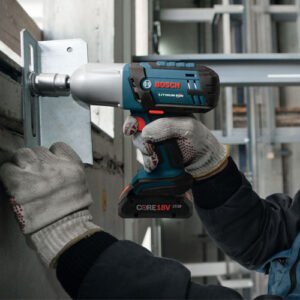
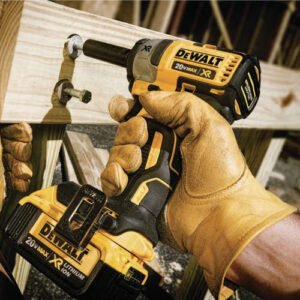
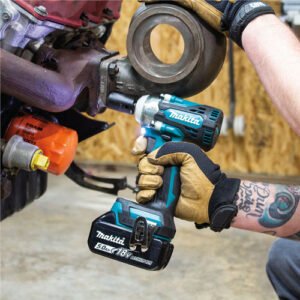
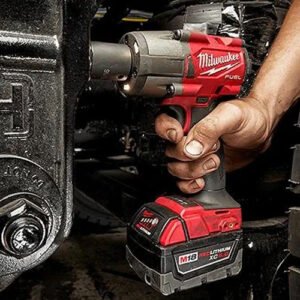


A cordless impact wrench can make wheel changes, suspension work, automotive repairs, equipment maintenance and heavy fastening considerably easier than using a conventional ratchet or breaker bar alone. However, choosing the right model involves more than comparing the largest torque figure on a product listing. Battery platform, fastening control, anvil size, physical dimensions, cold-weather practicality, charger compatibility and the type of work you expect to perform can all affect whether a particular impact wrench is genuinely a smart buy.
For Canadian buyers, the decision also deserves a little extra attention because cordless tools may be used in unheated garages, workshops, driveways and outdoor environments where temperature can affect battery performance and working comfort. A compact tool that is ideal for routine vehicle maintenance may not be the right choice for stubborn fasteners, while a high-torque heavy-duty model can be unnecessarily bulky for someone who primarily changes wheels or performs light mechanical repairs.
The strongest buying approach is therefore to match the tool's torque range, control system, battery ecosystem and physical design to the jobs you actually perform. Brands such as DeWalt, Milwaukee, Makita, Bosch, Ryobi and RIDGID offer cordless tool ecosystems worth considering, but the brand name alone should not determine the purchase. Compare the specifications of the individual model, the included accessories and the intended application before choosing.
A smart purchase is not necessarily the most powerful impact wrench or the least expensive one. It is the model that provides an appropriate combination of fastening capability, control, portability, battery compatibility and long-term practicality for the intended work.
For example, an occasional DIY user may value a compact body, a manageable battery and a useful speed-control system more than extreme breakaway torque. A professional automotive technician may place greater emphasis on sustained performance, battery availability, ergonomics, durability and predictable fastening control. Someone maintaining agricultural or heavy equipment may need a substantially different class of tool.
Torque is one of the most important specifications when comparing cordless impact wrenches, but torque figures can be misunderstood. Product listings may distinguish between fastening torque, breakaway torque and maximum torque, and different manufacturers may present specifications in different ways.
Breakaway torque describes the tool's ability to overcome resistance from an already-tightened fastener. It should not automatically be interpreted as the torque that the tool will apply continuously during normal fastening. Maximum fastening figures also do not mean that every fastener will receive exactly that amount of torque.
Torque is commonly expressed in newton-metres (N·m) in Canada, although pound-feet (lb-ft) figures are also frequently shown in tool specifications. When comparing products, make sure you are comparing equivalent measurements and understand whether the published number refers to fastening torque, nut-busting or breakaway performance.
Excessive torque can be counterproductive when working on smaller fasteners or components with specified tightening requirements. An impact wrench is primarily a rapid fastening and loosening tool; it should not automatically replace a calibrated torque wrench where a manufacturer specifies a precise final torque.
A powerful impact wrench can also be heavier, physically larger and more difficult to control in confined spaces. For this reason, a mid-range model may be a better everyday choice than an oversized high-torque wrench if most of your work involves ordinary passenger vehicles and household mechanical projects.
The square-drive size affects the sockets you can use and generally corresponds to the class of work for which the wrench is intended. Choosing the correct drive size is more useful than simply looking for the biggest advertised torque number.
A 1/2-inch drive is a common choice for automotive work, particularly wheel-related jobs and larger fasteners. It provides access to a broad range of impact-rated sockets and is often the most versatile format for a DIY garage that wants one general-purpose impact wrench.
When shopping for a 1/2-inch model, compare overall length, torque control, battery size, weight and the availability of suitable impact sockets. A high-output 1/2-inch wrench can be excellent for difficult fasteners but may be unnecessary for users whose main task is occasional wheel removal.
A 3/8-inch impact wrench can be an attractive compromise for mechanical work involving smaller fasteners. Its more compact socket interface can be convenient for engine-bay, suspension and general repair applications where a 1/2-inch tool feels unnecessarily large.
The important consideration is whether the torque capacity and socket selection fit your work. If you routinely work on larger automotive fasteners, a 1/2-inch model may offer greater flexibility.
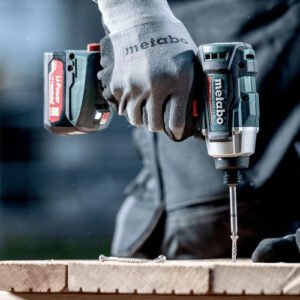
An impact driver should not be confused with a square-drive impact wrench. A 1/4-inch hex impact driver is designed primarily around hex-shank bits and driving screws or compatible fastening accessories. Although an impact driver can be extremely useful in a workshop, it is not automatically a substitute for a dedicated impact wrench when working with automotive wheel nuts and larger socket fasteners.
Brushless motors are widely used in modern cordless power tools. Compared with traditional brushed motor designs, brushless systems eliminate physical brushes that contact the rotating motor components. This can support efficient operation and electronic motor control, although the exact benefits depend on the design of the complete tool.
For someone purchasing a cordless impact wrench for repeated use, a brushless model can be particularly appealing when it is paired with an established battery platform and useful electronic controls. That does not mean every brushless model is automatically better than every brushed model. Compare the actual specifications, ergonomics, warranty terms, battery requirements and intended application.
Battery voltage is another specification that should be interpreted carefully. Higher nominal voltage does not, by itself, guarantee that one tool will outperform another. Motor design, battery output capability, electronic controls, gearing and impact mechanism design all contribute to real-world capability.
The battery ecosystem can be even more important for a regular cordless-tool user. If you already own compatible batteries from DeWalt, Milwaukee, Makita, Bosch, Ryobi or RIDGID, buying a bare tool from that same platform can sometimes make more sense than starting another battery system. Conversely, a user purchasing their first cordless tool should consider the broader range of compatible tools they may want later.
A bare tool normally excludes the battery and charger, whereas a kit may include one or more batteries and a charger. Do not compare the advertised prices without accounting for these differences.
Cold temperatures can affect rechargeable battery performance. If a cordless impact wrench will be used in an unheated Canadian garage or outdoors during winter, battery and storage practices deserve consideration.
Check the manufacturer's instructions for operating and charging temperature ranges rather than assuming that a battery should be charged immediately after being used in very cold conditions. Keep batteries stored according to the manufacturer's recommendations, and avoid exposing them to unnecessary temperature extremes.
For frequent winter automotive work, a buyer should consider whether a particular battery system offers convenient battery availability and whether the tool remains comfortable to handle while wearing suitable gloves. These practical details may matter more than a small difference in published torque.
Modern cordless impact wrenches can offer multiple operating modes rather than a simple on/off trigger. Depending on the model, these controls may adjust speed, power or the way the tool behaves as resistance changes.
More control is especially valuable for automotive work because the same wrench may be used for loosening stubborn hardware and installing fasteners that require much more careful final tightening.
A variable-speed trigger allows the user to control the tool more gradually. This can help when starting a fastener, positioning a socket or reducing unnecessary impact activity. A good trigger can make a powerful tool feel substantially easier to manage.
Some impact wrenches provide electronic modes designed to limit power, slow the tool after a particular stage or help prevent unwanted over-fastening. The exact behaviour varies by manufacturer and model, so buyers should read the individual product documentation rather than assuming that a named mode provides a particular torque value.
These tools perform different jobs. An impact wrench is primarily designed to rapidly loosen and install threaded fasteners. A torque wrench is designed to apply or verify a specified tightening torque with much greater precision.
For critical automotive fasteners, wheel nuts and other components with manufacturer-specified tightening requirements, follow the vehicle or equipment manufacturer's procedure. An impact wrench can often be used for initial installation, but final tightening should be performed according to the applicable specification and tool instructions.
This distinction is particularly important for buyers searching for the best cordless impact wrench for changing tires. The wrench can dramatically speed up wheel removal and installation, but it should not be treated as a replacement for proper torque verification where required.
For seasonal tire changes and routine wheel work, look for a cordless impact wrench with an appropriate drive size, enough torque for the vehicle and a comfortable overall weight. A 1/2-inch drive is a common choice for this type of work because compatible impact sockets are widely used for automotive applications.
Compact dimensions can be helpful when working around a vehicle, while a larger high-torque model may be preferable if you also expect to remove heavily seized automotive fasteners. Consider how often you will perform the work and whether you already have a compatible battery platform.
Regardless of the impact wrench selected, use the vehicle manufacturer's specified wheel-nut tightening procedure. Do not rely solely on the impact wrench's highest setting as a substitute for the specified final torque.
Automotive work covers a wide range of fastener sizes and access conditions, so there is no single ideal impact wrench for every repair. Suspension and chassis work may require greater torque, while engine-bay repairs often benefit from a shorter and more compact tool.
Compact impact wrenches are designed around portability and access. They can be easier to position around suspension components and other restricted areas. Their smaller form factor may also reduce fatigue during extended work.
High-torque models prioritise the ability to tackle more resistant fasteners. The trade-off can include additional weight, larger dimensions and greater battery requirements. For a buyer who mostly performs routine maintenance, maximum torque may therefore be a poor measure of overall value.
The impact mechanism transfers rotational energy into repeated impacts that help loosen or tighten resistant fasteners. Manufacturers use different mechanical approaches, and the exact internal design can affect the tool's behaviour, noise, vibration, size and performance.
Consumers generally do not need to disassemble or evaluate the internal mechanism when comparing products. Instead, pay attention to the manufacturer's specifications, intended-duty classification, control options and the complete package. Claims about a particular internal mechanism should be evaluated against the actual technical documentation for the specific model.
The socket-retention system is an easily overlooked feature that can influence everyday convenience.
Before buying, check which retention system the exact model uses and make sure your preferred impact sockets are compatible.
Do not use ordinary chrome hand-tool sockets on an impact wrench unless the socket manufacturer specifically states that they are suitable for impact applications. Impact-rated sockets are designed for the repeated shock loading associated with impact tools.
For automotive work, consider the socket sizes you actually need and whether a suitable set is included. A low-priced wrench with no compatible sockets can become a more expensive purchase once the required accessories are added.
An impact wrench may be used repeatedly at awkward angles, particularly during automotive repairs. Weight is therefore more than a comfort specification. A heavy tool can become tiring during prolonged work, especially when held above shoulder height or at arm's length.
Evaluate:
If possible, compare the complete tool configuration rather than judging comfort from photographs or bare-tool specifications alone.
Integrated LED lighting can be useful when working underneath a vehicle, inside a wheel well or in a dim garage. Light placement matters, however. A lamp positioned close to the tool head can illuminate the socket and nearby work area more effectively than a light positioned farther back on the handle.
Lighting should be treated as a convenience feature rather than a substitute for adequate workshop illumination. For detailed repairs, maintain a properly lit working environment so that fasteners, components and potential hazards remain visible.
Impact wrenches generate substantially more noise and vibration than ordinary hand tools. If the tool will be used frequently, hearing protection and appropriate workshop practices should be part of the purchasing decision.
Vibration can also influence perceived comfort during repeated use. Product specifications may not provide a complete picture of how a tool feels during extended operation, so ergonomic design and manufacturer guidance deserve attention alongside raw performance figures.
When reviewing a shortlist of ten models, avoid ranking them by a single specification. A structured comparison makes it easier to identify the best option for different types of buyers.
The largest torque figure can be tempting, but it may lead to purchasing a tool that is unnecessarily large or powerful. Start with the fasteners and applications you actually expect to encounter.
A bare tool can appear inexpensive when the buyer already owns compatible batteries. For a new cordless-tool user, however, the cost of batteries and a charger must be included when comparing complete setups.
The names sound similar, but the tools use different interfaces and are intended for different categories of fastening work. Confirm whether you need a square-drive wrench or a hex-bit impact driver before ordering.
Check that your sockets are rated for impact use and match the wrench's drive size. This is particularly important for high-torque automotive applications.
A powerful impact wrench that cannot fit between surrounding components is not useful for the job. Head length and body profile can be decisive in tight spaces.
Impact wrenches are excellent for rapid fastening and loosening, but they should not be treated as precision torque-measuring instruments unless the specific system is explicitly designed and documented for that purpose.
If you expect to buy a drill, grinder, reciprocating saw, circular saw or other cordless tools later, consider whether the battery platform has the range you need. A slightly different initial purchase can affect your total tool costs over time.
Product specification tables can contain many numbers, but not all are equally useful. Start with the drive size and intended application, then evaluate torque, speed, battery platform, dimensions and weight.
Pay particular attention to whether a specification applies to the bare tool or the complete tool with battery. Also check whether speed figures refer to no-load speed and whether torque figures have clearly defined meanings. Manufacturer terminology is not always identical across brands, so direct numerical comparisons should be made cautiously.
Established cordless-tool brands can offer the advantage of broad battery ecosystems and multiple tool categories. DeWalt, Milwaukee, Makita, Bosch, Ryobi and RIDGID are examples of brands Canadian buyers may encounter when researching cordless impact wrenches.
The best ecosystem depends on what you already own and what you expect to purchase. A buyer who has several compatible batteries may find a bare impact wrench particularly attractive. Someone starting from zero should compare the cost and range of the entire platform rather than selecting an impact wrench in isolation.
Do not assume that batteries from different voltage families or product generations are interchangeable simply because they carry the same brand name. Verify compatibility with the exact tool and battery model before purchasing.
Proper care can help preserve the tool and batteries. Follow the manufacturer's instructions for cleaning, storage, charging and inspection.
Lithium-ion battery systems require sensible handling. Use the manufacturer's specified charger and follow its instructions rather than relying on generic charging practices. Do not modify battery packs or attempt to use damaged packs.
For Canadian seasonal use, storage conditions are particularly relevant. If the impact wrench spends months unused, follow the battery manufacturer's recommendations for storage charge, temperature and periodic inspection. Avoid leaving batteries exposed to extreme heat or cold for extended periods.
Technique matters as much as tool capability. Keep the socket aligned with the fastener and avoid forcing the tool sideways. Cross-threading can damage fasteners and components, while a poorly fitting socket can increase the risk of damage.
When loosening a stubborn fastener, ensure the socket is fully seated before operating the wrench. If the fastener does not move, investigate corrosion, thread damage or mechanical causes instead of simply escalating impact duration indefinitely.
When installing a fastener, use the lowest practical power or speed setting for the initial stage. For critical applications, complete the final tightening according to the manufacturer's specified procedure.
A suitable high-torque impact wrench can be very helpful with resistant fasteners, but no cordless wrench can guarantee removal of every seized bolt. Corrosion, damaged threads, heat exposure, thread-locking compounds and mechanical loading can all affect removal difficulty.
When a fastener refuses to move, consider appropriate penetrating products, correct socket fit, mechanical techniques and manufacturer-approved procedures. Avoid continuously hammering a fastener simply because a tool has a high advertised breakaway rating.
The answer depends on the application. Instead of selecting a universal torque threshold, identify the largest and most difficult fasteners you expect to encounter and then compare tools against those requirements.
For occasional vehicle maintenance, a moderate cordless impact wrench may provide a better balance of size and capability. For heavy automotive, agricultural or industrial work, a higher-output model may be more appropriate. If you regularly work on several categories of equipment, prioritise versatility and access as well as maximum torque.
DIY buyers generally benefit from a versatile model that is easy to handle and belongs to a battery platform with other useful tools. Unless your projects involve unusually large fasteners, extreme maximum torque may not provide enough additional value to justify a substantially heavier tool.
Look for sensible power control, a practical drive size, comfortable handling and a battery system you can continue using for future projects.
Professional users should place greater emphasis on repeatability, ergonomics, battery availability, durability, access and workflow efficiency. A technician who uses an impact wrench throughout the working day can benefit substantially from a tool that balances power with manageable weight.
It is also worth considering whether the platform provides compact, mid-torque and high-torque models. A workshop may ultimately benefit more from having complementary tools for different jobs than from attempting to use one maximum-power wrench for everything.
For seasonal wheel changes at home, focus on a practical 1/2-inch drive configuration, compatible impact sockets, adequate torque for the vehicle and comfortable handling. If the wrench will only be used a few times each year, the cost of the complete battery setup should receive particular attention.
Remember that wheel installation still requires adherence to the vehicle manufacturer's wheel-nut tightening specification. The impact wrench is best viewed as a speed and convenience tool within the complete wheel-changing process.
Online product listings can vary in the way they present kits, batteries and accessories. Before completing a purchase, verify the exact model number and package contents rather than relying solely on the product title.
A higher price can be justified when it buys capabilities that are genuinely useful for your work. These might include a stronger battery platform, better control, a more compact design, greater torque capacity, improved ergonomics or a complete kit that would otherwise require additional purchases.
On the other hand, paying substantially more for extreme torque that you never use is unlikely to improve the ownership experience. Value should be evaluated against the complete package and the frequency with which the tool will be used.
Customer ratings can provide useful clues about common ownership experiences, but they should be considered alongside technical specifications. A product can receive positive feedback from DIY users while being unsuitable for a professional application, or receive mixed feedback because buyers misunderstood the difference between a bare tool and a complete kit.
When reviewing customer feedback, look for repeated observations about battery compatibility, weight, ergonomics, socket retention, control modes and durability rather than relying on isolated comments. Also make sure reviews correspond to the exact model being considered.
Use the following checklist when evaluating the ten products featured on this page. It helps separate genuine differences from marketing language.
There is no single best model for every Canadian buyer. The right choice depends on the type of fasteners, required torque, drive size, battery platform, available space, frequency of use and budget. Compare the exact specifications of shortlisted models rather than selecting solely by brand or maximum torque.
It can be worthwhile if you regularly perform automotive maintenance, seasonal wheel changes, equipment repairs or other jobs involving stubborn threaded fasteners. For very occasional use, consider the total cost of the tool, battery and charger before deciding.
A 1/2-inch drive is a common choice for automotive wheel work because it accommodates commonly used impact sockets. The appropriate torque capacity still depends on the vehicle and application.
Brushless designs can be attractive because of their motor technology and electronic control capabilities, but the decision should be based on the complete tool rather than the word “brushless” alone. Compare performance, ergonomics, battery compatibility and cost.
Use sockets specifically rated for impact applications. Ordinary hand-tool sockets are not automatically suitable for the shock loads generated by impact tools.
Yes. An impact wrench can apply substantial force, and the final result depends on the tool, operating mode, fastener, joint and other conditions. Follow the manufacturer's tightening procedure and use an appropriate torque wrench where a precise final torque is required.
Choose a bare tool if you already own compatible batteries and charger equipment. A kit can make more sense when entering a new battery platform. Compare the complete ownership cost rather than the tool-only price.
Not necessarily. Higher torque can be valuable for difficult fasteners, but a high-output tool may also be larger or heavier. For many users, a balanced model with adequate torque and better access can be more practical.
Cordless tools can be used in cold conditions within the operating limits specified by their manufacturers. Battery performance can be affected by temperature, so follow the battery manufacturer's storage, operating and charging guidance.
Runtime depends on battery capacity, tool design, fastener resistance, operating mode and frequency of use. Instead of expecting a fixed runtime, compare battery capacities and consider whether additional compatible batteries are practical for your workload.
Fastening torque describes the torque associated with tightening, while breakaway or nut-busting torque refers to the tool's ability to overcome resistance when loosening a fastener. These figures should not be treated as interchangeable.
The smartest cordless impact wrench purchase starts with the job rather than the marketing specification. Identify the fasteners you need to remove and install, choose the appropriate drive size, determine the torque range you realistically require and then compare the available battery platforms.
For many DIY automotive users, a versatile 1/2-inch cordless impact wrench can be a sensible starting point. Users who work in confined areas may prefer a more compact design, while heavy-duty applications can justify a higher-output model. Existing owners of DeWalt, Milwaukee, Makita, Bosch, Ryobi or RIDGID cordless tools should also consider whether remaining within their current battery ecosystem offers better overall value.
Before purchasing, verify the exact model number, package contents, battery requirements, drive configuration and current Canadian pricing. Read the manufacturer's specifications and current warranty information, compare recent verified customer feedback and make sure the tool is compatible with the impact-rated sockets and accessories you intend to use.
Most importantly, do not judge a cordless impact wrench by maximum torque alone. The best smart buy is the one that delivers the right combination of power, control, size, battery compatibility and everyday usability for your actual work.