

♥ Wishlist
Compare 36 Makita Cordless Impact Wrenches products in Canada. Reviews, ratings, pros, cons and buying advice updated for October 2026.


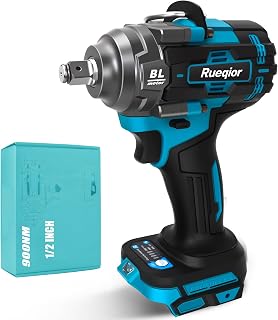


Choosing a Makita cordless impact wrench is about more than comparing maximum torque figures. The right model depends on the type of fasteners you work with, the available space, required control, battery platform, drive size, working frequency and the balance between power and portability. For Canadian buyers, it is also sensible to compare the complete tool setup rather than judging the bare tool alone, because a kit with batteries and a charger can represent a very different overall value from a tool-only package.
Makita has a broad cordless platform, with compact impact wrenches designed for controlled fastening as well as higher-output models intended for demanding automotive, construction and maintenance work. When comparing the best Makita cordless impact wrenches, look beyond the headline torque number and examine the complete specification, including fastening torque, nut-busting or breakaway capability, drive size, speed and impact rate, operating modes, physical dimensions, weight, battery compatibility and included accessories.
A smart purchase should match the tool's capabilities to the work you actually perform. Buying the most powerful impact wrench available is not automatically the best decision. Excessive power can make delicate fastening tasks harder to control, while an undersized model may struggle with heavily seized fasteners.
Torque is one of the most important specifications when comparing cordless impact wrenches, but it is also one of the easiest to misunderstand. A manufacturer's maximum figure does not mean the tool will deliver that exact torque to every fastener in every working condition.
Actual fastening performance can vary according to the fastener, socket, joint design, battery condition, temperature, corrosion, thread condition and how long the tool is applied. A rigid joint can behave differently from a softer joint, and a seized fastener may require substantially more breakaway force than is needed to install the same fastener.
Fastening torque indicates the tool's capability when tightening a fastener under specified conditions. It is useful for comparing models, but it should not automatically be treated as a recommended torque setting for a particular vehicle or machine.
Breakaway torque describes the tool's ability to loosen a fastener under specified test conditions. This figure can be considerably higher than the stated fastening torque. When shopping for an impact wrench for automotive or heavy maintenance work, examining both figures provides a more meaningful picture of capability.
A very high-torque impact wrench may be unnecessary for routine wheel changes, light mechanical repairs or general assembly. Conversely, a compact model may not be the right choice for large, heavily tightened fasteners. The goal is to choose enough capacity for the hardest routine job without sacrificing control and usability on everything else.
The square-drive size determines which sockets can be fitted directly to the impact wrench. Common categories include 1/4-inch, 3/8-inch, 1/2-inch and 3/4-inch drives, although the appropriate choice depends on the specific tool and application.
Small-drive impact tools are generally suited to lighter fastening applications and smaller fasteners. They are not the usual choice when substantial automotive wheel or suspension work is the primary requirement.
A 3/8-inch drive can provide a useful middle ground for compact mechanical applications. It can be attractive where access and lower weight matter more than maximum output.
The 1/2-inch drive is one of the most versatile choices for automotive and general mechanical work. It accommodates a wide selection of commonly available impact-rated sockets and can cover many workshop applications.
Larger drives are intended for applications involving larger fasteners and substantially higher loads. They can make sense for heavy equipment, industrial maintenance and demanding mechanical work, but they are generally less attractive for routine light-duty use because of their additional size and weight.
Makita's cordless ecosystem is an important consideration when comparing impact wrenches. Buyers who already own compatible Makita batteries may find a tool-only model particularly practical because the existing battery investment can potentially be shared across compatible tools.
Makita's LXT platform is widely associated with 18V cordless power tools, while the company's higher-output XGT platform uses a different battery system designed around higher-performance cordless equipment. Battery compatibility should always be checked against the exact model rather than assumed from voltage alone.
Do not purchase a battery solely because it has a compatible nominal voltage. Check the manufacturer's compatibility information for the exact impact wrench, battery and charger combination.
Makita LXT impact wrenches can be an appealing choice for users who already have compatible 18V LXT batteries. The platform covers a broad range of tools, making it particularly relevant to tradespeople, mechanics, contractors and serious DIY users who want to build around one battery ecosystem.
The main advantage of a shared platform is convenience. One battery system can potentially power drills, grinders, saws, impact drivers, lights and other compatible equipment. However, battery compatibility and performance depend on the exact tool and battery combination, so specifications should be checked before purchasing.
Makita XGT models are designed for users who need a higher-performance cordless platform. They can be worth investigating when the work involves larger fasteners, demanding mechanical applications or situations where higher cordless output is a priority.
The XGT platform should not simply be considered a replacement for every LXT tool. If your existing equipment is already built around LXT batteries, moving to XGT involves considering the additional battery and charging ecosystem. For buyers starting from scratch, however, platform choice can be evaluated based on the long-term tools they expect to use.
Brushless motor technology is a major feature across modern cordless power tools. In a brushless design, electronic motor control replaces the conventional brushes used in brushed motors. This architecture can support efficient power delivery, compact tool designs and electronic management of motor operation.
For a frequent-use impact wrench, a brushless model can be particularly attractive because cordless efficiency, heat management and overall motor design matter during repeated fastening cycles. Nevertheless, brushless technology should be considered alongside torque, speed, control, ergonomics and battery compatibility rather than treated as the sole reason to choose a particular model.
Impact wrench specifications often include no-load speed and impacts per minute. These figures help explain how quickly the mechanism operates, but they should be interpreted alongside torque and control features.
A high-speed impact wrench can be useful when removing or installing numerous fasteners, but speed should not be confused with torque. A smart comparison considers how the entire output range suits the intended work.
One of the biggest differences between basic and more sophisticated cordless impact wrenches is the amount of electronic control available. Depending on the model, Makita tools may offer selectable power settings, automatic stopping or tightening-control functions, reverse rotation controls and other electronic features.
These functions can reduce the likelihood of unnecessarily driving a fastener at maximum output. That is particularly useful when working with components where excessive tightening can damage threads, fasteners or mating surfaces.
For applications involving safety-critical fasteners, an impact wrench should not automatically be treated as a replacement for a calibrated torque wrench. Where the manufacturer's specifications require a precise final torque, use the appropriate torque-measuring equipment and follow the relevant service procedure.
Although the names sound similar, an impact wrench and impact driver are designed around different output interfaces and applications.
If your main job is installing screws and structural fasteners, an impact driver may be more suitable. If your work centres on nuts and bolts, especially with sockets, a cordless impact wrench is the more appropriate category.
Cordless impact wrenches eliminate the air hose associated with pneumatic tools and the electrical cable associated with corded equipment. That can make them especially convenient for mobile automotive work, outdoor maintenance, construction sites and locations without convenient access to compressed air or mains electricity.
Pneumatic impact wrenches can still be highly practical in workshops with an established compressed-air system. Cordless models, however, offer straightforward portability and reduce the need to manage hoses and compressors.
When comparing systems, consider the complete ownership setup rather than the tool alone. For a pneumatic system, this can include the compressor, air lines, fittings and maintenance. For a cordless system, consider batteries, chargers and the number of tools sharing the battery platform.
Start with the most demanding fastening task you regularly perform. If the majority of your work involves smaller fasteners, a compact and controllable model may be more practical than a heavy-duty wrench.
For automotive work, identify whether the tool will primarily be used for wheel removal and installation, suspension components, general repairs or heavier mechanical work. These tasks can have very different torque requirements.
For construction and equipment maintenance, identify the typical fastener sizes and joint types before choosing a model. If you frequently encounter large or corroded fasteners, additional output may justify selecting a higher-capacity wrench.
Impact wrench ergonomics become increasingly important during repetitive work. A tool that feels manageable for five minutes may become tiring after extended use.
Compare the stated weight and overall dimensions of shortlisted models. Remember that the working weight can increase once a battery and socket are installed.
Battery capacity is commonly expressed in ampere-hours, or Ah. A higher Ah rating generally means more stored electrical capacity, but it can also increase battery weight and physical size.
For frequent impact-wrench use, a larger-capacity battery can reduce interruptions for battery changes. For occasional jobs or work in confined spaces, a smaller and lighter battery may provide a better balance.
Runtime depends on workload. Removing lightly loaded fasteners does not necessarily consume energy at the same rate as repeatedly breaking loose heavily seized bolts. Temperature, battery condition, fastening duration and tool settings can also affect practical runtime.
Makita cordless impact wrenches may be available in tool-only configurations as well as packages containing batteries and chargers. Neither format is automatically better.
Always check exactly what is included in the listing. Product photographs can sometimes show accessories that are not necessarily part of the advertised package.
Use sockets specifically rated for impact-tool applications. Standard chrome sockets intended for hand tools are not automatically suitable for repeated use with an impact wrench.
Impact-rated sockets are designed for the dynamic loads generated by impact mechanisms. Choosing the correct socket size also matters. A poorly fitting socket can increase the risk of rounding a fastener or damaging the socket and fastener interface.
For professional automotive work, consider the range of impact-rated sockets required for your typical vehicles and equipment. Also check whether extensions, adapters or universal joints are appropriate for the application and rated for impact use.
Maximum torque is useful, but it does not tell the whole story. Control, drive size, dimensions, battery system and operating modes can be equally important.
A cheap tool-only price can become less attractive if you need to purchase multiple batteries and a charger separately. Conversely, buying another battery when you already have several compatible ones may be unnecessary.
A heavy-duty wrench can be unnecessary for light maintenance. Extra output may also make controlled fastening more difficult if the tool lacks suitable lower-power settings or if the user relies on maximum power indiscriminately.
Do not assume every socket in a toolbox is suitable for an impact wrench. Use appropriate impact-rated accessories.
A tool's ability to loosen a fastener does not mean it should be used to tighten that same fastener to an equivalent torque. Always follow the specified tightening procedure for the equipment being serviced.
A physically large impact wrench can be difficult to position in tight spaces. Compare head length and overall dimensions when access is a major consideration.
For automotive work, the ideal model depends on whether the job is occasional vehicle maintenance or frequent professional repair. A 1/2-inch drive is often a practical category to investigate for general automotive applications because of its compatibility with common impact sockets and its balance of versatility and output.
For wheel-related work, look for a model that offers sufficient output while also providing controllable operating modes. The ability to remove a stubborn wheel fastener is useful, but final wheel-fastener tightening should follow the vehicle manufacturer's specified torque procedure rather than relying on the impact wrench's maximum setting.
For suspension, drivetrain and heavy mechanical applications, consider models with greater output if the fasteners you regularly encounter justify it. Compact dimensions remain valuable because automotive components often provide limited access.
DIY buyers should usually prioritise versatility, ease of handling and compatibility with tools they already own. A mid-range cordless impact wrench can be more useful for a homeowner than a very high-output professional model that is rarely operated at its full capacity.
Consider how often you work on vehicles, outdoor equipment, structural projects or household maintenance. If the tool will spend most of its life in storage and only be used occasionally, avoid paying for specifications you are unlikely to use.
Professional users should evaluate the tool as part of a working system. Runtime, battery availability, charging arrangements, durability features, ergonomics and service requirements can influence productivity over time.
For mechanics, equipment technicians and construction professionals, it can be useful to maintain more than one compatible battery so a depleted battery does not necessarily stop work. The ideal configuration depends on workload and the number of other cordless tools sharing the same battery platform.
When access is restricted, tool dimensions can matter more than headline torque. A compact impact wrench can fit into spaces where a larger model cannot be positioned correctly.
Before purchasing for confined applications, compare the overall head length, anvil position, battery footprint and grip configuration. Also consider whether the socket and any extension will add enough length to interfere with surrounding components.
Proper maintenance helps preserve the condition and usability of a cordless impact wrench. Always follow the maintenance instructions supplied for the exact model.
Canadian temperatures can vary significantly throughout the year, making battery handling especially important. Lithium-ion batteries should be used, charged and stored according to the manufacturer's temperature and safety instructions.
Do not assume that a battery exposed to very cold outdoor conditions should immediately be placed on a charger. Follow the manufacturer's guidance regarding operating and charging temperatures. Similarly, avoid leaving cordless batteries exposed to excessive heat for extended periods.
Makita is not the only established manufacturer in the cordless power-tool market. Depending on your existing tool collection, it can also be sensible to compare equivalent impact wrenches from Milwaukee, DeWalt, Bosch, Metabo, Ryobi and other recognised manufacturers.
The most useful comparison is not simply brand versus brand. Compare equivalent models based on drive size, torque class, battery ecosystem, dimensions, weight, controls and kit contents.
Platform compatibility can be more valuable than switching brands for a single tool. If you already own several batteries, chargers and tools from one ecosystem, staying within that system can simplify ownership.
Retail listings can present specifications in different formats, so compare like-for-like information whenever possible. Pay particular attention to whether the stated weight includes the battery, whether torque figures refer to fastening or breakaway performance and whether the listing describes a bare tool or kit.
The lowest listed price is not necessarily the best deal. Compare the total package and specification before deciding.
A tool-only listing may initially appear less expensive than a kit, but the cost of adding a compatible battery and charger can change the comparison. Conversely, a kit containing batteries you already own may provide limited additional value.
When comparing Canadian listings, check the exact model number, package contents, seller information, current price, delivery terms and applicable retailer policies. Product listings can change, so verify the information immediately before purchase.
Customer reviews can provide useful information that technical specifications do not always capture. However, individual experiences vary, so look for recurring themes rather than relying on one unusually positive or negative review.
Reviews should complement, not replace, the manufacturer's technical specifications. If a review makes a technical claim that conflicts with the official specification, verify the exact model number and configuration.
Impact wrenches generate substantial mechanical force. Wear suitable eye protection and follow the safety instructions supplied with the tool. Keep hands, clothing and loose materials away from moving components.
Use sockets and accessories rated for impact applications. Inspect fasteners before use and replace damaged or unsuitable components. Do not use an impact wrench as a substitute for a calibrated torque wrench where a precise final torque is required.
For vehicle maintenance, use appropriate lifting and support equipment and follow the vehicle manufacturer's service instructions. Never rely solely on an impact wrench to determine whether a safety-critical fastener has reached its specified torque.
High-torque models can be worthwhile when the additional output directly matches your work. Professional mechanics, heavy-equipment technicians and users who routinely encounter large or stubborn fasteners may benefit from the greater capacity.
For occasional DIY work, however, the additional size, weight and cost of a high-output model may provide little practical benefit. A more compact wrench with sufficient torque and better low-output control can be the smarter choice.
Compact models can be particularly useful when access is difficult or when the tool is carried and used frequently. Reduced dimensions can improve manoeuvrability around suspension assemblies, engine components, machinery and other restricted areas.
The trade-off is that compact tools may have lower maximum output than larger heavy-duty models. Choose a compact wrench when access and handling are more important than maximum fastening capacity.
A practical setup usually consists of the impact wrench, compatible batteries, charger and a selection of impact-rated sockets. Depending on the application, users may also need extensions, adapters, protective storage and other accessories.
An impact wrench is not ideal for every fastening job. If the work requires highly precise torque control, a torque wrench or another controlled fastening tool may be more appropriate.
Likewise, if your primary work involves screws and smaller construction fasteners, an impact driver may be a better fit. If your work requires extremely high torque in a fixed workshop environment, a pneumatic system may also deserve consideration.
The best cordless impact wrench is therefore the one that fits the application rather than simply the one with the largest specification.
The best model depends on the required torque, drive size, workspace, battery platform and frequency of use. A compact model may be best for confined automotive work, while a higher-output model can be more appropriate for heavy-duty mechanical applications.
Makita is an established power-tool manufacturer with cordless platforms covering DIY, trade and professional applications. The best choice still depends on the exact model and whether its specifications match your requirements.
A 1/2-inch drive is a common category to consider for general automotive work because it accommodates many commonly used impact sockets. However, the correct choice depends on the vehicle, fastener sizes and intended applications.
A suitable Makita impact wrench can be used for removing compatible vehicle wheel fasteners when its output and socket size are appropriate. Always follow the vehicle manufacturer's instructions for final tightening and torque verification during installation.
If you already own compatible Makita batteries and a charger, a tool-only configuration may be practical. If you are new to the platform, a kit containing a compatible battery and charger can provide a more complete starting setup.
LXT and XGT are separate Makita cordless platforms. Compatibility should be checked by exact model and battery rather than assumed from general voltage or brand compatibility.
Brushless models can offer advantages in motor efficiency, electronic control and cordless system performance. However, torque, speed, dimensions, operating modes, battery compatibility and application should all be considered before choosing a model.
Use sockets specifically designed and rated for impact applications. Conventional hand-tool sockets are not automatically suitable for the forces produced by an impact wrench.
For applications requiring a precise specified final torque, a calibrated torque wrench can still be necessary. An impact wrench is primarily intended to provide fast rotational and impact output, not necessarily precision torque measurement.
Choose torque according to your largest and most demanding routine fastening jobs. More torque is not automatically better if most of your work involves smaller fasteners or requires careful control.
The appropriate battery depends on the exact tool, required runtime and handling preference. Larger-capacity batteries can provide greater stored capacity but may add weight. Always use a battery approved for the specific Makita platform and tool.
Makita offers cordless impact wrenches across performance categories suitable for different users and applications. Professional buyers should compare the exact model's output, ergonomics, battery system, controls and specifications with their workload.
The smartest way to compare Makita cordless impact wrenches in 2026 is to start with the application rather than the deal price. Determine the fastener sizes you normally encounter, identify the required drive size, establish the minimum useful torque range and decide whether compact dimensions or maximum output are more important.
Next, consider your battery ecosystem. Existing Makita owners may benefit from choosing a compatible tool-only model, while new users should compare the cost and contents of complete kits. Check the exact model number and manufacturer specifications before making a final decision.
For automotive users, pay particular attention to drive size, access, torque control and impact-rated sockets. For construction and equipment maintenance, focus on output, durability-related features, runtime and ergonomics. For occasional DIY work, prioritise versatility and manageable weight instead of automatically choosing the highest-torque option.
Finally, compare current Canadian listings, verified customer feedback, package contents and specifications from reputable retailers. Product availability, pricing and promotions can change throughout 2026, so confirm today's details before purchasing. A well-matched Makita cordless impact wrench can be a highly practical addition to a workshop, garage or professional tool collection when its specifications genuinely fit the work.