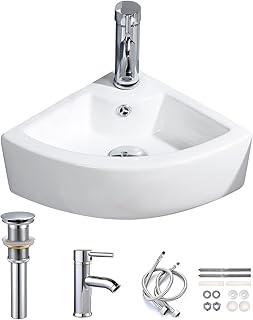

♥ Wishlist
Compare 58 Bathroom Sinks for Modern Canadian Bathrooms products in Canada. Reviews, ratings, pros, cons and buying advice updated for October 2026.








Choosing a bathroom sink is about more than finding a shape and finish that looks good. The right model needs to fit the available counter or vanity space, work with the existing plumbing, suit the bathroom's daily use, and provide the installation arrangement you actually need. A sink that looks ideal in a product photograph can become a poor choice if its dimensions, drain position, faucet configuration, mounting method, or overflow arrangement do not match the room.
For Canadian shoppers, it is particularly important to compare the complete specification rather than relying on a product title alone. Bathroom sinks can differ substantially in basin depth, overall dimensions, material, installation requirements, faucet-hole configuration, overflow design, and compatibility with existing vanity units. Before comparing deals, measure the installation area and determine whether you need a drop-in, undermount, vessel, wall-mount, pedestal, or integrated sink.
Established manufacturers such as Kohler, American Standard, TOTO, Delta, Moen, Kraus, Duravit, and Villeroy & Boch offer bathroom products across different design and installation categories. Brand reputation can be useful when comparing construction quality and replacement support, but the individual model's specifications should always be checked before purchase.
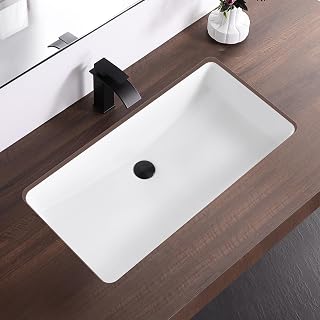
An undermount sink is installed beneath the countertop, leaving the counter surface visible around the basin opening. This creates a clean appearance and makes it easier to wipe water and debris directly into the sink. Undermount designs are especially attractive for contemporary vanity installations.
When comparing undermount models, pay close attention to the manufacturer's required cutout dimensions rather than assuming that sinks with similar outside measurements will use the same opening.
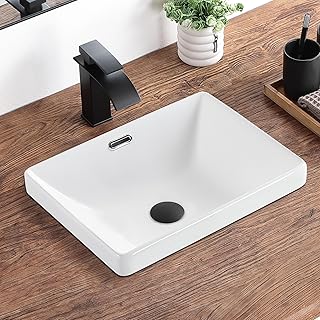
Drop-in sinks have a rim that rests on top of the countertop. They are among the more straightforward sink styles to consider when replacing an existing basin because the visible rim can cover the edge of the countertop cutout.
A drop-in sink can be a practical choice for renovation projects where minimizing countertop alterations is important.
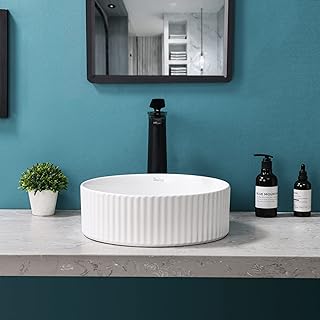
Vessel sinks sit above the countertop rather than being recessed into it. Their elevated profile can become a strong visual feature, making them popular in modern and decorative bathrooms.
One common mistake is choosing the vessel basin first and discovering later that the combined height of the vanity, countertop, basin, and faucet is uncomfortable for everyday use. Measure the finished installation height before purchasing.
Wall-mounted sinks attach directly to a suitably prepared wall and can create an open, minimalist bathroom layout. They can be useful where floor space is limited, but wall structure, mounting hardware, and plumbing placement become particularly important.
Do not assume that a wall-mounted sink can be attached to any wall without additional preparation. Confirm the manufacturer's mounting requirements and ensure the supporting structure can accommodate the installation.
Pedestal sinks combine a basin with a pedestal base that conceals much of the plumbing beneath the sink. They can be a practical solution for smaller bathrooms and traditional interiors where a freestanding vanity is unnecessary.
Pedestal sinks generally provide less storage than vanity-mounted alternatives, so they are best suited to bathrooms where cabinet storage is not a priority.
Integrated sinks combine the basin and countertop into one coordinated unit. Depending on the material and design, this can reduce visible seams and create a cohesive vanity appearance.
For shoppers comparing integrated options, evaluate the complete unit rather than judging the basin independently. The overall width, depth, backsplash configuration, faucet-hole arrangement, counter space, and cabinet compatibility all affect usability.
Vitreous china and porcelain are widely used for bathroom fixtures because they provide a smooth, nonporous-style glazed surface that is easy to clean and available in many traditional and contemporary designs. White finishes remain particularly versatile because they coordinate with a broad range of bathroom colours and fixtures.
When assessing a ceramic sink, inspect the specification for the exact material description, dimensions, overflow configuration, and recommended cleaning methods. A glossy white appearance alone does not tell you whether two models have identical construction.
Fireclay sinks are formed from clay-based material and fired at high temperatures, producing a substantial ceramic product. They can provide a distinctive appearance and are often associated with premium fixture designs.
Because fireclay products can be relatively substantial, check the installation requirements and countertop or cabinet support requirements before purchase.
Stainless steel is more commonly associated with kitchen sinks, but selected bathroom applications also use metal construction. Its appearance can complement industrial and contemporary interiors.
For bathroom use, compare the stated grade and construction details rather than assuming every stainless-steel basin offers the same resistance to staining, scratching, or corrosion.
Glass vessel sinks can provide a highly decorative appearance and are available in transparent, tinted, patterned, and textured designs. Their visual impact can make them attractive for statement bathrooms.
However, decorative glass requires more attention to cleaning and water spotting. Consider whether you are comfortable with the maintenance involved before choosing a highly visible glass basin.
Solid-surface and composite sink designs can offer distinctive shapes and integrated countertop solutions. They are worth considering when the bathroom design calls for a seamless or coordinated vanity appearance.
Material composition varies significantly between manufacturers, so compare the manufacturer's specification, care instructions, resistance characteristics, and repair guidance instead of treating every composite sink as equivalent.
Overall sink dimensions are among the most important specifications to check before buying. The listed width, depth, and height describe the product itself, but they do not necessarily tell you how much countertop or cabinet space is required.
Measure the actual installation area from side to side. Allow sufficient clearance from adjacent walls, cabinets, mirrors, and other fixtures. A sink may technically fit within the available width while leaving insufficient usable counter space around it.
Countertop depth can determine whether a particular basin is practical. A sink that extends too far toward the front edge may reduce usable counter space or interfere with the vanity structure.
Basin depth affects both appearance and practical washing space. A deeper basin can provide more room for washing, while a shallow basin can contribute to a lower-profile design. The ideal depth depends on the bathroom's intended use and the surrounding faucet arrangement.
The distance between the faucet, drain, rear wall, and basin can affect comfort and splash control. Confirm whether the sink is designed for a faucet mounted directly on the basin, on the countertop, or on the wall.
Drain placement matters during replacement projects. Even when two sinks have similar dimensions, different drain positions can affect plumbing alignment and installation difficulty.
Bathroom sinks may be available with different faucet-hole configurations. Some models are designed for a single-hole faucet, while others accommodate widespread or centreset faucet arrangements. Certain basins are also supplied without faucet holes for installations where the faucet is mounted separately.
Do not purchase a sink based solely on the number of holes visible in a photograph. Verify the hole spacing and the faucet manufacturer's installation requirements.
An overflow opening is designed to provide an additional drainage path when water reaches a designated level in a compatible basin. Whether your chosen sink includes an overflow is important because drain assemblies and basin configurations can differ.
When replacing an existing sink, inspect the current basin and drain arrangement before ordering the replacement. If you plan to reuse existing plumbing components, confirm compatibility rather than assuming the old parts will fit the new basin.
The sink basin is only one part of a complete installation. Depending on the design, you may need a compatible drain assembly, faucet, supply connections, mounting hardware, P-trap components, or other plumbing parts.
Before finalizing a purchase, determine which components are included and which are sold separately. Product photography can sometimes show a complete-looking installation even when accessories displayed in the image are not included with the basin.
Modern bathrooms often benefit from simple geometric shapes, clean edges, restrained finishes, and uncluttered countertop layouts. Rectangular undermount and vessel sinks can work particularly well with contemporary vanities.
Traditional interiors can suit rounded basins, pedestal sinks, classic white ceramic, and more decorative fixture profiles. The sink should complement the vanity, faucet, mirror, and lighting rather than being selected independently.
In a compact powder room, every centimetre matters. A narrow wall-mounted basin or appropriately sized pedestal sink can preserve floor space, while a compact vanity basin can provide valuable storage.
For small rooms, compare the basin's actual projection from the wall as well as its width. Depth can have a greater effect on circulation than width in a narrow bathroom.
Family bathrooms typically benefit from durable, easy-to-clean surfaces and a basin with enough usable area for frequent daily use. A practical design may be preferable to a highly decorative model that provides limited washing space or requires unusually careful maintenance.
Canadian shoppers should evaluate both the product and the installation environment. Existing bathroom construction can vary considerably between newer homes, older properties, condominium units, rental renovations, and custom bathroom remodels.
Locate the existing drain and water supply connections before choosing a replacement sink. A different basin configuration may require plumbing modifications, particularly when changing from one installation type to another.
If you are installing an undermount or drop-in sink, confirm the required cutout dimensions with the countertop fabricator or installer. The manufacturer's installation documentation should take priority over generic sink-size charts.
Bathroom renovations in Canada can involve different building, plumbing, and electrical requirements depending on the province, municipality, property type, and scope of work. Where professional installation is required or appropriate, verify the applicable local requirements rather than relying on a generic online installation guide.
For households where accessibility is important, evaluate sink height, knee clearance, faucet reach, handle operation, and surrounding circulation space as part of the complete bathroom design. A sink should be convenient for its intended users rather than selected only for appearance.
A smart buy is not necessarily the least expensive sink. It is the model that delivers the right combination of fit, construction, functionality, appearance, installation practicality, and long-term usability for your particular bathroom.
For example, spending more on a premium basin may make sense when the material, dimensions, finish, or design solves a specific requirement. Conversely, a less expensive sink can be the better purchase when it provides the required specifications without unnecessary features.
When comparing bathroom sink deals in Canada, calculate the complete project cost rather than focusing only on the advertised basin price. Additional expenses may include a compatible faucet, drain assembly, countertop modification, mounting hardware, plumbing work, sealant, or professional installation.
Use the following checklist when comparing several models side by side:
A beautiful basin can still be unsuitable if it does not fit the countertop or plumbing. Treat appearance as one part of the decision rather than the primary specification.
One of the most expensive mistakes during a renovation is assuming that a nominal sink size automatically corresponds to an existing countertop opening. Always compare the required cutout dimensions.
A sink with incompatible faucet holes can create unnecessary installation work. Select the sink and faucet as a coordinated pair whenever possible.
This is particularly important with vessel sinks. Calculate the total height from the floor through the vanity and countertop to the top of the basin.
Check the contents of the package carefully. A listing may display a faucet, drain, countertop, or decorative accessories that are not necessarily part of the sink package.
A complicated shape or highly decorative finish may require more frequent cleaning than a simple basin. Consider how much time you want to spend maintaining the sink before buying.
Oversized basins can consume valuable countertop space and make a small bathroom feel crowded. Compare the usable basin area with the counter area that remains after installation.
When evaluating a deal, compare like-for-like specifications instead of comparing headline prices. A lower-priced basin may require additional hardware or countertop modifications that increase the overall project cost.
Brand can be a useful starting point when narrowing a large selection, but it should never replace model-level research. The following manufacturers are established names in bathroom fixtures and can be useful benchmarks when comparing specifications:
Availability, model selection, pricing, and retailer inventory can change. Check the current specifications for the exact model you are considering rather than assuming that every product from a particular brand has identical characteristics.
Installation complexity varies substantially between sink types. A like-for-like replacement may be relatively straightforward for an experienced installer, while changing from a pedestal sink to a vanity-mounted basin or from a drop-in sink to an undermount model can involve substantially more work.
If the installation involves moving plumbing, modifying structural elements, or making changes that are subject to local regulations, professional advice can help avoid expensive corrections.
Regular cleaning is one of the simplest ways to preserve the appearance of a bathroom sink. The appropriate method depends on the basin material and manufacturer's care instructions.
Water splash is influenced by several factors, not simply by basin depth. Faucet height, spout reach, water pressure, stream direction, drain position, basin geometry, and user habits can all affect splash.
When comparing a sink and faucet combination, consider how the water stream enters the basin. A tall vessel-sink faucet paired with a shallow or narrow basin may behave differently from a lower faucet installed directly behind a conventional vanity sink.
Look for product specifications that identify faucet compatibility and basin geometry, and consider the complete sink-and-faucet arrangement rather than evaluating either product in isolation.
For a value-focused renovation, prioritize correct dimensions, practical material, compatible installation style, and easy maintenance. Decorative features should come after these fundamentals.
Mid-range shoppers can often focus more heavily on finish quality, basin shape, design coordination, and installation convenience while still maintaining a sensible overall renovation budget.
Premium models can be appropriate when design integration, distinctive materials, specialized dimensions, or a coordinated bathroom collection is particularly important. The premium price should still be justified by features that matter to your project.
Not every additional feature improves the ownership experience. Decorative styling, unusual shapes, oversized dimensions, or specialty finishes can increase the purchase price without providing meaningful benefits for a particular bathroom.
Before paying more, ask whether the feature improves installation, durability, cleaning, comfort, storage, or the overall design. If it does none of these things, it may simply be a styling premium.
Product specifications are more useful than promotional descriptions when comparing multiple sinks. Focus on measurable information first.
Customer reviews can complement technical specifications, but they should be interpreted carefully. Look for repeated patterns rather than allowing one unusually positive or negative comment to determine the purchase.
Reviews are most valuable when they add practical information that is difficult to determine from photographs. They should not replace the manufacturer's specifications.
There is no single best sink for every Canadian bathroom. The best choice depends on the available space, vanity or countertop, plumbing arrangement, preferred installation method, material, design, and budget. A correctly sized sink with compatible plumbing is generally a better choice than a more expensive model that requires extensive modifications.
For many bathrooms, glazed ceramic materials are practical because they provide a familiar smooth surface and broad design availability. However, the best material depends on the installation, appearance, maintenance preferences, and manufacturer's specifications.
Vessel sinks can be an excellent choice when appearance and countertop design are priorities. Their elevated position requires careful planning of vanity height and faucet placement, so they should be evaluated as part of the complete installation.
Undermount sinks generally require more precise countertop preparation than a typical drop-in basin. The countertop opening, mounting system, sink dimensions, and seal must all be compatible, which makes professional installation particularly useful for many renovation projects.
When a countertop requires a custom cutout, the sink model should normally be finalized before the countertop fabrication is completed. The exact manufacturer's cutout requirements should be supplied to the fabricator or installer.
Sometimes. A replacement may be possible when the new basin uses a compatible installation method and dimensions. However, changes in cutout size, mounting style, faucet configuration, or plumbing position can make the project more complicated.
Not necessarily. A product listing should be checked carefully to determine whether the faucet, drain, mounting hardware, or other accessories are included. Never assume that components shown in installation photographs are included in the package.
Compare the sink's exact required cutout dimensions with the existing countertop opening. For a new countertop, provide the selected sink's official installation specification to the countertop fabricator.
Confirm the exact model, dimensions, material, installation style, faucet configuration, drain requirements, overflow configuration, included components, installation instructions, and current retailer information. Also check the current return terms before ordering, particularly for fragile ceramic products.
No. Price can reflect design, materials, manufacturing, brand positioning, or specialized features, but a more expensive sink is not automatically better for your particular bathroom. The most useful comparison is between models that meet the same installation and functional requirements.
The strongest bathroom sink purchase starts with measurements rather than aesthetics. Determine the available width and depth, identify the required installation type, inspect the existing plumbing, and establish the faucet configuration before comparing models. Once those requirements are fixed, compare materials, basin geometry, finish, included components, maintenance needs, and overall design.
For Canadian buyers, product availability and pricing can change throughout 2026, so check current retailer information immediately before purchasing. Compare the exact model specifications rather than relying on a generic brand reputation or an advertised discount.
A smart bathroom sink deal is ultimately one that fits correctly, performs the intended job, complements the bathroom, and does not introduce unnecessary installation or maintenance problems. By comparing specifications first and price second, you can narrow the selection to products that offer genuine value for your particular renovation.