

♥ Wishlist
Compare 53 Tripods and Monopods for Photography and Video products in Canada. Reviews, ratings, pros, cons and buying advice updated for October 2026.


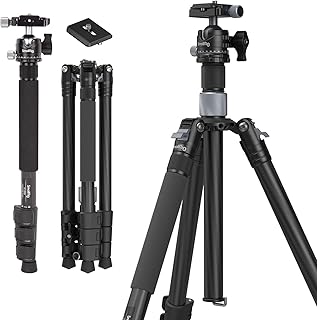


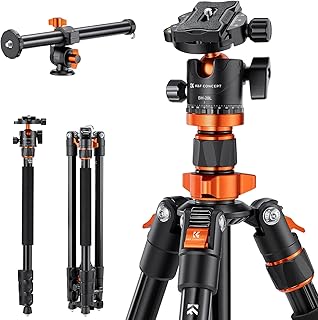


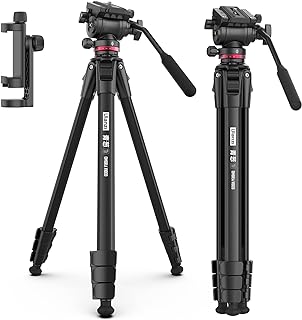


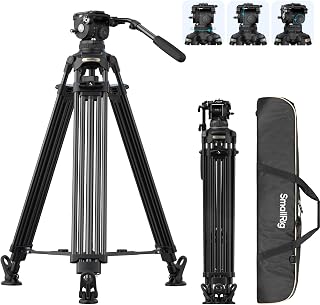


Choosing the right tripod or monopod is about more than finding the lowest price. A dependable support system can improve image sharpness, video stability, framing control and shooting comfort. The best choice depends on your camera or smartphone, lens weight, shooting environment, required height, portability and budget.
For Canadian shoppers, it is also worth considering how and where the support will be used. A lightweight travel tripod may be ideal for city photography and hiking, while a heavier aluminium or carbon-fibre model can make more sense for studio work, wildlife photography or large camera setups. A monopod can be particularly useful when mobility matters more than completely hands-free support.
A tripod uses three legs to create a stable platform without requiring the photographer to hold the equipment. This makes it suitable for long exposures, landscapes, night photography, product photography, self-portraits and many video applications.
A monopod has one primary support leg. It does not provide the same hands-free stability as a tripod, but it is faster to reposition and easier to carry. Sports, wildlife and event photographers often value this combination of support and mobility.
Load capacity is one of the most important specifications to examine. Do not compare the tripod with the camera body alone. Consider the combined weight of the camera, lens, battery grip, flash, microphone, monitor and other accessories that may remain attached during use.
A support system should have sufficient capacity for the complete setup rather than operating close to its stated maximum. This can provide a more practical margin for stability and future equipment upgrades.
A tall tripod can reduce the need to bend over, but maximum height should not be considered in isolation. Check the height of the centre column, leg sections and head together. A very tall centre column may also affect stability when it is raised significantly.
For travel photography, a slightly shorter model can be easier to carry. For portrait, architectural or studio work, additional height may be more valuable.
Minimum height matters for creative photography. Low-angle landscape compositions, macro photography and close-to-ground video can benefit from legs that spread widely or reverse-fold.
If you regularly photograph flowers, small objects, landscapes or low viewpoints, compare the minimum working height instead of focusing only on the maximum height.
Folded length determines how easily a tripod fits into a backpack, suitcase or carry-on bag. A tripod with a high maximum height may still be practical for travel if the leg design allows it to fold into a compact package.
Always compare folded dimensions with the actual bag or storage space you plan to use.
Weight involves a practical compromise. Heavier support systems can be easier to keep steady in demanding conditions, while lightweight models are more convenient for travel and extended walks.
For hiking, air travel and everyday photography, minimizing unnecessary weight can make you more likely to carry the tripod consistently. For stationary work, additional weight may be less of a concern.
Aluminium tripods are often attractive to buyers who want a balance between durability, cost and weight. They can be suitable for general photography, home studios and occasional outdoor use.
Carbon fibre is valued for its low weight and rigidity. It can be especially useful for photographers who carry their equipment over long distances or frequently travel.
The tripod legs are only part of the support system. The head controls how the camera moves and locks into position. Selecting the appropriate head can have a major effect on usability.
Ball heads provide quick adjustment in multiple directions. They are popular for photography because one main control can allow fast repositioning. They can work particularly well for travel and general-purpose shooting.
Pan-and-tilt heads provide more independent control over different axes. This can be useful when precise composition is more important than making extremely fast adjustments.
Video-oriented heads are designed around controlled camera movement. A fluid-style head can be more appropriate for video recording, especially when smooth pans and tilts are required.
Some compact travel tripods use smaller heads to reduce overall weight and folded dimensions. These designs can be convenient for lightweight camera equipment but should be evaluated against the load and control requirements of your setup.
A quick-release system allows the camera to be attached and removed without repeatedly threading the camera directly onto the tripod. Before buying, check whether the plate is compatible with your camera and whether replacement plates are readily available.
Photographers who switch frequently between handheld and tripod shooting should pay particular attention to the locking mechanism. A secure connection should be easy to operate while providing confidence that the camera is properly attached.
Twist locks can create a clean external profile and are common on travel tripods. They can be quick to operate once the user becomes familiar with the locking direction and sequence.
Lever locks provide a visible mechanism that makes it easy to see whether each section is open or secured. They can be convenient for photographers who need rapid setup.
Neither design should be selected solely because of the lock type. Look at the quality of the mechanism, ease of operation, number of leg sections and overall construction.
More leg sections can reduce folded length, which is useful for travel. However, additional sections also mean more locking points to adjust. A tripod with fewer sections may offer faster setup and fewer components to maintain.
Compact travel designs can prioritize portability by using reverse-folding legs or integrated components. These features can make the tripod easier to pack, but buyers should still verify the maximum height and load capacity.
More sections can make a monopod easier to pack, while fewer sections can simplify setup. Compare the collapsed size against the working height you actually need.
Some monopods use a conventional rubber foot, while others incorporate more specialized bases or feet. Consider whether you will primarily work indoors, outdoors, on hard floors or on uneven ground.
A wrist strap can make a monopod easier to control during fast-moving photography. It is a small feature but can be useful during long sessions.
Some monopods can accept different heads or mounting accessories. If you use a heavy telephoto lens or specialized camera equipment, check compatibility before purchase.
A travel photographer will generally benefit from a compact and relatively lightweight tripod. Folded dimensions, carrying weight and setup speed should receive priority.
Landscape photographers should consider stability, working height, low-angle capability and leg adjustment. A tripod that can be positioned securely on uneven terrain can be more useful than one that only performs well on flat surfaces.
A monopod can provide valuable support for long lenses while allowing the photographer to move quickly. A sturdy tripod can be preferable when the camera position remains fixed for longer periods.
Portrait photographers should consider working height, head control and stability. A tripod that reaches a comfortable eye-level position can make composition easier.
Video users should prioritize smooth movement, secure mounting and a head designed for controlled pans and tilts. Smartphone creators may have different requirements from users operating larger mirrorless or cinema cameras.
Smartphone users should verify that the tripod includes a suitable phone holder or supports a compatible accessory. A lightweight mini tripod may be enough for desk videos, while outdoor creators may need a taller and more stable system.
The cheapest option is not necessarily the best value. A support system should be evaluated for stability, construction, controls, compatibility and expected frequency of use.
Checking only the camera body's weight can lead to an unsuitable purchase. Include the lens and accessories when assessing load capacity.
A very tall tripod can look appealing on a specification sheet, but stability and practical working height are equally important. Consider how often you will actually need the maximum extension.
A tripod that remains at home because it is too large to carry does not provide much practical value. Measure your camera bag or luggage before selecting a travel model.
Tripod legs and tripod heads work as a system. A strong set of legs paired with a head that is difficult to adjust or unsuitable for the camera can limit the entire setup.
Most camera mounting systems follow common standards, but compatibility should still be checked. Smartphone holders, action cameras, compact cameras and larger interchangeable-lens cameras can require different mounting accessories.
When comparing several models, avoid looking at specifications individually. Build a complete picture of how the tripod will perform in your intended environment.
Several established photography brands offer tripods, monopods and related support equipment across different categories. Depending on your requirements and budget, it can be useful to compare products from brands such as Manfrotto, Gitzo, Benro, Sirui, Vanguard, Joby, SmallRig, Neewer and K&F Concept.
Brand reputation should not replace product-level comparison. Different models from the same manufacturer can target completely different users. Always compare the exact specifications, included accessories and intended application.
A good deal is not simply the product with the largest apparent discount. Compare the actual specifications, included accessories and current retailer pricing before deciding that one option represents better value.
When shopping in Canada, compare the current Canadian price rather than relying on prices displayed for another country. Also check whether the listed package includes the tripod head, quick-release plate, phone holder, carrying case or other accessories you would otherwise need to purchase separately.
It is also useful to compare the exact model number across retailers. Similar product names can refer to different generations, configurations or accessory bundles.
Customer reviews can provide useful information about everyday usability, but they should be interpreted alongside technical specifications. Look for repeated comments concerning stability, leg locks, head movement, portability, setup time and long-term usability.
Pay particular attention to reviews from customers using equipment similar to yours. A lightweight smartphone setup and a professional telephoto camera create very different demands on a support system.
Recent reviews can also reveal whether a product's current packaging or configuration differs from older listings. Verify the exact model before making a purchase.
Even a capable tripod can become less stable in difficult conditions. Strong wind, uneven terrain, raised centre columns and heavy accessories can all affect stability.
For outdoor photography, placing the tripod securely and keeping the centre column as low as practical can help maintain a stable setup. Avoid extending components unnecessarily when conditions are demanding.
When shooting with a long lens, pay attention to the combined camera and lens balance. A support system that feels stable with a small lens may behave differently with a substantially larger setup.
Canadian photographers may use support equipment in cold outdoor conditions, so material and operating mechanisms deserve consideration. Cold temperatures can make gloves necessary and may affect how easy small adjustment controls are to operate.
Look for controls that are sufficiently large and accessible for the way you normally shoot. After outdoor use in snow or wet conditions, allow equipment to dry appropriately and follow the manufacturer's care recommendations.
Regular care can help preserve the operation of a tripod or monopod. Dirt and moisture can accumulate around leg sections, locks and joints, especially after outdoor photography.
A long-term purchase should match both your current equipment and your likely future needs. If you expect to move from a lightweight camera to a larger lens, choosing a support system with adequate capacity can prevent the need for an immediate replacement.
Durable construction, replaceable components, reliable locking mechanisms and a useful mounting system can all contribute to long-term value. Portability also matters because a tripod that fits naturally into your photography routine is more likely to be used.
Neither is universally better. A tripod provides greater hands-free stability, while a monopod is faster to reposition and easier to carry. The best option depends on the type of photography or video you do.
Choose a tripod based on the combined weight of your camera, lens and accessories. Also consider working height, folded size, head type and portability. Larger lenses generally require a more robust support system.
Carbon fibre can be worthwhile when low weight and portability are important. However, an aluminium tripod may provide better value for shoppers who prioritize affordability and do not frequently carry their equipment over long distances.
It can be, depending on its construction and the equipment being used. Stability also depends on environmental conditions and how far the legs and centre column are extended. Compare the complete specifications rather than judging stability by weight alone.
A monopod can replace some tripod applications but not all of them. It is useful when mobility and support are priorities, but it cannot normally provide the same hands-free stability required for long exposures or unattended framing.
Prioritize folded length, weight, sufficient load capacity, setup speed and working height. A travel tripod should be compact enough to carry while still providing adequate support for your camera equipment.
Not always, but video users should pay close attention to the tripod head. A head designed for controlled pans and tilts can be more suitable for video than a basic photography-oriented head.
No. A higher price can reflect materials, construction, design or specialized features, but the best value depends on your requirements. A moderately priced tripod with the right specifications may be a better choice than an expensive model with features you do not need.
Check the current specifications whenever you compare products or prepare to purchase. Product configurations, included accessories and retailer listings can change, so verify the exact model before ordering.
The best tripod or monopod is the one that fits your equipment, shooting style and carrying habits. Start with the complete weight of your camera setup, then compare stability, working height, folded dimensions, material, head design and mounting compatibility.
For travel, prioritize portability without sacrificing adequate support. For wildlife and sports, consider the mobility of a monopod. For landscapes, night photography and long exposures, a stable tripod is usually the more versatile choice. For video, give particular attention to the head and movement controls.
Before purchasing, compare the exact model specifications, current Canadian pricing and recent customer feedback from trusted retailers. A smart buying decision is less about choosing the most expensive or heavily promoted option and more about matching the support system to the equipment and situations in which you will actually use it.