

♥ Wishlist
Compare 60 Sound Measurement Equipment products in Canada. Reviews, ratings, pros, cons and buying advice updated for October 2026.


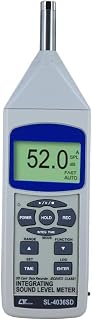


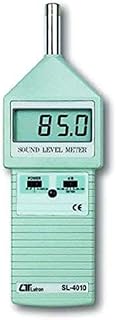


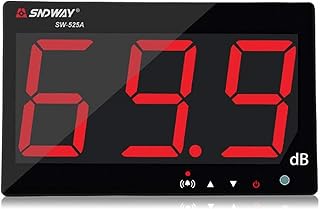




Choosing a sound measurement device is easier when the buying decision starts with the actual measurement task rather than the product name. Sound level meters, decibel meters, audio measurement tools, noise meters and connected monitoring devices can look similar while offering very different levels of accuracy, functionality and convenience.
For Canadian buyers, the right choice depends on where the meter will be used, how frequently measurements will be taken, the required measurement range, display readability, response settings, data-recording capabilities and the level of precision expected. A basic handheld meter can be suitable for general noise checks, while more advanced equipment may be preferable for acoustic analysis, workplace assessments, equipment troubleshooting or detailed audio work.
This 2026 buying guide focuses on the factors that matter when comparing smart sound measurement deals. Instead of choosing solely by price or review count, compare the specifications, intended application and measurement features of each product before purchasing.
A sound measurement meter is an electronic instrument designed to measure sound pressure levels and normally display the result in decibels, commonly abbreviated as dB. Depending on the model, the device may provide additional measurements, frequency weighting options, response settings, data logging and other functions.
The simplest devices are intended for quick readings. More capable models can provide greater control over how sound is measured and recorded. Some products are designed specifically for environmental noise checks, while others are intended for industrial, educational, audio or hobby applications.
The terms sound level meter and decibel meter are often used interchangeably in consumer product listings. In practical buying situations, however, the important issue is not the name but the specifications.
Look for information about the measurement range, frequency weighting, time weighting, accuracy, resolution, microphone type and operating conditions. A product described as a professional meter is not automatically the best choice for every application.
A typical meter measures sound pressure and expresses the result in decibels. Depending on its design, it may also provide:
The measurement range indicates the sound levels a meter is designed to measure. A wider range can make a device more versatile, particularly when measurements may vary considerably between quiet and loud environments.
Do not assume that the widest published range automatically represents superior performance. The usable range, accuracy and intended application should be considered together.
Accuracy is one of the most important specifications when comparing sound measurement products. A small difference in a specification can matter when measurements need to be compared consistently.
For casual household checks, buyers may not need the same specification level required for technical acoustic work. If measurements will be used for professional assessment, documentation or compliance-related purposes, examine the manufacturer's stated accuracy and applicable standards rather than relying on a generic product description.
Resolution describes how finely the display can represent a measurement. For example, a display that changes in smaller increments can make it easier to observe gradual variations in sound levels. Higher displayed resolution should not, however, be confused with higher measurement accuracy.
Frequency weighting changes how the instrument responds to different frequencies. A-weighting is commonly associated with measurements intended to approximate human hearing sensitivity at moderate sound levels. C-weighting provides a different frequency response and can be useful when evaluating louder sounds or low-frequency content.
When comparing meters, check whether the required weighting options are actually available. A low-cost device with only one mode may be unsuitable if your intended application requires another measurement approach.
Time weighting affects how quickly the displayed measurement responds to changes in sound. Fast response can make rapidly changing sound levels easier to observe, while slow response can produce a more stable reading in environments where the level fluctuates.
A meter offering both fast and slow settings provides greater flexibility than one with a fixed response mode.
Maximum and minimum functions can be useful when sound changes over time. Instead of watching the display continuously, the meter can retain an important high or low reading, depending on the product's design.
Data logging becomes particularly useful when measurements need to be reviewed later. Depending on the device, recorded readings may be stored internally or transferred to another device.
Before buying a data-logging sound meter, check the storage capacity, recording interval, file format and data-transfer method. A product that records measurements but makes them difficult to retrieve may be less useful than its feature list suggests.
A technically capable meter can still be inconvenient if its controls are difficult to understand. For handheld use, look for a clear display, logically arranged buttons and easy access to common measurement settings.
A backlight can improve readability when measurements are taken in dim rooms, workshops, studios or outdoor areas during low-light conditions. Consider whether the backlight can be activated when required and whether it affects battery consumption.
A larger display can be helpful when the meter is positioned away from the user. Compact meters can be easier to carry, but smaller screens may require closer viewing.
A hold function can freeze a displayed value temporarily. This is useful when the meter must be moved or when the user needs time to record a measurement manually.
The microphone is a critical component because it detects the sound reaching the instrument. Buyers should therefore look beyond the screen, casing and advertised features.
Check the microphone design, stated specifications and whether the microphone is protected from accidental damage. Some models use an exposed measurement microphone, while others incorporate additional protection around the sensing element.
How the meter is positioned can influence readings. Nearby walls, reflective surfaces, machinery and the user's own body can affect the sound field. For consistent comparisons, take measurements using a repeatable position and method.
Outdoor or airflow-heavy environments can create unwanted effects at the microphone. A compatible windscreen can help reduce the influence of air movement on the microphone. Buyers planning outdoor measurements should check whether appropriate microphone protection is included or available separately.
A handheld sound meter can help homeowners investigate noise from appliances, HVAC systems, fans, pumps, entertainment equipment and nearby activity. The goal is often to identify changes in sound level rather than conduct formal acoustic certification.
Musicians and home-studio users may use sound measurement tools to understand monitoring levels and compare acoustic changes. A meter can be useful for establishing repeatable listening conditions, although it does not replace comprehensive room-acoustic analysis.
Tools, compressors, extraction systems and other equipment can generate substantial noise. A sound meter can help identify which equipment or operating conditions produce higher readings and can support practical decisions about equipment placement and noise control.
Sound measurements can help investigate distracting background noise from ventilation systems, machinery, neighbouring rooms and other sources. Consistent measurement practices are important when comparing different areas.
Outdoor measurements introduce additional variables, including wind, traffic, reflections, weather and changing environmental conditions. A meter intended for general indoor measurements should not automatically be treated as a specialized environmental monitoring instrument.
A basic digital sound meter can be appropriate when the primary requirement is obtaining straightforward decibel readings. These models are generally easier to operate and can be attractive for occasional household or hobby use.
Prioritize a readable display, suitable measurement range, useful weighting options and dependable controls rather than paying for features you will never use.
A mid-range model may offer additional response settings, improved measurement controls, memory functions, maximum readings or data logging. This category can be suitable for buyers who need more flexibility without requiring a highly specialized acoustic instrument.
Advanced devices may provide expanded measurement capabilities, detailed logging, connectivity and more sophisticated analysis options. These products are better considered when measurements form part of a repeatable technical workflow rather than occasional curiosity.
The term smart can mean different things across sound measurement products. Some devices focus on simple digital displays, while others may provide connectivity or software-based data handling.
Bluetooth can make it easier to transfer measurements or operate a compatible device remotely. Before choosing a connected model, check supported operating systems, application requirements and whether the core measurement functions remain usable without the app.
USB can be useful for charging, transferring stored measurements or connecting the instrument to a computer, depending on the model. Do not assume that every USB-equipped device supports data transfer simply because it has a USB connector.
An accompanying application may provide charts, data storage or measurement history. App quality can be as important as hardware connectivity, so check the supported operating system and required permissions before purchasing.
Battery life matters when a sound meter is used for extended measurement sessions. Backlighting, wireless connectivity, continuous recording and frequent screen updates can affect power consumption.
Compare the battery type and replacement process. Some compact meters use replaceable batteries, while other devices may use rechargeable batteries. Consider which option is more convenient for your normal usage.
Automatic shutdown can help prevent accidental battery drain. However, it may become inconvenient during long measurement sessions if the user must repeatedly reactivate the meter. Check whether the feature can be adjusted when this matters to your workflow.
For a device that may be carried between rooms, vehicles, workshops or job sites, physical design deserves attention. Look for a casing that appears appropriate for the intended environment and controls that can be operated without excessive difficulty.
A compact sound meter is convenient to transport. A larger instrument may provide a larger screen and additional controls. The best balance depends on how the meter will be used.
Tripod mounting can be valuable for repeatable measurements because it reduces variation caused by hand movement and positioning. If consistent measurements are important, check whether the meter supports a compatible mounting arrangement.
Calibration is an important consideration for measurement equipment. A meter's accuracy specification should not be interpreted as a guarantee that every future reading will remain perfectly accurate under every condition.
Professional users should consider the manufacturer's calibration guidance and the requirements of the application. A compatible acoustic calibrator may be relevant for users who need to verify instrument response as part of a measurement procedure.
Accuracy describes how closely a measurement is expected to correspond to the specified reference under stated conditions. Calibration is the process of checking or adjusting an instrument against an appropriate reference. They are related concepts but should not be treated as identical.
Buyers using sound meters for workplace, environmental, construction or other regulated applications should determine which Canadian requirements or technical standards apply to their specific situation.
A consumer-grade sound meter may be perfectly adequate for general informational measurements while being unsuitable for formal compliance documentation. Before relying on readings for an official assessment, confirm the required instrument class, calibration procedure, measurement method and applicable authority or standard.
Price is an important consideration, but a very inexpensive meter may lack features needed for the intended measurement. Compare specifications before comparing discounts.
A display showing more decimal places does not automatically mean the instrument measures sound more accurately. Always examine the stated accuracy specification separately.
Buying a meter without checking its weighting options can result in a product that does not suit the intended measurement procedure.
Advanced connectivity, logging and analysis functions can be useful, but they can also add complexity. If you only need occasional decibel readings, a straightforward meter may provide better value.
Outdoor sound measurement can be affected by wind and other environmental factors. Make sure the chosen device and measurement method are appropriate for the environment.
Product descriptions can use terms such as professional, industrial or high precision. Treat these labels as marketing language until supported by specific technical documentation.
When comparing the best sound measurement deals available to Canadian shoppers, create a short specification checklist before looking at discounts. This prevents a low headline price from distracting you from important requirements.
Brand reputation can be useful as a starting point, but it should not replace specification-level comparison. Depending on the product category and model, buyers may encounter established measurement and electronics brands such as Extech, Fluke, Reed Instruments, B&K Precision, UNI-T, Kimo and Trotec.
These brands cover different segments, so do not assume that every model from an established manufacturer is appropriate for every application. Compare the exact model's specifications, intended use, accessories and documentation.
Customer reviews can reveal practical details that are difficult to understand from a specification sheet. However, individual experiences should be evaluated carefully rather than treated as universal evidence.
Look for repeated comments about display readability, button layout, battery performance, app compatibility, durability and ease of use. Reviews that discuss the exact model are generally more useful than generic comments about a brand or product category.
One isolated complaint may reflect an individual circumstance. Repeated comments describing the same usability issue deserve more attention. Likewise, several independent comments praising a particular feature can help identify practical strengths.
Choose a straightforward digital meter with a suitable range, clear display and basic weighting and response controls. There is usually little reason to pay for advanced data analysis if measurements are occasional.
Consider a durable handheld design, readable display, maximum-reading function and useful measurement range. Battery convenience can also become important when the meter is used away from a desk.
Look for appropriate frequency weighting, stable readings and easy positioning. If the goal extends into detailed room-acoustic analysis, consider whether dedicated acoustic measurement software and a suitable measurement microphone would be more appropriate than a basic handheld sound level meter.
Frequent users may benefit from data logging, memory, tripod compatibility, improved controls and computer or mobile connectivity. These features can reduce manual note-taking and make repeated measurements easier to organize.
Professional buyers should begin with the measurement procedure and applicable requirements. Determine the required instrument performance, calibration expectations and documentation before selecting a particular model.
Smartphone applications can be convenient for quick, informal sound-level estimates. A dedicated meter, however, uses purpose-built measurement hardware and may provide features and controls that are unavailable through a phone microphone.
A phone app can be useful for preliminary checks, while a dedicated instrument may be more appropriate when repeatability, specialized settings or documented measurement performance matters.
Do not treat readings from different phones, microphones or applications as directly interchangeable without considering their hardware and software differences.
The decibel is a logarithmic unit rather than a simple linear scale. This is one reason why comparing sound levels requires some care. A numerical change in decibels should not be interpreted in the same way as an equivalent percentage change on an ordinary linear scale.
For practical buying decisions, the important point is that a sound meter's measurement range and response characteristics should match the sound environment being investigated.
A handheld sound level meter is not a universal acoustic-analysis instrument. More advanced investigations may require specialized microphones, audio interfaces, spectrum-analysis software, acoustic calibrators or other equipment.
If you need to identify individual frequency bands, examine reverberation, analyze room modes or perform detailed acoustic engineering work, check whether a conventional decibel meter actually provides the required functionality.
The most useful way to evaluate sound measurement deals is to compare total suitability rather than the discount percentage alone. A lower-priced product is not necessarily a better deal if it lacks the measurement range, weighting options, logging functions or accuracy required for the task.
Canadian shoppers should also check the exact product model, current retailer information, included accessories, applicable delivery terms and current price before completing a purchase. Product specifications and retailer conditions can change during the year.
For Amazon affiliate shopping research, compare the exact model number rather than relying only on product titles. Similar-looking sound meters can have different revisions, accessories or specifications. Reading the manufacturer's documentation alongside current retailer information can provide a clearer picture of what is actually included.
There is no single best sound meter for every Canadian buyer. The right option depends on the required measurement range, accuracy, weighting options, environment and whether features such as data logging or connectivity are necessary.
Inexpensive meters can be useful for general-purpose sound checks when their specifications match the task. They should not automatically be assumed to provide the same measurement performance as specialized professional equipment.
The terms are commonly used for similar products. What matters most is the device's actual measurement capability, specifications and intended application.
A-weighting is commonly used for measurements intended to reflect human hearing sensitivity. Whether it is appropriate depends on the purpose of the measurement. Check the requirements of the specific application rather than selecting a mode simply because it is common.
C-weighting provides a different frequency response and can be useful when evaluating louder sounds and low-frequency content. Its suitability depends on the measurement method being used.
Neither is universally better. Fast response can follow changing sound levels more closely, while slow response can make fluctuating readings easier to observe. A meter offering both provides more flexibility.
A smartphone application can be useful for informal estimates, but a dedicated sound meter may offer purpose-built hardware, measurement controls and specifications better suited to repeatable measurements.
Calibration requirements depend on the instrument and application. Users performing professional or documented measurements should follow the manufacturer's calibration guidance and any requirements applicable to the specific measurement procedure.
Not necessarily. Price can reflect additional features, construction, connectivity, measurement capabilities and intended market. Compare the actual accuracy and specifications instead of using price as a substitute for technical evaluation.
Confirm the exact model number, measurement range, accuracy, frequency weighting, response modes, power requirements, included accessories, connectivity and current customer feedback. Also check the current retailer listing because product information can change.
The best smart buy sound measurement deal in 2026 is the product that fits the measurement job rather than simply the product with the lowest advertised price. Start by defining the environment and type of sound you need to measure. Then compare measurement range, accuracy, frequency weighting, response time, microphone design, display quality, logging capabilities, connectivity and calibration considerations.
For basic household checks, simplicity and readability can matter more than advanced functions. For frequent or technical measurements, data handling, repeatability and documented specifications become increasingly important. Buyers should also distinguish between general-purpose sound meters and equipment intended for formal acoustic or regulatory work.
Before purchasing in Canada, verify the exact model and current specifications, compare trusted brands such as Extech, Fluke, Reed Instruments, B&K Precision, UNI-T, Kimo and Trotec where relevant, and read current customer feedback for the specific product. A careful specification-first comparison makes it easier to identify genuine value and avoid paying for features that do not support your actual requirements.