

♥ Wishlist
Compare 48 Hand Drills Hand Tool for Precise Drilling and DIY Projects products in Canada. Reviews, ratings, pros, cons and buying advice updated for October 2026.




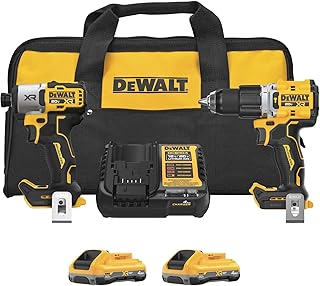


Choosing a hand drill is less about finding the most powerful specification and more about matching the tool to the materials, frequency of use, workspace and type of drilling you expect to do. A compact cordless drill may be ideal for furniture assembly and routine household repairs, while a higher-torque hammer drill is better suited to demanding work involving masonry, concrete block or tougher construction materials.
For Canadian buyers, the choice can also depend on whether the drill is part of an existing cordless tool system. Staying within one battery platform can make it easier to share batteries and chargers across compatible tools. Brands such as Bosch, DEWALT, Makita, Milwaukee, Ryobi, Black+Decker, Craftsman and Metabo HPT offer drill ranges covering different levels of performance and intended use.
Before comparing deals, look beyond the headline discount or advertised voltage. Chuck design, torque control, speed range, clutch settings, battery capacity, ergonomics, included accessories and the availability of compatible batteries can have a greater effect on long-term usefulness than a single headline specification.
A hand drill is a portable power tool designed primarily for drilling holes and, when equipped with the appropriate bit or accessory, driving screws and other fasteners. Modern cordless drills are especially popular because they eliminate the need for a mains power cable and can be used in locations where electrical outlets are inconvenient.
Most general-purpose cordless drills use a variable-speed trigger and an adjustable clutch. The trigger controls rotational speed, while the clutch helps limit the amount of torque delivered when driving screws. This combination makes a drill considerably more versatile than a basic single-speed tool.
Some models also include a hammer-drilling mode. A hammer drill adds a rapid impact action while the chuck rotates, helping the bit work into masonry and similar materials. However, a hammer drill should not automatically be treated as a substitute for a dedicated rotary hammer when heavy concrete drilling is involved.
The first major buying decision is whether you need a cordless or corded machine.
For many Canadian homeowners, a cordless drill is the most flexible starting point. For workshop users who regularly drill for long periods, however, continuous mains operation can still be worth considering.
Voltage is commonly used to describe cordless drill platforms, but it should not be used as the only measure of performance. Higher nominal voltage can indicate a platform designed for more demanding applications, yet actual performance also depends on the motor, gearing, electronics, battery and overall tool design.
Compact drills may be available in lower-voltage categories designed around portability. More powerful consumer and professional ranges commonly use higher-voltage battery systems. Instead of assuming that the highest voltage is automatically best, consider the torque, weight and work requirements associated with the complete tool.
Torque determines how effectively a drill can rotate a bit or fastener against resistance. It is particularly important when driving long screws, drilling larger holes or working with dense materials.
However, maximum torque is not the only useful consideration. A drill with excessive torque can make delicate screwdriving more difficult if its clutch is poorly suited to light work. For mixed applications, a useful combination of adjustable clutch settings, multiple gears and a responsive trigger is often more valuable than chasing the largest advertised torque figure.
Many quality drills use two mechanical speed ranges. The lower range generally prioritises torque, while the higher range provides greater rotational speed for suitable drilling applications.
A good drill should allow you to select an appropriate combination of gear, trigger speed and clutch setting instead of simply running at maximum speed for every task.
The chuck holds the drill bit or accessory. Common cordless drill designs use keyless chucks, allowing accessories to be tightened without a separate chuck key.
Chuck capacity determines the range of compatible bit shank sizes. A larger chuck can accommodate larger accessories, although that does not mean every drill with a larger chuck is automatically more capable in every application.
Check the chuck specification before buying if you already own drill bits or accessories, particularly when moving from a compact drill to a more substantial model.
The adjustable clutch is one of the most useful features for anyone who uses a drill as a screwdriver. It allows you to select a lower torque setting for delicate fasteners and increase the setting when more driving force is required.
Without suitable clutch control, it is easier to overtighten screws, damage softer materials or strip fastener heads. Woodworkers and furniture assemblers can benefit particularly from predictable clutch behaviour.
When comparing models, consider the number and usefulness of clutch positions rather than assuming that a higher number automatically represents better control.
A hammer drill combines conventional rotary drilling with a hammering action intended for masonry applications. This makes it more versatile than a standard drill when occasional work involves brick, block or similar materials.
A hammer drill can be a practical choice for homeowners who need one tool for a mixture of wood, metal, plastic and occasional masonry drilling. The hammer mode should normally be switched off for ordinary drilling and screwdriving where impact action is unnecessary.
For frequent heavy-duty concrete drilling, a rotary hammer with the appropriate chuck system is generally a more suitable category of tool. Selecting the right machine for the material reduces unnecessary strain on both the operator and equipment.
Motor design is another important comparison point. Traditional brushed motors use physical brushes that contact the rotating motor components. Brushless motors use electronic control instead of conventional brushes.
Brushless drills are often positioned toward higher-performance tool ranges. They can offer advantages such as reduced mechanical brush wear, efficient electronic control and strong performance within the manufacturer's battery platform.
Brushed models can still be entirely appropriate for occasional DIY work. If a drill will only be used a few times a year, paying more for a brushless platform may not provide the best value unless the other features justify the additional cost.
Battery capacity is generally expressed in ampere-hours, or Ah. In simple terms, a higher-capacity battery can provide more stored energy, although actual runtime varies substantially according to the task and tool.
A drill supplied with a smaller battery is not necessarily a poor choice. If the tool is compact and your projects are short, the reduced weight can be an advantage. Conversely, frequent users may prefer a larger battery or a kit containing multiple batteries.
Many cordless tools are available as bare tools, meaning the drill is supplied without a battery and charger. This can be an economical choice if you already own compatible batteries from the same platform.
A complete kit can be more convenient for someone entering a battery ecosystem for the first time. Compare the complete package rather than comparing only the tool price.
Battery compatibility can become one of the most important long-term considerations. A buyer who already owns compatible tools from Makita, Milwaukee, DEWALT, Bosch, Ryobi or another manufacturer may prefer to stay within that platform.
Staying within one ecosystem can reduce the need to purchase separate chargers and spare batteries. It can also make a future tool purchase simpler because the same battery family may support drills, impact drivers, saws, lights and other equipment.
Never assume batteries are interchangeable merely because their voltage appears similar. Use only batteries and chargers specified as compatible by the manufacturer.
A drill can have excellent specifications and still be uncomfortable to use. Ergonomics matter because drilling and fastening often involve repetitive movements, awkward angles and prolonged periods of gripping the tool.
Look for a handle that feels secure without requiring excessive grip pressure. A balanced centre of gravity can also make the tool easier to control. Compact dimensions are valuable when working inside cabinets, between studs or in other restricted spaces.
Integrated LED lighting can be surprisingly useful when drilling inside cupboards, under work surfaces or in poorly illuminated areas. It does not replace proper task lighting, but it can improve visibility around the work area.
Other convenience features can include belt hooks, side handles on larger models, battery charge indicators, electronic protection systems and quick-change chuck mechanisms. Decide which features genuinely match your working habits rather than paying more simply for a longer feature list.
The drill itself is only one part of the drilling system. The correct bit is essential for producing a clean hole and avoiding unnecessary tool strain.
Always check the manufacturer's recommendations for the accessory and material. Using an inappropriate bit can lead to poor results, excessive heat, premature wear or damage to the workpiece.
Woodworking often benefits from precise speed control, a responsive trigger and a dependable clutch. Compact dimensions can also be valuable when assembling cabinets, shelving and furniture.
For larger holes, consider whether the drill has sufficient torque and whether the battery system can comfortably support the workload. A lower-speed setting can provide better control for demanding accessories, while a higher speed may be appropriate for smaller bits when recommended by the bit manufacturer.
Metal drilling requires appropriate bits, controlled speed and suitable cutting conditions. Higher speed is not automatically better. The correct rotational speed depends on the material, bit type and diameter.
For regular metalworking, examine the drill's speed control and ability to operate steadily under load. A variable-speed trigger can help when starting a hole, while appropriate lubrication or cutting fluid may be required for particular metalworking applications.
If masonry drilling is part of your routine, consider a hammer drill. The hammer mechanism helps the bit work through masonry more effectively than rotary-only operation.
For occasional household masonry holes, a cordless hammer drill may provide a convenient balance of versatility and portability. For repeated or larger concrete drilling, investigate rotary hammer tools rather than expecting a general-purpose drill to perform every heavy-duty task.
Not every premium feature provides equal value. Prioritise features that directly affect the work you perform.
A high voltage number does not tell you everything about the tool. Compare torque, speed, weight, battery system and intended use together.
A very powerful drill can be unnecessarily heavy for furniture assembly or light household work. Extra capability is useful only when your projects actually require it.
A discounted bare tool may not be the least expensive option if you also need to purchase batteries and a charger.
Published tool weight may not represent the exact weight you will hold during use. Consider the complete operating setup, including the battery.
A general-purpose hammer drill may be suitable for occasional masonry tasks but may not be the right tool for demanding concrete work.
Check the exact battery platform and manufacturer compatibility information before purchasing additional batteries or chargers.
A good deal should be evaluated on total value rather than discount percentage alone. Compare the tool specification, kit contents and long-term platform costs.
A compact cordless drill with an adjustable clutch and variable-speed trigger is usually sufficient for shelves, furniture, fixtures and routine household repairs.
A mid-range cordless drill or hammer drill offers greater versatility for users who work with wood, metal and occasional masonry.
A durable brushless drill with multiple speed ranges, good ergonomics and a dependable battery platform can make more sense for frequent users.
Higher-output cordless platforms can be useful when drilling larger holes or driving demanding fasteners. Depending on the application, an impact driver or rotary hammer may be a better companion tool than simply choosing the most powerful drill.
Compact size, low weight, clutch control and precise speed adjustment are generally more important than maximum torque.
A drill and impact driver overlap in some fastening tasks, but they are designed differently. A drill provides controlled rotary power and is generally more versatile for drilling. An impact driver is designed primarily around fastening and uses an impact mechanism to deliver rotational force.
If drilling holes is a major requirement, start with a drill. If you frequently drive long screws or structural fasteners, an impact driver can be a useful additional tool.
These tools should not be considered interchangeable. A hammer drill is a versatile general-purpose drill with an added hammer action. A rotary hammer is specifically engineered for more demanding masonry and concrete applications and typically uses a specialised bit system.
For occasional wall anchors in masonry, a hammer drill may be adequate. For frequent concrete drilling, larger holes or demanding renovation work, compare dedicated rotary hammer options instead.
A hand drill prioritises portability and flexibility. A drill press prioritises controlled, repeatable drilling from a fixed position.
For furniture installation, repairs and construction work, portability is usually the greater advantage. For workshop tasks requiring consistent hole alignment and repeatability, a drill press may be preferable.
Safe operation starts with choosing the correct tool and accessory for the job. Read the manufacturer's instructions before using a new drill and follow the stated operating and charging requirements.
Proper battery handling can help maintain a cordless tool system over time. Follow the battery manufacturer's charging, storage and temperature recommendations rather than relying on generic charging practices.
Keep battery contacts clean and inspect packs for visible damage. Do not use a battery that shows signs of damage or behaves abnormally. Use the specified charger and compatible battery family.
Routine maintenance is straightforward for most consumer drills. Keep ventilation openings clear of accumulated dust and inspect the chuck, controls and battery connection regularly.
Good technique can make a noticeable difference even with an affordable drill. Start at a controlled speed and increase pressure gradually when appropriate. Let the bit perform the cutting rather than forcing the tool aggressively into the material.
For larger holes, consider using a suitable pilot hole where appropriate. Keep the drill aligned with the desired hole and select the correct gear and operating mode before starting.
If your projects involve multiple materials, a mixed drill-bit set can be more practical than buying individual bits for every task. However, make sure the set contains the types and sizes you actually need.
A large accessory kit is not necessarily better value if most of the pieces remain unused. Prioritise quality and material compatibility over the number of components.
Customer reviews can add useful real-world information, but they should be evaluated critically. Focus on repeated comments about specific characteristics rather than isolated opinions.
Professional-oriented tools may make sense for tradespeople or frequent users who place a high value on durability, performance and battery-platform flexibility. DIY-focused tools can be a better value for occasional household projects.
The right choice depends on usage rather than the label alone. A homeowner who completes frequent renovations may benefit from a professional-grade platform, while someone drilling only a handful of holes each year may gain little from paying substantially more.
Cordless tool ecosystems can influence the value of a drill beyond its initial purchase. Once you own several compatible tools, the battery and charger infrastructure can become part of the overall investment.
Before choosing a platform, consider the other equipment you may want in the future. A system that includes drills, impact drivers, circular saws, reciprocating saws, lights and garden tools can provide more flexibility for buyers planning to expand their collection.
Popular ecosystems include ranges from Milwaukee, Makita, DEWALT, Bosch, Ryobi, Black+Decker, Craftsman and other established manufacturers. Always verify the exact battery family because a manufacturer may offer several incompatible or differently positioned battery systems.
For a basic Canadian home workshop, a sensible starting point may include a cordless drill, a suitable bit set, a small selection of driver bits, measuring equipment and appropriate personal protective equipment.
As your projects become more demanding, you can add specialist tools instead of expecting the drill to perform every function. An impact driver, circular saw, reciprocating saw, rotary hammer or dedicated sander may each be better suited to particular tasks.
Use this checklist when comparing the best hand drill deals available in Canada:
The best home drill depends on the work involved. For general repairs and furniture projects, a compact cordless drill with variable speed and adjustable clutch control can be a practical choice. If you regularly drill masonry, consider a hammer drill.
Neither is universally better. Cordless drills provide greater mobility, while corded drills can be useful for extended work where continuous electrical power is available. Your workspace and typical workload should determine the choice.
A brushless model can be attractive for frequent or demanding users because of its motor design and electronic control. For occasional DIY use, a good brushed drill may provide sufficient capability at a lower overall cost.
Choose voltage according to the intended workload rather than assuming the highest rating is best. Compare torque, speed, weight, battery capacity and tool dimensions alongside voltage.
You need hammer-drilling capability if masonry drilling is a regular part of your projects. If you primarily work with wood and metal, a conventional drill may be sufficient.
A hammer drill can handle some masonry applications, but demanding concrete work may require a rotary hammer. Check the manufacturer's recommendations for the exact tool, bit and material.
Two mechanical speed ranges can provide greater flexibility by allowing a lower-speed, higher-torque setting and a higher-speed setting for appropriate drilling applications.
Battery capacity should match your workload. Smaller batteries reduce weight, while higher-capacity packs can provide more stored energy for longer or more demanding work. Actual runtime varies with the task and tool.
No. The best value comes from matching the tool to your requirements. Paying for professional-level power may not be worthwhile for occasional household tasks, while frequent users may benefit from investing in a more durable platform.
If you already own compatible batteries and a charger, a bare tool can be practical. New users should compare complete kit costs, including batteries and charger, before deciding.
Generally, battery platforms are manufacturer-specific. Do not assume compatibility based only on voltage or physical appearance. Check the manufacturer's stated compatibility information.
A lightweight cordless drill with good clutch control, variable speed and a comfortable handle is often more suitable than a heavy high-torque model.
A versatile mid-range cordless drill or hammer drill can cover many renovation tasks. If your projects include substantial concrete drilling, consider adding a rotary hammer rather than relying exclusively on a general-purpose drill.
The best hand drill deal is the one that delivers the right combination of capability, comfort, battery compatibility and total ownership value for your projects. Do not judge a drill solely by its advertised voltage, torque or discount.
Start by identifying the materials you work with most often. Then compare chuck capacity, speed range, clutch control, motor type, battery capacity, ergonomics and included accessories. If you already own cordless tools, the existing battery ecosystem should also play a major role in your decision.
For occasional home maintenance, prioritise convenience and low weight. For regular DIY work, look for a versatile platform with sufficient power and useful accessories. For demanding professional applications, focus more closely on sustained performance, ergonomics, battery availability and the broader tool ecosystem.
Before making a purchase, compare current specifications, verified customer reviews and today's retailer pricing in Canada. Product availability, configurations and promotional offers can change throughout 2026, so confirm the exact model and included components at the time of purchase.