

♥ Wishlist
Compare 44 Garden Carts for Yard, Garden & Outdoor Projects products in Canada. Reviews, ratings, pros, cons and buying advice updated for October 2026.


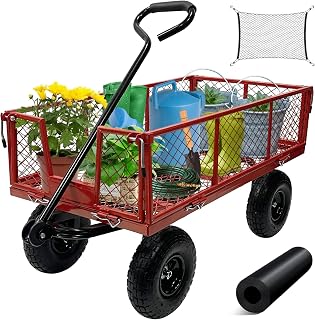


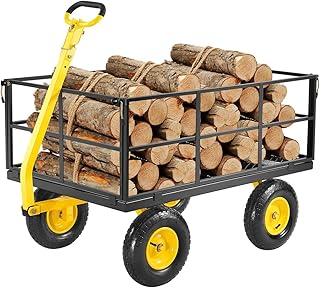


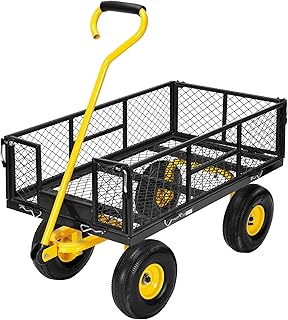


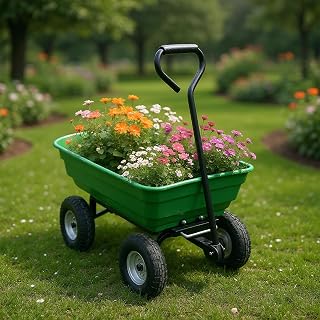


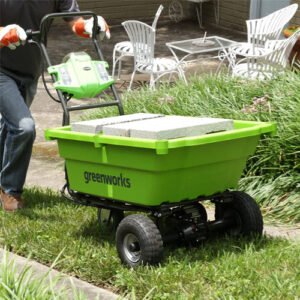
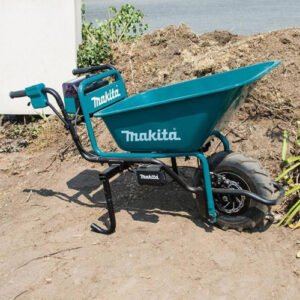
A garden cart can make a substantial difference when moving soil, compost, mulch, firewood, tools, plants, stones, leaves and other materials around a property. However, the right cart depends on much more than its advertised load capacity. Canadian buyers should consider terrain, seasonal weather, storage conditions, wheel design, bed construction, handle configuration, steering, tipping mechanism and the type of material they expect to transport.
For 2026, a smart buying decision means comparing the complete specification rather than choosing solely on price or headline capacity. A compact garden cart may be easier to manoeuvre around raised beds and narrow paths, while a heavy-duty utility cart may be better suited to larger yards, landscaping projects and frequent transport of dense materials.
This guide explains the features that matter when comparing garden carts in Canada and provides practical criteria for evaluating specifications, customer feedback and current retailer offers before purchasing.
A garden cart is a wheeled hauling tool designed to transport gardening, landscaping and general outdoor materials. Unlike a traditional wheelbarrow, many garden carts use a wider four-wheel platform or a two-wheel design with a balanced load bed. The configuration affects stability, steering, turning radius and how easily the cart handles uneven ground.
Garden carts are available in several forms, including steel utility carts, poly garden carts, dump carts, wagon-style carts and heavy-duty yard carts. Some models are designed primarily for gardening, while others are suitable for construction materials, firewood and general property maintenance.
Before comparing individual models, identify the work the cart needs to perform. Moving lightweight leaves requires very different characteristics from transporting wet soil, rocks or bags of landscaping material.
Load capacity is one of the first specifications to check, but maximum capacity should not be treated as the only measure of performance. A cart rated for a high load may still be inconvenient if it is difficult to pull, steer or unload.
Consider the typical weight of the materials you will transport. Soil, gravel, stone and wet organic material can become substantially heavier than their dry appearance suggests. If a cart will regularly carry dense loads, choose a model with an appropriate frame, axle, wheels and bed construction rather than simply selecting the largest available capacity.
The material used for the cart bed affects durability, weight, cleaning and resistance to outdoor conditions.
Poly beds are generally attractive to buyers who want a relatively lightweight cart that is easy to clean. They can be practical for soil, mulch, leaves and general garden debris. Steel beds can provide a more rigid structure and may be preferable for demanding work, although construction quality, protective coatings and storage conditions remain important.
When comparing steel carts, inspect the frame and bed construction rather than assuming that every metal cart offers the same durability. Weld quality, reinforcement points, axle construction and corrosion protection can all influence long-term usefulness.
Wheel configuration has a direct effect on how a garden cart behaves outdoors. Larger wheels generally make it easier to roll over uneven surfaces, small obstacles and rough lawn areas. Smaller wheels can work well on smooth paths but may require more effort across soft or irregular ground.
For Canadian properties, consider how the cart will be used during changing seasons. Muddy lawns, wet soil, gravel paths and uneven ground can place greater demands on the wheels than a flat paved driveway.
Pneumatic tyres use air and can offer a comfortable ride over rough terrain. Their drawback is that they can require inflation and may be vulnerable to punctures depending on the environment.
Flat-free tyres eliminate the need for regular air-pressure checks and can be particularly convenient for users who want a low-maintenance cart. However, the ride characteristics and traction can differ between wheel designs, so the choice should reflect the terrain rather than a simple preference for one tyre type.
The handle determines how naturally the cart can be pulled and controlled. Look for a comfortable grip, suitable handle height and a design that allows the user to maintain control when the cart is loaded.
Some carts use a single pull handle, while others incorporate a handle arrangement that can be adapted for different pulling positions. If the cart will be used frequently, ergonomics become more important than they may initially appear.
A cart that performs well in a straight line may still be frustrating in a garden with tight corners. Consider the turning mechanism, wheel arrangement and overall dimensions.
Four-wheel garden carts can provide excellent stability, while models with a more wagon-like steering system may be easier to direct around larger spaces. Narrower carts can be advantageous between garden beds, gates and storage areas.
A dump cart can save considerable effort when unloading loose materials such as soil, mulch, compost, grass clippings and leaves. Instead of manually lifting the entire load, the bed can be tilted to release the contents.
When comparing dump mechanisms, look at how the bed locks into its normal position and how easily the release mechanism can be operated. A useful design should provide controlled unloading rather than relying on awkward lifting or excessive force.
Dump functionality is particularly valuable for landscaping projects because unloading repeatedly can otherwise become one of the most physically demanding parts of using a garden cart.
Steel carts are often considered when strength and rigidity are priorities. They can be suitable for heavy landscaping materials and demanding outdoor tasks. Buyers should nevertheless examine the gauge and construction, frame reinforcement, finish and corrosion protection.
Steel is also heavier than many plastic alternatives. That additional weight can increase stability but can make an unloaded cart harder to move and store.
Poly carts are commonly chosen for their combination of relatively low weight, easy cleaning and resistance to many outdoor conditions. They can be particularly convenient for routine gardening tasks.
When assessing a poly cart, examine the bed thickness, frame support, axle design and wheel attachment points. A durable bed alone does not guarantee that the entire cart is designed for demanding loads.
Metal components exposed to moisture can eventually corrode if they are not adequately protected or maintained. A protective finish can help, but buyers should still avoid assuming that any coated steel component is completely corrosion-proof.
For Canadian use, storage matters. Keeping a cart sheltered when it is not required can help reduce unnecessary exposure to rain, snow, road salt and prolonged moisture.
Cart dimensions should match the spaces through which the cart will travel. A very large bed may appear attractive because it carries more material per trip, but its width can make it difficult to move through gates, between planting areas or into a shed.
Measure gates, shed doors, storage areas and narrow paths before purchasing a large model. Also consider the cart's overall length because a long handle or extended wheelbase can affect turning space.
Garden carts and wheelbarrows both move outdoor materials, but their handling characteristics are different.
There is no universal winner. The better choice depends on terrain, load size, storage space and the user's preferred method of handling materials.
For routine gardening, prioritise manoeuvrability, manageable weight and easy cleaning. A compact or medium garden cart can be more practical than an oversized heavy-duty model if most loads consist of plants, hand tools, bags of compost and garden debris.
Landscaping frequently involves heavier materials. Look for a strong frame, suitable load rating, durable wheels and a bed capable of handling soil, gravel, mulch or other dense materials.
Moving firewood requires attention to both capacity and wheel durability. Logs can create concentrated loads, so examine the bed structure, frame, axle and wheel attachment points. A cart should also remain stable when loaded unevenly.
A larger-volume cart can be useful when transporting lightweight but bulky materials. Bed volume may matter more than maximum weight capacity for leaves, grass clippings and branches.
Prioritise wheel diameter, tyre construction, ground clearance and stability. A cart intended for rough lawns and uneven paths should not be evaluated using paved-surface performance alone.
Compact dimensions and turning ability are usually more important than maximum capacity. A smaller cart that fits through gates and around planting beds may be significantly more useful than a larger model that has to be parked outside the garden area.
Product specifications can look straightforward, but several numbers deserve closer attention.
A high load rating does not automatically make a cart the best choice. If the cart is too wide, heavy or difficult to steer, its practical usefulness may be limited.
Wheels are among the most important components because they carry the load and determine how easily the cart moves. A strong bed cannot compensate for wheels that are poorly suited to the terrain.
Oversized carts can create access and storage problems. Measure the actual route from your storage location to the areas where the cart will be used.
Steel is only one part of the construction. Frame design, welds, axle support, protective finish and wheel mounts all contribute to overall durability.
A garden cart can occupy significant space. Before buying, decide where it will be stored during periods of infrequent use and whether its dimensions fit that location.
Many garden carts require some assembly. Check the product specification and retailer information to understand what assembly is required and whether specialist tools may be needed.
Customer reviews can provide useful information, but they are most valuable when read alongside specifications. Look for recurring comments about steering, wheel durability, assembly, bed strength, dumping performance and performance on the type of terrain you expect to encounter.
Do not rely on a single review or an isolated complaint. Instead, look for patterns across multiple verified customer reviews. Pay particular attention to reviews from buyers describing similar use cases, such as moving heavy soil, navigating grass, hauling firewood or using the cart on gravel.
It is also useful to distinguish between product-related issues and problems caused by incorrect assembly, overloading or use outside the manufacturer's intended application.
When researching garden carts and outdoor utility equipment, buyers may encounter established brands such as Gorilla Carts, WORX, Polar Trailer, Agri-Fab, John Deere, Craftsman, Yard Commander and other specialist or retailer-specific manufacturers.
Brand recognition should be treated as a starting point rather than proof that a particular model is the best option. Compare the individual product's load rating, dimensions, materials, wheels, steering system, warranty information provided by the manufacturer and current customer feedback.
For an affiliate buying guide, the most useful approach is to compare competing products on specifications and intended use rather than recommending a brand solely because of its name.
A smart buy is not necessarily the cheapest cart or the cart with the highest advertised capacity. It is the model that provides the right combination of durability, usability, capacity and convenience for the buyer's actual workload.
Canadian outdoor conditions make material selection and storage particularly important. Moisture, freezing temperatures, snow, mud and seasonal temperature changes can affect metal components, tyres and moving mechanisms over time.
A garden cart should ideally be stored in a dry or sheltered location when possible. If it is exposed to rain or snow, remove accumulated moisture and debris and follow the manufacturer's care recommendations for metal, wheels and moving components.
During winter, avoid assuming that a cart designed for general outdoor use should automatically be used in every winter condition. Frozen ground, packed snow and ice can substantially change traction and handling.
Safe operation begins with loading the cart correctly. Distribute weight as evenly as practical and keep the centre of gravity low. Avoid stacking material so high that it obstructs visibility or makes the cart unstable.
Take additional care on slopes. A heavily loaded cart can be significantly harder to control than an empty one. Avoid sudden turns, excessive speed and conditions where traction is uncertain.
Always follow the manufacturer's instructions for maximum load, terrain limitations, towing restrictions and maintenance. If a cart is designed for manual pulling, do not assume that it is suitable for attachment to a lawn tractor, ATV or other powered vehicle unless the manufacturer specifically permits that use.
When comparing garden cart deals, avoid evaluating the advertised discount in isolation. A lower purchase price may not represent better value if the cart has smaller wheels, a lower capacity, weaker construction or fewer useful features.
Instead, create a simple comparison based on the specifications that matter to you. Compare load capacity, cart dimensions, empty weight, bed material, wheel design, steering, dumping mechanism and included accessories. Then compare current prices from trusted Canadian retailers.
It is also sensible to check whether the listed price applies to the complete cart or whether particular accessories, replacement wheels or other components are sold separately.
The best-value garden cart is usually the one that meets the required workload without paying for capabilities that will rarely be used. For a small residential garden, an extremely heavy-duty cart may provide little practical advantage.
The best overall option for a larger property may justify additional cost through stronger construction, larger wheels, greater capacity and easier unloading. Buyers should therefore compare value based on expected use over time rather than the initial price alone.
The best type depends on the property and workload. A compact or medium cart is often practical for routine gardening, while a heavier-duty model may be more appropriate for landscaping, firewood or frequent movement of dense materials.
Neither is universally better. Garden carts can offer greater stability and convenient hauling, while wheelbarrows can be easier to lift, manoeuvre and dump in certain situations. Consider the terrain, load and type of work before choosing.
Steel can be attractive for buyers prioritising rigidity and heavy-duty use, while poly can offer lower weight and easy cleaning. The complete construction, including frame, axle and wheels, should be compared rather than judging the bed material alone.
Flat-free tyres can be useful for buyers who want to avoid punctures and routine inflation. Pneumatic tyres may provide different ride and terrain characteristics. Choose based on where the cart will be used and how much maintenance you are comfortable performing.
Choose a size that accommodates your normal loads while remaining easy to manoeuvre through your property. Measure gates, pathways and storage areas before selecting a large model.
A dump function is especially useful when transporting loose materials that need to be unloaded repeatedly. If most loads consist of tools, plants or boxed items, a dump mechanism may be less important.
Some heavy-duty carts are designed for substantial loads, but the manufacturer's stated capacity must always be followed. Dense materials can quickly create very heavy loads, so compare capacity, frame strength, axle construction and wheel design.
Regularly inspect wheels, tyres, axles, fasteners, moving mechanisms and metal surfaces. Clean the bed after use and store the cart appropriately. Always follow the maintenance instructions supplied with the specific model.
This buying guide is structured for Canadian shoppers researching garden carts in 2026. Product availability, specifications, customer ratings and retailer prices can change, so verify the latest information before making a purchase.
Compare current prices across trusted Canadian retailers and marketplaces, then check the complete specification before purchasing. Look beyond the advertised discount and consider shipping charges, included accessories, warranty terms, return conditions and replacement-part availability.
The right garden cart should make outdoor work easier rather than simply provide the largest possible carrying capacity. Start by identifying the materials you move, the terrain you cross and the amount of storage space available. Then compare capacity, bed material, wheel construction, steering, dumping functionality and overall dimensions.
For Canadian buyers, durability and seasonal storage deserve particular attention. A cart that is correctly matched to its workload and maintained properly can be a useful long-term tool for gardening, landscaping and general property maintenance.
Before choosing from the top garden cart deals for 2026, compare the latest specifications, verified customer feedback and current Canadian retailer pricing. The smartest purchase is the model that delivers the features you genuinely need without paying extra for capacity or functionality that will rarely be used.