

♥ Wishlist
Compare 3 Calculators for School, Work and Everyday Use products in Canada. Reviews, ratings, pros, cons and buying advice updated for October 2026.
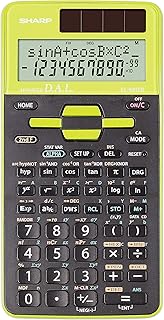

A good calculator is more than a device that adds, subtracts, multiplies and divides. For students, office workers, professionals, business owners and households in Canada, the right calculator can make everyday calculations faster while reducing avoidable input errors. The best choice depends on the type of mathematics you perform, the display you prefer, portability requirements, power source, durability and the functions you actually need.
When comparing smart buy calculators in 2026, look beyond the number of buttons or the appearance of the casing. A calculator designed for basic household budgeting has very different requirements from one intended for advanced mathematics, engineering, statistics or financial calculations. A feature-rich model can be excellent for one user but unnecessarily complicated for another.
Basic calculators are suitable for everyday arithmetic such as totals, discounts, percentages, tax calculations and simple budgeting. They generally prioritise large keys, straightforward operation and an uncluttered display.
For home use or occasional office calculations, a simple model from brands such as Casio, Sharp or Texas Instruments may be more practical than an advanced scientific calculator. If the calculator will be shared among family members or used at a reception desk, clear labelling and comfortable keys can matter more than specialist functions.
Scientific calculators are designed for substantially broader mathematical work. Depending on the model, useful functions may include fractions, powers, roots, logarithms, trigonometry, scientific notation, statistical calculations, equation solving and other mathematical operations.
Students should check the curriculum or examination requirements before purchasing. Some educational institutions permit specific calculator types while restricting programmable, graphing or communication-enabled models. A calculator can therefore be technically more capable yet unsuitable for a particular examination.
Financial calculators are aimed at users who regularly work with time-value-of-money calculations, cash flows, interest rates, amortisation, depreciation or investment-related mathematics. They can be useful for finance students and professionals who repeatedly perform specialised calculations.
Before choosing one, consider whether dedicated financial functions will actually save time compared with a scientific calculator or spreadsheet. If you regularly calculate loan payments or analyse cash flows manually, dedicated keys can make repeated workflows considerably easier.
Graphing calculators occupy a different category because they can support visualisation, advanced mathematical functions, programming and other sophisticated workflows depending on the model. They are typically more expensive and have a steeper learning curve.
They can make sense for advanced secondary-school mathematics, university courses and technical applications when the required curriculum supports them. For simple arithmetic, however, their additional capabilities may add cost and complexity without providing meaningful benefits.
The display is one of the most important parts of a calculator because every result depends on being able to read the input and output correctly. Compare character size, contrast, viewing angle and the amount of information visible at once.
For more advanced mathematics, a natural textbook-style display can make fractions, roots, exponents and other expressions easier to understand. A traditional single-line display may be perfectly adequate for basic arithmetic and can sometimes make quick calculations faster.
Two calculators with similar specifications can feel very different during repeated use. Pay attention to key spacing, button size, resistance and the logical arrangement of frequently used functions.
Calculator power systems commonly include replaceable batteries, rechargeable batteries, solar-assisted operation or combinations of these approaches. Solar-assisted models can be convenient for users who work in well-lit environments, while battery-powered designs may provide predictable operation in varied lighting conditions.
Check whether the battery is replaceable, rechargeable or integrated before purchasing. For a calculator that may sit unused for long periods, consider how easily it can be stored and returned to service when needed.
Memory functions become increasingly useful when a calculation involves multiple intermediate values. Basic memory keys can store and recall numbers, while advanced calculators may provide multiple variables or more sophisticated storage options.
Do not assume that more memory automatically means better usability. For straightforward calculations, a simple memory system may be faster to operate. For complex coursework or technical work, additional storage capabilities can be much more valuable.
Some modern calculators allow previous calculations or expressions to be reviewed and edited. This can be especially useful when checking a result or correcting one part of a longer calculation without starting again.
Calculation history is particularly valuable when accuracy matters because it gives the user another opportunity to inspect the sequence of operations rather than relying solely on the final displayed number.
Canadian shoppers should compare more than the advertised feature list. Product listings can vary by seller, model revision and market, so confirm the exact model number before making a purchasing decision.
Calculator families often contain multiple versions that look similar but have different functions, displays or included accessories. The model number is therefore more useful than relying on photographs alone.
When comparing listings, verify the manufacturer's model designation, included accessories, power configuration and stated functionality. This is particularly important when several versions have nearly identical names.
Students should confirm calculator policies for their school, course, examination board or professional program before buying. Requirements can differ depending on the assessment.
A calculator that supports advanced functions may not be permitted in every testing environment. Conversely, buying an overly basic model can become frustrating if coursework requires functions that it does not provide.
Price should be evaluated alongside functionality and expected lifespan. A low-cost calculator can be excellent value when it covers the required calculations and is comfortable to use. Paying more can make sense when additional functions genuinely reduce repetitive work or when the calculator is expected to receive heavy use.
Canadian shoppers should also check the final checkout cost, applicable taxes, shipping charges and seller-specific terms when comparing online offers. Advertised prices can change, so treat any deal price as time-sensitive rather than permanent.
If you are buying a scientific calculator, make a checklist of the functions required for your work rather than choosing based solely on marketing language. Relevant functions may include trigonometric calculations, logarithms, exponential functions, fractions, permutations, combinations, statistics, equation solving and numerical conversions.
Check whether functions are directly accessible through dedicated keys or hidden behind secondary menus. Two calculators can technically support the same operation while offering very different levels of convenience.
Natural textbook-style displays can show mathematical expressions in a format closer to conventional written mathematics. This can make fractions, powers and nested expressions easier to inspect.
For learners, this can reduce the mental effort involved in interpreting a long calculation. For experienced users who mainly perform simple numerical operations, however, a conventional display may remain perfectly adequate.
Users performing trigonometric calculations should pay attention to angle-mode controls. Accidentally calculating in radians when degrees are required can produce an apparently incorrect result even when the entered expression is otherwise correct.
A good workflow is to verify the calculator's mode before beginning a set of calculations, particularly when switching between different assignments or applications.
Students and professionals working with data may benefit from functions for statistical calculations. Depending on the model, these can include measures such as mean and standard deviation, regression-related calculations or other statistical operations.
Compare the exact statistical functions and supported data-entry methods rather than assuming that every scientific calculator offers the same capabilities.
A long feature list can look impressive, but unused functions add little practical value. If you primarily calculate household expenses, percentages and totals, an advanced scientific or graphing calculator may be unnecessary.
The cheapest calculator is not necessarily the best value. Consider how frequently you will use it, whether the display is comfortable to read, whether the keys are suitable for your hands and whether it supports the calculations you actually perform.
Large desktop calculators can be comfortable for office work but inconvenient in a student backpack. Compact calculators travel easily but may have smaller keys or displays. Match the physical format to the environment in which the calculator will normally be used.
This is one of the most important mistakes for students. Before purchasing a calculator for an examination or professional assessment, check the current rules governing permitted calculator types and features.
Manufacturers frequently offer several models with similar designs. Always compare the exact specifications and model numbers rather than assuming that appearance indicates identical functionality.
Established calculator manufacturers can provide a useful starting point when researching options, particularly when replacement parts, manuals or long-term familiarity matter. Brands commonly encountered in the calculator market include Casio, Texas Instruments, Sharp, Canon and HP.
Brand reputation alone should not determine the purchase. Compare the specific model's functions, display, key layout, power requirements and suitability for your intended use. A well-known brand can produce both entry-level and highly specialised calculators, so the individual model remains the most important comparison point.
Casio and Texas Instruments are particularly familiar choices in educational settings, while Sharp offers calculators across basic, scientific and other categories. The right choice depends on the functions required and the rules of the school or examination environment.
Rather than asking which brand is universally best, compare the specific models side by side. Look at expression entry, display style, statistical functions, memory, power source, physical design and the calculations required by your course or work.
A calculator can remain useful for years when it is protected from unnecessary physical damage and stored appropriately. Keep it away from liquids, excessive heat and environments where dust or debris can accumulate around the keys.
Use a suitable protective case when carrying a calculator in a backpack alongside books, chargers and other equipment. Avoid placing heavy objects directly on the display, especially when the calculator has a large LCD screen.
Follow the manufacturer's cleaning recommendations. In general, avoid allowing liquid to enter the calculator through the keys, display edges or battery compartment. A soft, dry or appropriately dampened cloth can be preferable to applying cleaning fluid directly to the device.
If a calculator uses replaceable batteries, check the battery compartment periodically, particularly if the calculator will be stored for a long period. Batteries left inside unused electronics for extended periods can create problems if they leak.
Customer reviews can reveal practical information that a specification sheet does not always communicate, but reviews should be interpreted carefully. Look for recurring comments about readability, key responsiveness, ease of use, battery behaviour, durability and whether the advertised functions work as expected.
Give greater weight to patterns across many relevant reviews than to one extremely positive or negative comment. Also make sure reviews relate to the exact model being considered because different versions in the same product family can have materially different features.
Calculator prices can change across retailers and over time. When evaluating a deal, compare the exact model number rather than simply comparing brand names or product photographs.
A higher-priced calculator can be worthwhile when its additional capabilities directly match your requirements. For example, a student who regularly uses fractions, statistics, equations and trigonometric functions may benefit from a more capable scientific model than from an inexpensive four-function calculator.
The same principle applies to professional users. If a calculator saves repeated manual steps every day, improved functionality can have practical value. On the other hand, occasional users should avoid paying for specialised features that will rarely be used.
Simple calculations do not require sophisticated hardware. If your normal tasks involve totals, percentages, multiplication, division, budgeting or checking invoices, a straightforward calculator can be faster and easier to operate.
For shared office environments, reception desks and household use, simplicity can also reduce training time. The best calculator is often the one that performs the required task without unnecessary menus or complicated operating sequences.
There is no single calculator that is best for every Canadian buyer. The right option depends on whether you need basic arithmetic, scientific mathematics, finance, statistics, engineering calculations or graphing. Start with the functions you need and then compare display quality, usability, durability and price.
They can be, especially for students and users who regularly perform advanced mathematical calculations. If your needs are limited to basic arithmetic and percentages, a simpler calculator is usually more appropriate.
The best student calculator depends on the course and examination rules. Before buying, identify the mathematical functions required and confirm which calculator types are permitted in relevant assessments.
All three brands offer calculators across different categories. Instead of selecting a brand solely on reputation, compare the exact models for functions, display, key layout, power requirements, educational compatibility and price.
Not for most basic calculations. They become useful when coursework or professional work requires graphing, advanced mathematical analysis or other capabilities unavailable on simpler calculators.
Check the exact model number, specifications, included accessories, seller information, current total cost and relevant customer feedback. If the calculator is for school or an examination, verify compatibility with the applicable rules before ordering.
Very important. A readable display can make it easier to verify numbers and expressions, particularly during longer calculations. Advanced users should also consider whether the display can show mathematical expressions in a format that is easy to interpret.
They generally require very little maintenance. Keeping the calculator clean and dry, protecting it from impacts and checking replaceable batteries during long-term storage can help maintain reliable operation.
The smartest way to choose a calculator is to start with the work it needs to perform rather than with the most impressive feature list. A dependable basic calculator can be the ideal purchase for everyday arithmetic, while a scientific, financial or graphing model can be a better investment when specialised functions are genuinely required.
For Canadian shoppers, the final comparison should include the exact model, permitted-use requirements where applicable, display and keyboard usability, functions, power source, portability, customer feedback and current total purchase cost. Comparing these factors together makes it easier to distinguish a genuinely useful deal from a product that simply has a long specification list.
Because product pricing, availability and retailer offers can change throughout 2026, verify current specifications and Canadian pricing immediately before making a purchase. The strongest buying decision is the one that matches your actual calculation needs while avoiding unnecessary features and cost.