

♥ Wishlist
Compare 65 Suitcases for Travel in Canada products in Canada. Reviews, ratings, pros, cons and buying advice updated for October 2026.


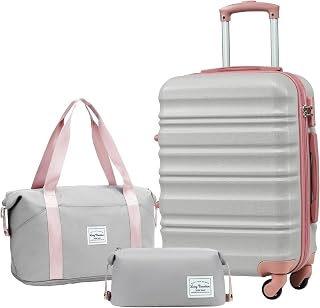


Choosing a suitcase in 2026 involves more than comparing appearance and advertised capacity. A good travel case needs to balance durability, weight, wheel performance, security, organisation, and ease of handling. For Canadian travellers, the right choice can also depend on airline baggage policies, trip length, weather conditions, and whether the suitcase will mainly be used for domestic flights, international travel, road trips, or frequent business journeys.
The phrase “smart buy” should not simply mean finding the lowest advertised price. A better approach is to compare the complete package: construction quality, useful features, dimensions, empty weight, warranty terms, customer feedback, and expected frequency of use. A slightly more expensive suitcase can be a better value if it provides practical features and remains comfortable to use over many journeys.
A smart suitcase purchase should solve the problems you actually encounter while travelling. Some travellers prioritise maximum packing space, while others need a lightweight carry-on that meets airline size requirements. Frequent flyers may place greater importance on wheel durability and reinforced corners, whereas occasional travellers may prefer an affordable case with straightforward features.
Look beyond marketing terms and examine measurable specifications. Compare the external dimensions, internal capacity, empty weight, shell or fabric construction, wheel configuration, handle design, closure system, and available compartments. These details usually tell you more about practical value than appearance alone.
The choice between a hard-shell and soft-side suitcase is one of the most important decisions when comparing luggage. Neither construction is automatically best for every traveller. Your choice should reflect how you pack, how the suitcase is transported, and how much flexibility you need.
Hard-shell luggage uses a rigid outer shell designed to provide a structured exterior. Common shell materials include polycarbonate, ABS, polypropylene, and combinations of different materials. Each material can provide a different balance of weight, flexibility, impact resistance, and price.
Polycarbonate is widely considered when impact resistance and flexibility are priorities. Polypropylene can also provide a useful combination of low weight and resilience. ABS is commonly found in more budget-focused luggage, although construction quality varies considerably between individual models.
A rigid suitcase can be particularly useful when you want greater protection around packed items or prefer a structured case that does not collapse when partially filled.
Soft-side luggage typically uses fabrics such as polyester or nylon. Its flexible exterior can make it easier to fit into tight storage spaces. External pockets are another practical advantage because they can provide quick access to documents, chargers, travel accessories, or other small items.
Soft luggage can be appealing for travellers who value flexibility and organisation. However, fabric construction should be evaluated carefully. Check the quality of stitching, zipper construction, handle attachment points, corner reinforcement, and wheel housings rather than judging durability solely by the fabric's appearance.
The material of a hard-shell suitcase affects weight, flexibility, durability, and long-term value.
Polycarbonate is a popular choice for travellers looking for a balance between toughness and manageable weight. It can flex under pressure instead of behaving like a completely rigid surface. However, not every suitcase made from polycarbonate has the same construction quality, thickness, reinforcement, or hardware.
ABS is frequently associated with affordable hard-shell luggage. It can be suitable for occasional travellers who want a structured suitcase without moving into premium pricing. When comparing ABS models, pay particular attention to overall construction, shell thickness, wheel quality, zipper design, and handle stability.
Polypropylene can offer a useful combination of light weight and flexibility. It is worth considering when baggage weight is an important concern. As with other materials, the material name alone should not determine the purchase. Hardware, design, manufacturing quality, and construction details also influence the suitcase's practical performance.
Wheel configuration can have a major effect on everyday handling.
Four-wheel spinner luggage is designed to roll in multiple directions. This can be particularly convenient in busy airport terminals, lift areas, hotel corridors, and queues where changing direction frequently is necessary.
Spinner wheels can also reduce the need to tilt the suitcase during short movements. However, the wheels may be more exposed depending on the design. When comparing models, inspect wheel housing, wheel size, mounting, and clearance.
Two-wheel suitcases generally roll by being pulled behind the traveller. They can be useful when moving over surfaces where larger wheels and a tilted pulling position are preferable. Their design may also leave more of the wheel mechanism protected within the suitcase body.
The best choice depends on your travel environment. A frequent airport traveller may prefer the manoeuvrability of four-wheel luggage, while someone who regularly travels across uneven outdoor surfaces may appreciate a different wheel design.
Wheels are among the most frequently used components of a suitcase. A case can have an excellent shell and attractive interior while still being frustrating to use if its wheels are poorly designed.
When evaluating luggage, consider whether the wheels rotate smoothly, whether they feel firmly mounted, and whether the wheel housings provide adequate protection. Larger wheels can sometimes handle surface transitions more comfortably, while compact wheels may allow a more streamlined suitcase design.
Do not assume that a four-wheel suitcase is automatically superior. Wheel construction, placement, bearing quality, housing design, and overall case balance all contribute to handling.
The handle system deserves careful attention because it carries much of the pulling force during travel. A telescopic handle should extend and retract smoothly without excessive looseness.
Check whether the handle provides multiple height positions. This can make a noticeable difference for travellers of different heights. Also inspect the attachment area where the handle enters the suitcase because this is an important structural point.
Top and side carry handles are equally useful. A side handle can make lifting the case into a vehicle or onto a luggage rack easier. Some larger suitcases also include a bottom grab point that helps when the case needs to be lifted from the floor.
Suitcase capacity should be selected according to the duration and style of your typical travel rather than simply choosing the largest case available.
Carry-on luggage is designed for travellers who want to keep essential belongings with them in the aircraft cabin when permitted. Airline size and weight restrictions can differ, so always verify the current requirements for the specific airline and fare before purchasing or travelling.
External dimensions matter. Wheels, handles, and other protruding components can contribute to the overall measurements. A suitcase advertised as a cabin model should therefore be checked against the airline's actual limits rather than relying only on the product category.
Medium luggage can provide a useful compromise between portability and packing capacity. It may suit longer personal trips where a carry-on is insufficient but an oversized case would be unnecessary.
Large suitcases are useful when you need substantial packing capacity. However, bigger does not always mean better. A large empty suitcase can itself add considerable weight, and filling every available compartment may push the total weight beyond an airline's allowance.
An expandable suitcase can provide additional packing room when required. This is useful for travellers who purchase items during a trip or need flexibility between different journeys.
There is a practical disadvantage: expanding the suitcase can make it easier to overpack. Extra capacity does not remove airline weight restrictions. If you frequently travel by air, consider whether the additional expansion feature encourages you to carry more than you can comfortably transport.
Capacity is only one part of a suitcase's usability. Internal organisation can determine how efficiently that capacity is used.
Security features should provide convenience without creating unrealistic expectations. A lock can help prevent casual access, but travellers should not treat a suitcase lock as a guarantee against theft or tampering.
Some luggage includes integrated combination locks designed around commonly used travel-security standards. If you are considering a suitcase with a lock, check the actual specifications and understand how the mechanism works before travelling.
Zipper quality also matters. Look for smooth operation and sturdy construction. A complicated locking mechanism is not necessarily better if it is difficult to use reliably.
Technology has introduced additional features to modern luggage. Some smart suitcases may include USB charging systems, removable batteries, digital tracking compatibility, or integrated electronic features.
These features can be useful, but they should not overshadow fundamental luggage quality. A charging port does not compensate for weak wheels or an unstable handle.
If a suitcase contains a lithium battery or removable power bank, check the current airline requirements before travelling. Battery rules can apply differently depending on whether the battery is installed in the luggage or removed and carried separately. Airline policies can change, so current requirements should always be confirmed before departure.
Brand reputation can be useful as a starting point, but it should never replace specification-level comparison. Established luggage brands such as Samsonite, American Tourister, Travelpro, Delsey Paris, Briggs & Riley, Tumi, and SwissGear offer different approaches to materials, designs, price levels, and travel features.
Samsonite and American Tourister are widely associated with a broad selection of travel luggage. Travelpro is often considered by travellers who place strong emphasis on practical travel-oriented design. Delsey Paris offers both hard-shell and soft-side luggage across different product ranges. Briggs & Riley and Tumi occupy more premium segments, where construction, materials, design details, and warranty considerations may receive greater emphasis.
When comparing brands, avoid assuming that every suitcase from the same manufacturer has identical quality. Product lines can use different materials, wheel systems, hardware, and construction methods. Compare the individual model rather than relying solely on the logo.
A stylish exterior may attract attention, but appearance does not reveal wheel durability, handle stability, interior construction, or empty weight. Treat design as one consideration rather than the primary buying criterion.
A heavy suitcase consumes part of your baggage allowance before you pack anything. Compare the empty weight of similar-sized models to understand how much usable capacity remains within typical airline limits.
Oversized luggage can become difficult to manoeuvre and easier to overpack. Choose capacity based on actual travel requirements.
Capacity measurements and external measurements are different. Airline restrictions generally concern the overall dimensions and weight, so both should be reviewed.
Wheels are easy to ignore when looking at product photographs. Yet they can have a significant effect on everyday convenience. Examine wheel construction as carefully as the suitcase shell.
Higher pricing does not automatically guarantee the best fit. A traveller who takes only occasional trips may gain more value from a well-designed mid-range suitcase than from a premium model containing features they will rarely use.
Create a simple comparison based on your own priorities. Start with the dimensions and empty weight. Then examine construction, wheel configuration, handle design, interior organisation, security features, warranty information, and customer feedback.
Prioritise dependable wheels, a stable telescopic handle, practical weight, strong construction, and easy organisation. A suitcase used regularly benefits from durable hardware and a design that is comfortable to manoeuvre.
Organisation may be especially important. Look for compartments that allow clothing, documents, electronics, and accessories to be separated. A compact case with efficient internal space can be more useful than a larger model.
Families may benefit from larger capacity, durable construction, easy identification, and straightforward organisation. Different sizes can also make packing more manageable than placing everything into one oversized suitcase.
Occasional travellers may not need premium materials or advanced electronic features. Focus on dependable construction, appropriate capacity, comfortable handling, and a reasonable overall cost.
Check the baggage requirements of every airline involved in the journey. International itineraries can involve multiple carriers with different restrictions. A suitcase that meets one airline's cabin requirements may not necessarily meet another's.
Customer reviews can provide useful information, but they should be interpreted carefully. A single complaint does not necessarily establish a recurring product defect, while a high overall rating does not guarantee that the suitcase is right for your needs.
Look for repeated comments about the same component. If many customers independently mention wheel problems, handle looseness, zipper failures, or unusual sizing, that information deserves attention. Also consider how long the reviewer appears to have used the suitcase and whether the reported issue is relevant to your own travel pattern.
Recent reviews can be particularly useful when a product has undergone a design revision. However, verify that the reviews correspond to the exact model and version you are considering.
Proper maintenance can help keep luggage functional between trips. Remove dirt from wheels and the exterior after travelling, especially after exposure to wet or dirty surfaces. Check the telescopic handle for unusual movement and inspect zippers for damage before storing the suitcase.
Do not force an overloaded zipper. Excessive internal pressure can make the zipper harder to close and may increase strain on the surrounding material. If the suitcase has expansion capability, use it deliberately rather than keeping it permanently expanded.
Store luggage in a dry location away from prolonged moisture. Avoid placing excessively heavy objects on top of a suitcase when it is stored, particularly if the case has a lightweight shell or delicate structural components.
A premium suitcase can offer refined materials, sophisticated construction, advanced organisation, or additional warranty benefits. However, premium pricing should be evaluated against actual use.
If you travel several times each month, spending more on durable wheels, a reliable handle, and strong construction may make sense. If you travel once or twice a year, a well-reviewed affordable model with sensible specifications may provide better overall value.
The key question is not “What is the most expensive suitcase?” but “Which suitcase provides the features and construction I need without paying for unnecessary extras?”
There is no single best suitcase for every Canadian traveller. The right option depends on your budget, travel frequency, preferred size, packing habits, airline requirements, and priorities such as low weight, durability, organisation, or manoeuvrability.
Not universally. Hard-shell luggage can provide a structured exterior and useful protection, while soft-side luggage can offer flexibility and convenient external pockets. Compare the construction and features that match your travel needs.
Polycarbonate is often selected when flexibility and impact resistance are priorities, while ABS is common in more budget-oriented luggage. However, the complete construction matters more than the material name alone.
They can be especially convenient in airports and other areas where frequent changes of direction are necessary. Before buying, compare wheel construction, mounting, clearance, and overall case balance.
An expandable model can be useful when you need additional packing flexibility. Remember that additional space can make it easier to exceed airline weight limits, so expansion should be treated as optional capacity rather than guaranteed usable baggage allowance.
The appropriate size depends on the airline, fare, trip duration, and whether the suitcase will be carried into the cabin or checked. Always compare the suitcase's complete external dimensions and weight with the current rules of every airline on your itinerary.
They can be convenient for travellers who value integrated technology, but charging functionality should not outweigh core luggage qualities. Check battery-removal requirements and current airline rules before flying with electronic luggage.
Very important for air travel. A lightweight suitcase leaves more of the permitted baggage allowance available for clothing and other belongings. Compare empty weights between similarly sized cases before deciding.
Compare individual models rather than assuming every product from a particular brand has the same construction. Review materials, dimensions, weight, wheels, handles, organisation, warranty conditions, and customer feedback.
The best smart buy suitcase is the one that matches your actual travel requirements rather than the one with the longest feature list. Start by deciding whether you need a carry-on, medium, or large case. Then compare weight, construction, wheels, handles, organisation, security, and airline compatibility.
For Canadian shoppers, current airline requirements should remain a key part of the decision. Baggage policies can differ by carrier and fare, so specifications should be checked before every major trip. When comparing deals, consider the complete product specification and long-term usefulness rather than choosing solely because a suitcase has a lower advertised price.
Use customer reviews as supporting evidence, verify the specifications for the exact model, compare reputable brands such as Samsonite, American Tourister, Travelpro, Delsey Paris, Briggs & Riley, Tumi, and SwissGear where appropriate, and select the construction that fits your travel habits. A careful comparison can help you find a suitcase that offers the right combination of capacity, portability, durability, organisation, and value for your 2026 travels.