

♥ Wishlist
Compare 56 Pipe Locators for Underground Pipe and Utility Detection products in Canada. Reviews, ratings, pros, cons and buying advice updated for October 2026.


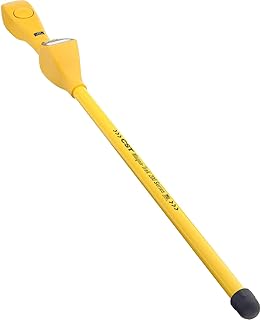


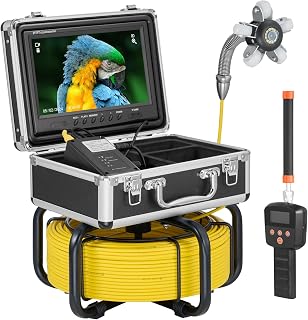


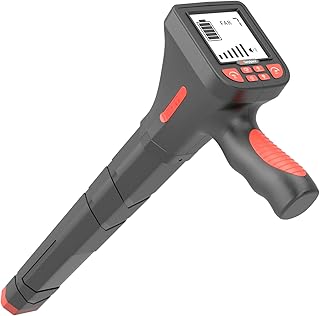


Choosing a pipe locator is less about finding the most expensive detector and more about matching detection technology to the type of buried utility, soil conditions, working depth, and locating method required. For Canadian homeowners, contractors, landscapers, plumbers, electricians, and utility professionals, these factors can make a major difference when comparing pipe locating equipment.
Pipe locators generally work by detecting electromagnetic signals associated with conductive underground utilities. Active locating uses a transmitter to place a traceable signal onto a suitable utility, while passive locating attempts to detect signals already present in the environment. Understanding this distinction is important because a detector can perform differently depending on how the target is energized or connected.
Before choosing a model, check exactly which locating methods it supports. A receiver designed primarily for basic detection may not provide the same control or versatility as a complete transmitter-and-receiver locating system.
The target material is one of the most important considerations. Metallic pipes and other conductive utilities can generally interact with electromagnetic locating systems more readily than non-conductive materials. Plastic, PVC, polyethylene, and similar pipes may require a compatible sonde, tracer wire, or another locating method rather than simple electromagnetic detection of the pipe itself.
Frequency is a major technical specification when comparing pipe locators. Lower frequencies can be useful for tracing conductive utilities over longer distances when conditions are suitable, while higher frequencies can sometimes be advantageous for difficult-to-locate or poorly conductive targets. The appropriate frequency depends on the utility, surrounding environment, connection method, and locating objective.
A model offering multiple frequencies can provide more flexibility than a basic single-frequency detector. However, having more frequency settings does not automatically mean that a particular locator will outperform every simpler model. Frequency selection should be considered alongside transmitter power, receiver sensitivity, signal modes, accessories, and the nature of the target.
Maximum detection depth is one of the specifications buyers commonly focus on, but real-world locating conditions can affect performance. Soil composition, moisture, electrical interference, target size, burial depth, utility material, signal strength, nearby conductive objects, and the locating technique can all influence detection.
For this reason, avoid choosing a pipe locator solely because its product description lists an impressive maximum depth. Instead, compare the operating characteristics of each system and consider whether the manufacturer provides appropriate guidance for the type of utility you need to trace.
When comparing complete locating systems, transmitter capability deserves close attention. A transmitter is responsible for applying or inducing the locating signal, and its available output modes can affect how effectively a compatible utility can be traced.
A strong transmitter cannot compensate for an unsuitable target or poor locating technique. Treat transmitter specifications as one part of the complete system rather than as an isolated measure of quality.
The receiver is the part you use to identify and follow the detected signal, so its interface can have a substantial effect on practical usability. When comparing products, examine how clearly the receiver communicates signal strength, direction, depth information, and other available measurements.
A simple detector can be easier to learn, while a more advanced digital receiver can provide additional information for users who need detailed locating data. Buyers should consider whether the extra controls genuinely support their work.
For occasional residential projects, a straightforward interface may be preferable to an instrument with numerous configuration options. For repeated professional locating, detailed signal information and adjustable settings may justify choosing a more sophisticated system.
Not every underground locating task involves a pipe. Electrical cables, telecommunications lines, metallic conduit, water infrastructure, and other conductive utilities may also need to be identified. If the equipment will be used across several types of projects, a multi-purpose underground locator can be more practical than a device intended for one narrow application.
Compare the supported target types carefully. A product described broadly as an underground detector may not provide the same functionality as a dedicated professional utility locator with a transmitter and receiver.
When researching pipe locating equipment, buyers may encounter established manufacturers such as RIDGID, Radiodetection, Vivax-Metrotech, Leica Geosystems, and Schonstedt. Different product families from these manufacturers can target very different users and applications, so brand recognition should not replace model-level comparison.
Compare the exact model's frequency options, locating modes, transmitter configuration, depth capabilities, display, battery system, included accessories, environmental specifications, and intended application. Availability and pricing can also vary among Canadian retailers, so check current product information before purchasing.
The receiver is only part of many locating setups. Accessories can determine whether a system is suitable for a particular job, especially when locating non-metallic pipes or tracing utilities that cannot be connected directly.
Always verify whether an accessory is included or sold separately. A lower-priced base unit may require additional components before it can perform the locating task you have in mind.
Homeowners may need underground locating equipment for landscaping, fence installation, drainage work, irrigation projects, renovation, or other property improvements. For occasional use, simplicity and clear operating instructions can be more valuable than advanced professional controls.
However, underground utility locating should not be treated as a substitute for the appropriate Canadian utility-locating process before excavation. A consumer detector can provide useful information, but buyers should understand its limitations and follow applicable local requirements and safe excavation practices.
Plumbers and drainage professionals may need to determine the route of buried or concealed pipework. The best solution depends on whether the pipe is conductive, whether access is available, and whether a sonde can be introduced into the line.
For drainage and sewer applications, consider systems that can work with compatible sondes. For conductive water or other suitable utilities, electromagnetic tracing may provide a different approach. The important question is not simply whether a device is marketed as a pipe locator, but whether its detection method matches the pipe you need to locate.
Contractors typically need equipment that can handle repeated use and varied site conditions. In this category, durability, controls, battery life, signal interpretation, accessories, and compatibility with different locating methods can become more important than the initial purchase price.
For frequent work, consider whether the instrument provides the workflow information you need without making routine locating unnecessarily complicated. A system that operators can configure and interpret consistently may be more useful than one with advanced features that rarely apply to the work.
Canadian users should consider environmental conditions when comparing outdoor locating equipment. Temperature, moisture, mud, dust, and accidental exposure to water can all affect equipment handling and longevity.
Check the manufacturer's stated operating and storage conditions rather than assuming that an outdoor-rated instrument is suitable for every environment. Look for an appropriate ingress-protection rating when relevant, and consider how easily the controls can be operated while wearing work gloves.
A pipe locator is of limited practical value if its battery cannot support the planned job. Compare battery chemistry, charging arrangements, expected operating time, replacement options, and charging accessories.
The cheapest option may not provide the locating method, frequency range, accessories, or information required for the job. Conversely, the most expensive model may offer features that an occasional user never needs.
A buyer may assume that every underground pipe can be detected directly. Plastic and other non-conductive pipes often require a different approach, such as a compatible sonde or tracer system.
Advertised maximum depth should not be interpreted as a guaranteed field result. Site conditions can significantly influence detection.
Some buyers compare receiver specifications without checking how the complete locating system creates or applies the signal. For active locating, transmitter capability can be just as important as receiver performance.
Check the package contents carefully. A system may require separate clamps, leads, sondes, batteries, or other accessories for the intended application.
Advanced controls can add complexity. If the equipment will only be used occasionally, prioritize understandable controls and the locating capabilities that directly match the project.
Before purchasing, create a short specification checklist. Compare each candidate against the same criteria rather than judging products from different categories by headline features alone.
Customer reviews can help identify recurring usability issues, but they should be interpreted alongside technical specifications. A positive review from a homeowner locating a shallow conductive line does not necessarily establish that the same product is appropriate for a contractor tracing difficult underground utilities.
Look for reviews that explain the application, target type, operating environment, and specific features used. Give greater weight to detailed feedback that describes what the reviewer actually needed from the equipment rather than short comments based only on packaging or delivery.
Accuracy is not simply a property of the instrument. The operator, target, signal quality, soil, nearby utilities, and locating procedure all influence the final result. Even sophisticated equipment can produce misleading indications when the signal is distorted or the wrong target is being traced.
For important excavation work, use established locating procedures and appropriate utility-marking practices. Treat electronic detection as part of the overall process rather than assuming that a single reading provides complete certainty about an underground installation.
Underground locating has an important safety dimension. Buried electrical, gas, telecommunications, water, and other utilities may create serious hazards if damaged. A consumer-grade detector should not be treated as the sole safeguard before digging.
In Canada, the appropriate utility-locating process can vary by province, municipality, utility owner, and project type. Before excavation, identify the applicable local requirements and use the appropriate utility-locating service or authority where required. Follow safe excavation practices and maintain appropriate caution around identified and unidentified underground services.
The best pipe locator deal is not necessarily the product with the largest discount or the highest number of advertised features. A smart purchase starts by defining the locating task, then selecting the technology that can perform it.
For occasional residential work, prioritize ease of use, suitable detection capability, clear documentation, and reasonable accessory requirements. For professional applications, place greater emphasis on frequency flexibility, transmitter performance, receiver controls, compatibility, durability, and serviceable accessories.
When comparing current Canadian listings, check the exact model number and package contents. Product names can be similar while specifications and included accessories differ. Prices and availability can also change, so verify current information before completing a purchase.
The best choice depends on the type of pipe and the locating task. A straightforward detector may suit occasional work involving accessible conductive utilities, while non-metallic pipes may require a compatible sonde or tracer approach. Compare the actual detection method rather than selecting a product solely because it is marketed for homeowners.
A conventional electromagnetic receiver generally cannot simply detect a PVC pipe in the same way it can detect a conductive utility. Depending on the application, a compatible sonde or tracer wire can provide a detectable signal that allows the route to be located.
Detection depth varies by equipment, target, signal conditions, soil, interference, and locating technique. Manufacturer specifications can provide useful reference points, but a listed maximum depth should not be treated as a guaranteed field result.
Pipe locators generally do not detect water itself as though it were a conductive pipe. The locating method normally relies on an electromagnetic signal associated with a suitable conductive target, tracer, or compatible sonde.
They can be worthwhile for frequent professional locating where advanced frequency options, transmitter controls, signal interpretation, durability, and accessory compatibility provide meaningful advantages. For occasional projects, a simpler system may offer better value if it meets the actual requirements.
A pipe locator is generally discussed in terms of tracing buried pipework, while a utility locator can cover a wider range of underground services such as conductive cables, pipes, conduit, and other utilities. The exact capabilities depend on the model.
Multiple frequencies can provide greater flexibility when different targets and locating conditions are encountered. However, frequency count should be evaluated together with transmitter performance, receiver sensitivity, operating modes, and the specific utilities you intend to locate.
Confirm the exact model, included accessories, applicable specifications, battery requirements, manufacturer documentation, current Canadian pricing, delivery conditions, and retailer policies. Also check whether the equipment is appropriate for the type of underground utility you intend to trace.
Before selecting one of the best smart buy pipe locators available in Canada, make sure the equipment matches the job rather than simply the marketing description. Identify the target material, determine whether active or passive locating is required, check the frequency range, assess transmitter and receiver capabilities, and verify compatibility with any required sondes or accessories.
Finally, compare current specifications and customer feedback from reputable sources, then verify the latest Canadian price and package contents before purchasing. A carefully matched pipe locator can be a useful diagnostic tool, but safe excavation procedures and appropriate utility-locating practices remain essential.