

♥ Wishlist
Compare 40 Laptop Briefcases for Work, Business & Everyday Commutes products in Canada. Reviews, ratings, pros, cons and buying advice updated for October 2026.


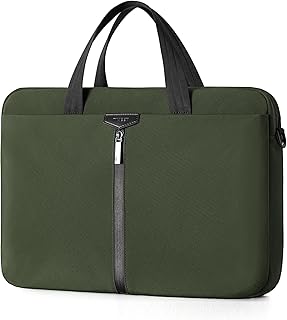
A laptop briefcase is more than a professional-looking bag. The right model should protect your computer, organise everyday essentials, remain comfortable during commuting, and suit the way you travel. For Canadian buyers, practical considerations such as winter weather, public transit, office commuting, university use, business travel, and compatibility with larger laptops can all influence the best choice.
When comparing laptop briefcases, look beyond appearance and advertised laptop size. Check the actual laptop compartment dimensions, exterior measurements, construction materials, handle design, shoulder-strap adjustment, pocket layout, closure system, weight, and resistance to rain or snow. A briefcase that looks compact online may have limited internal capacity, while a larger model may provide substantially better organisation for chargers, documents and accessories.
A smart purchase balances protection, usability, durability and price rather than focusing on one feature. The best laptop briefcase for one Canadian buyer may not be the best for another. A consultant carrying documents and a 14-inch laptop has different requirements from a commuter carrying a 16-inch notebook, charger, tablet, headphones and lunch.
One of the most common buying mistakes is assuming that a briefcase advertised for a particular screen size will fit every laptop with the same screen measurement. Laptop dimensions vary between manufacturers and generations, so screen size alone is not enough.
Before purchasing, measure your laptop's physical width, depth and thickness. Compare those measurements with the manufacturer's stated dimensions for the internal laptop compartment. Leave enough room for the computer to enter and exit easily, but avoid choosing a compartment so large that the laptop can move freely inside it.
Compact laptops are well suited to slim briefcases. Buyers carrying a 13- or 14-inch computer may prioritise a lightweight profile, minimalist storage and easy portability. These models are particularly useful when the daily load consists mainly of a laptop, charger, notebook and a few personal items.
Larger laptops require more careful checking. A 15- or 16-inch notebook can have substantially different physical dimensions depending on its design. A business laptop, workstation or gaming laptop may also be thicker than a slim ultraportable. Check the actual compartment dimensions rather than relying exclusively on the stated screen size.
Large laptops need specialist compatibility. Many conventional laptop briefcases are not designed for them, and forcing a large computer into a narrow compartment can damage the bag or make the laptop difficult to remove. If you use a large workstation or gaming laptop, prioritise internal measurements and padding over a slim appearance.
The material affects weight, appearance, durability, weather resistance and maintenance. There is no single best fabric for every buyer.
Nylon is widely used for practical laptop bags because it can provide a useful combination of durability and relatively low weight. Higher-denier fabrics are often chosen for demanding everyday use, although denier alone does not determine overall bag quality.
Polyester is another common option. It can offer good everyday durability while allowing manufacturers to produce affordable briefcases in a range of styles. The quality of the fabric, stitching, lining and hardware should be assessed together.
Canvas can provide a distinctive casual-professional appearance and may appeal to buyers who prefer a less formal design. Depending on the treatment and construction, however, canvas may require more attention to moisture protection.
Leather briefcases can provide a traditional professional appearance and may develop a distinctive finish over time. They can also be heavier than synthetic alternatives and may require additional care. When comparing leather models, examine the type of leather, construction, lining and hardware rather than judging quality solely from the appearance.
The primary purpose of a laptop compartment is to reduce the risk of everyday knocks and contact with other objects. Look for padding around the base and sides, a secure closure and a compartment that keeps the laptop separated from harder accessories.
Consider how the computer is positioned when the bag is placed on the floor. A padded base can provide an additional layer of protection from ordinary impacts. A raised laptop compartment may also help keep the computer away from the bottom of the bag, although the exact protection depends on the design.
Thicker padding is not automatically better. Excessive padding can add weight and reduce usable internal space. What matters is whether the compartment provides consistent protection and prevents unnecessary movement.
A strap, elasticated edge or secure compartment closure can help prevent a laptop from sliding out when the briefcase is tilted. This is particularly useful when commuting or moving through crowded transport environments.
Chargers, power adapters, cables and other hard objects should ideally have separate storage areas. Keeping them away from the laptop can reduce pressure and scratching while also making the bag easier to organise.
Weather protection deserves special attention in Canada. A commuter may encounter rain, wet pavement, snow, slush or changing temperatures during the same journey. However, water-resistant and waterproof are not interchangeable terms.
A water-resistant exterior can help with light precipitation, while a fully waterproof construction is designed to provide a substantially higher level of moisture protection. Check the manufacturer's exact claims and construction details rather than assuming that a coated fabric makes the entire bag waterproof.
A well-designed laptop briefcase can reduce the time spent searching for small accessories. Think about everything you normally carry and check whether the bag has suitable places for each item.
A traditional laptop briefcase is usually the strongest choice when professional appearance and hand or shoulder carrying are priorities. A laptop backpack can distribute weight more evenly across both shoulders, while a messenger-style laptop bag may provide quick access and a more casual profile.
For office meetings, client visits and formal workplaces, a structured briefcase can complement business clothing. For cycling, walking or long public-transit journeys, a backpack may provide better weight distribution. If your routine changes throughout the week, a convertible design can offer greater flexibility.
Small ergonomic details become important when a laptop bag is carried every day. Handles should feel secure and remain comfortable when the bag is loaded. Reinforced attachment points are particularly important because the handle carries the entire weight of the bag.
A removable shoulder strap is useful when you want to switch between hand carrying and shoulder carrying. Adjustable length allows the bag to sit in a more comfortable position. A padded strap can reduce pressure when carrying a heavier load.
Frequent business travellers should look for a luggage trolley sleeve or pass-through panel. This feature allows the briefcase to sit securely over the handle of compatible rolling luggage instead of requiring you to carry both bags separately.
Check the width and positioning of the pass-through before purchasing. The feature is most useful when it is securely constructed and positioned so that the briefcase remains stable while the luggage is moved.
Daily commuters often benefit from practical features rather than decorative details. A lightweight structure, protective laptop sleeve, weather-resistant exterior, quick-access pocket and comfortable shoulder strap can be more valuable than numerous specialised compartments.
If you regularly use public transportation, consider a briefcase that keeps its shape while allowing easy access to travel essentials. If you walk long distances, weight and strap comfort become more important. If you commute by car, a compact design may be preferable because it is easier to store beside or under a seat.
Business travellers generally need more than laptop protection. A useful travel briefcase should accommodate documents, chargers, personal electronics and other essentials without becoming excessively bulky.
When researching laptop briefcases, established brands can provide useful starting points because they often offer multiple designs aimed at different types of users. Depending on your preferred style and budget, compare models from brands such as Samsonite, Targus, Lenovo, Dell, HP, Wenger, SwissGear, Case Logic, Kenneth Cole, Solo New York, Timbuk2 and Bellroy.
Brand reputation should not replace product-level research. A premium brand can have different models with very different dimensions, materials and layouts. Always compare the specifications of the exact briefcase you are considering.
When two bags look similar, inspect the construction details. These can reveal differences that are difficult to see in product photographs.
Look for clean, consistent stitching around handles, shoulder-strap anchors, seams and pockets. High-stress areas deserve particular attention because they experience repeated loading and movement.
Zippers should open smoothly without excessive resistance. Large compartments benefit from durable zipper construction because they are opened frequently and may carry considerable weight.
Buckles, rings, clips and other hardware should match the intended load. Metal hardware can provide a premium appearance, while reinforced polymer components can reduce weight. The overall construction matters more than the material of a single component.
A good lining can make the interior easier to use and maintain. It should be securely attached and should not interfere with zippers or internal compartments.
A larger briefcase is not automatically better. Extra capacity can encourage overpacking and make the bag heavier than necessary. Conversely, a slim briefcase may become uncomfortable if you regularly carry accessories outside the laptop compartment.
Make a realistic list of what you carry on a normal workday. Include the laptop, charger, mouse, headphones, notebook, documents, tablet, water bottle and personal items where applicable. Then choose a capacity that accommodates the normal load without requiring excessive compression.
Two laptops with the same screen size can have different external dimensions. Always compare measurements.
A robust briefcase can still be inconvenient if it starts heavy before you put anything inside. Compare the bag's weight alongside its capacity and protection.
A sleek exterior is valuable, but not if the laptop compartment is poorly padded or lacks secure retention.
Check the manufacturer's exact terminology and construction. Weather-resistant fabric may not protect against prolonged heavy rain.
Organisation is useful until pockets reduce the usable space you actually need. Choose compartments that match your everyday equipment.
A laptop may fit perfectly while its large power adapter makes the bag uncomfortable. Check where the charger will be stored before buying.
If you expect to carry the briefcase over your shoulder, examine strap adjustability, padding and attachment points.
Prioritise a structured design, reliable laptop protection, document storage, professional styling and comfortable carrying options. A restrained exterior can work well across meetings and normal office environments.
Students may benefit from a larger main compartment and flexible storage for notebooks, chargers and accessories. Durability and comfort can be more important than a formal executive appearance.
A remote worker who regularly moves between home, coworking spaces and cafés may benefit from a lightweight bag with organised electronics storage and room for peripherals.
Look for luggage compatibility, secure compartments, easy access and a professional design. Keep the overall dimensions and weight practical for travel.
If you carry only a laptop, charger and a few small items, a slim briefcase can reduce unnecessary bulk. Avoid paying for capacity you will rarely use.
Price should be evaluated against construction and features rather than used as the sole indicator of quality. A higher price can reflect materials, hardware, design, padding, organisation or brand positioning, but an expensive briefcase is not automatically the right choice.
For a sensible comparison, create a shortlist based on laptop compatibility and essential features first. Then compare construction quality, comfort, capacity and weather protection. Finally, check current prices and verified customer feedback from trusted retailers before deciding.
Customer reviews can provide useful information about real-world usability, but they should be interpreted carefully. Focus on repeated observations rather than isolated comments.
Verified customer feedback is most useful when combined with manufacturer specifications. Reviews can describe usability, while specifications provide measurable information such as dimensions, compatibility and construction details.
Regular care can help preserve the appearance and functionality of a laptop briefcase. Maintenance requirements depend on the material, so follow the manufacturer's care instructions whenever they are provided.
Use this checklist when comparing laptop briefcases in 2026:
The best laptop briefcase depends on your laptop dimensions, commuting style, storage needs, preferred materials and budget. Canadian buyers should also consider weather protection, particularly if the bag will regularly be exposed to rain, snow or slush.
Choose a briefcase based on the actual dimensions of your laptop rather than screen size alone. Measure the computer and compare its width, depth and thickness with the stated internal compartment dimensions.
Some are designed to resist water, while others provide substantially greater moisture protection. Check the manufacturer's specifications carefully. Water-resistant construction should not automatically be treated as fully waterproof.
Neither material is universally better. Leather can provide a traditional professional appearance, while nylon can offer a practical balance of durability and weight. Compare the complete construction, including padding, stitching, hardware and lining.
Yes. A well-organised briefcase can be particularly useful for business travel when it includes a protected laptop compartment, document storage, accessory organisation and a luggage pass-through.
Choose pockets according to your actual equipment. Multiple compartments can improve organisation, but excessive internal dividers can reduce usable space and increase bulk.
Typical contents include a laptop, charger, mouse, headphones, documents, notebook, pens, phone accessories and personal essentials. Your ideal bag should accommodate your normal load without becoming unnecessarily heavy.
It depends on construction and usage. If you carry a laptop every day, durable materials, comfortable carrying systems and reliable protection may justify spending more. Compare measurable features rather than assuming that a higher price guarantees better performance.
Use a briefcase with appropriate weather-resistant construction and keep the laptop inside a properly protected compartment. Avoid exposing the bag unnecessarily to heavy precipitation, and allow the bag to dry appropriately after wet-weather use.
There is no universal replacement schedule. Replace it when protection, stitching, handles, zippers, straps or compartments no longer perform reliably, or when the bag no longer accommodates your current equipment.
The smartest way to choose a laptop briefcase is to start with your daily routine rather than a brand name or appearance. Confirm laptop compatibility first, then evaluate protection, weight, organisation, comfort, weather resistance and durability. After narrowing the selection, compare exact specifications and verified customer feedback for the individual models.
For Canadian buyers in 2026, the ideal choice should be practical for the local climate and your normal method of commuting or travelling. Whether you need a slim professional briefcase, a spacious work bag or a travel-friendly laptop case, prioritise the features you will use every day. Before purchasing, check today's price, current product specifications, retailer policies and recent verified reviews because these details can change throughout the year.