

♥ Wishlist
Compare 52 Kitchen Islands & Carts for Flexible Kitchen Storage and Prep Space products in Canada. Reviews, ratings, pros, cons and buying advice updated for October 2026.


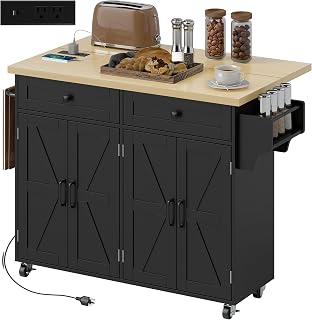

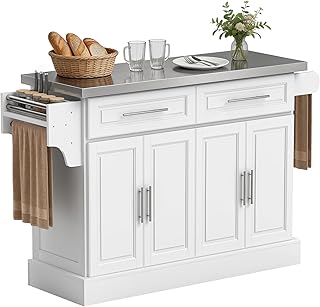


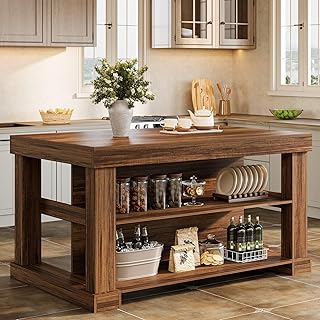


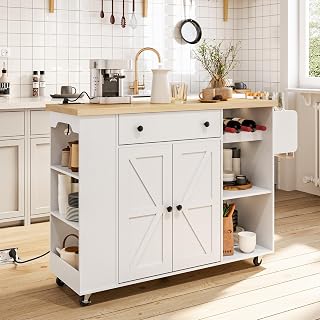


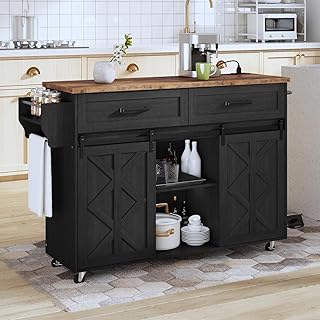


A kitchen island or mobile kitchen cart can add valuable preparation space, storage and serving flexibility without requiring a complete kitchen renovation. For Canadian homes, the right choice depends on more than appearance. Available floor space, countertop material, cabinet construction, wheel quality, storage configuration, assembly requirements and the way the unit will be used all affect long-term value.
This buying guide is designed to help Canadian shoppers compare kitchen islands and carts by practical features rather than relying on appearance alone. Whether you need a compact cart for an apartment, a rolling island for a busy family kitchen, additional pantry storage, or a larger workstation for food preparation, compare dimensions and construction details carefully before buying.
The terms kitchen island and kitchen cart are sometimes used interchangeably, but they can serve different purposes. A kitchen island is generally designed as a substantial central workstation, while a cart usually prioritises mobility and flexible storage.
A freestanding island is a strong choice when you have sufficient clearance around the unit and want a semi-permanent addition to the kitchen. Larger islands can provide generous preparation space, drawers, enclosed cabinets and seating. They can also visually anchor an open-plan kitchen.
The disadvantage is that a large island can make a kitchen feel cramped if the surrounding walkways are too narrow. Measure the entire room rather than judging available space by eye.
A rolling cart is useful when flexibility matters. You can move it closer to a preparation area, reposition it for serving, or store it against a wall when the additional workspace is not required.
Carts are particularly practical in smaller kitchens, condos, apartments and homes where a permanent island would interfere with movement. However, compact designs may provide less countertop and cabinet capacity than full-size islands.
Measurement is one of the most important steps in selecting a kitchen island or cart. A unit that looks compact online can occupy considerably more space once doors, drawers and people using the surrounding area are taken into account.
Measure the proposed location from wall to wall and account for fixed features such as refrigerators, ovens, dishwashers, radiators, doors and kitchen cabinets. Record both width and depth rather than relying on a general estimate.
Leave enough room for people to walk around the island and comfortably open nearby drawers, cupboards and appliances. The required clearance varies with the kitchen layout, but the important principle is simple: do not measure only the footprint of the island. Consider how the surrounding kitchen will function when every cabinet and appliance is being used.
A cart may technically fit beside a cabinet while still being impractical because its drawers cannot open fully. Similarly, a cabinet door could collide with another appliance or wall. Test the movement of nearby doors and drawers before deciding on the maximum dimensions.
For a large assembled or semi-assembled island, check the width of exterior doors, interior doors, hallways, stairways and elevator openings if applicable. The product's packed dimensions can also matter when access to the kitchen is restricted.
The worktop is one of the most important components because it receives direct contact with food preparation, cookware and everyday kitchen activity. Material choice should match the intended use, cleaning routine and level of maintenance you are prepared to provide.
Wooden worktops offer a warm appearance and can complement traditional, farmhouse, cottage and contemporary kitchens. They can be comfortable for food preparation and visually integrate well with other timber furniture.
However, wood requires appropriate care. Moisture, spills and prolonged exposure to heat can affect some finishes. Always follow the manufacturer's care instructions and confirm whether the surface is intended for direct food preparation.
Stainless steel provides a practical appearance and is associated with professional-style kitchens. It is resistant to many everyday kitchen conditions and is straightforward to wipe clean.
Its appearance can change with scratches, fingerprints and surface marks. If visual perfection is important, consider how the finish will look after regular use.
Engineered-wood-based tops can provide a consistent appearance while keeping the overall construction relatively accessible. Quality varies considerably between products, so inspect the material specifications, edge construction and surface finish rather than assuming all engineered wood products perform identically.
Stone and stone-look countertops can create a more substantial appearance. Genuine stone can also add considerable weight, which matters for a mobile cart. A heavy countertop can make a rolling unit harder to reposition and may require a particularly robust frame and caster system.
The countertop may attract most of the attention, but the cabinet and frame determine much of the island's stability and everyday usability.
Where specifications are provided, compare panel thickness rather than simply looking at photographs. Thicker panels can contribute to a more substantial structure, although thickness alone does not guarantee superior construction.
Pay attention to hinges, drawer slides, handles, fasteners and caster attachments. Hardware receives repeated mechanical stress, especially on a mobile cart. Smooth drawer operation and secure hardware are more useful indicators than decorative styling alone.
If the cart will be visible from several sides, examine how the rear is finished. Some kitchen carts are designed to sit against a wall, while others are intended to look presentable from all directions.
Two islands with similar exterior dimensions can provide very different amounts of usable storage. Compare the internal layout carefully.
Drawer capacity should be judged by both external size and internal usability. A deep drawer may be useful for utensils or cookware, while shallow drawers can be better for cutlery and smaller tools.
Look for clearly stated drawer dimensions where possible. Also consider the slide mechanism, drawer clearance and whether the drawer can be removed for cleaning or maintenance.
Mobility is one of the main reasons shoppers choose a kitchen cart, yet caster quality is often overlooked. A cart should roll predictably without feeling unstable or excessively difficult to steer.
Locking casters are particularly useful when the cart doubles as a preparation surface. Brakes can help prevent unwanted movement during normal use. Check whether the product has locking casters on all wheels or only on selected wheels.
Larger wheels can sometimes handle minor floor irregularities more easily than very small wheels. However, wheel size should be considered alongside overall cart construction, weight and floor type.
Think about the flooring in your kitchen. Hardwood, laminate, vinyl, tile and other surfaces can respond differently to furniture movement. Check the manufacturer's information regarding caster material and intended floor surfaces.
Some freestanding islands include a countertop overhang that allows stools to be positioned underneath. This can turn the island into a breakfast bar or casual dining area.
Before choosing a seating-style island, consider knee clearance, stool height, available walkway space and whether people can comfortably sit without obstructing the main cooking area. An attractive overhang is not necessarily useful if the surrounding space is too narrow.
Compact homes often benefit from furniture that performs more than one job. A small rolling island can provide a preparation surface, storage cabinet, serving station and occasional appliance platform.
For a small kitchen, prioritise usable functionality over decorative features. A narrow unit with one efficient drawer, enclosed storage and a durable worktop may be more useful than a larger cart with features you rarely use.
Large kitchens provide more flexibility, but that does not mean the biggest available island is automatically the best option. A large unit should improve workflow rather than simply occupy unused floor space.
Consider how the island interacts with the refrigerator, sink, cooking surface and primary preparation area. The most useful position is usually the one that reduces unnecessary movement between frequently used kitchen zones.
A freestanding island offers flexibility because it does not require permanent attachment to the floor. This can be beneficial when you want to change the layout later.
A fixed island can provide a more integrated appearance and may be preferable in a purpose-designed kitchen renovation. However, installation requirements are more involved, particularly when electrical, plumbing or structural work is required.
For a simple furniture purchase, a freestanding model is generally easier to integrate without modifying the kitchen itself.
Traditional carts often combine wood-look finishes, framed doors, drawers and decorative hardware. They work well in kitchens where furniture-style cabinetry is part of the overall design.
Modern models tend to emphasise clean lines, simple handles and restrained finishes. They can work particularly well with contemporary cabinets and stainless-steel appliances.
Farmhouse-inspired designs commonly use timber-look surfaces, panelled doors and contrasting finishes. The style can add visual warmth without requiring a permanent renovation.
Industrial designs may combine metal frames with wood-look or solid worktops. These models can suit kitchens that already use metal shelving, exposed hardware or industrial lighting.
Utility-style carts prioritise practical storage and mobility. They can be useful for kitchens where the primary objective is adding workspace rather than creating a decorative centrepiece.
Material selection affects appearance, weight, durability and maintenance.
Colour should complement existing cabinets, flooring and appliances rather than being selected in isolation. White and light finishes can visually suit smaller kitchens, while darker or natural wood tones can provide contrast in larger rooms.
Two-tone designs can create a furniture-like focal point, particularly when the countertop and cabinet finish intentionally contrast. Before buying, compare the product photographs with your actual kitchen colours under normal lighting.
Never assume that a kitchen cart can support heavy appliances simply because it looks sturdy. Check the manufacturer's stated weight capacity for the countertop, shelves, drawers and overall unit when those specifications are available.
Remember that weight distribution matters. Concentrating a heavy appliance or cookware collection on one shelf can place more stress on a specific area than evenly distributing the same total weight.
If you plan to store countertop appliances such as a stand mixer, air fryer, microwave or small oven, confirm the relevant load rating before purchase.
A kitchen island can provide convenient space for small appliances, but ventilation, heat, electrical access and weight must be considered.
Do not position heat-producing appliances where they can damage a surface or surrounding cabinetry. Also avoid using a furniture-style island as a substitute for professionally installed electrical infrastructure when an appliance requires a dedicated or permanent electrical connection.
Some kitchen islands are designed with integrated electrical features, while others are purely furniture. If a product includes an outlet or electrical component, review its specifications and installation requirements carefully.
For permanent electrical modifications in a Canadian home, use an appropriately qualified professional and follow applicable local electrical requirements. Do not assume that an integrated feature eliminates the need to consider electrical safety or installation rules.
Many freestanding kitchen islands arrive partially assembled or flat-packed. Assembly time and complexity can vary substantially between designs.
Before ordering, check whether the package requires two people for assembly, whether specific tools are needed, and whether the finished product must be anchored or levelled. Heavy countertops can make final assembly more difficult.
A beautiful finish does not compensate for inadequate storage, poor mobility or unsuitable dimensions. Treat design as one selection criterion rather than the only one.
Depth can dramatically affect walkway space. Always compare the complete assembled depth with the available kitchen area.
A cabinet may fit perfectly while closed but become difficult to use when its door is fully open. Consider the operating space around the furniture.
If you plan to use the countertop for chopping, mixing or other active preparation, uncontrolled movement can become frustrating. Locking casters are worth considering for this type of use.
A heavy island may feel substantial but can be difficult to reposition. Conversely, an extremely lightweight cart may be less stable during everyday use. Compare weight, frame construction and caster design together.
Additional shelves and compartments can make organisation harder if they are poorly suited to your cookware. Match the storage arrangement to the items you actually intend to keep inside.
When comparing several products, create a simple specification checklist rather than relying on photographs. This makes differences easier to identify.
Brand selection can help narrow a large marketplace, but the brand name should not replace specification checks. Depending on the style and product category available at the time of shopping, Canadian buyers may encounter kitchen furniture and storage products from brands such as HOMCOM, Yaheetech, VASAGLE, SONGMICS, Costway, HOMCOM by Aosom, Linon, Winsome Wood, Hodedah and Bestier.
Availability, individual models and specifications can change, so compare the exact product rather than assuming that every item from a particular brand has the same construction quality or features.
Customer feedback can be useful, but it should be read selectively. Focus on comments that provide specific information about dimensions, assembly, stability, drawer operation, finish quality and everyday usability.
Look for recurring observations rather than relying on one unusually positive or negative comment. A review that simply says a product is “great” provides less useful information than a review explaining how the cart performs in a small kitchen or how much storage it provides.
A low advertised price does not automatically represent the best value. Compare the complete specification, construction, storage capacity and intended lifespan before judging a deal.
Calculate the value of the features you will actually use. Paying more for a durable worktop and better storage may make sense if the unit will be used every day, while a simpler cart may be preferable for occasional entertaining.
If food preparation is the primary purpose, countertop usability should take priority over decorative storage. Look for a sufficiently deep work surface, a stable frame and a finish that can be cleaned according to the manufacturer's instructions.
Consider where cutting boards, mixing bowls, ingredients and small appliances will be placed. A well-designed island should make preparation easier rather than forcing you to move items repeatedly between the island and the main countertop.
Bakers often benefit from a broad, stable worktop with nearby storage for mixing bowls, measuring tools, baking trays and ingredients. A substantial surface can make rolling dough and assembling baked goods more convenient.
If you intend to use heavy appliances such as a stand mixer, verify the countertop and shelf weight capacities. Also consider whether the island is stable enough to prevent unwanted movement during vigorous mixing or kneading.
A mobile island can function as a serving station during gatherings. Open shelving provides quick access to serving items, while enclosed cabinets can hide less attractive kitchen equipment.
For entertaining, mobility can be particularly useful because the cart can be repositioned according to the occasion. A model with locking casters provides the option of keeping the cart securely positioned once it has been moved.
Maintenance requirements vary by material and finish. Wipe spills promptly, use cleaning products appropriate for the surface and follow the manufacturer's recommendations.
Wood surfaces may require more specific care than sealed synthetic finishes. Metal surfaces can show fingerprints and water marks, while textured finishes may require additional attention around seams and edges.
A mobile cart should be positioned so that it does not obstruct major walkways, exits or appliance access. Lock the casters when the cart is being used as a stationary work surface if the product provides wheel brakes.
Keep heavy items low in the unit where appropriate to reduce the risk of instability. Do not overload shelves or place objects where they can fall when the cart moves.
Families with children should also consider whether drawers, doors, sharp corners and stored objects create accessibility or safety concerns. Furniture should be positioned according to the household's needs and the manufacturer's instructions.
There is no single ideal kitchen island size because room layouts vary. Instead, select dimensions based on available clearance, intended storage and the amount of countertop you genuinely need.
Compact models are suited to apartments, condos and narrow kitchens. They can add useful storage without dominating the room.
Medium islands offer a balance between workspace and storage. They are suitable for kitchens with enough clearance for people to move around the unit comfortably.
Large islands can provide substantial preparation space and seating, but they require careful planning. Before buying, map the proposed footprint using removable tape on the floor. Walk around the taped area and open nearby cabinets to determine whether the size is practical.
Storage is valuable only when the kitchen remains comfortable to use. An oversized island can create bottlenecks and make everyday cooking frustrating.
Before selecting a larger model, simulate normal activities. Imagine opening the refrigerator, loading the dishwasher, standing at the sink and passing another person in the kitchen. If these activities become awkward, a smaller island may deliver better overall value.
A kitchen island is not automatically the best way to increase storage. If your kitchen has very limited floor space, wall-mounted shelving, a narrow pantry cabinet or another compact storage solution may be more practical.
Likewise, if you require plumbing, electrical outlets or permanent structural integration, a furniture-style island may not meet your needs. In those situations, a professionally planned renovation may be more appropriate than a freestanding product.
A kitchen island provides a combination of storage and workspace, whereas a pantry cabinet generally maximises vertical storage. If your main problem is insufficient food storage, a pantry solution may offer greater capacity per square metre of floor area.
If your main problem is insufficient preparation space, an island or cart is usually more relevant. Identify the actual problem before choosing the furniture category.
A butcher-block-style table can provide an excellent preparation surface with a simpler furniture design. A kitchen island generally offers more integrated storage, while a table can provide greater legroom and a more open appearance.
Choose an island when storage is a priority. Choose a table-style workstation when open floor space beneath the work surface is more valuable.
A bar cart is primarily designed for beverage service and compact storage, while a kitchen island or utility cart is normally intended for broader kitchen functions. Do not select a bar cart simply because it is mobile if you need a robust food-preparation surface.
Not every premium feature delivers equal value. If your budget is limited, prioritise features that affect everyday functionality.
Decorative hardware, specialised bottle storage and elaborate trim may be lower priorities if your primary goal is practical storage and preparation space.
Extra features can make a product look more versatile than it actually is. Consider whether you will use them before paying more.
Prioritise durable surfaces, practical storage and stable construction. A combination of drawers and cabinets can accommodate utensils, cookware and food-preparation accessories.
A compact cart may provide sufficient additional space without consuming valuable floor area. Focus on mobility and storage efficiency.
Choose a generous work surface with adequate weight capacity and storage for baking equipment. Stability should be considered carefully.
Prioritise serving space, easy access and mobility. Open shelving can make frequently used serving items easier to reach.
Choose a compact footprint, vertical storage and locking wheels. A multifunctional design can provide greater value than a specialised unit.
When shopping in Canada, compare product dimensions in centimetres, confirm the intended delivery or pickup format through the retailer, and check whether the product is actually available for your location before making a purchase.
Canadian shoppers should also consider the climate and household environment when choosing materials. Kitchens can experience temperature changes, humidity and frequent moisture, so construction and finish should be suitable for normal indoor kitchen conditions.
For electrical products or islands with integrated electrical components, check that the specific model is appropriate for Canadian use and review the relevant product documentation before installation.
When comparing your shortlist, record the same information for every model. This avoids choosing a product simply because one listing provides more attractive photographs or more promotional language.
A useful shortlist should not consist of ten products that all have the same design. Instead, compare products that solve different kitchen problems. For example, one compact cart may be better suited to a small apartment, while another may offer a larger worktop, and another may focus heavily on storage.
Rank each option according to the features that matter most to your household. A practical scoring system can include dimensions, storage, construction, mobility, countertop suitability, maintenance and overall value.
A smart buy is not necessarily the cheapest kitchen island or cart. It is the product whose specifications align closely with your actual requirements.
For example, a compact model may be the smarter purchase than a large island if it provides enough workspace while preserving comfortable movement. Likewise, a more expensive cart with better storage and hardware may be more appropriate for daily use than a cheaper model that lacks the required capacity.
The best option is usually a compact island or rolling cart that provides useful storage and preparation space without restricting movement. Measure the room first and prioritise a narrow footprint, practical storage and locking wheels.
Kitchen carts can be worthwhile when you need additional workspace or storage but cannot accommodate a permanent island. Their main advantage is flexibility because they can be repositioned when required.
Choose wheels when mobility is genuinely useful. A rolling island can be repositioned for cleaning, preparation or entertaining. For active food preparation, locking casters are especially useful.
There is no universally best material. The right choice depends on how the surface will be used, the required maintenance level, appearance preferences and the manufacturer's intended-use guidance.
Some can, but you should confirm the product's weight capacity and countertop dimensions before placing a microwave on it. Also consider ventilation, electrical access and the stability of the cart.
Some islands are designed with seating overhangs and can work as casual dining areas. Check knee clearance, countertop height and the surrounding space before using one for regular seating.
Measure the proposed footprint and surrounding clearance. Also account for opened cabinet doors, drawers, appliances and walking routes. Marking the dimensions on the floor with removable tape can help you visualise the finished footprint.
Maintenance depends on the type of wood and finish. Follow the manufacturer's cleaning and care instructions, and avoid prolonged exposure to moisture or heat when the surface is not designed for those conditions.
Locking wheels are not essential for every use, but they are particularly helpful when the cart is being used as a stationary preparation surface. They can reduce unwanted movement while the cart is in use.
Check the exact dimensions, materials, weight, storage configuration, caster design, assembly requirements, stated load capacity and customer feedback. Also confirm current retailer pricing and availability for your Canadian location.
Kitchen furniture listings, specifications, pricing and availability can change during the year. For a 2026 purchase, recheck the exact product details and current retailer information immediately before ordering.
The best kitchen island or cart is the one that improves your kitchen without creating a new space problem. Start with measurements, identify the functions you need and then compare construction, storage, mobility and countertop materials.
Do not judge value from the headline deal alone. Compare the complete specifications, read detailed customer feedback, check the current product dimensions and consider how the unit will perform during ordinary cooking rather than only how it looks in promotional photographs.
For most shoppers, the strongest buying decision comes from balancing three factors: available space, everyday functionality and construction quality. Once those priorities are clear, it becomes much easier to narrow the available Canadian options and select a kitchen island or cart that genuinely fits your home and cooking routine.