

♥ Wishlist
Compare 31 Irons and Steamers for Easy Clothes Care in Canada products in Canada. Reviews, ratings, pros, cons and buying advice updated for October 2026.




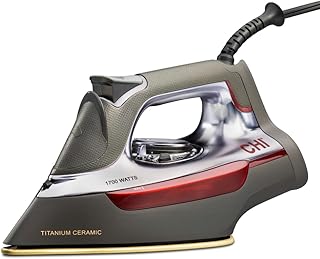


Choosing the right iron or garment steamer is less about finding the appliance with the highest wattage and more about matching its performance, design and features to the way you actually care for clothing. A compact travel steamer may be ideal for occasional touch-ups, while a powerful steam iron can be a better choice for cotton shirts, linen, uniforms, bedding and garments with stubborn creases. For households that press clothes frequently, tank capacity, soleplate design, temperature control, steam output and automatic shut-off can make a noticeable difference to everyday convenience.
This independent buying guide focuses on the factors Canadian shoppers should compare before choosing an iron, steam iron, handheld steamer or related garment-care appliance. Product specifications, included accessories, retailer pricing and availability can change during 2026, so always check the latest product information before purchasing.
Irons and garment steamers remove wrinkles in different ways. A traditional steam iron combines heat, moisture and direct pressure from the soleplate. A garment steamer relies primarily on hot steam delivered through a nozzle, allowing you to freshen and relax fabrics while they remain hanging.
Neither category is automatically better. The best option depends on fabric types, laundry volume, available storage space and whether you prefer precise pressing or rapid wrinkle removal.
Steam performance is one of the most important specifications to examine. Continuous steam helps relax everyday wrinkles, while a steam boost can provide additional moisture when dealing with more resistant creases.
Do not judge an appliance solely by one advertised steam figure. Look at the complete steam system, including continuous steam, steam boost, vertical steaming capability and how consistently steam is delivered during normal use. A high headline specification does not necessarily mean that every garment will be easier to press.
Higher wattage can support faster heating and strong operating performance, but wattage alone should not determine your purchase. Heating speed also depends on the appliance's internal design, soleplate, thermostat and steam system.
For frequent household ironing, look for a model that reaches operating temperature quickly and maintains consistent heat. For occasional use, paying considerably more for maximum power may offer limited practical benefit.
The soleplate is the part of a steam iron that comes into direct contact with clothing, so its glide, durability and resistance to sticking are important.
Also examine the soleplate shape. A pointed tip can help reach around buttons and tight areas, while a well-designed steam-hole pattern can improve moisture distribution across the fabric.
A larger water tank can reduce interruptions during a long ironing session, while a smaller tank can make a handheld appliance lighter and easier to manoeuvre.
Consider how much laundry you normally press in one session. A large household that irons shirts, trousers and other garments in batches may benefit from greater capacity. Someone who only removes a few wrinkles before work may prefer a lighter appliance that heats quickly.
Different fabrics require different levels of heat. A useful iron should provide clear temperature guidance and make it straightforward to select an appropriate setting.
Temperature control is particularly important when a wardrobe includes synthetics, wool, cotton, linen and blended fabrics. Always follow the care label on the garment rather than assuming that a higher temperature will produce better results.
Water droplets escaping from the soleplate can leave marks on clothing, particularly when ironing at lower temperatures. An anti-drip system is therefore a useful feature for people who frequently work with temperature-sensitive fabrics.
Mineral deposits can accumulate inside steam appliances over time. This can affect steam performance and contribute to blocked steam holes or unwanted residue.
When comparing models, look for features such as anti-scale systems, replaceable cartridges where applicable, self-cleaning functions and accessible maintenance procedures. These features are especially worth considering if your local water conditions make mineral buildup a recurring concern.
Automatic shut-off is an important convenience and safety feature. Depending on the design, the appliance may switch itself off after remaining stationary for a specified period or after being left in a particular position.
Do not treat automatic shut-off as a substitute for careful use. Follow the manufacturer's instructions and unplug the appliance when it is no longer needed.
Families that regularly iron multiple garments should prioritise dependable steam delivery, a practical water tank, comfortable handling and an easy-to-clean design. A well-shaped soleplate and responsive temperature controls can also make repeated pressing less tedious.
If you regularly wear business shirts, trousers, blazers or other formal clothing, precise pressing may be more important than compactness. Look for a steam iron that allows controlled temperature selection and produces consistent steam across the soleplate.
A compact iron or handheld steamer can make more sense when storage space is limited. Smaller appliances are generally easier to store, although a compact design may mean a smaller water reservoir or fewer advanced features.
Travel-focused garment appliances should be judged on size, weight, storage requirements and compatibility with the electrical system used at the destination. Canadian travellers should also check voltage requirements when taking an appliance outside Canada. Never assume that a compact appliance automatically supports international voltage.
People who press substantial quantities of clothing may want to investigate steam generator irons. These systems separate the water reservoir from the handheld iron and are designed around higher-volume ironing. They can be more substantial than conventional irons, so storage space and overall setup should be considered.
Product specifications can look impressive at first glance, but not every number has equal importance. A sensible comparison should focus on the specifications that influence real-world usability.
Handheld steamers are designed around convenience. Instead of placing garments flat on an ironing board, you can normally hang the garment and move the steaming head over the fabric.
They can be particularly convenient for dresses, jackets, curtains and garments that are awkward to place on a conventional ironing board. However, a steamer is not always the best replacement for an iron. If your priority is a sharply defined trouser crease or a perfectly pressed shirt collar, direct contact from an iron can provide greater control.
Vertical steaming is convenient because the garment can remain on a hanger. This is particularly useful for quick preparation before work, events or travel. It also reduces the need to set up an ironing board for a single garment.
Horizontal ironing remains preferable when pressure and precision are important. Placing fabric on a stable ironing surface allows you to work deliberately across collars, cuffs, hems, seams and other structured areas.
For many households, the decision is not necessarily either-or. A steam iron can handle detailed pressing while a handheld steamer can provide fast touch-ups between full ironing sessions.
Fabric care should influence your choice of appliance. Always check the garment label and manufacturer's instructions before applying heat or steam.
Steam is not a universal solution for every material. When uncertain, follow the lower-risk care instructions provided by the garment manufacturer.
Brand reputation can be useful when narrowing down a large selection, but it should not replace product-level comparison. Different models within the same brand can have substantially different designs and capabilities.
When comparing these and other brands in Canada, assess the exact model rather than assuming that every appliance from a particular manufacturer has the same performance, warranty terms or feature set.
Customer reviews can provide useful information, but review counts and star ratings should not be treated as the sole measure of quality. Look for recurring comments about the exact model you are considering.
Prioritise reviews that describe actual usage conditions rather than relying only on short comments such as “great product” or “works well.” Also check whether reviews refer to the exact model number, because similarly named products can have different specifications.
High wattage does not automatically make an iron the best choice. Consider steam delivery, soleplate construction, temperature control, water capacity and handling as a complete system.
A feature-rich appliance can become tiring if it is uncomfortable to hold. If you iron several loads each week, balance performance against weight and ergonomics.
A compact reservoir can be convenient, but frequent refilling can become frustrating during large ironing sessions. Consider the amount of clothing you normally press at one time.
Steam appliances require appropriate care. A model that looks attractive on paper may become inconvenient if its cleaning procedure is difficult or if replacement maintenance components are difficult to source.
Steamers are excellent for many wrinkle-removal tasks, but they do not always produce the same crisp finish as direct pressing. Consider what your wardrobe actually requires.
Using excessive heat or inappropriate steam can damage some fabrics. The care label should always take priority over general ironing advice.
The lowest advertised price is not necessarily the best deal. Compare the complete package, including the appliance's specifications, included accessories, warranty information, retailer policies and current customer feedback.
When evaluating deals during 2026, compare the exact model number across multiple trusted retailers where possible. Seasonal promotions, limited-time discounts and retailer-specific offers can change quickly. A model with a slightly higher purchase price may provide better value if it offers features you will actually use and is better suited to your laundry routine.
The cheapest appliance can be attractive for occasional use, but value depends on how well the product matches your requirements. Someone who irons only a few garments each month may not need a premium steam system. A household that presses clothes several times a week may benefit from investing in better ergonomics, a larger reservoir, stronger steam performance and easier maintenance.
A useful value comparison asks whether each additional feature solves a real problem. Paying more for a feature you never use does not necessarily improve value, while spending slightly more for a feature that saves time every week can be worthwhile.
Steam irons and garment steamers operate at high temperatures and can cause burns if used incorrectly. Steam can also cause injury even when the appliance's external surfaces do not appear extremely hot.
Regular maintenance can help preserve steam performance and reduce the chance of mineral deposits affecting the appliance. The exact cleaning procedure varies by model, so the manufacturer's instructions should always take precedence.
Residue can accumulate on the soleplate after repeated use, especially if an inappropriate temperature has been used on treated or synthetic fabrics. Clean it according to the manufacturer's recommended method and avoid abrasive materials that could damage the surface.
Use the appliance's self-cleaning or anti-scale procedure when the manufacturer recommends it. If the model uses a removable scale collector or cartridge, follow the specified maintenance schedule and replacement instructions.
Follow the manufacturer's storage instructions regarding water remaining in the reservoir. Emptying the tank when recommended can help reduce stagnant water and mineral buildup.
Blocked steam holes can reduce performance and may contribute to uneven steam distribution. Never insert unsuitable objects into the steam openings. Use the cleaning method specified for the particular appliance.
A good iron can still be frustrating to use with an unsuitable ironing surface. When choosing an ironing board, consider its stability, working height, board dimensions, heat resistance and cover design.
A wider surface can make large shirts and trousers easier to position, while a narrower board can be more convenient where storage space is limited. The best setup is one that allows you to maintain a comfortable posture without repeatedly reaching or twisting.
A steam generator system separates the main water reservoir from the handheld ironing unit. This configuration can provide a different experience from a conventional steam iron and is particularly relevant to people who press substantial quantities of laundry.
The right technique can make even a basic iron more effective. Start by sorting garments according to the manufacturer's recommended temperature. Work from fabrics requiring lower heat toward those requiring higher heat where appropriate, while following individual care labels.
For shirts, work systematically across collars, cuffs, sleeves, shoulders and the main body. For trousers, align seams carefully before pressing. Avoid holding the iron stationary on one area longer than necessary, particularly when working with heat-sensitive materials.
When using a steamer, hang the garment securely and allow steam to relax the fabric while moving the steam head according to the appliance's instructions. Avoid assuming that more steam or prolonged exposure is always better.
A smart buy is not necessarily the most expensive model or the appliance with the longest feature list. It is the product that provides the performance you need without paying for unnecessary capabilities.
The best iron depends on your laundry routine, budget and fabric requirements. For frequent pressing, prioritise consistent steam, comfortable handling, an appropriate soleplate and useful temperature controls. For occasional touch-ups, a compact model may provide better value.
Neither is universally better. A steamer is convenient for hanging garments and quick wrinkle removal, while an iron is generally better suited to precise pressing and crisp finishes.
Look for a model with dependable continuous steam, a practical water reservoir, smooth soleplate movement, appropriate temperature controls and manageable weight. The ideal specification depends on the fabrics and quantity of clothing you normally handle.
An expensive iron can be worthwhile when its additional features address genuine needs, such as frequent ironing, stronger steam performance, improved ergonomics or easier maintenance. If you only iron occasionally, a simpler model may offer better value.
There is no single wattage that makes an iron good. Wattage should be considered alongside heating speed, steam output, soleplate design, temperature control and overall construction.
Both can work well. Stainless steel is often selected for durability and smooth movement, while ceramic designs can provide smooth fabric contact and even heat distribution. Compare the exact soleplate construction rather than choosing based only on the material name.
No. Always check the garment's care label and the steamer manufacturer's instructions. Some fabrics and finishes require specific temperature, moisture or cleaning precautions.
Water requirements vary by appliance. Some manufacturers permit tap water, while others provide specific guidance based on water hardness or recommend particular water types. Follow the instructions for the exact model you purchase.
Cleaning frequency depends on usage, water conditions and the manufacturer's maintenance recommendations. Regularly inspect the soleplate and steam system and follow the model-specific cleaning procedure.
Check the exact model number, specifications, water capacity, steam performance, soleplate material, temperature controls, dimensions, weight, included accessories, warranty information, current customer feedback and the retailer's current return terms.
Compact handheld steamers can be convenient for travel because they occupy less space than many traditional ironing setups. However, check the appliance's electrical specifications and destination compatibility before using it outside Canada.
Travel irons generally prioritise compact dimensions and portability. Standard household irons usually provide a larger soleplate, larger water capacity or more extensive controls. The better option depends on whether portability or everyday pressing performance is more important.
The smartest way to choose an iron or steamer in Canada is to start with your actual routine rather than a product ranking. Decide whether you need precise pressing, fast steaming, portability or high-volume ironing. Then compare steam performance, soleplate construction, water capacity, temperature control, weight, maintenance requirements and safety features.
Before purchasing, compare the exact model across trusted Canadian retailers, read current customer feedback, verify the manufacturer's specifications and check the latest price, warranty and return information. Deals can change throughout 2026, so a product that represents good value at one point may not remain the strongest choice after prices or competing models change.
Ultimately, the best smart-buy iron or steamer is the one that performs the tasks you regularly need, fits your available storage space, suits the fabrics in your wardrobe and provides useful features without unnecessary expense.