

♥ Wishlist
Compare 37 Indoor Climbers Play Structures for Active Indoor Play products in Canada. Reviews, ratings, pros, cons and buying advice updated for October 2026.


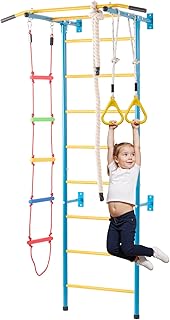


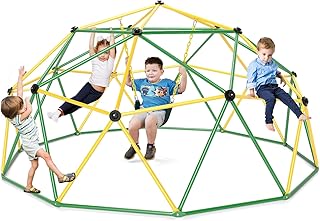
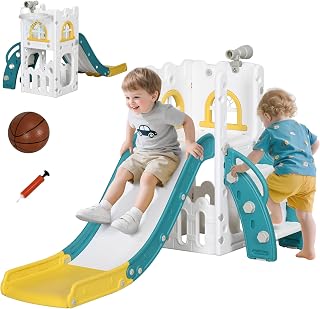


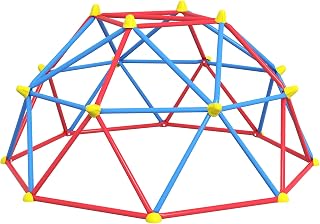

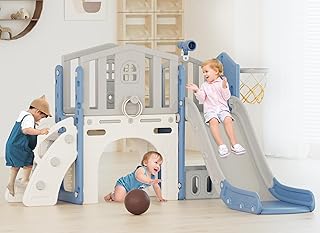


Indoor climbers and play structures can turn part of a home into an active play area without relying on outdoor weather. For Canadian families, that can be particularly useful during cold winters, rainy periods and days when outdoor play is less convenient. The right indoor structure can provide opportunities for climbing, crawling, balancing, sliding and imaginative play while fitting the available space.
However, the best choice is not simply the largest or most feature-packed model. A smart purchase depends on the child's age and abilities, available floor space, construction quality, stability, materials, weight limits, assembly requirements and the type of play the structure encourages. This guide explains the important differences so shoppers can compare specifications and identify the most suitable option for their home.
A smart buy combines useful play features with appropriate construction, practical dimensions and a sensible long-term value. A lower purchase price does not necessarily make a product economical if it is difficult to assemble, unsuitable for the child's age or too large for the intended room.
Look beyond the headline features and consider how the structure will actually be used. A compact wooden climbing triangle may be ideal for a toddler who enjoys pulling up, climbing and balancing, while an older child may benefit more from a larger structure with a climbing wall, slide, tunnel or multiple activity areas.
Pikler-style climbing triangles are compact climbing structures designed around climbing, balance and movement. Their relatively simple construction makes them attractive for homes where a full indoor playground would be impractical. Some models can be paired with ramps, climbing boards or reversible activity panels.
When comparing these products, examine the spacing and shape of the rungs, the angle of the climbing surface, the stability of the frame and whether the accessory components are included or sold separately.
Combination sets can include a small climbing wall, platform and slide. They are useful when children enjoy transitioning between different activities. A combination structure may offer more play variety than a simple climber, but it also requires additional floor space and careful attention to the landing area.
Playhouses focus more heavily on imaginative play, although many incorporate climbing openings, tunnels, windows and activity panels. These can be a practical choice for younger children or families who want a structure that supports both physical and pretend play.
Wooden indoor gyms can combine ladders, climbing surfaces, bars, ramps and other activities. Wood construction can provide a substantial feel, but shoppers should inspect the finish, joints, edges, hardware and overall stability rather than judging quality from material alone.
Plastic structures are often easier to clean and may have rounded moulded surfaces. They can also be lighter than substantial wooden structures, which may make repositioning easier. On the other hand, lightweight construction makes base stability particularly important.
The choice between wood and plastic should be based on the intended environment and child's use rather than assuming one material is universally better.
For wooden products, check whether surfaces are smooth and appropriately finished. For plastic products, inspect moulded seams and edges. In both cases, examine connection points because structural integrity depends on the complete assembly, not just the primary material.
Indoor play equipment should always be selected according to the child's age, size, physical abilities and the manufacturer's instructions. No indoor climber should be treated as completely risk-free. Active climbing naturally involves movement and the possibility of falls.
A stable base is one of the most important characteristics of an indoor climbing structure. Compare the width of the base with the height of the structure. Taller equipment generally creates greater leverage when a child climbs, pulls or shifts their weight.
Bolts, screws, hinges and other connection points should be properly fitted during assembly. Before each use, parents and caregivers should periodically check for loosened hardware, unusual movement or damaged components.
Climbing structures should not have accessible sharp edges, splinters, exposed fasteners or damaged moulded surfaces. Wooden components deserve particular attention because wear can eventually affect the finish.
The area around a slide, climbing opening or elevated platform needs sufficient clear space. Avoid placing the structure where furniture, hard corners or other obstacles create additional hazards.
Always follow the manufacturer's stated weight and user limits. Do not assume that a structure designed for one child is suitable for several children at the same time. Multiple children can substantially change the load and movement experienced by the frame.
Online product photographs can make an indoor climber appear smaller or larger than it really is. Always compare the listed height, width and depth with the actual room where it will be installed.
Measure the complete footprint and allow additional clearance around moving areas. A structure may technically fit against a wall but still be impractical if children cannot safely access it or if a slide extends into a walkway.
An indoor climber should match the child's current abilities rather than being selected solely because it has a higher advertised age range.
Young toddlers generally benefit from low-height equipment that allows supervised exploration without requiring advanced climbing ability. Simple ramps, low steps and accessible platforms may be more appropriate than tall structures.
Preschool-age children may enjoy structures that combine climbing, balancing, sliding and imaginative activities. Adjustable or modular products can provide additional flexibility as their abilities develop.
Older children may quickly outgrow small toddler-focused equipment. If buying for this age group, compare maximum user weight, structural dimensions and the complexity of the climbing activities. Do not use a product beyond its specified limits simply because it appears physically large enough.
A climbing wall can provide a more challenging activity than a basic ladder. Compare the arrangement and shape of climbing holds, the wall angle and how the structure is intended to be used.
Ramps can support climbing and other movement activities. Reversible ramps may provide different surfaces, but shoppers should confirm exactly which accessories are included with the chosen model.
A slide can increase play value but also requires additional room. Compare slide length, height, width and landing area. A compact slide may be appropriate for a smaller room, while a longer slide requires more clearance.
Tunnels encourage crawling and imaginative play. Check the opening dimensions and overall construction, particularly if the structure is intended for more than one age group.
Adjustability can extend the useful life of an indoor climber. However, more moving or adjustable parts can also mean additional assembly and maintenance requirements. Check how adjustments are secured and whether tools are required.
Safety does not end once the package has been assembled. Indoor climbing equipment should be inspected regularly, particularly when used frequently.
The surface beneath an indoor climber can affect stability and the consequences of a fall. A hard, slippery floor may not be the best location for active equipment. Depending on the manufacturer's instructions, a suitable play mat or protective flooring can help create a defined play zone.
Do not place an indoor climber beside glass furniture, fireplaces, sharp furniture corners, heaters or other hazards. Also consider heating vents and radiators when deciding where a structure will remain for extended periods.
Assembly can significantly affect the overall buying experience. Two structures with similar specifications may differ substantially in the time and effort required to put them together.
Before purchasing, check whether the product arrives partially assembled, whether special tools are required, whether two adults are recommended and whether the instructions clearly identify each component.
Foldable models can be useful in apartments, smaller homes and multipurpose rooms. They may allow parents to reclaim floor space when the structure is not being used.
Modular systems can offer a different advantage. Instead of purchasing a single fixed configuration, families may be able to change the arrangement or add compatible components. Before choosing a modular design, verify which accessories are included, which are optional and whether future components are actually compatible with the specific model.
Limited space does not necessarily mean giving up on indoor climbing. Compact designs can provide active play without occupying an entire room.
For a small Canadian home or apartment, consider a low-profile climbing triangle, compact activity centre or foldable structure. Wall clearance, storage position and the area required when accessories are attached should all be included in the measurement.
A larger playroom gives shoppers more flexibility. A combination structure can potentially create separate climbing, sliding, crawling and imaginative-play zones.
Even in a large room, avoid selecting equipment solely because it occupies available space. A thoughtfully chosen structure should leave enough room for children to move safely around it and for adults to supervise.
When researching indoor climbers and children's play structures, shoppers may encounter brands such as Little Tikes, ECR4Kids, Costzon, Milliard and other established children's-equipment manufacturers. Brand familiarity can be useful, but it should not replace specification checks.
Compare the actual model rather than assuming every product from the same manufacturer has identical construction or safety characteristics. Product dimensions, recommended age, weight limits, materials and included accessories can vary substantially between models.
A useful comparison should focus on measurable characteristics rather than ranking products simply by appearance.
Customer reviews can provide useful information, but they should be evaluated alongside technical specifications. A review describing a product as "large" is less useful than the actual dimensions. Similarly, statements about durability should be considered alongside construction materials, usage patterns and the manufacturer's specifications.
Look for recurring comments about assembly, stability, missing components, dimensions, ease of cleaning and suitability for the stated age group. Give greater weight to detailed reviews that explain how the product was used rather than isolated one-line ratings.
For current shopping decisions, compare verified customer feedback with the latest product specifications and check whether the reviewed model is the same version you are considering.
Bigger does not automatically mean better. An oversized climber can restrict movement around the room and may provide a level of challenge that is inappropriate for a younger child.
A tall climbing structure can become impractical in rooms with low ceilings. Measure vertically as well as horizontally.
The published footprint may not fully communicate how much open floor is required in front of a slide or ramp.
A structure designed for an older child may not be appropriate for a younger child simply because the family expects the child to grow into it.
Compare the complete package, including included accessories, construction, dimensions, storage requirements and assembly complexity.
Wood species, panel construction, joints, finish quality, hardware and overall engineering can differ considerably.
Regular inspection is important for active children's equipment. A structure that is difficult to inspect or maintain may be less convenient over time.
The best value is not necessarily the product with the lowest advertised price. Instead, compare what the price provides and whether the structure meets the intended requirements.
Canadian homes vary considerably, from compact urban apartments to large suburban houses. Climate also makes indoor play equipment particularly useful during portions of the year when outdoor activity may be less convenient.
For an apartment, prioritise a compact footprint, low noise potential and easy storage. For a dedicated playroom, a larger combination structure may make better use of the available space. For a family that frequently rearranges rooms, a foldable or movable design may be more practical.
In every case, measure the intended area first, then compare the product's complete dimensions and required clearance.
Maintenance requirements depend on the material and design, so always follow the manufacturer's care instructions. In general, routine inspection is more important than occasional deep cleaning.
Use this checklist when comparing products in Canada:
An indoor climber occupies more space than conventional toys, but it can support a broader range of physical movement. Instead of simply manipulating a toy while seated, children can use an appropriate structure for climbing, balancing, crawling and navigating.
That does not mean every child needs a large play structure. Families should consider the child's interests, available space and supervision arrangements. A compact activity centre may provide better value than a large indoor playground if the room is small or the structure will be used by a younger child.
Outdoor play equipment can provide greater scale and variety, but indoor equipment has a practical advantage: it can be used inside the home. This can be valuable during extreme cold, heavy precipitation or other periods when outdoor play is less convenient.
Indoor equipment should nevertheless be treated as active play equipment rather than ordinary furniture. Appropriate placement, supervision, maintenance and adherence to the manufacturer's instructions remain important.
A compact climber may be the smarter choice when floor space is limited, the child is younger, storage is important or the family already has other toys that provide imaginative and sensory play.
Small does not have to mean uninteresting. A well-designed climbing triangle, ramp or compact activity centre can encourage multiple forms of movement while remaining easier to store and supervise.
A larger structure may be appropriate when the family has a dedicated playroom and multiple children who are within the manufacturer's recommended age and weight ranges. Combination equipment can offer climbing, sliding, crawling and imaginative play in one area.
Before buying, make sure the larger structure does not compromise safe access around the room. A playroom should still have enough open space for children and adults to move around the equipment.
Instead of chasing the most heavily advertised model, identify the features that matter most to your family. If climbing is the priority, spend more attention on climbing design and stability. If storage matters, prioritise folding or compact construction. If several activities are important, compare the actual functionality of combination structures.
It is also worth comparing the cost of the complete configuration. A basic frame may appear inexpensive until necessary ramps, slides or activity boards are added separately.
Online shopping makes it easier to compare many indoor climbers, but product listings can change. Before ordering, verify the exact model number, dimensions, material specifications, included accessories and recommended age range.
Check the current listing from the retailer and manufacturer where available. Compare current customer feedback, examine photographs for construction details and make sure the product specification corresponds to the version being sold.
For Canadian shoppers, also confirm that the listing and retailer information are relevant to the Canadian market. Availability, delivery options, taxes, retailer policies and product versions can change, so these details should be checked at the time of purchase.
There is no single best indoor climber for every Canadian family. The right choice depends on the child's age, physical ability, available space, desired activities, weight requirements and budget. Compare specifications and verified customer feedback for the exact model before buying.
Not necessarily. Wooden and plastic climbers have different characteristics. Wood is common in climbing-focused structures, while plastic can offer moulded shapes and easy-to-clean surfaces. Construction quality, stability and age suitability are more important than material alone.
Indoor climbing equipment can involve falls and other risks because it is designed for active movement. Choose equipment appropriate for the child's age and abilities, follow the manufacturer's instructions, provide appropriate supervision and regularly inspect the structure.
The required space depends on the product. Measure its complete height, width and depth and allow additional clearance around slides, ramps, climbing entrances and landing zones. Do not rely solely on product photographs.
Age suitability varies by design. Check the manufacturer's specific age recommendation and consider the child's developmental abilities. A low, appropriately designed structure may suit younger children, while more challenging climbing equipment may be intended for older users.
Only when the manufacturer permits multiple users and the structure's design and weight limits support that use. Never assume that a product designed for one child can safely accommodate several children simultaneously.
They can be useful for families with limited space or rooms that serve multiple purposes. Compare the folded dimensions, locking mechanism, storage requirements and instructions for safe setup before choosing one.
Inspection frequency depends on usage and the manufacturer's guidance. Families should routinely check fasteners, joints, surfaces and accessories, with additional checks when the equipment is used frequently or moved.
Follow the manufacturer's placement recommendations. Where appropriate, a suitable play mat or protective flooring may help define the play area and provide a more suitable surface than a slippery hard floor. Make sure any mat does not introduce a separate slipping or tripping hazard.
Many do, although assembly requirements vary significantly. Check the product instructions before purchasing and confirm whether special tools, additional assistance or a particular installation method is required.
Compare the complete feature set rather than the purchase price alone. Consider construction, stability, dimensions, age range, weight capacity, included accessories, storage, assembly and expected usefulness.
Future usability can be useful, but the current age and ability of the child should remain the priority. A structure that is too challenging for a young child may not be appropriate simply because it has a higher maximum age.
The smartest indoor play structure purchase is the one that fits the child, the room and the family's everyday routine. Start with age and safety requirements, then compare dimensions, stability, materials, weight capacity and play features. After that, consider storage, assembly, maintenance and overall value.
For Canadian shoppers in 2026, product specifications, prices, availability and customer feedback can change, so verify the current information for the exact model before ordering. Compare reputable retailers, read detailed verified customer reviews and check manufacturer instructions rather than relying only on promotional claims.
Whether the final choice is a compact climbing triangle, wooden activity gym, indoor slide, plastic play centre or multi-activity structure, careful comparison can help you select equipment that provides useful active play without overwhelming your available space.