

♥ Wishlist
Compare 18 Cordless Mitre Saws for Precise, Portable Cutting products in Canada. Reviews, ratings, pros, cons and buying advice updated for October 2026.
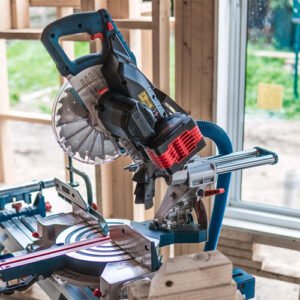
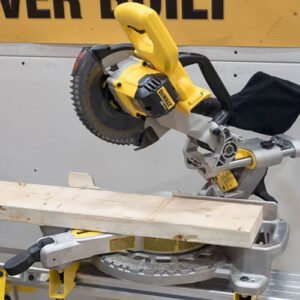
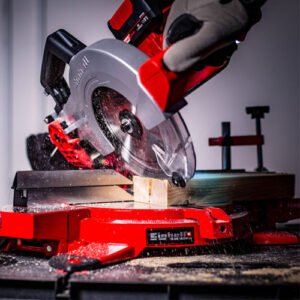
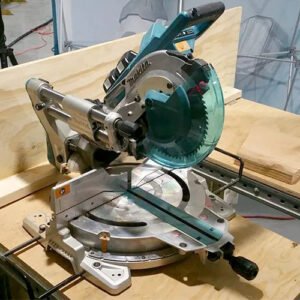
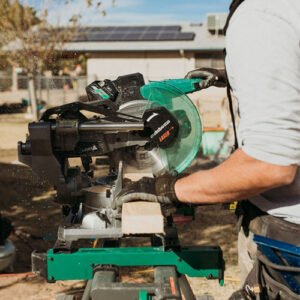
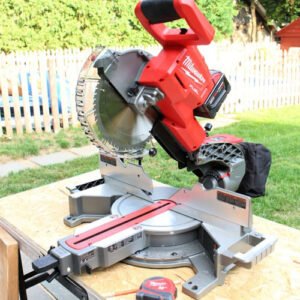


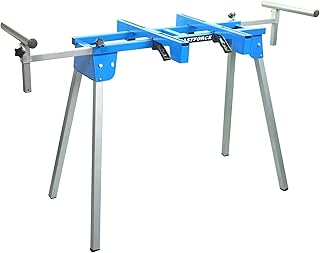


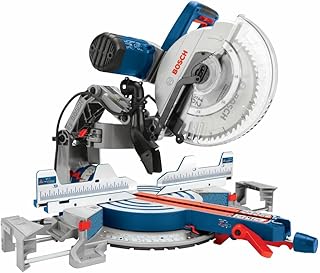


A cordless mitre saw can be an excellent choice when portability, quick setup and freedom from a power cord matter more than having a permanently connected mains supply. For Canadian buyers, however, the right model depends on considerably more than the advertised blade size or battery platform. Cutting capacity, battery compatibility, motor performance, bevel and mitre adjustment, dust collection, portability, cold-weather considerations and the availability of compatible batteries can all affect the practical value of a saw.
When comparing cordless mitre saws, consider the complete cutting system rather than judging the bare tool in isolation. A lower-priced saw may become less attractive if it requires batteries and a charger that are not already in your workshop. Conversely, a bare-tool model can be a smart purchase for someone who already owns compatible batteries from the same platform.
For Canadian shoppers, it is also sensible to check the exact configuration offered by the retailer. A product may be available as a bare tool, a kit with one or more batteries, or a package containing a charger and accessories. The model number should be checked carefully because visually similar versions can have different included equipment, blade configurations or regional specifications.
Blade diameter is one of the first specifications buyers notice, but it should not be treated as a complete measure of capability. Common cordless mitre saw categories include compact models and larger saws intended for heavier crosscutting work. The blade diameter influences the potential cutting depth and the type of material the machine can handle, while the saw's mechanical design determines the actual maximum dimensions that can be cut.
A compact saw may be easier to transport and more convenient for trim, moulding, flooring and smaller woodworking projects. A larger model can provide greater capacity for framing lumber, wider boards and other substantial workpieces. Before choosing a blade size, compare the manufacturer's stated crosscut capacity at common mitre and bevel angles rather than relying only on the diameter printed in the specification sheet.
Bevel capability determines how easily the blade can be tilted for angled cuts through the thickness of a workpiece. A single-bevel saw tilts in one direction, while a dual-bevel design can tilt to both sides.
For occasional basic crosscuts and simple mitre work, single-bevel operation may be sufficient. For crown moulding, complex trim, furniture components and repetitive compound cuts, dual-bevel operation can save time because the workpiece does not need to be repositioned as frequently.
When comparing models, look beyond the phrase “dual bevel.” Check the actual bevel range, the locations of positive stops, the ease of releasing and locking the adjustment, and whether the scale is easy to read from the normal operating position.
The mitre adjustment controls the horizontal angle of the cut. Useful positive stops allow common angles to be selected quickly and repeatably. A good adjustment mechanism should provide a secure lock without excessive play.
For installation work, trim carpentry and repetitive production cutting, accurate stops can be more valuable than a long list of theoretical adjustment positions. Buyers should examine whether the saw offers the angles they regularly use and whether the adjustment system is practical when wearing work gloves.
Cordless mitre saw motors are designed to balance cutting performance with battery consumption. A specification describing motor speed can be useful, but it does not by itself determine how effectively a saw will cut under load.
Pay attention to the overall combination of motor design, blade selection, electronic controls, battery platform and intended application. A saw intended for light trim work should not be evaluated using the same expectations as a model designed for repeated construction cuts.
Battery voltage is only one part of the cordless equation. Runtime depends on the battery's capacity, the material being cut, blade condition, cutting technique, workpiece dimensions and the frequency of cuts.
Battery-platform compatibility can have a major impact on total ownership cost. If you already use tools from brands such as DeWalt, Makita, Milwaukee, Bosch or Ryobi, staying within the same compatible battery ecosystem may eliminate the need to purchase another charger and a separate collection of batteries.
Compatibility should always be verified by exact model and platform rather than assuming that batteries from the same brand are interchangeable across every generation or product family.
Cordless mitre saws are commonly offered in two basic purchasing configurations. A bare tool generally includes the saw without a battery or charger. A kit typically includes some combination of batteries and a charger.
Do not compare the headline prices of a bare tool and a complete kit as though they were equivalent purchases. Calculate the complete cost of obtaining a usable setup, including batteries and a charger if required.
Battery runtime is difficult to reduce to one universal number because cutting conditions vary substantially. Cutting softwood trim is different from repeatedly cutting thick construction lumber, hardwood or composite materials. A worn or inappropriate blade can also increase resistance and consume more battery power.
For demanding work, owning two compatible batteries can be more useful than relying on a single high-capacity battery. One battery can be in use while another is charging, assuming the charging setup and battery platform support that workflow.
When reading retailer listings, distinguish between battery capacity, charger specifications and the actual runtime information supplied by the manufacturer. Avoid assuming that a larger battery automatically produces proportionally greater cutting performance.
A sliding mitre saw uses a sliding mechanism that allows the blade assembly to travel through wider material. This can substantially increase crosscut capacity, particularly when working with wider boards.
A non-sliding design can be simpler and more compact. It may be attractive when portability and a smaller footprint are more important than maximum cutting width.
If your projects frequently involve wide boards, compare the stated maximum crosscut capacity rather than choosing based solely on whether the saw is described as “sliding.” Also inspect the physical footprint because the sliding rails can affect how much clearance is required behind or around the saw.
Sliding rails are particularly important for buyers with limited workshop space. Some designs require additional clearance behind the saw, while other mechanical arrangements can reduce the rear footprint.
Measure the available bench or stand area before purchasing. Remember to account for the movement of the workpiece, the blade guard, the sliding mechanism and the space needed to safely position long boards.
A saw with excellent cutting specifications can still be inconvenient if it cannot be positioned safely in the workspace.
Accuracy matters whenever multiple pieces need to match. A saw should hold its selected mitre and bevel settings securely and provide a clear reference scale for adjustments.
Important factors include the rigidity of the saw head, stability of the base, quality of the mitre detent system, bevel adjustment mechanism, fence alignment and ease of making fine adjustments.
For precision woodworking, do not assume that a higher price guarantees perfect accuracy. Setup, blade condition, workpiece support and user technique all influence the final cut. A careful buyer should inspect the manufacturer's adjustment instructions and, after setup, verify critical angles using appropriate measuring equipment.
The fence provides a reference surface against which the workpiece rests. Its height, rigidity and configuration can affect how securely different materials are supported.
When comparing cordless mitre saws, consider the type of material you normally cut. Short trim pieces, dimensional lumber and wider boards can require different support arrangements. Adjustable or removable fence sections may provide greater flexibility for compound cuts and unusual workpieces.
Long boards should not be allowed to hang unsupported from the saw table. Appropriate extension supports or a dedicated mitre saw stand can improve stability and make repetitive cutting more manageable.
Dust management is another important buying consideration. Mitre saws generate a substantial amount of sawdust because the blade is exposed to the workpiece from above. A dust port can help connect the saw to a compatible extraction system, but collection effectiveness varies according to the saw design, blade, material and extraction equipment.
For indoor woodworking, consider the dust-management system alongside the rest of the workshop extraction setup. For renovation or construction work, portability and the ability to connect to an appropriate dust extractor may be more important than having the most compact saw possible.
A cordless mitre saw is only as useful as the blade installed in it. Blade tooth count, tooth geometry, kerf, diameter and intended material all influence the quality and speed of a cut.
Always use a blade that is correctly sized and rated for the particular saw. Check the arbor specification, maximum permitted blade dimensions and manufacturer instructions before changing blades.
The best cordless mitre saw for one Canadian buyer may be poorly matched to another person's workload. A homeowner cutting occasional pine trim has different requirements from a contractor making hundreds of repetitive framing cuts.
For trim and moulding, precision, clean cuts, bevel adjustment and manageable portability are particularly valuable. For framing, cutting capacity, durability, battery availability and efficient repetitive operation become more important. For furniture and fine woodworking, accuracy, blade quality, dust management and repeatability deserve greater attention.
A mitre saw is a high-speed cutting machine and should be treated as such. Buyers should review the manufacturer's safety instructions before operating any model.
The major advantage of a cordless mitre saw is the ability to work without a mains power cord at the immediate cutting location. That can be valuable for framing sites, renovations, outdoor projects and locations where access to electrical outlets is inconvenient.
Weight nevertheless matters. A saw that is easy to carry from a vehicle to a work area can be more useful than a heavier model with specifications that exceed the user's actual requirements.
Look at the carrying handle, balance, battery position, overall dimensions and compatibility with a dedicated stand. A compact design may also be easier to store in a vehicle or small workshop.
Canadian conditions introduce a practical consideration that is easy to overlook: temperature. Lithium-ion batteries and cordless power tools have operating and storage recommendations that should be followed carefully.
Do not assume that a battery will deliver identical performance in very cold conditions. Review the battery manufacturer's guidance for temperature limits, charging conditions and storage. If tools are transported in a cold vehicle, allow equipment to reach the appropriate temperature before charging or operating it when the manufacturer's instructions call for this.
This is one reason professional users who work outdoors through changing seasons may place considerable value on battery management and having an appropriate backup battery.
A dedicated stand can significantly improve the usability of a cordless mitre saw. Stands can provide better workpiece support, easier positioning and more comfortable working height than placing the saw on an improvised surface.
When comparing stands, check the saw's mounting requirements and the stand's rated capacity. Look for adequate support for long boards and convenient transport features if the equipment will frequently move between locations.
For stationary workshop use, a purpose-built bench arrangement may be preferable. The important consideration is that the saw and workpiece remain stable throughout the cutting operation.
More cutting capacity is not always better. A larger saw can take up more room, weigh more and require a larger investment in batteries, blades and accessories. Choose capacity based on the materials and dimensions you actually expect to cut.
A cordless tool's purchase price can be misleading if batteries and a charger must be purchased separately. Compare the complete system cost rather than the bare-tool price alone.
No-load speed is useful specification information, but cutting performance also depends on torque, blade condition, material, battery state and the overall design of the saw.
Two saws with similar blade sizes can have meaningfully different cutting capacities. Compare actual manufacturer specifications for the angles and material dimensions relevant to your projects.
A sliding mechanism, rear rails, dust collection connection and long workpieces can require more room than the saw's basic dimensions suggest. Measure the intended workspace before purchasing.
Battery compatibility should be verified against the exact tool and battery platform. Brand names alone are not sufficient evidence of compatibility.
An inappropriate blade can compromise cut quality, increase resistance and make a capable saw perform poorly. Match the blade to the material and desired finish.
When reviewing a shortlist of cordless mitre saws, use a consistent comparison method. This makes it easier to distinguish meaningful differences from marketing terminology.
Major cordless-tool brands such as DeWalt, Makita, Milwaukee, Bosch and Ryobi offer different battery ecosystems and tool ranges. The right brand is not necessarily the one with the most expensive or highest-powered model; compatibility with the tools and batteries you already use can be a major practical advantage.
When comparing these brands, concentrate on the individual model rather than assuming that every product within a brand has the same characteristics. Check the exact battery platform, cutting capacity, included accessories, adjustment range, dimensions and manufacturer documentation.
For buyers starting from scratch, compare the wider ecosystem as well. A mitre saw may be the first cordless tool purchased, but future purchases such as drills, impact drivers, circular saws, reciprocating saws and outdoor equipment can influence which battery platform provides the best long-term value.
Occasional users may benefit from prioritising ease of setup, manageable weight, straightforward controls and sufficient cutting capacity. There is little reason to pay for capabilities that will rarely be used.
DIY woodworkers should give greater weight to accuracy, repeatability, blade options, bevel adjustment and dust collection. A stable saw with predictable adjustments can be more useful than a model selected solely for maximum power.
Renovation work often involves moving tools around a property. Portability, battery availability, dust management and the ability to handle different dimensions of construction material can therefore be important.
Professionals should evaluate the saw as part of a daily workflow. Battery turnaround, durability, cutting capacity, stand compatibility, transportability and access to replacement blades and batteries can have a larger impact on productivity than isolated headline specifications.
The best value is not necessarily the lowest purchase price. Consider the expected ownership period and the additional equipment needed to use the saw effectively.
Customer reviews can be useful for identifying recurring usability observations, but they should not replace technical specifications or manufacturer documentation. A review written after occasional trim work may not tell you much about repeated construction use.
Look for patterns rather than isolated comments. Repeated observations about adjustment usability, battery compatibility, transport, dust collection or setup can help identify practical strengths and weaknesses.
Also consider whether reviewers purchased the bare tool or a kit, what battery they used and what type of material they were cutting. Differences in configuration and workload can explain why experiences vary.
Routine maintenance can help keep a mitre saw operating predictably. Follow the manufacturer's maintenance schedule and never bypass guards or other safety components.
A blade should not be judged solely by how old it is. Cutting performance, tooth condition, material compatibility and visible damage are more useful considerations. Signs that a blade may need attention can include poor finish quality, increased resistance, burning associated with an unsuitable or dull blade, inaccurate cuts caused by blade or setup issues, or visibly damaged teeth.
Do not continue using a blade that is damaged or otherwise outside the manufacturer's recommended condition. Select replacement blades based on the saw's required diameter, arbor specification, maximum speed rating and intended material.
A cordless model offers mobility and eliminates the need for a mains cable at the cutting location. This can simplify setup and make outdoor or developing construction sites more convenient.
A corded saw, by contrast, does not depend on battery charge for its operating power and can make sense for a permanently equipped workshop with convenient electrical access.
The choice should therefore be based on workflow rather than the assumption that cordless technology is automatically superior. If the saw rarely moves and is used for long cutting sessions in a workshop, corded operation may remain attractive. If portability is a major requirement, cordless operation can provide a meaningful practical advantage.
A smart buy should represent a strong match between capability, ownership requirements and intended use. The most expensive cordless mitre saw is not automatically the best choice, and the cheapest model is not necessarily the best value.
For a fair comparison, evaluate what you receive for the complete purchase: saw, battery requirements, charger requirements, blade, cutting capacity, adjustment features and compatibility with your existing equipment. Then consider whether those capabilities match your actual projects.
Because Canadian retailer inventory, configurations and pricing can change, verify the current product specification and package contents immediately before purchasing. A deal is only worthwhile if the configuration meets your needs.
There is no single best model for every Canadian buyer. The right choice depends on cutting capacity, battery platform, portability, bevel requirements, material type, workspace and budget. Compare the exact specifications and current package contents of the models on your shortlist.
Many cordless mitre saws are designed for construction and woodworking applications, but suitability depends on the specific model, battery configuration, blade and material. Check the manufacturer's intended applications and cutting specifications rather than judging capability from the cordless design alone.
Neither size is universally better. A larger blade can provide greater cutting capacity, while a smaller saw can be easier to transport and may occupy less space. Compare the actual dimensions and capacities required by your projects.
Some are sold as complete kits while others are sold as bare tools. Always check the exact retailer listing and model configuration before purchasing.
Do not assume that batteries are interchangeable between brands or even across every product family within one brand. Confirm compatibility for the exact battery platform and saw model.
A sliding model can be worthwhile when you regularly cut wider boards because the sliding mechanism can increase crosscut capacity. If most of your work involves narrow trim or smaller stock, a compact non-sliding design may be more practical.
Select a blade that matches the saw's required diameter, arbor and speed specifications and is intended for the material and finish you need. Fine-finish woodworking and rapid construction cutting can call for different blade characteristics.
Dual-bevel operation is especially useful for compound cuts and repetitive trim work because the saw can tilt in either direction. For straightforward crosscuts, it may be less important.
It can make financial and practical sense when the saw uses the same compatible battery ecosystem. Before buying, verify exact compatibility and compare the cost of the bare tool with a complete kit.
Check the exact model, cutting capacity, blade specification, bevel and mitre range, battery requirements, included accessories, warranty information provided by the manufacturer or retailer, and current verified customer feedback. Also make sure the advertised deal is for the configuration you actually need.
The strongest cordless mitre saw purchase is the one that fits the user's cutting requirements, battery ecosystem and working environment without paying for unnecessary capability. Start with the dimensions and materials you need to cut, then compare blade size, crosscut capacity, bevel and mitre adjustment, battery configuration, portability, dust management and support equipment.
For Canadian buyers, also consider seasonal working conditions, battery storage, retailer configuration and the long-term availability of compatible batteries and blades. Brands such as DeWalt, Makita, Milwaukee, Bosch and Ryobi provide useful points of comparison, but the exact model specifications should always take priority over brand reputation alone.
Before making a purchase, compare the latest specifications, verify what is included in the package, review current customer feedback and check today's Canadian pricing across trusted retailers. Taking these steps can help turn a tempting cordless mitre saw deal into a genuinely suitable long-term purchase.