

♥ Wishlist
Compare 27 Metabo Cordless Mitre Saws products in Canada. Reviews, ratings, pros, cons and buying advice updated for October 2026.


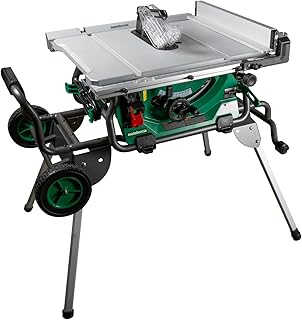


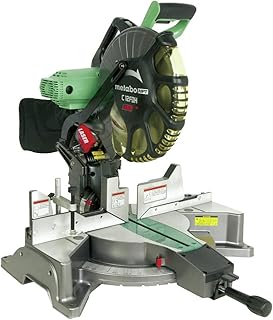


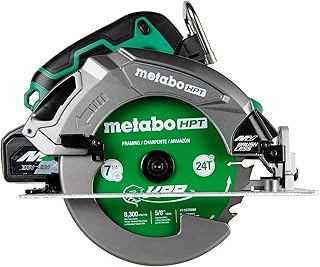

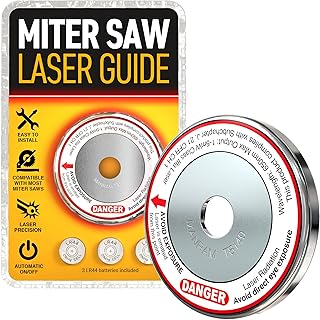

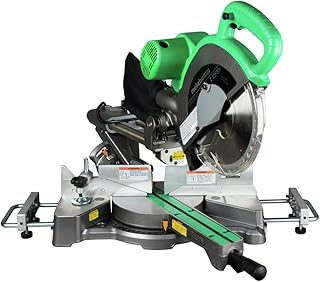


Choosing a cordless mitre saw is about more than comparing blade diameter or battery voltage. The right model depends on the type of timber you cut, the width and thickness of your workpieces, how often you move the saw, whether you already own compatible batteries, and whether you need a compact jobsite tool or a higher-capacity machine.
For Canadian buyers, it is also important to distinguish between Metabo and Metabo HPT. Metabo HPT states that Metabo-branded tools use the Metabo HPT name in North America. This matters when searching Canadian retailers, replacement parts, batteries and accessories because a search for only “Metabo cordless mitre saw” may not show the complete North American range.
A smart purchase should therefore compare the complete package rather than the tool body alone. Check the battery, charger, blade, dust collection accessories, support hardware and any included adapter before comparing the final cost with another model.
One of the most distinctive features of the Metabo HPT cordless mitre saw range is the MultiVolt platform. Depending on the model, MultiVolt saws can operate from a compatible battery and, on certain models, can also use an AC adapter when mains power is available. That can be useful for contractors who want cordless portability on site but prefer corded operation when working in a workshop.
The system also creates an important battery-compatibility consideration. A battery that appears to be an 18V/36V MultiVolt pack may provide different nominal capacity depending on the tool voltage. For example, Metabo HPT lists its 372121M MultiVolt battery as 8.0Ah for 18V tools and 4.0Ah for 36V tools.
Do not compare amp-hour numbers without considering voltage. Battery energy is better understood by considering both voltage and amp-hours. A higher Ah figure does not automatically mean a particular saw will run longer if the voltage and operating conditions are different.
Blade size affects cutting capacity, portability and the physical size of the saw. A 10-inch model can be a practical middle ground for many renovation, trim and carpentry applications. Larger blades can provide greater capacity, while smaller machines may be easier to transport.
Do not select a blade size solely because it sounds more powerful. First identify the largest material you regularly cut. Then check the manufacturer's stated cutting capacity at 90 degrees, at 45 degrees and during compound cuts.
Cross-cut capacity tells you how large a workpiece the saw can cut under a particular configuration. Sliding mitre saws generally provide more cross-cut width than non-sliding designs, but the actual capacity varies substantially between models.
Always check the capacity specification for the exact angle you intend to use. A saw may handle a wide board at 90 degrees but have considerably less capacity when the blade is tilted for a compound cut.
The mitre range determines how far the saw can rotate left and right. Common detent positions can make repetitive work faster, especially when cutting trim, framing components and other pieces that require repeatable angles.
A wider stated range can be useful, but the quality of the locking mechanism and the ability to make fine adjustments are just as important. A broad range has little value if the saw is awkward to set accurately.
A single-bevel saw tilts in one direction, while a dual-bevel saw can tilt both left and right. Dual-bevel operation can reduce the need to reposition or flip workpieces during compound cutting.
For crown moulding, architectural trim and repeated compound cuts, dual-bevel functionality can be a meaningful productivity advantage. For occasional straight crosscuts and basic mitre work, a single-bevel design may be sufficient.
A sliding mechanism allows the blade assembly to travel through wider workpieces. This is useful when cutting wider boards, shelving components, framing stock and trim.
A non-sliding design can be more compact and may be easier to transport. If most of your work involves narrow boards, casing or small trim, paying for maximum sliding capacity may not provide much practical benefit.
Brushless motors are widely used in modern cordless power tools because they can support efficient power delivery and reduced mechanical wear compared with traditional brushed designs. Metabo HPT lists brushless motors on several of its MultiVolt cordless mitre saws.
However, “brushless” should not be treated as a complete performance rating. Motor design, battery output, blade condition, material thickness, feed pressure and electronic controls all influence real cutting performance.
No-load RPM describes blade speed when the saw is running without cutting material. It can help when comparing machines, but it should not be used as the only indicator of cutting performance.
A saw with a high no-load speed may still perform differently from another model under load. For practical buying decisions, combine RPM with motor design, battery system, blade specification and stated cutting capacity.
The Metabo HPT C1810DFA is an 18V MultiVolt cordless 10-inch single-bevel mitre saw kit. The Canadian manufacturer's specifications list a brushless motor, a 3,800 RPM maximum no-load speed, a 0-to-52-degree mitre range in both directions and a 0-to-45-degree left bevel range. The listed tool weight is 19.6 lb.
This specification profile makes the C1810DFA particularly interesting for buyers who value portability. The machine is considerably easier to position and transport than many larger professional sliding mitre saws.
The kit version includes a MultiVolt battery and charger, while the C1810DFAQ4 is the tool-body-only version. Buyers should therefore compare the complete package rather than assuming the two model numbers represent completely different saw designs.
Metabo HPT also lists an Xact Cut LED shadow system, electric brake, positive stops and an extendable fence. These features are relevant when repeatability, visibility and portability matter more than maximum large-board capacity.
The C1810DFAQ4 shares the core specification profile of the C1810DFA but is sold as a tool-body-only configuration. Metabo HPT lists the same 10-inch blade size, brushless motor, 3,800 RPM speed, 52-degree left-and-right mitre range, 45-degree left bevel range and 19.6 lb weight.
This configuration can make more sense for buyers who already own compatible MultiVolt batteries and a charger. It can avoid paying for duplicate charging equipment, although the final value depends on the current Canadian price difference between the tool-only and kit versions.
Always verify the exact package contents before purchasing. Retailer listings can use similar model names while offering different combinations of batteries, chargers or accessories.
The C3610DRAQ4 moves into a substantially more capable category. Metabo HPT lists it as a 36V MultiVolt 10-inch dual-bevel sliding cordless mitre saw that can operate from a compatible 36V battery or an AC adapter. The manufacturer lists a 45.5 lb tool weight and a 5-year tool-body warranty.
Its dual-bevel configuration is important for users who frequently perform compound cuts. The machine is also designed around a zero-clearance slide arrangement, which can be useful when workspace behind the saw is limited.
Metabo HPT lists an adjustable laser, LED lighting, electric brake, brushless motor and front-mounted adjustment controls. The manufacturer also lists a 36V MultiVolt battery or compatible AC adapter as the available power options, with both sold separately for the tool-body-only configuration.
The C3612DRAQ4 is a 36V MultiVolt 12-inch dual-bevel sliding mitre saw. Metabo HPT lists a maximum no-load speed of 4,000 RPM and a high-torque mode of 3,200 RPM. It accepts compatible 18V/36V MultiVolt batteries and can also operate with the appropriate AC adapter.
The manufacturer lists a 45-degree bevel range to both the left and right, a mitre range of 45 degrees left and 57 degrees right, and a 54.2 lb tool weight with battery.
This is the type of saw to consider when larger cutting capacity is more important than portability. The 12-inch blade and dual-bevel sliding configuration can be valuable for demanding woodworking, construction and professional carpentry tasks.
The C3612DRAQ4 also uses Xact Cut shadow-line technology and front-access controls. These design choices can make frequent angle changes more convenient during repetitive work.
Start with the materials you actually cut. If your work consists mostly of trim, moulding and smaller boards, a compact 10-inch saw may be enough. If you regularly cut wide dimensional lumber or large trim profiles, a sliding 10-inch or 12-inch machine may be more appropriate.
A tool-only deal is not necessarily the cheapest option. Add the cost of a compatible battery and charger if you do not already own them. Conversely, a kit can be less attractive if you already have several compatible batteries.
Dual bevel is particularly useful for repeated compound cuts. If you mainly make square and simple mitre cuts, single bevel may be adequate and can reduce both machine complexity and weight.
Never rely on blade diameter alone. Review the manufacturer's capacity figures for straight cuts, mitre cuts, bevel cuts and compound cuts. The useful capacity of a saw is determined by the complete mechanism, not simply by the diameter of its blade.
A heavy saw can be excellent in a workshop but inconvenient on a residential renovation project. Think about stairs, vehicles, temporary workstations and the number of times the machine will be moved during a typical week.
A stable fence helps support workpieces and contributes to repeatable cuts. Look for sufficient support for your typical material and check whether the fence arrangement interferes with bevel or compound-cut operations.
Frequent users should pay attention to where the mitre lock, bevel controls and detent override are positioned. Front-access controls can save time when making repeated angle changes.
Confirm the supplied blade size, tooth configuration and arbor specification. A saw may be supplied with a general-purpose wood blade, while your application may benefit from a different tooth count or blade designed for a particular material.
Mitre saws can produce a significant amount of sawdust. Check the dust-port arrangement, dust bag compatibility and whether your intended workshop vacuum can connect to the saw. Better dust management can improve visibility around the cutting area and reduce cleanup.
Before deciding which deal is best, compare the saw, battery, charger, blade, accessories, adapter requirements and retailer terms as a complete package. A lower headline price can become less attractive after necessary accessories are added.
Metabo HPT offers cordless mitre saw configurations in both tool-only and kit formats. The C1810DFAQ4, for example, is listed as a tool-body-only configuration, while the C1810DFA includes a battery and charger.
For an existing MultiVolt user, tool-only can be the logical choice. For a first-time buyer entering the platform, a complete kit may be easier to evaluate because the power system is included.
Do not assume every “kit” includes the same battery capacity. Check the exact model number and package contents before ordering.
Cordless operation is most useful when mobility matters. It removes the need to route a power cable across a work area and makes temporary outdoor or unfinished-site work easier.
However, cordless does not automatically mean better. If the saw will remain in one workshop, a corded machine may provide a simpler workflow because battery charging and runtime are no longer part of the cutting process.
The MultiVolt approach is unusual because compatible models can combine both operating methods. The C3610DRAQ4 and C3612DRAQ4 are examples of models designed to accept a MultiVolt battery or an AC adapter.
Battery runtime varies with material, blade sharpness, cut frequency, feed rate, temperature and the battery's condition. Manufacturer cut-per-charge figures should therefore be treated as model-specific reference information rather than a guarantee for every user.
For example, Metabo HPT lists up to 180 2-by-4 cuts on a charge for the C1810DFA and 230 crosscuts on a charge for the C3612DRAQ4 under the manufacturer's stated conditions. These figures should not be directly compared as though they were identical tests because the saws, batteries and stated cutting conditions differ.
The supplied blade is only one part of the cutting system. Tooth count, tooth geometry, kerf and intended material can affect the finish and cutting behaviour.
Do not continue using a blade simply because it came with the saw. Inspect blades regularly and replace damaged, excessively dull or unsuitable blades.
Accuracy is not determined by a laser or shadow line alone. A reliable setup depends on the saw's mechanical alignment, fence position, table stability, blade condition, material support and the user's technique.
A laser or shadow system primarily helps indicate the intended cut line. It does not automatically correct a misaligned fence or compensate for material movement.
When evaluating a saw, look for positive detents, readable scales, secure locks, stable fences and adjustment mechanisms that can be operated without excessive force.
Both systems can help identify the cutting position, but they work differently. A laser projects a reference line, while a shadow-line system can indicate the blade's position by casting a visible shadow onto the workpiece.
Metabo HPT uses its Xact Cut LED shadow technology on models such as the C1810DFA and C3612DRAQ4, while the C3610DRAQ4 is listed with an adjustable laser marker and LED lighting.
When comparing models, do not automatically treat one guidance method as universally superior. Consider visibility, lighting conditions, adjustment convenience and whether you prefer a projected reference line or a blade-shadow indication.
Sliding rails can extend behind a conventional mitre saw. That can be inconvenient when the machine is positioned close to a wall.
Zero-clearance slide arrangements address this limitation by keeping the sliding mechanism within a more compact rear footprint. This can be valuable in smaller workshops, garages and renovation environments where every centimetre of workspace matters.
Before purchasing a sliding saw, measure the intended installation area. Do not measure only the machine's overall dimensions. Allow additional space for the workpiece, operator movement, dust collection and material supports.
A 12-inch machine can provide impressive capacity, but additional size and weight are not automatically useful. If your normal work involves small trim, the extra capacity may rarely be used.
Do not assume every Metabo HPT battery operates identically across every tool. Check the exact voltage and MultiVolt compatibility specified for the model you are considering.
A bare tool and a complete kit are different purchase packages. Add the cost of the battery and charger before deciding which deal represents better value.
High RPM does not automatically equal better cutting. Consider capacity, motor behaviour, blade design, electronic controls and battery performance together.
Weight matters if the saw moves frequently. A heavier machine may be perfectly reasonable for a permanent workshop but frustrating for a contractor who loads and unloads tools every day.
A single-bevel saw can still perform compound cuts, but the direction of tilt matters. If your workflow involves repeated left- and right-hand compound cuts, dual bevel can save repositioning time.
A practical way to narrow the choice is to start with your workpiece dimensions rather than your budget.
The C1810DFA represents the compact 10-inch category, while the C3610DRAQ4 and C3612DRAQ4 represent higher-capacity 36V MultiVolt sliding options.
DIY users should prioritise ease of setup, portability, manageable weight and straightforward controls. A professional-grade machine can be useful, but buying substantially more capacity than necessary may increase cost and storage requirements without improving everyday results.
For occasional home renovation work, a compact cordless saw can be attractive because it can be transported to the project rather than requiring a permanent workshop position.
Users should still treat a mitre saw as a high-powered cutting machine. Read the manufacturer's instructions, use the specified blade, secure the workpiece appropriately and follow all applicable safety guidance.
Professional buyers should place greater emphasis on repeatability, durability, battery logistics, cutting capacity and serviceability. A contractor who performs dozens or hundreds of cuts in a working day may benefit more from a larger-capacity dual-bevel sliding design than from the lightest available model.
The ability to operate a compatible MultiVolt machine from an AC adapter can also be valuable in workshop-style environments where continuous operation is more important than battery portability.
Canadian workshops can vary considerably in size and operating environment. A garage workshop may require a compact footprint, while a professional shop may have dedicated bench space and material supports.
Cold conditions can also affect lithium-ion battery behaviour. When working in low temperatures, follow the battery manufacturer's storage, charging and operating guidance rather than assuming the pack will perform identically to a room-temperature battery.
For winter jobsites, keep batteries protected from unnecessary exposure to extreme temperatures and allow them to reach an appropriate operating condition according to the manufacturer's instructions.
Remove accumulated sawdust from the table, fence area, vents and moving components. Fine dust can interfere with adjustments and visibility.
Check for damaged teeth, resin buildup, excessive dullness and other visible problems. A poor blade can make an otherwise capable saw appear underpowered.
Periodically inspect accessible fasteners, fences, stops and adjustment mechanisms. If an angle setting no longer repeats correctly, investigate the setup before assuming the motor or battery is at fault.
Store batteries according to the manufacturer's recommendations. Keep battery contacts clean and avoid storing packs where they can be exposed to unnecessary moisture, heat or physical damage.
Empty dust bags regularly and inspect hoses or connections when using an extraction system. A blocked or poorly connected collection path can reduce effectiveness.
A cordless mitre saw is not safer simply because it has no power cord. The blade remains capable of causing severe injury. Buyers should consider safety features as part of the purchasing decision, but safe operation still depends on correct setup and technique.
Retail prices, bundles and stock status can change frequently. Instead of selecting the first discounted listing, compare the model number and complete package.
Customer reviews can provide useful information, but they should be evaluated carefully. A review describing a saw as “powerful” does not tell you whether it is the right machine for your application.
Look for recurring comments about alignment, battery runtime, fence adjustment, portability, dust collection, controls and ease of transport. Give greater weight to detailed reviews that explain the user's application and material rather than one-line ratings.
Also distinguish between reviews of the exact model and reviews of a related product. Similar model numbers can represent different blade sizes, power configurations or package contents.
Value is the relationship between capability, ownership cost and actual use. A cheaper saw may become expensive if you need additional batteries, a charger, specialised blades or other accessories.
Likewise, the most expensive model is not necessarily the best value. If you rarely cut wide boards, the capacity of a large 12-inch saw may remain unused.
A sensible buying decision starts with the minimum capabilities you genuinely need and then adds useful features such as dual bevel, sliding capacity, improved visibility or a flexible power system.
Before purchasing a Metabo or Metabo HPT cordless mitre saw in Canada, use this checklist to narrow the options:
In North America, Metabo HPT states that Metabo-branded tools use the Metabo HPT name. Canadian shoppers should therefore include “Metabo HPT” in their searches when looking for cordless mitre saws and related products.
There is no single best model for every buyer. A compact 18V 10-inch model can be a better choice for portability, while a 36V 10-inch or 12-inch dual-bevel sliding model can be more appropriate when cutting capacity and professional versatility are priorities.
For many home renovation and woodworking projects, a 10-inch machine can provide useful capacity without the additional size and weight of a larger saw. The correct choice depends on the dimensions of the material you plan to cut.
Compatible MultiVolt batteries are designed to work across the supported MultiVolt platform, but buyers should always verify compatibility for the exact tool and battery model. Metabo HPT lists its MultiVolt battery as a power source for supported 18V and 36V tools.
Some MultiVolt mitre saws can also operate from an AC adapter. For example, Metabo HPT lists AC-adapter compatibility for the C3610DRAQ4 and C3612DRAQ4. The adapter may be sold separately depending on the configuration.
Choose a tool-only configuration if you already have compatible batteries and charging equipment. Choose a kit if you need the power system and want to avoid purchasing the components separately. Always compare the complete package price.
It can be worthwhile for users who frequently make compound cuts in both directions. It reduces the need to reposition or flip workpieces. For basic crosscuts and occasional mitre cuts, single bevel may be sufficient.
No. RPM is only one specification. Cutting capacity, motor behaviour, battery output, blade quality, electronic controls and mechanical accuracy all contribute to the usefulness of a mitre saw.
Check the exact model number, battery configuration, charger, blade, accessories, cutting capacity, weight and current Canadian retailer terms. A discount is meaningful only when the package matches your actual requirements.
Yes, depending on the model and application. Higher-capacity MultiVolt machines are designed around professional-oriented features such as brushless motors, larger cutting capacities, dual-bevel operation and flexible power options. The appropriate model depends on workload and jobsite requirements.
The smartest purchase is not necessarily the saw with the largest blade, highest voltage or biggest discount. Start with the workpiece sizes you need to cut, then choose the appropriate blade diameter, cutting capacity, bevel configuration and battery platform.
For buyers prioritising portability, the Metabo HPT C1810DFA and its tool-only counterpart C1810DFAQ4 provide a compact 10-inch MultiVolt option. For users needing greater capacity and dual-bevel sliding functionality, the C3610DRAQ4 moves into a more capable 36V class. For larger workpieces, the C3612DRAQ4 provides a 12-inch dual-bevel sliding configuration.
Because Canadian prices, bundles and availability can change, compare the exact model number and current package contents before purchasing. The best deal is the one that gives you the required cutting capacity, battery compatibility, portability and features without paying for capabilities you will rarely use.