

♥ Wishlist
Compare 19 Cordless Angle Drills for Tight Spaces and Versatile Drilling products in Canada. Reviews, ratings, pros, cons and buying advice updated for October 2026.
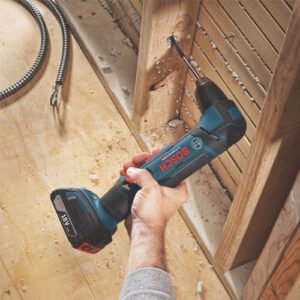
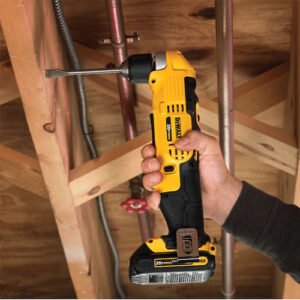
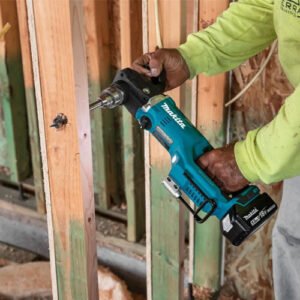
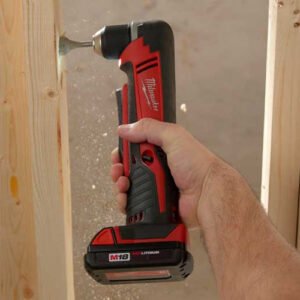


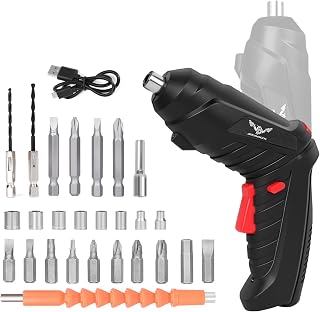


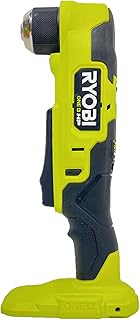


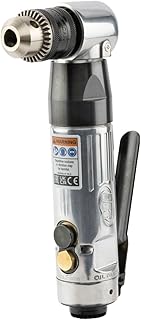
A cordless angle drill is designed for situations where a conventional drill is difficult to position. Its compact right-angle configuration places the chuck or bit holder at 90 degrees to the motor, making it particularly useful inside cabinets, between wall studs, beneath sinks, around plumbing, and in other confined areas. For Canadian buyers, the right choice depends on more than battery voltage or advertised torque. Chuck design, head length, battery ecosystem, ergonomics, speed control, and the availability of compatible accessories can have a major effect on everyday usability.
When comparing cordless angle drills, consider the work you actually expect to perform. A homeowner installing shelving may value compact dimensions and easy handling, while a renovator, electrician, plumber, cabinet installer, or construction professional may need stronger torque, longer runtime, a durable gearbox, and compatibility with an established cordless tool platform.
A standard cordless drill has its chuck aligned with the motor. An angle drill changes that geometry so the tool can reach spaces where a conventional drill body would collide with surrounding materials. This is the main reason angle drills remain useful even when a workshop already contains a standard drill or impact driver.
The most important advantage is access rather than maximum drilling power. A compact angle drill can make a difficult fastening or drilling task considerably easier when there is limited clearance.
Cabinet interiors can create awkward drilling angles, especially when installing hardware, drawer components, shelves, or fastening points close to a side panel. A compact right-angle drill can provide better access without requiring the operator to hold a conventional drill at an uncomfortable angle.
Plumbers and renovators frequently work around pipes, framing members, cabinets, and other obstacles. An angle drill can be useful for drilling through framing or preparing holes where access is restricted. The appropriate bit and drilling technique remain important because a right-angle tool does not eliminate the need to account for material resistance or hidden services.
Electricians and installers may encounter tight spaces behind cabinets, inside framing, or around existing installations. A compact cordless angle drill can be useful for drilling pilot holes, fastening hardware, and completing other controlled tasks where tool clearance is limited.
Some mechanical work involves fasteners or drilling locations that are difficult to reach with a conventional drill. However, buyers should distinguish between an angle drill and a right-angle impact tool. They are not interchangeable for every application, and the tool should be selected according to the required drilling or fastening operation.
Specifications are most useful when interpreted in relation to the job. A larger numerical rating does not automatically mean a better angle drill for every buyer.
Battery voltage is one of the most visible specifications on cordless tools, but it should not be used in isolation. Higher-voltage platforms can offer strong performance, while compact lower-voltage tools can be attractive when weight and manoeuvrability matter more.
Compare the complete system rather than focusing only on the voltage printed on the battery. Motor design, gearing, battery capacity, electronics, tool weight, and the intended application all influence practical performance.
Battery capacity is commonly expressed in ampere-hours, or Ah. In general terms, a larger-capacity battery can provide more stored energy, although actual runtime depends heavily on the workload.
The chuck determines which drill bits and accessories can be securely held. A keyless chuck is convenient for quick bit changes, while a hex interface may be especially convenient for compatible driver bits and accessories.
Before buying, check the exact chuck or bit-holder specification and compare it with the accessories you already own. An otherwise excellent drill can be inconvenient if it cannot accommodate the bits required for the intended projects.
Variable speed gives the operator greater control. Lower speeds are generally useful for controlled drilling, larger bits, and applications where excessive speed could damage the material or accessory. Higher speeds can be useful with appropriately sized bits and materials.
A good comparison should therefore consider the available speed range and control mechanism rather than simply choosing the drill with the highest maximum speed.
Torque describes the tool's ability to produce rotational force. It is relevant when drilling larger holes or driving demanding fasteners, but published torque figures should be interpreted carefully because manufacturers may use different testing conditions and specifications.
For general household work, maximum torque may be less important than smooth control and compactness. For professional applications involving repeated high-load work, torque capability becomes more significant.
Head length can be one of the most important measurements on an angle drill because the entire purpose of the design is to work in confined areas. Two tools with similar power specifications may perform very differently in a cabinet or narrow cavity if one has a substantially more compact head.
When comparing models, look beyond overall tool length and examine the dimensions around the chuck and right-angle gearbox.
Weight matters because angle drills are often used in awkward positions. A heavy tool can become tiring when drilling overhead or when the operator must hold the drill away from the body.
Remember to consider the weight of the complete working tool, including the battery. A bare-tool weight may look attractive but does not represent the weight you will actually hold during use.
Motor technology is another important comparison point.
Brushless motors use electronic commutation rather than conventional brushes. They are widely used in modern cordless power tools and can offer an efficient, durable design with electronic control.
Brushless models can be especially attractive for frequent users who expect their tool to see substantial use. However, a brushless motor alone does not guarantee that one model is superior to another. Gearbox construction, controls, ergonomics, battery system, and overall tool design still matter.
Brushed motors are an established technology and can be perfectly appropriate for occasional drilling and household projects. They may be available at lower entry prices, although buyers should compare the complete specification and intended use rather than selecting solely by motor type.
For many Canadian buyers, the most practical purchasing decision is to stay within a cordless platform already used at home or on the job. Major tool manufacturers such as DeWalt, Milwaukee, Makita, Bosch, RIDGID, Ryobi, and Metabo HPT offer cordless ecosystems containing multiple tools that share compatible battery families within their respective platforms.
Compatibility must always be checked for the exact product generation. Batteries are not universally interchangeable between brands, and even within a brand, different voltage families or battery systems may not be compatible.
A bare tool normally makes the most sense for someone who already owns compatible batteries and a charger. A complete kit can be more convenient for a new user because it may include the battery, charger, and other necessary components.
Do not compare the headline prices of a bare tool and kit without checking what is included. A cheaper-looking option can become more expensive once the required battery and charger are added.
Because an angle drill is designed for difficult access, ergonomics can matter as much as raw power. Look for a grip that feels secure and controls that can be reached without changing hand position unnecessarily.
Consider the tool's balance with the battery installed. A drill that feels well balanced on a workbench may feel different when held overhead or at arm's length.
An integrated work light can be particularly useful in the environments where angle drills are commonly used. Cabinets, wall cavities, framing spaces, and areas behind appliances may have limited illumination.
A work light is not a replacement for proper job-site lighting, but its position can make it easier to see the bit and drilling point. When comparing models, check whether the light illuminates the working area effectively rather than treating the presence of an LED as sufficient on its own.
Modern cordless tools may incorporate electronic systems that manage motor operation, battery protection, overload conditions, temperature, and other operating parameters. The exact functions differ between models.
Potentially useful features can include electronic braking, variable-speed control, overload protection, battery-status indicators, and systems designed to manage excessive temperature or current. Always verify which features are actually included on the specific model rather than assuming that a feature is standard across an entire product family.
The right-angle gearbox is a critical component because it transfers rotational power through the 90-degree configuration. Frequent professional use places greater demands on the gearing and housing than occasional household drilling.
When comparing tools for demanding applications, examine the manufacturer's specifications concerning gearbox construction, housing materials, serviceability, and intended duty. A metal gearbox housing can provide a different durability profile from a predominantly polymer housing, but construction quality should be considered as a whole.
Homeowners often benefit from prioritising compact dimensions, comfortable handling, variable speed, straightforward controls, and compatibility with a useful battery ecosystem. There is little value in paying for extreme performance if the tool will only be used occasionally for furniture assembly, shelving, light renovation, and household maintenance.
DIY renovators should look for a more versatile combination of power, access, runtime, and accessory compatibility. If projects involve repeated drilling through wood or other common construction materials, a robust mid-range cordless angle drill may be more practical than an ultra-compact model designed primarily for light-duty access.
Cabinet work places a premium on compactness and control. A shorter head, manageable weight, smooth speed control, and easy bit changes can be particularly valuable when working inside finished cabinetry.
Electricians may value a balance of access, drilling performance, runtime, and durability. Since installation environments can vary significantly, the ideal configuration depends on the hole sizes, materials, access limitations, and frequency of use.
Plumbing work can involve confined spaces and challenging angles. A compact angle drill can be useful for controlled drilling around existing installations, although users should carefully assess clearance and verify that the selected drill and accessory are suitable for the material being worked.
Professional users should give greater weight to durability, battery availability, charging options, ergonomics, service considerations, and compatibility with the cordless platform already used across the job site.
The drill itself is only one part of the drilling system. Bit selection has a major influence on drilling performance and safety.
A premium cordless angle drill paired with a damaged, dull, or unsuitable bit can produce poor results. A sharp and correctly selected bit generally makes it easier to maintain controlled progress and can reduce unnecessary strain on the tool.
Keep commonly used bits organised and inspect them regularly. Replace damaged accessories rather than attempting to compensate for poor cutting performance by applying excessive force.
Voltage is an important specification, but it does not tell the complete story. A compact tool with excellent ergonomics may be more useful in a restricted space than a heavier model with a larger battery system.
This is one of the biggest mistakes when shopping for a right-angle drill. If access is the reason for purchasing the tool, head dimensions should be near the top of the comparison list.
A bare tool may look inexpensive until the cost of a compatible battery and charger is considered. Compare complete ownership requirements.
More power is not automatically more useful. For delicate work, excessive force can make control harder. Match the tool to the materials, hole sizes, fasteners, and frequency of use.
An angle drill and an impact driver perform different roles. Impact mechanisms are designed around high-torque fastening applications, while an angle drill is primarily valuable because of its drilling geometry and access advantages.
Check whether the tool accepts the drill bits, driver bits, hole saws, and other accessories you intend to use. The chuck or bit interface can determine the practical versatility of the tool.
Always consider the complete operating configuration. A tool's balance and weight can become particularly noticeable during overhead or extended work.
A useful comparison should look beyond ratings and headline marketing claims. Create a shortlist and evaluate each candidate against the same criteria.
Customer ratings can provide useful information, but they should not replace specification checks. Look for recurring comments about the specific attributes that matter to your application.
For example, if the drill will be used in cabinets, pay more attention to comments discussing compactness, head access, balance, and bit changes than to generic statements about whether the tool is powerful.
Also consider the age and context of individual reviews. Battery technology, product revisions, packaging, and included accessories can change over time. Confirm the specifications of the exact product listing before making a purchase decision.
The lowest listed price is not necessarily the best deal. A more useful approach is to compare the complete package and the long-term value of the battery platform.
Canadian shoppers should verify that the exact model and configuration are intended for the Canadian market. Packaging, included accessories, model numbers, battery bundles, warranty arrangements, and retailer availability can differ between regions.
For purchases made online, carefully check the product description and seller information before ordering. Pay attention to the exact model number because visually similar tools can belong to different battery systems or regional configurations.
Routine care can help keep a cordless angle drill operating reliably. Always follow the manufacturer's maintenance instructions for the specific model.
Remove dust, wood chips, metal particles, and other debris after use. Pay particular attention to ventilation openings, the chuck or bit holder, and areas around moving components.
Check the chuck or bit holder periodically for contamination, abnormal movement, or visible damage. A bit should be secured correctly before operation.
Use the manufacturer's compatible charger and follow its battery storage and charging guidance. Avoid exposing battery packs to conditions outside the manufacturer's specified operating and storage limits.
Replace worn or damaged bits. A damaged accessory can create poor drilling results and place unnecessary demands on the tool.
Unexpected noise, excessive vibration, unusual heat, intermittent operation, or other changes in normal behaviour should not be ignored. Stop using the tool when appropriate and consult the manufacturer's instructions or an authorised service provider if inspection or repair is required.
Battery care is especially important because replacement battery packs can represent a significant part of cordless-tool ownership costs. Store batteries according to the manufacturer's instructions and avoid leaving them in environments that expose them to excessive heat, cold, moisture, or physical damage.
For users with several cordless tools, a consistent battery platform can simplify charging and storage. Keeping batteries organised by platform also reduces the chance of accidentally using an incompatible charger or tool.
Read and follow the instruction manual supplied with the specific tool. Wear appropriate personal protective equipment for the material and task, secure the workpiece where practical, and make sure the selected accessory is suitable for the intended operation.
A standard drill is generally the more versatile all-purpose option for open working areas. An angle drill becomes more compelling when physical access is the primary problem.
For many users, an angle drill is best viewed as a complementary tool rather than a complete replacement for a conventional cordless drill.
These tools can look similar but serve different purposes. A right-angle impact driver is generally designed around impact-assisted fastening, while a cordless angle drill is intended primarily for controlled drilling and related tasks.
If your work involves frequent drilling in confined spaces, an angle drill may be the more appropriate tool. If your main task is driving demanding fasteners in difficult-to-reach locations, a right-angle impact tool may be worth considering instead.
The answer depends on the balance between access and workload.
Choose compactness when: most jobs involve cabinets, furniture, electrical enclosures, tight framing spaces, or other areas where clearance is severely limited.
Choose greater power when: the drill will regularly handle larger holes, harder materials, extended workloads, or demanding professional applications within the manufacturer's specified operating range.
Choose a balanced model when: the tool will be used for a mixture of household, renovation, and professional-style projects and you want a single angle drill that covers a broad range of tasks.
Several established power-tool manufacturers offer cordless systems that may include angle drills or related right-angle tools. Buyers can compare offerings from brands such as DeWalt, Milwaukee, Makita, Bosch, RIDGID, Ryobi, and Metabo HPT.
The best brand for one buyer may not be the best for another. Existing battery ownership, local availability, tool selection within the ecosystem, specifications, ergonomics, and intended workload should all be considered.
Product listings can contain several configurations for what appears to be the same tool. Before completing a purchase, verify:
Instead of selecting a product immediately because it appears near the top of a search result, narrow the field in stages. First remove models that do not fit your battery platform. Next remove tools that cannot accommodate your required bits. Then compare head dimensions, weight, power, controls, and included equipment.
After the technical shortlist is established, examine current customer feedback and retailer information. This approach helps prevent a low price, high rating, or prominent marketing claim from becoming the sole reason for a purchase.
A useful buying guide should distinguish between specifications, user feedback, and suitability for a particular job. Specifications describe what the manufacturer states about a product; customer feedback can reveal practical concerns or advantages; and the final buying decision should take into account the buyer's own workload, budget, accessories, and battery ecosystem.
Product configurations and retailer information can change, so verify the latest specifications and package contents before purchasing. A recommendation that makes sense for a homeowner with an existing battery collection may not be the right choice for a professional starting a new cordless platform.
There is no single best model for every Canadian buyer. The right choice depends on access requirements, drilling materials, workload, battery platform, tool weight, chuck type, and budget. Compare the specifications of shortlisted models against the jobs you actually expect to perform.
They can be worthwhile when you regularly work in locations where a conventional drill is difficult to position. If you mostly drill in open areas, a standard cordless drill may offer greater general-purpose value.
A brushless motor can be advantageous for frequent users because of its motor design and electronic control, but motor type should not be the only buying criterion. Compare the complete tool, including gearbox, ergonomics, battery system, specifications, and intended workload.
Choose a battery capacity based on the required runtime and the weight you are comfortable carrying. Higher-capacity batteries can provide more stored energy, while compact packs may make a tool easier to handle in restricted or overhead positions.
Usually, it is better considered a specialised complement rather than a complete replacement. The right-angle configuration offers excellent access but is designed around a narrower set of ergonomic and positioning advantages.
Some angle drills can be used for appropriate metal-drilling applications when the tool and accessory are rated for the task. Use a suitable bit, follow the manufacturer's operating guidance, and select an appropriate speed for the material and bit.
Do not assume that every angle drill is appropriate for masonry. Check the manufacturer's specifications and determine whether the specific tool is designed for the required masonry operation. A dedicated hammer or rotary hammer may be more appropriate for demanding masonry work.
No. Torque is only one aspect of performance. In confined spaces, head dimensions, weight, balance, speed control, and battery compatibility may be more important than maximum torque.
The appropriate chuck or bit-holder size depends on the accessories you intend to use. Check the required bit diameters and interface before buying rather than assuming that a larger chuck is automatically better.
A bare tool can be a smart choice when you already own compatible batteries and a charger. If you are entering a new cordless platform, compare the total cost of the bare tool plus required battery and charger with the price of a complete kit.
Established brands in the cordless power-tool market include DeWalt, Milwaukee, Makita, Bosch, RIDGID, Ryobi, and Metabo HPT. Availability and exact product ranges vary, so verify the current Canadian lineup and the specifications of the exact model.
It can be extremely important. The primary reason for choosing an angle drill is usually access, so a shorter head can make a meaningful difference when working inside cabinets, between framing members, or around existing installations.
Many are designed for demanding applications, but suitability depends on the exact model and workload. Professional buyers should pay particular attention to durability, ergonomics, battery availability, duty requirements, service arrangements, and manufacturer specifications.
Before choosing from a list of cordless angle drill deals, use this checklist to make the comparison more objective:
The best cordless angle drill is the one that solves the access problem you actually have without introducing unnecessary weight, expense, or battery-platform complications. For confined drilling, compact head dimensions and comfortable handling can be more valuable than maximum power. For demanding professional work, durability, runtime, torque, battery availability, and platform compatibility deserve greater emphasis.
When comparing cordless angle drill deals in Canada in 2026, start with your application, then narrow the options using dimensions, battery system, chuck design, speed, torque, ergonomics, accessories, and total ownership cost. Finally, verify the current model specifications, package contents, retailer information, and customer feedback before making a purchase.