

♥ Wishlist
Compare 62 Coat Racks for Organised Entryways & Everyday Storage products in Canada. Reviews, ratings, pros, cons and buying advice updated for October 2026.
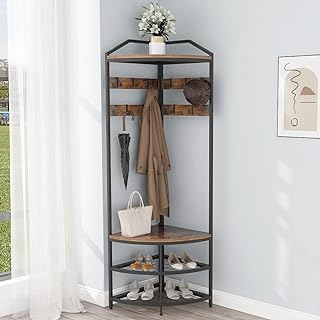


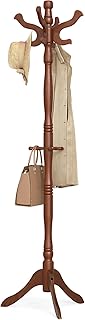


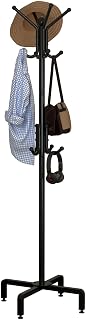


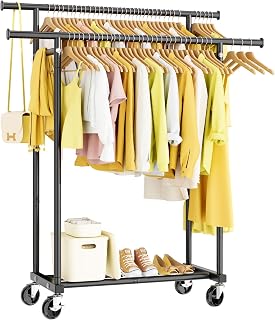





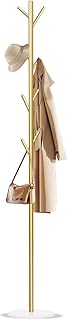


Choosing a coat rack is less about finding the largest number of hooks and more about matching the rack to the way a Canadian home, apartment, condo, office, entryway, or mudroom is actually used. A good coat rack should provide enough hanging capacity without consuming unnecessary floor or wall space, remain stable when several garments are loaded, and suit the room's layout and décor.
For Canadian shoppers, seasonal use is especially important. A rack that works well with lightweight spring jackets may behave very differently when loaded with heavy winter coats, insulated parkas, scarves, hats, backpacks, and other cold-weather accessories. Before comparing deals, consider the weight of the clothing you expect to hang, how many people will use the rack, and whether it will remain in one location throughout the year.
The most useful comparisons therefore look beyond appearance. Construction, dimensions, mounting method, weight capacity, base stability, hook configuration, material, finish, assembly requirements, and available storage all deserve attention before purchase.
Freestanding coat racks are among the most flexible options because they do not require permanent wall installation. They can be positioned near an entrance, moved during cleaning, or relocated when a room's layout changes. Many designs combine several upper hooks with a weighted or wide base.
The main consideration is stability. A tall rack with a narrow footprint may take up little floor space but can become inconvenient if heavy garments are concentrated on one side. A wider base generally provides a more reassuring setup, particularly in busy entryways.
Freestanding models are useful for renters, home offices, bedrooms, guest rooms, and households that want flexible storage without drilling into a wall.
Wall-mounted coat racks are often a better choice where floor space is limited. They can keep coats, bags, and accessories off the floor while leaving the area underneath available for shoes, baskets, or other storage.
Installation is an important part of the buying decision. The rack itself may be capable of carrying substantial weight, but its real-world performance depends on the wall material, mounting hardware, stud location, and installation method. A product should not be loaded beyond its stated capacity, and the manufacturer's installation instructions should be followed carefully.
Over-the-door racks can provide additional hanging capacity without occupying floor space. They are particularly useful for bedrooms, bathrooms, utility rooms, and smaller apartments where wall and floor space are already committed.
Check the dimensions of both the door and the rack before purchasing. Door thickness, clearance, trim, and the position of existing hardware can affect compatibility. It is also worth considering whether the added weight could make the door difficult to close smoothly.
Coat trees generally combine multiple hooks with a vertical structure, while hall trees may incorporate shelves, benches, cubbies, drawers, or shoe storage. These larger units can become a complete entryway organization system rather than simply a place to hang coats.
They are attractive for households that want one centralized location for outerwear and accessories, but their larger footprint makes measuring the available area particularly important.
Expandable designs can be useful when storage requirements change. Some models allow the number or position of hooks, shelves, or hanging sections to be adjusted. This flexibility can make them appealing for growing households or multipurpose rooms.
However, moving parts introduce additional points that should be inspected before purchase. Look for secure connections, clear adjustment mechanisms, and a configuration that remains stable after being expanded.
Measure the intended installation area rather than relying on photographs. Record the available width, height, and depth, then compare those measurements with the assembled dimensions listed for each product.
For a hallway or entrance, depth can be just as important as width. A rack that technically fits may still interfere with walking paths, doors, drawers, or nearby furniture. Tall models should also be assessed in relation to ceiling height and nearby lighting fixtures.
A higher hook count does not automatically mean better storage. Closely spaced hooks can become difficult to use once bulky winter coats are added. Look at the vertical and horizontal spacing between hanging points and consider the size of the garments you normally wear.
Different hook heights can be particularly useful in households where adults and children share the same rack. Lower hooks can also make frequently used bags and accessories easier to reach.
Weight capacity deserves more attention than it often receives in quick product comparisons. A rack may hold several lightweight jackets comfortably but be less suitable for a collection of heavy winter coats.
When a manufacturer provides separate limits for individual hooks, shelves, or the complete unit, consider each specification rather than assuming that the maximum total load applies equally to every component.
For freestanding racks, examine the relationship between height, base size, construction, and expected load. A stable base helps reduce unwanted movement when coats are added or removed.
Where possible, distribute garments across multiple hooks rather than concentrating everything on one side. This is especially relevant for tall coat trees with multiple projecting arms.
Common coat-rack materials include solid wood, engineered wood, steel, stainless steel, aluminium, and combinations of metal and composite materials. Each has different characteristics.
Material alone should not determine the decision. Joint construction, fasteners, thickness, base design, finish quality, and assembly method can all influence durability.
Hooks should be evaluated for practical usability rather than appearance alone. Rounded or smoothly finished contact points can be preferable for delicate garments, while sufficiently deep hooks can help prevent coats and bags from sliding off.
Also consider whether the hook design creates enough separation between garments. A rack that keeps clothing neatly separated is generally easier to use than one where sleeves, straps, and collars become tangled.
Entryways can expose furniture and hardware to moisture, particularly during Canada's wet and snowy seasons. Coats may carry melted snow or rain indoors, while boots can increase humidity around an entry area.
A suitable finish can make routine cleaning easier, but shoppers should still follow the manufacturer's care instructions. Avoid assuming that a decorative metal finish automatically makes a product suitable for prolonged exposure to moisture.
Canadian homes can have very different storage requirements depending on climate, household size, property type, and available entryway space. A compact apartment may prioritize vertical or wall-mounted storage, while a detached home may have room for a larger hall tree or dedicated mudroom organizer.
Prioritize a compact footprint and efficient use of vertical space. Wall-mounted racks, over-the-door solutions, and slim freestanding designs can all reduce the amount of floor area devoted to outerwear.
If the entrance is narrow, check the rack's projection from the wall and think about how far loaded garments extend. A rack that fits when empty may feel much larger once several coats are hanging from it.
Families typically benefit from multiple accessible hanging positions. A combination of adult-height and child-accessible hooks can help keep everyday jackets and school bags organized.
For larger households, a hall tree with additional shelves or cubbies may be more useful than a simple coat tree because it can accommodate hats, gloves, footwear, backpacks, and other entryway items.
Mudrooms usually require more than coat storage. Look for designs that can accommodate coats alongside bags, footwear, hats, umbrellas, and seasonal accessories.
In a mudroom, durability and cleanability should be given additional weight. Surfaces that are easy to wipe down may be more practical than delicate finishes or intricate structures that collect dirt.
A compact rack can provide a dedicated place for jackets and bags without turning the office chair, desk, or door into improvised storage. In a professional-looking workspace, a simple metal or wood design can also blend more easily with existing furniture.
Wooden racks can complement traditional, Scandinavian, farmhouse, minimalist, and contemporary interiors depending on the design. When comparing wooden products, inspect the stated material carefully because "wood" can refer to different construction types.
For larger hall trees, also examine how shelves, benches, panels, and hooks are joined. Structural connections matter because entryway furniture is often subjected to repeated loading and unloading.
Metal racks are commonly chosen for modern interiors and utility-focused spaces. They can offer a visually light profile while providing a rigid framework when properly designed.
Look at the type of metal, finish, tubing or bar construction, joint design, and base structure. A thin-looking frame is not necessarily weak, just as a substantial appearance does not automatically guarantee superior performance.
Combination designs can balance the visual warmth of wood with the clean lines of metal. These are especially suitable for contemporary entryways where the rack needs to function as both storage and furniture.
A discounted coat rack is only a good deal if its specifications match your requirements. Comparing the original and current price alone can lead to poor purchasing decisions when a cheaper product has inadequate capacity or unsuitable dimensions.
Brand familiarity can be a useful starting point, but it should not replace specification checking. Depending on the design and category, Canadian shoppers may encounter products from brands such as SONGMICS, Umbra, IKEA, Yamazaki Home, Honey-Can-Do, mDesign, Vasagle, and Simple Houseware.
The right choice can differ significantly between brands because each may focus on different product styles, materials, dimensions, and storage formats. A recognizable brand name is therefore best treated as one comparison factor rather than proof that a particular model is the best fit.
When comparing two brands, evaluate equivalent products against the same criteria: dimensions, construction, capacity, mounting method, finish, assembly, storage configuration, and current customer feedback.
Product photographs can make a rack look ideal, but images rarely communicate its true dimensions or stability. Always compare the listed measurements with the available space.
A lightweight jacket collection and a Canadian winter wardrobe place very different demands on a rack. If the rack will carry parkas, heavy coats, backpacks, and other equipment, choose based on the expected real-world load rather than the number of hooks alone.
More hooks can be useful, but only when garments have enough room to hang. An overloaded rack can become difficult to access and visually cluttered.
Over-the-door and wall-mounted racks require compatibility checks. Door thickness, trim, studs, wall construction, and surrounding clearance can all affect installation.
Some racks are simple to assemble, while larger hall trees can involve multiple panels, shelves, fasteners, and alignment steps. Check the assembly requirements before choosing a product if setup time is an important consideration.
Furniture dimensions can be difficult to judge until an item is positioned in the intended room. Reviewing the retailer's current return conditions before purchasing can reduce the risk of being stuck with an unsuitable size or configuration.
Customer reviews can provide useful information that specifications do not fully capture, but they should be interpreted carefully. Focus on repeated observations rather than isolated comments.
A review saying that a rack is "small" has limited value without context. A more useful review explains the measured dimensions, how many coats are being stored, and where the rack is being used.
Some features can add visual appeal without significantly improving everyday functionality. Decorative shapes, extra ornamental elements, or an unusually high hook count should not outweigh fundamental considerations such as stability and usable capacity.
Likewise, a built-in shelf is not automatically beneficial if it reduces hanging clearance or makes the rack too deep for the intended location. Every added feature should be evaluated according to whether it solves a real storage problem.
For one person with a limited number of everyday jackets, a compact wall-mounted or small freestanding rack may provide sufficient storage. Prioritize convenient placement and easy access over maximum capacity.
Two-person households can benefit from several well-spaced hooks and dedicated positions for bags or accessories. A narrow rack with efficient vertical organization can work well where entrance space is restricted.
Families generally need more capacity and better organization. Multiple hook levels, shelves, cubbies, or a bench can make a larger hall-tree configuration more practical.
If the rack will hold winter parkas, thick coats, backpacks, and accessories simultaneously, prioritize structural capacity and stability. A rack intended for occasional light use may not be appropriate for this application even if it has a visually similar design.
The better format depends on the room and installation preferences.
There is no universally best configuration. The most suitable choice is the one that provides sufficient capacity while fitting the physical constraints of the space.
The ideal location is usually the point where coats are naturally removed when entering the home. Placing the rack too far from the entrance can reduce its usefulness because occupants may continue leaving coats on chairs or other furniture.
For a wall-mounted rack, choose a structurally appropriate surface and verify the mounting requirements. For a freestanding model, keep sufficient clearance around the base and avoid locations where people are likely to walk directly into projecting hooks or garments.
In households with children, placing frequently used hooks at accessible heights can encourage independent organization. In offices or guest rooms, positioning the rack close to the entrance makes it easier for visitors to use without entering deeper into the room.
Regular maintenance can help preserve the appearance and functionality of a coat rack. The correct cleaning method depends on the material and finish, so manufacturer instructions should take priority.
When comparing deals in Canada, calculate value from useful storage rather than the headline discount. A rack that costs less but provides inadequate hanging space may ultimately require another organizer, making the initial saving less meaningful.
Compare products at similar price points by dividing the decision into practical categories: capacity, footprint, construction, versatility, appearance, and installation requirements. This approach helps distinguish a genuinely useful deal from a product that is inexpensive primarily because it has fewer features or lower capacity.
Also check the current listing carefully before purchase. Product configurations, colours, dimensions, bundles, and prices can change, and the product displayed in a comparison may have multiple variants.
Look for a slim wall-mounted, over-the-door, or vertically oriented freestanding design. The priority should be usable storage with minimal floor projection.
Prioritize construction, stability, secure hooks, and an appropriate weight capacity. Avoid selecting a rack simply because it has a large number of hanging points.
A larger hall tree or multi-level rack can be more practical because it provides designated storage for coats, bags, hats, footwear, and other everyday items.
Freestanding and over-the-door options can provide flexibility without requiring permanent wall modifications. Where wall mounting is considered, verify whether the installation is compatible with the property's requirements.
Simple silhouettes, restrained finishes, and a limited number of visible components can integrate more naturally with minimalist rooms. Function should still take priority over purely decorative styling.
Quality is best evaluated as a combination of materials, engineering, construction, finish, and usability. A rack can use premium-looking materials but still have poor stability if the base or joints are inadequately designed.
Likewise, an inexpensive-looking rack can provide excellent everyday utility when its dimensions, construction, and intended load are appropriate. This is why comparing specifications and customer feedback is more useful than relying on brand reputation or appearance alone.
A smart buy is not necessarily the cheapest coat rack or the one with the largest number of features. It is the product that meets the user's actual storage requirements without unnecessary cost, space consumption, or complexity.
For example, a compact apartment may get more value from a simple wall-mounted rack than from a large hall tree. Conversely, a busy family entrance may benefit from a larger organizer that combines hooks with shelves or seating. The right decision depends on the use case.
A wall-mounted, over-the-door, or compact vertical rack can be a practical choice when floor space is limited. The best option depends on the available wall or door space and the amount of outerwear that needs to be stored.
Pay particular attention to stability, construction, hook strength, spacing, and stated weight capacity. Heavy parkas and layered winter clothing can place substantially more demand on a rack than lightweight jackets.
Neither is universally better. Wall-mounted racks can save floor space and provide a fixed storage point, while freestanding racks offer easier relocation and generally avoid permanent installation.
The appropriate number depends on household size and clothing volume. More hooks are useful only when there is enough physical space to use them comfortably without overcrowding.
Metal can provide a strong structural framework, but durability depends on the specific material, thickness, joints, finish, base design, and overall construction. The product's stated specifications should be reviewed before purchase.
Wooden coat racks can be an excellent choice when their construction matches the intended load and environment. Compare the actual material, dimensions, hook attachment, base or mounting structure, and finish rather than choosing solely on appearance.
Shelves can add useful storage for hats, bags, baskets, or accessories, but they also increase the rack's footprint. Choose this configuration when the additional storage solves a genuine organizational need.
One of the most common mistakes is judging size from photographs. Always compare the listed dimensions with the actual space available and consider how far coats and bags will project once the rack is loaded.
Compare equivalent products using dimensions, capacity, materials, stability, storage features, installation requirements, customer feedback, and current pricing. A large percentage discount does not necessarily indicate better value.
No. Retail pricing, promotions, inventory, product variants, and availability can change. Check the current retailer listing before making a purchase decision.
The strongest coat rack purchase is one that fits the space, handles the expected load, remains convenient to use, and provides the right amount of organization for the household. For Canadian shoppers, winter clothing should be part of the calculation rather than an afterthought.
Before choosing from the top options, compare the complete specifications instead of relying on a product title, promotional discount, or photograph. Check dimensions, construction, weight capacity, hook arrangement, installation requirements, and recent customer feedback. Then compare the current prices of genuinely comparable models.
Whether the priority is a compact coat rack for a condo, a durable solution for heavy winter coats, a family-friendly entryway organizer, or a stylish hall tree with additional storage, the best value comes from matching the product's design and capabilities to the way it will actually be used.