

♥ Wishlist
Compare 56 Packing Organizers for Easier, More Organized Travel products in Canada. Reviews, ratings, pros, cons and buying advice updated for October 2026.


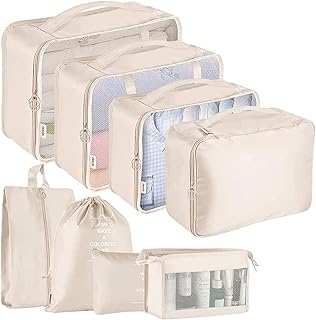


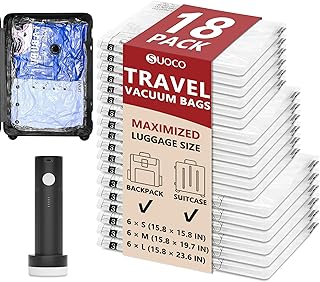


Choosing a packing organizer is less about buying the largest set and more about matching the organizer to your luggage, travel habits, clothing volume, and trip length. In Canada, travellers may use packing organizers for weekend breaks, domestic flights, international holidays, business travel, road trips, camping, or seasonal visits. Each situation can call for a different combination of packing cubes, toiletry bags, shoe bags, laundry pouches, and compression organizers.
A well-designed organizer can separate clothing from footwear, keep small accessories together, and make it easier to find items without unpacking an entire suitcase. However, organization alone should not be confused with compression. Some products divide luggage into compartments, while others actively reduce the volume occupied by soft clothing. Understanding that distinction is one of the most important steps when comparing packing organizers.
Packing cubes and related organizers create smaller sections inside a suitcase or travel bag. Instead of placing loose garments directly into the main compartment, travellers can group similar items together. One cube might contain shirts, another trousers, and another underwear or sleepwear.
This approach can make packing more predictable. It also makes unpacking easier because individual organizers can be transferred directly into hotel drawers or placed on a luggage rack. For travellers who frequently move between accommodations, this can be more convenient than repeatedly sorting loose clothing.
These two categories are often treated as interchangeable, but they serve different purposes. Standard packing cubes primarily provide organization. Compression packing cubes add a compression mechanism that can reduce the volume of soft items when the organizer is closed correctly.
A standard cube may be preferable when luggage space is already adequate and organization is the main priority. Compression models can be more useful for bulky clothing, winter garments, or travellers attempting to fit more into a limited suitcase.
Compression does not eliminate the weight of clothing. It changes how much space the clothing occupies. Travellers should therefore avoid assuming that a compression cube automatically makes an overweight suitcase acceptable for an airline's baggage allowance.
The fabric and construction of a packing organizer influence durability, weight, flexibility, and ease of cleaning. Common materials include polyester, nylon, ripstop fabrics, mesh panels, and combinations of these materials.
Nylon is commonly selected for travel organizers because it can provide a useful balance between strength and relatively low weight. Different nylon constructions can have very different characteristics, so the fabric name alone should not determine a purchase.
Polyester is another common choice. It can be practical for general travel organization and is available in many constructions and price ranges. When comparing polyester organizers, pay attention to stitching, zipper construction, panel thickness, and overall build rather than relying only on the material label.
Ripstop construction uses a reinforced weave intended to help limit the spread of small tears. It can be useful for travellers who regularly place organizers into crowded luggage compartments or use them on outdoor-oriented trips.
Mesh sections allow travellers to see some of the contents without opening the organizer. This can be particularly useful when several cubes have similar dimensions. However, mesh is not necessarily appropriate for every part of a travel organizer because exposed mesh can be more vulnerable to snagging than solid fabric.
Fabric quality is only one part of durability. Zippers, seams, handles, compression panels, stitching, and connection points can all affect how an organizer performs during repeated travel.
Brands such as Eagle Creek, Osprey, Thule, Samsonite, Travelpro, BAGSMART, and Amazon Basics offer travel organization products across different design approaches and price categories. Brand familiarity can be useful when comparing construction and product ranges, but the specific model's dimensions, materials, features, and customer feedback should still be checked before purchase.
More cubes are not automatically better. An oversized collection can consume useful luggage space through unnecessary packaging and can make packing more complicated.
A practical approach is to identify the categories that genuinely need separation. A traveller might need one organizer for tops, one for bottoms, one for underwear, and a separate bag for footwear. Another traveller may prefer fewer large cubes for maximum flexibility.
Small organizers can work well for accessories and underwear, while medium and large cubes are generally more useful for larger garments. Before choosing a set, compare the dimensions of every cube rather than judging the set by the advertised number of pieces alone.
Measure the internal packing area of your luggage before selecting organizers. External suitcase dimensions can be misleading because wheels, handles, shell construction, and internal components occupy space.
For a traditional rectangular suitcase, several similarly sized cubes can create a predictable arrangement. In luggage with tapered corners or an irregular interior, flexible organizers can be easier to position.
Carry-on luggage places a greater emphasis on efficient use of limited space. Compact packing cubes can help divide clothing while keeping frequently accessed items organized.
For short trips, a small or medium organizer can be more practical than a large compression cube. Travellers should also consider airline carry-on size restrictions separately from the dimensions of the organizers themselves. A suitcase that fits within an airline's allowance can become difficult to close if organizers are overfilled.
For business travel, a useful combination can include a clothing cube, a smaller underwear organizer, and a dedicated accessory or electronics pouch. The ideal configuration depends on the luggage layout and the traveler's packing routine.
Checked luggage generally provides more internal space, making larger organizers useful. Travellers taking longer trips may benefit from separating garments by category, especially when multiple outfits are packed.
For extended travel, consider organizers that can be handled independently. This makes it easier to remove one category without disturbing the rest of the suitcase. A separate laundry bag can also be useful for keeping worn clothing away from clean garments during the return journey.
Compression systems vary considerably. Some organizers use a second zipper around the perimeter, while others rely on straps or integrated panels. The mechanism should be easy enough to operate without excessive force.
Compression works best with soft, flexible contents. It is less useful for rigid objects because rigid items cannot be compressed in the same way as clothing.
Zippers receive repeated stress during travel. A cube that is difficult to close can become frustrating when packed near its maximum capacity. Smooth operation is particularly important for compression organizers because the zipper may need to travel around a heavily loaded compartment.
When evaluating a product, inspect customer feedback for recurring comments about zipper separation, catching, broken pulls, or difficulty closing. Individual reviews can vary, so repeated patterns are generally more informative than a single positive or negative comment.
External handles can make packing organizers more convenient when moving them between a suitcase, hotel room, closet, or laundry area. However, handles also add material and stitching to the design.
If you rarely remove cubes from your luggage, handle design may be less important. If you use organizers as portable storage throughout a trip, reinforced handles deserve more attention.
Packing organizers do not inherently reduce luggage weight. In fact, every organizer adds some weight to the suitcase. Their main purpose is to improve organization and, in the case of compression products, reduce the volume occupied by suitable soft items.
This distinction matters when comparing products for air travel. Travellers should consider both the empty weight of the organizers and the amount of luggage space they help manage.
Cold-weather travel can create a different packing challenge because sweaters, fleece layers, coats, and other insulated clothing can be bulky. Compression organizers may be particularly useful for smaller garments and soft layers, although a large winter coat may still require separate handling.
For winter trips, consider using different organizers for base layers, mid-layers, accessories, and everyday clothing. Hats, gloves, scarves, and similar small items can easily disappear inside a large suitcase, so a smaller accessory pouch can improve visibility.
Road trips provide more flexibility than air travel, but organization can still become important when several people share a vehicle. Individual cubes can be assigned to travellers or clothing categories.
Soft-sided organizers can also be convenient because they can fit into irregular spaces. For vehicle travel, a cube's ability to maintain organization during frequent stops may matter more than extreme compression.
Clothing cubes should not replace dedicated toiletry storage. Toiletries may contain liquids, creams, or other products that need to remain separated from clothing.
When choosing a toiletry organizer, consider compartments, visibility, closure type, cleaning convenience, and whether the interior can contain minor spills. A hanging design can be useful when bathroom counter space is limited.
Shoes can transfer dirt and moisture to clean garments, making separate storage worthwhile. A dedicated shoe bag creates a physical barrier between footwear and clothing.
A laundry bag serves a different purpose. It provides a separate location for worn clothing during the trip and can simplify repacking before the journey home.
Family travel often benefits from a system that makes ownership obvious. Different colours or labels can help distinguish one person's clothing from another's, although colour is not a substitute for checking the actual dimensions and construction.
For children, smaller cubes may be easier to manage than large organizers. For parents, a combination of clothing cubes and dedicated accessory pouches can make it easier to locate essentials quickly.
A set containing many pieces can look attractive, but the individual dimensions may be too small or poorly matched to your luggage. Evaluate usable capacity rather than the number printed on the packaging.
An organizer can be well made yet unsuitable for your suitcase. Always compare internal luggage measurements with the organizer's stated dimensions.
Compression reduces volume, not mass. Continue to observe airline baggage limits even when clothing takes up less space.
Low purchase cost can become poor value if zippers, stitching, or fabric fail after limited use. Check recent customer feedback and look for recurring construction complaints.
An excessive number of cubes can make luggage organization unnecessarily complicated. Choose enough organizers to separate meaningful categories without filling every available space.
Customer reviews can provide useful information that product specifications do not reveal. However, review quality varies. Focus on repeated observations about dimensions, zipper performance, fabric durability, compression effectiveness, and practical capacity.
Product specifications deserve careful attention because marketing terminology can make different organizers appear more similar than they really are. Compare dimensions, fabric, closure system, number of compartments, included pieces, empty weight where available, and care instructions.
If the product is described as waterproof or water-resistant, check the manufacturer's exact wording and intended use. These terms should not automatically be interpreted as complete protection against immersion or significant water exposure.
Recognized travel brands can provide useful starting points, but brand reputation should not replace model-level research. Eagle Creek and Osprey are associated with travel-oriented products, while Thule, Samsonite, and Travelpro offer broader luggage and travel accessories. BAGSMART and Amazon Basics also have products aimed at travel organization.
The right choice depends on the specific organizer rather than the brand name alone. Compare the actual dimensions, materials, closure design, storage configuration, customer feedback, and price before deciding.
A simple packing system is usually easier to maintain than an overly complicated one. Start by separating items according to how you use them rather than putting every type of object into its own container.
Rolling or folding clothing can both work with packing cubes. The best approach depends on the garment and the shape of the organizer. Soft items can often be arranged to use the available corners, while structured garments may benefit from careful folding.
Avoid filling an organizer so tightly that the zipper requires excessive force. Overloading can place unnecessary stress on the seams and closure system.
Travel organizers can collect dust, lint, and other debris over time. Maintenance requirements depend on the fabric and manufacturer's care instructions.
There is no single best packing organizer for every Canadian traveller. The ideal choice depends on luggage size, trip duration, clothing type, travel frequency, and whether compression is actually needed.
The most expensive set is not automatically the best value. Instead, compare the construction, included pieces, useful dimensions, closure quality, material, and customer feedback with your actual requirements.
A traveller who takes one holiday a year may have different priorities from someone who travels every month. Frequent travellers may place greater value on durability, while occasional travellers may prioritize straightforward organization and affordability.
When checking current Canadian pricing, compare the price of the complete set with the cost of buying only the organizers you genuinely need. Also consider whether the listed price represents a temporary promotion or the usual selling price.
They can be worthwhile for travellers who value organized luggage, easier unpacking, and separation between clothing categories. Their usefulness depends on how you normally pack and the type of luggage you use.
Not necessarily. Compression cubes are useful when reducing the volume of suitable soft clothing is important. Regular cubes can be simpler and lighter when organization is the main objective.
Yes. Packing cubes have their own empty weight. Their primary advantage is organization and, for compression designs, improved volume management rather than weight reduction.
Yes. Compact organizers can work particularly well in carry-on luggage because they divide limited space into manageable sections. Always consider the actual dimensions of your luggage and airline baggage requirements.
There is no universal number. Start with the categories you want to separate and select sizes that fit your suitcase. A smaller, well-matched set can be more useful than a large set containing pieces you rarely use.
Nylon and polyester are common choices, while ripstop constructions can offer additional resistance to tearing. The best option depends on the specific fabric construction, stitching, zipper quality, weight, and intended use.
It is generally more practical to keep shoes in dedicated shoe bags or another separate compartment. This helps prevent dirt and moisture from transferring to clean garments.
Cleaning methods depend on the materials and construction. Always follow the care instructions provided for the specific product rather than assuming that every organizer is machine washable.
No. Price alone does not establish quality. Compare construction, dimensions, materials, zipper design, functionality, customer feedback, and expected frequency of use.
Compare the product specifications, dimensions, current Canadian price, seller information, customer feedback, delivery terms, return conditions, and any applicable product details shown by the retailer. Product information and availability can change, so verify these details immediately before purchasing.
The smartest way to choose packing organizers in 2026 is to start with the luggage you already own and the way you actually travel. Measure the available space, identify which categories need separation, and decide whether compression provides a meaningful advantage. Then compare materials, zippers, stitching, dimensions, included pieces, and customer feedback.
For Canadian shoppers, it is also sensible to verify current pricing and availability at the time of purchase because online deals can change. Do not select a product solely because it has the largest number of pieces, the most aggressive compression claim, or the lowest advertised price.
A good packing system should make travel easier without adding unnecessary complexity. The right combination of clothing cubes, compression organizers, toiletry storage, shoe bags, and laundry pouches can help create a cleaner and more manageable suitcase while allowing you to choose products according to your budget and travel requirements.