

♥ Wishlist
Compare 35 On Ear Headphones for Everyday Listening products in Canada. Reviews, ratings, pros, cons and buying advice updated for October 2026.

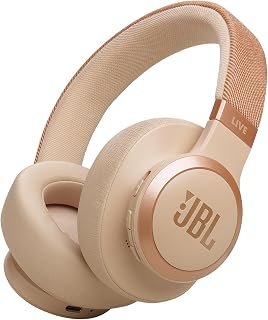


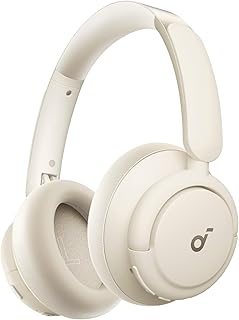


Finding a smart buy in the Canadian headphone market is not simply about choosing the model with the highest rating or the longest advertised battery life. On-ear headphones vary considerably in fit, sound profile, noise control, wireless features, microphone performance, portability and long-term practicality. The right choice depends on how and where you expect to use them.
For Canadian shoppers, it is also worth comparing the exact model number, included accessories, connectivity options and current retailer pricing before purchasing. Product names can remain similar across generations, while specifications and features can change. A sensible buying decision therefore starts with the features that matter most to your everyday listening habits.
A smart buy balances performance, comfort, features and cost rather than maximizing one specification. An inexpensive pair can be excellent for commuting and casual listening if it has a comfortable fit, dependable Bluetooth and sufficient battery life. A more expensive model may make sense when you need advanced noise cancellation, better microphones, wired audio or premium materials.
Bluetooth is now the standard wireless connection for most portable headphones. However, the presence of Bluetooth alone does not tell you everything about the listening experience. Look at the supported Bluetooth version, audio codecs, multipoint capability and whether the manufacturer provides firmware updates through a companion application.
Multipoint can be particularly useful for people who move between a smartphone and laptop. The Sony WH-CH520, for example, supports connections with two Bluetooth devices at the same time.
Active noise cancellation, commonly called ANC, uses microphones and electronic processing to reduce certain external sounds. It can be useful for commuting, office environments and air travel. It should not, however, be treated as a guarantee of complete silence.
On-ear headphones can have different noise-control performance from over-ear models because their ear cushions sit directly on the ears rather than surrounding them completely. A strong seal and appropriate fit can therefore influence the practical result.
The JBL Tune 670NC is an example of an on-ear model with adaptive noise cancellation and Smart Ambient functionality. JBL specifies up to 70 hours of music playback with ANC disabled and up to 44 hours with ANC enabled.
Battery claims should always be interpreted as maximum figures rather than guaranteed everyday results. Listening volume, ANC, Bluetooth use and other functions can affect runtime.
For example, Sony lists up to 40 hours of continuous communication time for the WH-CH520, while Marshall lists more than 100 hours of wireless playtime for the Major V. These figures illustrate why battery specifications should be compared within the same usage category rather than treated as directly interchangeable measurements.
A wired option remains valuable even in a predominantly wireless market. It can provide an alternative when the battery is depleted and can be useful with compatible computers, audio equipment or other devices.
The Beats Solo 4 includes both USB-C audio and a 3.5 mm analog connection, while the Marshall Major V includes a 3.5 mm input/output.
For shoppers who mainly want wireless music, podcasts and calls without paying for a long list of premium features, a lightweight model such as the Sony WH-CH520 is worth comparing. Sony lists a weight of approximately 147 grams, USB-C charging, Bluetooth 5.2, AAC and SBC support, and multipoint connectivity.
This type of headphone can make sense for students, casual listeners and people who want a compact everyday pair. The absence of active noise cancellation should nevertheless be considered if you frequently travel in noisy environments.
If commuting or working in noisy surroundings is a priority, compare on-ear headphones with active noise cancellation rather than focusing only on sound output. The JBL Tune 670NC combines adaptive ANC, Smart Ambient, multipoint connectivity, a foldable design and app-based sound customization.
Keep in mind that ANC can reduce battery runtime. JBL's specifications demonstrate this difference directly, listing up to 70 hours with ANC off and up to 44 hours with ANC on.
Battery-focused buyers should pay attention to both maximum runtime and charging speed. Marshall Major V stands out on paper with more than 100 hours of wireless playtime and a quick-charge specification of 15 minutes for up to 15 hours of playback. It also supports wireless charging.
The trade-off is that Major V does not include active noise cancellation. Marshall identifies it as an on-ear model with a 40 mm dynamic driver, Bluetooth 5.3, a 3.5 mm connection and a weight of 186 grams.
People who want a headphone that works comfortably in both wireless and wired situations should check whether the product supports audio through a physical cable and whether that connection can operate without battery power.
Beats Solo 4 provides Bluetooth 5.3, USB-C audio, a 3.5 mm analog connection and up to 50 hours of listening time. Beats also states that the 3.5 mm connection can be used without battery power.
Specifications such as driver size and frequency response can help with comparison, but they do not independently determine whether one headphone will sound better than another. Tuning, enclosure design, digital processing, fit and individual hearing all influence perceived sound.
Larger drivers are not automatically better. The Sony WH-CH520 uses 30 mm drivers, JBL Tune 670NC uses 32 mm drivers, while Marshall Major V and Beats Solo 4 use 40 mm drivers.
Instead of choosing based solely on driver diameter, consider the manufacturer's sound tuning and whether the headphone provides an equalizer or other sound customization options.
A stated frequency range indicates the frequencies the manufacturer specifies for the product, but a wider published range does not automatically mean better sound. Two headphones can list similar frequency ranges while producing noticeably different tonal balances.
JBL specifies a 20 Hz to 20 kHz dynamic frequency response range for the Tune 670NC, while Marshall specifies 20 Hz to 20,000 Hz for Major V.
An equalizer can be more useful than a headline specification because it lets listeners adjust the sound to personal preference. App support may also provide firmware updates, control customization and additional listening modes.
On-ear headphones place their cushions directly against the outer ear. Over-ear headphones use larger cups designed to surround the ears. Neither design is universally better.
When comparing these designs, think about where you will use the headphones rather than assuming one form factor is automatically superior.
A technically impressive headphone is a poor purchase if it becomes uncomfortable after a short period. On-ear designs deserve particular attention because the cushions rest directly on the ears.
A headband should hold the headphones securely without creating excessive pressure. People with different head sizes can experience the same model differently, so customer feedback about comfort can be useful when available from reliable retailers.
Soft cushioning can improve comfort, but material, thickness and heat retention also matter. If you regularly wear headphones for several hours, prioritize the overall fit rather than focusing only on specifications such as driver size.
Weight is another useful comparison point. Sony lists the WH-CH520 at approximately 147 grams, JBL lists the Tune 670NC at 174 grams and Marshall lists Major V at 186 grams. Beats lists Solo 4 at 217 grams.
Weight alone does not determine comfort, but it can help establish an initial comparison between models.
If your headphones will be used for work, school or video calls, microphone performance deserves its own evaluation. Music quality and voice quality are separate considerations.
Look for multiple microphones, voice-focused processing, sidetone or voice-awareness functions and compatibility with the calling applications you use. JBL Tune 670NC includes VoiceAware, while Beats Solo 4 uses multiple digital beam-forming microphones and voice-targeting processing for calls.
For frequent professional calls, it is sensible to check independent microphone tests and recent customer feedback rather than relying exclusively on manufacturer descriptions.
Marshall Major V supports wireless charging and specifies 15 hours of additional playback after a 15-minute quick charge. JBL Tune 670NC supports speed charging, while Beats Solo 4 offers up to 50 hours of listening and up to 5 hours after a 10-minute Fast Fuel charge.
Multipoint allows compatible headphones to maintain connections with multiple devices. This can be particularly convenient when switching between a smartphone and computer.
For example, Sony describes the WH-CH520 as capable of pairing with two Bluetooth devices simultaneously. JBL also lists multipoint connection for the Tune 670NC, while Marshall lists Bluetooth multipoint connectivity for Major V.
Before buying, confirm exactly how multipoint behaves with your intended devices. Some implementations may have limitations depending on operating system, application or codec usage.
Foldability can be more important than it initially appears. A headphone that folds flat or into a compact shape is easier to carry in a backpack, laptop case or travel bag.
JBL Tune 670NC and Marshall Major V both feature foldable designs.
When shopping for travel use, also check whether a protective case or pouch is included, whether a wired cable is supplied and how exposed the hinges feel during repeated folding.
Durability is influenced by hinges, headband construction, ear-cup joints, buttons, cables and the materials used throughout the frame. A foldable headphone introduces additional moving components, so the hinge design deserves attention if the product will be opened and closed frequently.
Do not confuse a rugged appearance with water resistance. Marshall specifically states that Major V is not IP rated and should not be taken swimming.
If you plan to use headphones outdoors during Canadian winters, protect them from moisture and extreme conditions unless the manufacturer explicitly provides an appropriate operating specification.
A high customer rating does not necessarily mean a product is right for your needs. Review what customers are actually praising or criticizing. Comfort, microphone quality, battery life and fit may matter more to you than another buyer.
Extremely long battery life can be useful, but not if the headphone lacks features you actually need. A model with ANC, multipoint and a more compact design may be more useful than a model offering substantially longer runtime without those functions.
On-ear headphones place pressure directly around the ears. A headphone can sound excellent and still be uncomfortable for a particular listener.
Do not automatically pay extra for spatial audio, advanced applications, wireless charging or other features if your listening habits do not require them. Identify your priorities before comparing prices.
Wireless headphones can be convenient, but a wired fallback can be valuable when travelling, using certain computers or dealing with an empty battery.
Battery figures may be measured with different settings. ANC can reduce playback time, while volume and other features can also influence real-world results. Always read the detailed specification rather than comparing headline numbers alone.
The lowest displayed price is not always the best overall value. When comparing Canadian deals, check whether you are looking at the same model, colour, generation and included accessories.
Prices and promotions can change frequently in Canada, so a deal that looks attractive on one day may not represent the same value later. Treat the specifications and your requirements as the foundation of the buying decision.
Several established audio brands offer on-ear models worth investigating in 2026. Sony is relevant for lightweight everyday Bluetooth headphones such as the WH-CH520. JBL offers models such as the Tune 670NC that combine ANC, app customization and multipoint functionality. Beats focuses on products such as Solo 4 with Apple and Android compatibility, spatial audio and wired and wireless listening. Marshall offers the Major V for buyers who prioritize long battery life, distinctive design and wired/wireless flexibility.
Other established manufacturers can also be worth comparing depending on your budget and feature requirements. The important point is to evaluate the individual model rather than assuming every headphone from a particular brand has the same sound, fit or feature set.
Prioritize comfort, battery life, multipoint connectivity and portability. A lightweight headphone can be convenient when moving between classes, study spaces and home.
Microphone quality and multipoint connectivity can be more important than maximum bass response. Switching efficiently between a work computer and smartphone can save considerable daily effort.
ANC, secure fit and battery life should receive greater attention. If you travel by public transportation regularly, noise control may justify choosing a more feature-rich model.
Look for foldability, low weight, long battery life, fast charging and wired compatibility. A compact carrying solution is also valuable.
Sound tuning, driver performance, codec support, wired audio and EQ customization should receive more attention. Do not select a headphone solely because it has the largest driver.
If you regularly switch between Android, iOS, Windows or other platforms, verify the specific compatibility features before purchasing. Beats Solo 4, for example, is designed to work with both iOS and Android.
Specifications should be interpreted together. A single number rarely provides enough information to identify the best headphone.
Manufacturer specifications are essential for objective comparison, but customer feedback can reveal practical issues that are difficult to understand from a specification sheet. When reading reviews, look for repeated comments rather than isolated praise or criticism.
Useful review topics include long-session comfort, Bluetooth stability, microphone performance, battery consistency, hinge durability, app reliability and fit. Give greater weight to detailed reviews that explain how the product was used.
Also pay attention to review dates. Older reviews may refer to an earlier software version, previous pricing or an older production revision. Current information is particularly important when evaluating products that have been on the market for several years.
Instead of comparing ten headphones equally, narrow the field using a simple priority system.
This approach prevents a common shopping mistake: selecting a headphone because it has one impressive feature while overlooking several characteristics that matter more in daily use.
Canadian shoppers should verify that the exact product configuration is intended for the Canadian market when purchasing through online retailers. Product names, accessories, warranty arrangements and pricing can differ between regions.
It is also sensible to check the retailer's Canadian return policy before placing an order. Headphone fit is highly personal, and the ability to return an unsuitable product can be important when you have not previously worn that model.
During major Canadian shopping periods, compare the actual model and specifications rather than relying on a large percentage-discount message. A smaller discount on a model that better matches your needs can represent better value than a larger discount on an unsuitable product.
There is no single best model for every Canadian buyer. The right choice depends on budget, comfort, ANC requirements, battery expectations, sound preference and device compatibility. Sony WH-CH520, JBL Tune 670NC, Beats Solo 4 and Marshall Major V illustrate how different on-ear models can prioritize different features.
They can be, especially when the model has effective noise control, a secure fit and sufficient battery life. For particularly noisy environments, compare ANC-equipped models and consider how the on-ear fit affects isolation.
Neither is universally better. Wireless headphones offer convenience and mobility, while wired connections can provide a dependable fallback and avoid battery dependency. Some modern models offer both options.
There is no universal lifespan. Longevity depends on construction, frequency of use, storage, battery aging, exposure to moisture and how the headphones are handled. Models with replaceable or serviceable components may have different long-term considerations from fully sealed designs.
ANC is most valuable when you regularly encounter steady external noise. If you mainly listen in quiet rooms, it may not be worth making it a primary buying criterion.
No. Driver diameter is only one part of headphone design. Tuning, acoustic design, processing, fit and the quality of the overall implementation also affect perceived sound.
Prioritize the characteristic that affects your daily use most. Someone who travels frequently may value battery life and fast charging, while a dedicated music listener may prefer sound tuning and wired connectivity.
No. Higher-priced models may provide additional features, premium construction or more advanced connectivity, but the best value comes from matching the product to your requirements.
There is no universal replacement interval. Inspect the cushions for cracking, flattening, peeling or loss of shape. If replacement cushions are available for your model, they can sometimes extend the useful life of the headphones.
The smartest headphone purchase is not necessarily the cheapest model or the one with the longest specification sheet. It is the model that provides the right combination of comfort, sound, battery life, connectivity and features for your actual routine.
For lightweight everyday listening, the Sony WH-CH520 is worth comparing. For shoppers who specifically want adaptive ANC and multipoint, the JBL Tune 670NC offers a feature-focused alternative. Beats Solo 4 is an option for buyers interested in spatial audio, wired and wireless listening and broad iOS and Android compatibility. Marshall Major V is particularly notable for its very long advertised wireless runtime, wireless charging and wired connectivity, while omitting ANC.
Before buying, compare the exact specifications, current Canadian price, recent customer feedback, return terms and warranty information. That final comparison is more valuable than choosing based on a headline discount or a single specification.