

♥ Wishlist
Compare 47 Metabo Plunge Saw for Precise Woodworking Cuts products in Canada. Reviews, ratings, pros, cons and buying advice updated for October 2026.













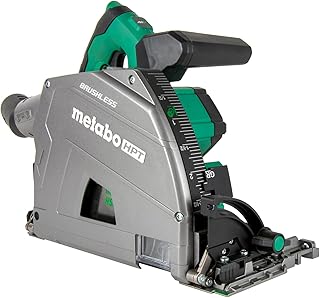
Choosing a Metabo plunge saw is less about finding the most powerful specification and more about matching the saw to the type of work, cutting depth, mobility requirements, guide-rail setup, material and dust-control expectations. For Canadian buyers, it is also important to distinguish between corded and cordless models, check the exact model number, confirm what is included in the package and compare the total cost of the saw with the accessories needed to use it effectively.
Metabo's current plunge-saw range includes both corded and 18V cordless designs. The KT 66 BL is a corded brushless plunge saw rated at 1,200 W, while the KT 18 LTX 66 BL is an 18V cordless model with a 66 mm maximum cutting depth at 90 degrees. These models illustrate why specifications should be evaluated as a complete system rather than by motor power alone.
Maximum cutting depth is one of the first specifications to check. A saw with a greater nominal cutting depth gives you more flexibility when working with thick boards, countertops, panels and laminated materials. However, the published maximum should not be interpreted as the usable depth for every cutting situation.
For example, the Metabo KT 66 BL is specified for a maximum cutting depth of 66 mm at 90 degrees and 43 mm at 45 degrees. When used with a guide rail, its maximum stated cutting depth is 61 mm. The cordless KT 18 LTX 66 BL provides the same 66 mm headline depth at 90 degrees and 43 mm at 45 degrees, with a stated 61 mm maximum when used with a guide rail.
Before purchasing, compare the required material thickness with the cutting depth available at the angle and setup you actually intend to use.
Blade compatibility is another essential consideration. The KT 66 BL and KT 18 LTX 66 BL use 165 mm blades with a 20 mm bore. Buying replacement blades based only on diameter is a common mistake because the bore, cutting width, tooth configuration and intended material must also be compatible.
A suitable blade can have a major effect on the finished cut. A fine-tooth blade is generally more appropriate when surface quality is important, while a blade designed for faster material removal may be preferable for rougher work. Always verify the blade specifications recommended for the exact saw.
Variable speed can make a plunge saw more versatile. Different materials and blade designs can require different operating speeds, so an adjustable speed range gives the user greater control than a single fixed speed.
The KT 66 BL has a no-load speed range of 2,250 to 5,000 rpm. The KT 18 LTX 66 BL has the same stated no-load speed range. Speed should still be selected according to the blade and material rather than simply using the highest available setting.
A corded plunge saw can be a strong choice for a workshop where continuous operation and access to mains power are more important than maximum mobility. The KT 66 BL has a 1,200 W rated input power and a 4 m cable, making it suited to users who prefer a mains-powered cutting system.
The main advantage is straightforward workflow. There is no battery charging cycle, and long cutting sessions do not require carrying spare battery packs. For a fixed workshop, renovation area or dedicated woodworking space, that can be more convenient.
The KT 18 LTX 66 BL is designed around an 18V battery platform. Its cordless format removes the power cable from the cutting area, which can be useful when moving around a jobsite or working where mains power is inconvenient.
The exact package matters, however. Some configurations can be supplied with batteries and a charger, while other versions are sold without them. A lower advertised price can therefore be misleading if you do not already own compatible batteries and charging equipment.
The KT 18 LTX 66 BL is part of the CAS battery system, allowing compatibility with 18V battery packs and chargers from participating CAS brands. Buyers should verify the precise package and battery requirements before comparing prices.
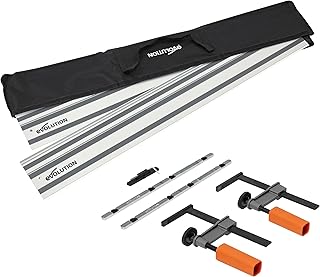
A plunge saw becomes considerably more useful when paired with a suitable guide rail. The rail helps establish a straight cutting path and is particularly valuable for breaking down sheet goods, trimming large panels and producing repeatable straight cuts.
Metabo states that its plunge saws can be adjusted for a close, backlash-free fit on guide rails from Metabo and other manufacturers. This gives buyers more flexibility, but compatibility should still be checked before purchasing a rail from another brand.
The correct rail length depends on the workpiece. A short rail may be easier to transport and store, while a longer rail can be more convenient for cutting large sheets without repositioning the guide.
Dust management should be part of the buying decision rather than an afterthought. Plunge sawing can generate substantial airborne particles, particularly when cutting engineered wood, MDF, laminated boards and composite sheet materials.
The KT 66 BL includes a dust collection bag and a rotatable dust-ejection nozzle. Metabo also specifies that the saw can be connected to a vacuum cleaner. The cordless KT 18 LTX 66 BL likewise includes a dust bag in listed configurations and supports dust-extraction accessories.
A compatible extraction setup can improve visibility around the cut, reduce accumulated debris and make workshop cleanup easier. For frequent indoor woodworking, check the vacuum connection and extraction accessories before selecting the saw.
Brushless motors are increasingly common in professional cordless and higher-performance power tools. In the Metabo plunge-saw models discussed here, brushless motor technology is used to support the cutting system.
For buyers, the important point is not to assume that the word "brushless" automatically makes one saw better than every alternative. Compare the complete specification set, including cutting capacity, speed range, weight, power source, rail compatibility, battery ecosystem and included accessories.
For solid wood, select a blade designed for the desired balance between speed and cut quality. A higher tooth count can be useful when a cleaner finish is required, while a coarser configuration can be appropriate when rapid material removal is the priority.
Plywood and laminated sheet materials often demand greater attention to tooth configuration because surface chipping can affect the finished edge. A blade specifically intended for clean panel cuts may produce a more suitable result than a general-purpose coarse blade.
MDF and similar engineered boards can generate significant fine dust and can be demanding on cutting edges. Use a blade that is explicitly appropriate for the material and follow the manufacturer's recommendations for speed and operating technique.
Metabo's blade range includes options designed for wood processing and lists compatibility with models such as the KT 18 LTX 66 BL. Specialty blades are also available for certain composite and fibre-cement materials, demonstrating why material-specific blade selection matters.
Tooth count should be viewed as a cutting-behaviour decision rather than a simple quality ranking.
Never select a blade solely because it has the highest number of teeth. Confirm that its diameter, bore, cutting width and intended application are suitable for the specific Metabo saw.
The principal advantage of a plunge saw is controlled entry into the material. Instead of beginning every cut from the edge, the blade can be lowered into the workpiece at a defined location. This makes the design particularly useful for panel work, openings and controlled interior cuts where a conventional circular saw may be less convenient.
The Metabo KT 66 BL includes a double guide for setting cutting depth with or without a guide rail. It also has an undercut function and adjustable 0-degree and 45-degree positions intended to support accurate cutting.
For precision work, mechanical adjustment is only one part of the result. The workpiece must be properly supported, the guide rail must remain stable and the blade must be appropriate for the material.
Safety should be evaluated before price or promotional offers. A plunge saw combines a high-speed rotating blade with a mechanism that allows the blade to enter the workpiece, so controlled operation and proper setup are essential.
The Metabo KT 66 BL includes a fast brake intended to stop the saw blade quickly after operation. The cordless KT 18 LTX 66 BL also lists a fast-braking system among its features.
Convenient blade-changing systems can reduce setup time, but the saw should always be disconnected from its power source before servicing or changing the blade according to the manufacturer's safety instructions.
A high-quality saw cannot compensate for an unstable workpiece. Support sheet material properly so that the cut does not close onto the blade or cause unwanted movement during operation.
Weight becomes increasingly important during long cutting sessions or when working away from a bench. A heavier machine can sometimes feel substantial and stable, but excessive weight may become tiring when positioning the saw repeatedly.
The corded KT 66 BL is specified at 4.9 kg without the power cable. The cordless KT 18 LTX 66 BL is listed at 4.3 kg without the battery and 5.3 kg with its specified battery configuration. These figures show why cordless comparisons should distinguish between bare-tool weight and ready-to-use weight.
When comparing products, consider the complete working configuration rather than the number printed beside the bare tool.
A plunge saw and a conventional circular saw can both make straight cuts, but their designs serve different workflows.
If most of your work involves breaking down plywood, cabinetry panels, countertops or large sheet materials, the plunge-saw format can be particularly useful. If you mainly cut dimensional lumber for construction, a conventional circular saw may be sufficient.
Metabo should be compared with established brands such as Festool, Makita, Bosch Professional and DEWALT rather than judged independently. The best option depends on the complete tool ecosystem already available to you.
Festool is well known for integrated woodworking systems and guide-rail solutions. When comparing a Metabo plunge saw with Festool, focus on the complete rail, extraction, blade and accessory ecosystem rather than comparing motor figures alone.
Makita offers extensive cordless power-tool platforms. If you already own compatible Makita batteries, a Makita plunge saw can be convenient. If your existing batteries and chargers are compatible with the Metabo CAS ecosystem, the calculation may favour Metabo instead.
Bosch Professional offers a broad range of woodworking and construction tools. Compare guide-rail compatibility, battery platform, cutting depth, blade size, weight and included accessories to identify the more practical system.
DEWALT is another major consideration for buyers building a cordless jobsite system. Battery ownership can have a substantial effect on the real cost of changing platforms, so compare the complete tool ecosystem rather than the saw's advertised price alone.
The lowest initial price does not necessarily represent the lowest overall cost. A bare cordless tool may require batteries, a charger, guide rail and extraction accessories before it becomes suitable for the intended job.
A plunge saw is often purchased specifically for guided cutting. If the rail is not included, add its cost to the comparison. Also consider the rail length required for your most common workpieces.
A premium saw fitted with an unsuitable blade can deliver disappointing results. Confirm the blade diameter, bore, tooth pattern and material compatibility before buying replacements.
For cordless models, the working weight includes the battery. Compare the complete setup when evaluating comfort and portability.
Motor power matters, but it is only one part of cutting performance. Blade quality, tooth configuration, material, feed rate, guide-rail stability and dust extraction all influence the final result.
When evaluating a deal, use the exact model number rather than relying on a product title alone. Sellers may list similar-looking configurations with different accessories, batteries or regional packaging.
A genuinely attractive deal should provide the right combination of tool capability and useful accessories. A discount on a bare tool may not be better value than a slightly more expensive package containing the required battery system, charger, storage case or guide rail.
For a workshop user, a corded package may provide the most straightforward ownership experience. For a mobile professional already invested in compatible 18V batteries, a cordless package can eliminate the need to maintain a separate power system.
Always compare like-for-like configurations. A model number, included accessories and battery configuration can matter more than the advertised discount percentage.
Resin, adhesive residue and accumulated dust can affect cutting performance. Inspect the blade regularly and clean it using a method appropriate for the blade manufacturer's recommendations.
Check the guide-rail interface for excessive debris, damage or adjustment issues. A clean, correctly adjusted connection helps maintain predictable movement along the rail.
Inspect the dust outlet, extraction connection and collection system regularly. Restricted extraction can reduce dust-management performance and allow debris to accumulate around the saw.
For corded models, inspect the power cable and plug for visible damage. For cordless models, inspect battery packs and contacts and follow the battery manufacturer's storage and charging guidance.
Do not continue using a blade that is damaged, excessively worn or unsuitable for the material. A sharp, correctly specified blade generally provides a more controlled cutting process.
A Metabo plunge saw can make sense for woodworkers, cabinet makers, renovators, contractors and serious DIY users who frequently need accurate straight cuts in sheet goods or other suitable materials.
It is particularly attractive when guide-rail accuracy, controlled plunge cuts and repeatable panel cutting are more important than having the simplest possible circular saw.
For occasional rough construction cuts, however, the additional plunge mechanism and guide-rail system may not be necessary. In that situation, a conventional circular saw could provide the functionality required at a lower overall system cost.
These two models provide a useful comparison because both are designed around a 66 mm maximum cutting depth at 90 degrees and use 165 mm by 20 mm blades.
The cordless model can be particularly attractive for users already equipped for the CAS 18V platform. The corded model may be preferable where the saw will spend most of its time in a workshop with convenient mains access.
There is no single best model for every Canadian buyer. The right choice depends on power source, cutting depth, portability, battery ownership, guide-rail requirements and budget. The KT 66 BL is a corded 1,200 W option, while the KT 18 LTX 66 BL provides an 18V cordless configuration.
A suitable Metabo plunge saw can be used for plywood when fitted with an appropriate blade and operated correctly. For clean plywood edges, blade selection, guide-rail stability and cutting technique are particularly important.
Yes. Metabo specifies guide-rail compatibility for its plunge saws, including compatibility with Metabo rails and, depending on the model and setup, rails from other manufacturers. Always confirm compatibility before purchasing a third-party rail.
Yes. Metabo describes the KT 66 BL as a plunge saw with a brushless motor.
The stated maximum cutting depth is 66 mm at 90 degrees, 43 mm at 45 degrees and 61 mm with a guide rail.
The stated maximum cutting depth is 66 mm at 90 degrees, 43 mm at 45 degrees and 61 mm with a guide rail.
Neither is automatically better. Cordless models offer greater freedom from power cables, while corded models can be convenient for long workshop sessions where mains power is readily available. Battery ownership and the intended working environment should guide the decision.
You do not necessarily need one for every cut, but a guide rail can be highly valuable for long, straight and repeatable cuts. If precision sheet cutting is the main reason for buying a plunge saw, include the guide rail in your overall budget.
Check the exact model number, cutting capacity, blade specification, power source, included accessories, battery and charger status, guide-rail compatibility, weight and current retailer terms. Also verify that the listing corresponds to the exact configuration you intend to purchase.
The smartest way to choose a Metabo plunge saw in Canada is to evaluate the entire cutting system rather than focusing on a single specification or advertised deal. Cutting depth tells you what the saw can handle, but blade selection determines how it interacts with the material. Guide rails influence accuracy, dust extraction affects workshop cleanliness, and the power source determines how easily the tool fits into your existing workflow.
The Metabo KT 66 BL is a strong option to consider when a corded brushless plunge saw with 1,200 W input power and 66 mm cutting capacity matches your workshop needs. The KT 18 LTX 66 BL is worth considering when cordless operation and the 18V CAS ecosystem are more important.
Before purchasing, compare the exact model and package, check current Canadian retailer pricing, read verified customer feedback for the same configuration and calculate the cost of the accessories you actually need. A well-matched saw, blade, guide rail and extraction setup is usually a more useful investment than simply choosing the model with the largest headline specification.