

♥ Wishlist
Compare 57 Metabo Cordless Vacuums products in Canada. Reviews, ratings, pros, cons and buying advice updated for October 2026.









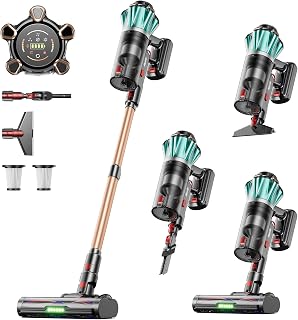


Choosing a Metabo cordless vacuum is less about selecting the model with the biggest headline specification and more about matching suction performance, battery requirements, dust classification, capacity, portability and accessories to the work you actually do. For Canadian buyers, the right choice can vary significantly between occasional workshop cleanup, mobile jobsite dust extraction, renovation work and demanding professional applications.
Metabo's cordless vacuum range is built around its 18V battery platform, while larger systems can use two 18V battery packs to deliver higher performance. The AS 18 L PC, for example, is specified at 2,100 l/min maximum air output, 120 hPa vacuum and a 7.5-litre container. The more compact AS 18 L PC Compact is listed with the same maximum airflow and vacuum but uses a smaller 6-litre container and weighs less without its battery.
Before comparing deals, check whether the listing includes the battery and charger. Many Metabo cordless vacuum configurations are supplied as bare tools, meaning the purchase can make more sense for someone who already owns compatible batteries than for a new user who needs a complete cordless setup.
A good buying decision starts with the intended application. A compact vacuum can be ideal for light cleanup and mobile work, but a larger professional unit may be more appropriate when the vacuum must collect substantial quantities of dust or operate with demanding power tools.
Airflow is commonly expressed in litres per minute or cubic feet per minute. It indicates how much air the vacuum can move under specified conditions. Higher airflow can be useful when removing loose dust, chips and debris, but it should not be considered in isolation.
A Metabo AS 18 L PC is rated at a maximum air output of 2,100 l/min, equivalent to approximately 74 CFM. Its published vacuum rating is 120 hPa.
Vacuum pressure describes the suction pressure the machine can generate. It becomes particularly relevant when extracting dust through a hose, filter and power-tool connection. A vacuum with strong airflow but inadequate pressure may not perform as expected when the extraction path becomes restrictive.
Container volume affects how frequently you need to empty the vacuum. The AS 18 L PC has a 7.5-litre container, while the AS 18 L PC Compact has a 6-litre container.
A smaller container reduces overall size and can make transportation easier. A larger container is more convenient when collecting substantial quantities of dust and debris between emptying intervals.
Filter surface area matters because the filter is one of the main restrictions in the airflow path. The AS 18 L PC has a published filter surface of 3,600 cm².
When comparing models, do not look only at the filter's physical size. Also consider the filtration class, cleaning system, replacement-filter availability and the type of material being collected.
One of the useful features to look for in Metabo cordless extraction equipment is PressClean. It provides manual filter cleaning by using a strong airflow while the extraction unit is activated through its switch during a break in operation. The purpose is to help maintain suction as dust accumulates on the filter.
This feature is especially relevant when collecting fine dust. A clogged or heavily loaded filter can restrict airflow, so a practical filter-cleaning mechanism can be more useful in everyday work than a specification that looks impressive on paper.
When comparing deals, consider how easy it is to access the filter, how frequently it may need cleaning, whether replacement filters are readily identifiable by model number and whether the filtration system matches the intended material.
Some Metabo cordless vacuum configurations are designed for wet and dry applications. The AS 18 L PC Compact is described by Metabo as suitable for both wet and dry cleaning.
However, buyers should never assume that every cordless vacuum in a product listing has identical wet-cleaning capabilities. Always verify the exact model number and supplied equipment before purchase.
Wet pickup also requires different handling from dry dust extraction. Filters, bags, containers and fill-level systems can have specific operating requirements. Following the manufacturer's instructions is important when switching between applications.
Battery compatibility can make a significant difference to the real cost of a cordless vacuum. Metabo's 18V cordless vacuum equipment is associated with the CAS multi-brand battery system. Metabo states that compatible 18V CAS batteries and chargers can be used across participating brands within the system.
For an existing Metabo or compatible CAS user, a bare-tool vacuum may therefore be more attractive than a complete kit. A first-time cordless-tool buyer, however, should calculate the cost of the vacuum, battery and charger together.
Battery capacity is normally expressed in ampere-hours, such as 4.0 Ah, 5.5 Ah or 10.0 Ah. A larger capacity can provide more stored energy, but runtime depends on operating mode, suction demand, battery condition, material being collected and the specific vacuum.
Do not treat an advertised battery capacity as a guaranteed number of operating hours. Instead, compare the battery system, available capacities and whether the vacuum offers power-saving modes.
The AS 18 L PC includes Eco mode for longer runtime per battery charge and Boost mode when maximum power is required.
This type of operating flexibility can be valuable because maximum suction is not necessary for every cleaning task. Eco mode may be suitable for lighter debris, while a higher-power setting can be selected when extraction demands increase.
Compactness is an important advantage when a vacuum must be carried around a workshop, moved between rooms or transported to different locations.
The AS 18 L PC Compact is listed with a 6-litre container and a weight of 3.8 kg without the battery. Metabo also lists a 4.8 kg weight with battery for this configuration.
The larger AS 18 L PC has a 7.5-litre container and weighs 6.9 kg without the battery and 7.5 kg with a battery according to Metabo's published specifications.
This illustrates an important buying principle: a larger model is not automatically better. If your work involves frequent carrying, stairs, ladders or short cleanup jobs, lower weight can be more valuable than additional capacity.
Heavy-duty users may need more than a compact 18V vacuum can provide. Metabo also offers larger cordless extraction equipment based on two 18V batteries. The AS 36-18 H 30 PC-CC, for example, is specified at 3,300 l/min airflow, 140 hPa vacuum and a 30-litre container. It is an H-class cordless vacuum and includes CordlessControl functionality.
The larger format can be more appropriate for demanding professional dust-management applications, especially when a substantial container and higher extraction performance are priorities.
However, a larger vacuum also means more weight and a bigger physical footprint. The AS 36-18 H 30 PC-CC is listed at 10.3 kg without battery packs.
Dust classification should be treated as a safety and application decision rather than a marketing specification.
L-class equipment is intended for lower-risk dust applications within the limits of its certification and operating instructions. Metabo lists the AS 18 L PC as certified according to the relevant European standard for dust class L.
M-class equipment is intended for more demanding dust-control applications. Metabo's larger cordless range includes M-class configurations designed for professional dust extraction.
H-class equipment is intended for particularly demanding hazardous-dust applications. The Metabo AS 36-18 H 30 PC-CC is identified as an H-class cordless vacuum and is specified with a special H-class filter bag in its delivery scope.
Do not select a dust class based solely on price or suction performance. The correct classification depends on the material and work environment. For potentially hazardous dust, follow applicable Canadian workplace requirements and the manufacturer's instructions.
A cordless vacuum becomes substantially more useful when its hose and accessories work well with drills, sanders, saws, grinders and other dust-producing tools.
Before buying, check the connector diameter and adapter requirements. The AS 18 L PC uses a 32 mm suction hose and a 3.5-metre hose length.
Connection compatibility can determine whether the vacuum can be attached directly to a tool or requires an adapter. A seemingly inexpensive vacuum can become less attractive if additional accessories are necessary for your primary tools.
Higher-end Metabo cordless extraction systems can include CordlessControl. On the AS 36-18 H 30 PC-CC, the system enables the vacuum to start and stop automatically when a connected cordless tool is switched on or off.
This feature can improve workflow because the user does not need to operate the vacuum separately each time the connected tool is used.
Some Metabo cordless vacuums include an integrated blow function. The AS 18 L PC is specified with a blow function for tasks such as blowing out, drying and directing exhaust air.
A blower function can be useful for clearing accessible debris from equipment and work areas, but it should not replace proper dust extraction when fine or hazardous particles are involved. Blowing dust into the surrounding air can make an otherwise controlled workspace dirtier.
A long hose gives greater freedom of movement, but it can also add storage requirements and may affect handling. A shorter hose can be easier to manage in a compact workspace.
Diameter also matters. Narrower connections may be useful for specific power tools, while larger hose diameters can be advantageous for moving greater quantities of debris. The best configuration depends on the tool, material and adapter system.
When comparing products, look for the actual hose diameter and length rather than relying on phrases such as professional suction hose or extended hose.
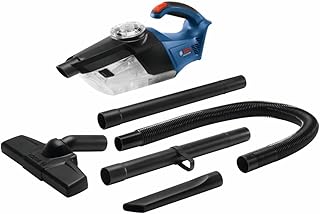
The accessories included with a vacuum can have a meaningful effect on usability. Metabo's AS 18 L PC delivery configuration includes a stretchy suction hose, fleece filter bag, suction nozzle, crevice nozzle and carrying strap, although equipment can vary by configuration.
Regular maintenance helps preserve performance and reduces avoidable operating problems. The exact maintenance procedure depends on the model, but several principles apply across cordless extraction equipment.
Use the vacuum's intended filter-cleaning procedure instead of improvising. Models equipped with PressClean are designed to allow manual filter cleaning during breaks.
Inspect the hose for cracks, punctures, blockages and loose connections. A damaged or obstructed hose can reduce extraction effectiveness.
Do not allow collected material to accumulate beyond the recommended fill level. Follow the manufacturer's instructions for wet and dry material because the correct procedure can differ.
Air leaks around connectors, lids or hoses can reduce suction efficiency. Check the complete extraction path whenever performance appears weaker than normal.
Remove and store batteries according to the battery manufacturer's recommendations. Avoid exposing battery packs to unsuitable temperatures, moisture or physical damage.
Airflow and vacuum pressure are useful comparison figures, but they do not tell the whole story. Filtration, hose design, filter condition, dust classification, battery performance and accessories also affect real-world suitability.
A bare vacuum can appear inexpensive until the cost of a compatible battery and charger is added. Always compare complete system cost.
A 30-litre professional vacuum can be excellent for demanding work but unnecessary for short cleanup jobs. If the vacuum must be carried frequently, weight should be treated as a primary specification.
Verify the exact model's intended application. Do not assume that one Metabo vacuum's capabilities apply to every cordless model.
For fine, hazardous or regulated dust, choosing a vacuum solely because it has strong suction is inappropriate. Dust class and filtration requirements should come first.
Check the hose diameter, tool connection and required adapters before purchasing. This is particularly important when the vacuum is intended for automated or semi-automated extraction.
A compact model such as the AS 18 L PC Compact is worth considering when portability is the priority. Its published specifications include a 6-litre container, 2,100 l/min maximum airflow and 120 hPa vacuum.
The AS 18 L PC provides a larger 7.5-litre container while retaining the 18V platform. Its published specification includes a 3.5-metre hose, 3,600 cm² filter surface and 2,100 l/min maximum airflow.
Users with demanding dust-management requirements may need a larger two-battery platform. The AS 36-18 H 30 PC-CC offers a 30-litre container, 3,300 l/min airflow and 140 hPa vacuum, but its larger size and weight make it a very different proposition from a compact 18V vacuum.
The lowest listed price is not necessarily the best deal. Compare the complete package and the specifications that matter to your application.
A smart purchase is one that solves the user's actual cleaning and extraction requirements without paying for capabilities that will never be used. For example, a compact 18V vacuum can be a logical choice for mobile cleanup when portability is more important than container size. A larger professional system makes more sense when the workload requires greater capacity, higher extraction performance or a particular dust class.
Battery compatibility can also improve the value proposition for people already invested in a compatible cordless-tool ecosystem. Conversely, buyers starting from zero should compare the cost of the complete battery, charger and vacuum system.
Metabo should be compared with established professional brands rather than evaluated only against generic consumer vacuums. Depending on the application, buyers may also encounter Bosch Professional, Festool, Makita, Milwaukee, DeWalt and Kärcher products.
The important comparison is not simply brand recognition. Look at the battery platform, dust class, filtration system, airflow, vacuum pressure, container size, hose compatibility, automatic tool activation, accessory ecosystem, replacement filters and overall portability.
Compare battery compatibility first. A buyer already invested in one battery ecosystem may gain more practical value by selecting equipment that works with the batteries already owned.
Makita offers a broad cordless-tool ecosystem, so users already invested in Makita batteries may prioritize ecosystem compatibility. Metabo's CAS compatibility can similarly be valuable for users within that platform.
Milwaukee is another major professional cordless-tool brand. Compare the complete system rather than comparing vacuum body prices alone, particularly when battery and charger costs are significant.
Festool is strongly associated with professional dust extraction and tool integration. Buyers should compare dust-control requirements, automatic activation, filtration, hose connections and the intended tool ecosystem.
Canadian buyers should verify that the exact product configuration is intended for the Canadian market and that the listed electrical, battery, charger and warranty information applies to the Canadian version. Marketplace listings can sometimes combine descriptions or images from different regions.
When buying online, inspect the complete product description rather than relying only on the title. Confirm the model number, included accessories, battery status and seller information before placing an order.
Canadian users should also consider the working environment. A vacuum intended for a heated workshop may have different practical requirements from equipment transported between outdoor jobsites during cold weather. Follow the battery and vacuum manufacturer's temperature and storage guidance.
Customer reviews are useful, but they should be interpreted alongside technical specifications. A reviewer may praise portability because they use the vacuum for small cleanup jobs, while another buyer may consider the same capacity inadequate for continuous workshop extraction.
Look for recurring observations about:
Give more weight to repeated patterns across reviews than to isolated comments. Also confirm that reviews relate to the exact model rather than a similar-looking vacuum.
Not necessarily. Several Metabo vacuum configurations are sold without a battery and charger. The AS 18 L PC listed by Metabo, for example, is supplied without a battery pack and charger in the referenced configuration.
Yes. The AS 18 L PC is an 18V cordless vacuum. Its published maximum airflow is 2,100 l/min, with 120 hPa vacuum and a 7.5-litre container.
Both are compact 18V Metabo cordless vacuum options with published maximum airflow of 2,100 l/min and vacuum of 120 hPa. The AS 18 L PC has a 7.5-litre container, while the AS 18 L PC Compact has a 6-litre container and a lower published bare-tool weight.
It depends on the exact model and its dust classification. The AS 18 L PC is identified by Metabo as an L-class vacuum. For higher-risk dust applications, choose equipment with the appropriate certified classification rather than relying on general suction performance.
Some models are designed for professional dust extraction and demanding applications. The appropriate choice depends on dust classification, capacity, extraction requirements, battery configuration and the connected tools.
Neither is universally better. Cordless models provide mobility and eliminate the need for a mains cable, while corded models can be preferable for extended operation where continuous mains power is available. Compare runtime, power requirements, portability and workload.
Before selecting one of the best Metabo cordless vacuum deals available to Canadian shoppers, work through this checklist:
The best Metabo cordless vacuum for a Canadian buyer in 2026 depends on the balance between mobility, extraction performance, container capacity, dust control and battery compatibility.
The AS 18 L PC Compact is particularly relevant when a lightweight, portable format is the priority. The AS 18 L PC provides additional container capacity while remaining within the 18V platform. For more demanding professional dust-management requirements, Metabo's larger two-battery systems provide substantially greater capacity and extraction performance, but they also require users to accept greater size and weight.
Rather than choosing a vacuum solely because it appears in a “top 10” list or has a strong headline specification, compare the exact model, battery configuration, dust class, accessories and current Canadian price. That approach makes it easier to identify a genuinely suitable Metabo cordless vacuum deal instead of simply choosing the most expensive or most powerful option.