

♥ Wishlist
Compare 49 First Aid Supplies for Emergency Preparedness in Canada products in Canada. Reviews, ratings, pros, cons and buying advice updated for October 2026.
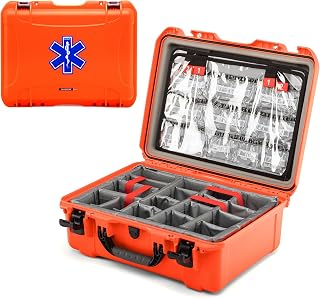




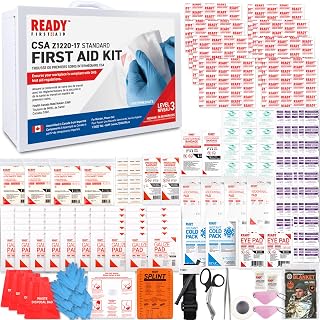



Finding a genuinely smart first aid deal is about more than choosing the lowest price. A useful first aid kit or individual first aid product should match the situations in which it may be needed, contain appropriate supplies, remain easy to access, and be packaged in a practical format for Canadian homes, vehicles, workplaces, travel and outdoor activities.
When comparing first aid deals in Canada, look beyond the headline discount and examine the contents, quantities, packaging, expiry information, storage requirements and suitability for the intended user. A larger kit is not automatically better, and a highly compact kit may not provide enough supplies for a household or vehicle.
This buying guide focuses on the factors that can help shoppers compare first aid products more intelligently in 2026. Product specifications, package contents and retailer information should always be checked before purchasing because they can vary between listings and over time.
A smart buy combines useful contents, appropriate quantities, sensible organisation and dependable packaging with a price that makes sense for the intended purpose. The best choice for a single person travelling by car can be very different from the best choice for a family, workplace, camper, hiker or household.
Before comparing products, identify the primary use case. This immediately narrows down the features that matter most and helps prevent paying for supplies that are unlikely to be useful.
The contents are one of the most important comparison points. Two kits can look similar externally while offering very different quantities and types of supplies. Always read the complete product specification rather than judging a kit by its case size or number of pieces alone.
Adhesive bandages are among the most commonly used first aid supplies. When comparing kits, check whether they include different sizes and shapes rather than only one standard format. Variety can make a kit more versatile for minor cuts, scrapes and everyday skin injuries.
Sterile gauze pads and other dressings can serve different purposes from small adhesive bandages. Check the dimensions, quantity and packaging. Individually packaged sterile supplies can also make organisation and storage easier.
Tape can be useful for securing dressings when an adhesive bandage is unsuitable. Consider the tape type, width and quantity rather than simply checking whether tape is included.
Some kits include products intended for cleaning minor wounds or maintaining basic hygiene. Review the exact formulation and directions provided by the manufacturer. Do not assume that every cleaning wipe or solution is interchangeable with another.
Disposable gloves can be an important hygiene component of a first aid kit. Check the material, size and number of pairs. People with specific material sensitivities should pay particular attention to the product description.
Basic tools can increase the versatility of a kit. Scissors may help with cutting tape or dressings, while tweezers can be useful for certain minor first aid tasks. Inspect the specifications and construction rather than assuming that every included tool offers the same quality.
Some larger first aid kits include items such as emergency blankets, CPR barriers, cold packs or other emergency accessories. These additions can increase versatility, but they should be assessed according to your actual needs rather than used as a reason to choose a larger kit automatically.
Rather than treating every first aid kit as interchangeable, compare products according to their intended application. The following ten categories cover common buying situations in Canada and provide a practical framework for evaluating competing products.
Compact kits are designed around portability and convenient storage. They can be suitable for individuals who want basic supplies in a backpack, desk drawer, luggage compartment or small storage space.
The main trade-off is capacity. A compact case may be convenient to carry but may contain fewer supplies or fewer size options. Check the item list carefully before selecting one as your only first aid kit.
A household kit generally benefits from a broader selection of everyday supplies. Organisation is particularly important because a kit may be accessed by different members of the household.
Look for clearly separated compartments, labelled sections or transparent internal storage where appropriate. A practical layout can reduce the time spent searching for a specific item.
A vehicle first aid kit should be compact enough to store securely while remaining accessible. The case should suit the storage conditions of the vehicle, and the contents should be reviewed periodically.
Do not assume that a first aid kit replaces a complete roadside emergency setup. A vehicle emergency plan may require additional equipment depending on the journey, season and driving conditions.
Outdoor kits place greater emphasis on portability, weight and durability. A kit intended for hiking should be comfortable to carry and organised so commonly needed supplies can be located quickly.
Consider the activity, group size, trip duration and distance from medical assistance when determining how comprehensive the kit should be.
Camping introduces different storage and environmental considerations. A durable, easy-to-clean case can be preferable when equipment is exposed to dust, moisture or outdoor conditions.
Compare the kit's contents with the length and type of camping trip. A short campsite visit and an extended remote trip may justify very different levels of preparation.
Workplace first aid requirements can depend on the nature of the workplace, number of workers and applicable Canadian requirements. Buyers should therefore check the relevant provincial or territorial rules rather than relying solely on a generic online checklist.
For a workplace purchase, consider accessibility, visibility, mounting or storage options, inventory management and the number of people the kit is expected to serve.
Families may benefit from kits that offer multiple dressing sizes and useful quantities of frequently used supplies. A clearly organised case can be especially valuable when several people need to identify supplies quickly.
When children are present, storage location is also important. First aid supplies should be accessible to responsible adults while medicines and other potentially hazardous products should be stored according to their labels and safety instructions.
Travel kits focus on portability and efficient use of space. Compare the packed dimensions, weight and organisation rather than choosing purely on the number of included pieces.
International travellers should also consider destination-specific requirements and restrictions. Products that are acceptable or readily available in one country may be subject to different rules elsewhere.
Emergency preparedness kits are intended to support basic first aid when normal access to supplies may be disrupted. Storage capacity and inventory breadth can therefore be more important than ultra-compact design.
A first aid kit should be considered one component of a wider emergency preparedness plan. Water, food, lighting, communication equipment and other emergency necessities may need to be planned separately.
Multi-purpose kits attempt to balance portability and breadth of contents. They can be attractive to buyers who want one kit for several environments, but compromises are possible.
Before buying a multi-purpose kit, identify which use case matters most. If the product does many things reasonably well but does not adequately cover your primary need, a more specialised kit may offer better value.
The case is more than packaging. A well-designed case can help protect contents, simplify inventory checks and make supplies easier to find.
Hard cases can provide structured storage and help protect internal contents from being compressed. They may also be easier to organise when the kit contains multiple tools and packaged supplies.
Soft cases can reduce weight and may fit more easily into backpacks, luggage and vehicle compartments. Their flexibility can be an advantage when storage space is limited.
Transparent pockets or clearly separated compartments can make inventory checks easier. They can also help users identify missing supplies without unpacking the entire kit.
Look for logical organisation rather than simply counting compartments. A case with numerous pockets is not necessarily easier to use if the contents are poorly labelled or difficult to access.
For a product that may be stored for long periods and transported regularly, construction quality matters. Inspect the case material, seams, zipper or closure system, handles and internal dividers when product information makes these details available.
For outdoor or vehicle use, consider whether the manufacturer's description identifies the case as water-resistant or otherwise designed for demanding environments. Avoid interpreting marketing terms as a guarantee of complete waterproofing or protection unless the manufacturer provides specific details.
A common buying mistake is assuming that the kit with the largest number of pieces is automatically the best deal. Piece counts can include numerous small items, and quantities alone do not indicate whether the contents are appropriate for your situation.
Instead, compare:
Price is useful, but it should be considered alongside contents and usability. A low-cost kit may appear attractive until you discover that it contains limited quantities of important supplies or requires substantial additions.
A practical comparison method is to create a short checklist of the supplies you actually need. Then compare each product against that checklist instead of comparing package size alone.
A kit advertised with a high item count can still have limited practical coverage. Always inspect the individual contents and quantities.
A small travel kit may be excellent for luggage but unsuitable as the primary first aid kit for a large household. Match the product to the environment instead of buying based on appearance.
Storage space can be surprisingly important. Check the external dimensions before purchasing if the kit needs to fit inside a glove compartment, backpack, drawer or emergency storage container.
Some first aid supplies have expiry dates or recommended replacement periods. A kit can lose practical value if its contents are stored for years without inspection.
A kit should be treated as an inventory rather than a one-time purchase. After supplies are used, replace them so the kit remains ready for its intended purpose.
No generic first aid kit should be treated as a universal solution for every injury or emergency. Serious injuries and medical emergencies require appropriate professional assistance.
Buying a good kit is only the first step. Proper storage and periodic inspection help keep supplies usable when they are needed.
Household members should know where the kit is stored. Avoid placing it somewhere that is difficult to reach during an emergency.
Follow the storage instructions supplied with individual products. Excessive heat, moisture, freezing conditions or prolonged exposure to unsuitable environments can affect certain supplies.
Inspect the contents at regular intervals. Look for missing items, damaged packaging, expired products and supplies that have become unsuitable for use.
Do not wait until the next emergency to discover that a commonly needed item has been used. Replace depleted supplies promptly.
Brand familiarity can be useful when comparing first aid supplies, but brand recognition should not replace checking the exact product specification. Established names such as 3M, Johnson & Johnson, First Aid Only, Curad, Nexcare, Dynarex and Medline offer different types of healthcare and first aid products across various product categories.
Availability, product ranges and packaging can differ between Canadian retailers and individual listings. Always verify the exact model, package contents and manufacturer information for the product being considered.
Canadian households can have very different first aid requirements depending on family size, location, activities and access to nearby services. A household kit should therefore be selected around the people and activities it needs to support.
For homes where outdoor recreation is common, a second compact kit can be useful for keeping with outdoor equipment rather than repeatedly moving the main household kit. Likewise, keeping a dedicated vehicle kit can prevent the household kit from being unavailable when someone takes it on a trip.
Vehicle storage creates unique challenges because temperatures inside parked vehicles can vary substantially. Check manufacturer storage instructions for temperature-sensitive contents and periodically inspect the kit.
Choose a case that can remain securely stored without obstructing vehicle controls or safety equipment. The kit should be accessible without creating an additional hazard.
Outdoor first aid planning should account for the activity rather than relying solely on a generic product label. A short day hike, family camping trip, cycling excursion and remote backcountry trip can have very different requirements.
Weight, weather exposure, storage space, group size and distance from medical assistance should all influence the selection. For remote activities, preparation should be based on the specific risks and circumstances of the trip.
Online listings can make comparison easier, but buyers should distinguish between useful specifications and promotional wording. Before purchasing, look for a complete contents list and detailed product information.
Customer reviews can provide useful information about packaging, organisation, durability and whether the delivered contents match the listing. However, reviews should be interpreted carefully.
Look for recurring observations across multiple reviews rather than relying on one unusually positive or negative comment. Pay particular attention to comments that identify specific product characteristics, such as case construction, compartment layout, missing components or packaging quality.
Also distinguish reviews of the exact product from reviews covering different sizes, variants or bundles. A review for one version may not accurately describe another.
Use this quick checklist when comparing several products:
A first aid kit is intended to provide basic supplies for appropriate first aid situations. It is not a substitute for professional medical assessment or emergency services.
For severe bleeding, difficulty breathing, loss of consciousness, suspected major trauma, serious burns, severe allergic reactions, poisoning, or other potentially life-threatening situations, seek appropriate emergency medical assistance rather than relying on the contents of a consumer first aid kit.
Users should follow the instructions supplied with individual medical products and seek professional advice when they are uncertain about appropriate treatment.
For shoppers comparing first aid deals in Canada during 2026, the most reliable approach is to start with the intended use and then work through contents, quantity, organisation, portability, durability and price. This prevents attractive packaging or a large piece count from becoming the main deciding factor.
It is also worth comparing multiple listings for the same or similar products. Package contents can change, and retailers may sell different configurations under similar product names. Check the exact listing and specifications immediately before purchase.
For an independent buying decision, compare specifications first, then consider verified customer feedback and the current retailer price. The best deal is the product that provides the right combination of useful contents, practical storage and appropriate quality for your particular situation.
There is no single first aid kit that is best for every Canadian buyer. The right choice depends on whether the kit is intended for home, vehicle, travel, workplace, camping, hiking or emergency preparedness use. Compare the contents, quantities, case design and storage requirements against your specific needs.
Look for a compact and well-organised kit that can be stored securely and accessed easily. Check the manufacturer's storage instructions because vehicle interiors can experience significant temperature changes.
Not necessarily. Larger kits may provide more supplies, but they can also be heavier and harder to store or carry. The better option is the kit whose contents and format match the intended use.
Consider a broad selection of basic first aid supplies, useful quantities, clear organisation and a case that can be stored in an accessible location. Families may benefit from a greater variety and quantity than individual users.
For many households, having separate kits for different locations can be practical. For example, a home kit does not need to be removed every time someone goes on a road trip or outdoor activity. The number and type of kits should reflect your activities and storage needs.
Inspect it periodically and whenever it has been used. Check for missing supplies, damaged packaging and products that have reached their expiry date or require replacement according to manufacturer instructions.
The case itself may remain usable for a long time, but individual contents can have expiry dates or replacement recommendations. Check each dated product and follow the manufacturer's instructions.
A lower-priced kit can provide good value if its contents meet your needs and the product is appropriately packaged and organised. Compare the actual contents and quantities instead of judging value from price alone.
Both can matter, but the exact product specification is critical. A recognised brand does not make every product automatically suitable for every use. Compare the manufacturer information, contents, materials, packaging and intended application.
Compare the contents line by line, paying particular attention to frequently used supplies, dressing sizes, quantities, tools, case construction, organisation and dimensions. The kit with the higher piece count is not necessarily the better value.
First aid kits can contain supplies useful for treating minor injuries involving children, but children should not be allowed unsupervised access to medicines, sharp tools or other potentially hazardous contents. Follow the instructions for each product and seek professional care when appropriate.
Yes. Many buyers add or replace supplies according to their household, workplace, travel or outdoor requirements. Keep the original product instructions and check the inventory regularly after making changes.
The smartest first aid purchase is not necessarily the biggest kit, the cheapest bundle or the product with the highest advertised item count. It is the option that fits the intended environment and provides useful, appropriately packaged supplies in a format that is easy to store, inspect and access.
Before purchasing a first aid deal in Canada, compare the complete contents list, quantities, dimensions, case construction, storage guidance and current product information. Consider verified customer feedback as supporting evidence rather than the sole basis for your decision. If your needs involve a workplace, specialised activity or emergency preparedness scenario, check the applicable Canadian requirements and plan accordingly.
Because product configurations, retailer listings and prices can change, verify the current specifications and package contents at the time of purchase. A careful comparison can help you spend less on unnecessary extras while making sure the first aid supplies you actually need are available when required.