
♥ Wishlist
Compare 34 DEWALT Cordless Nail Guns for Framing, Finishing & DIY products in Canada. Reviews, ratings, pros, cons and buying advice updated for October 2026.

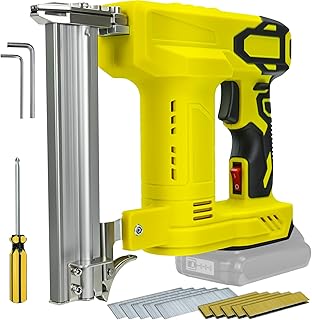
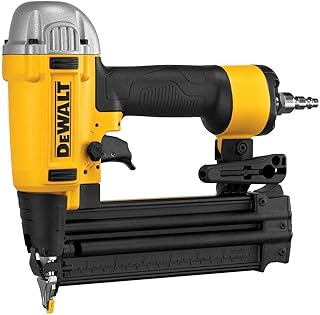


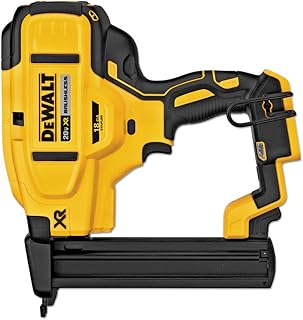


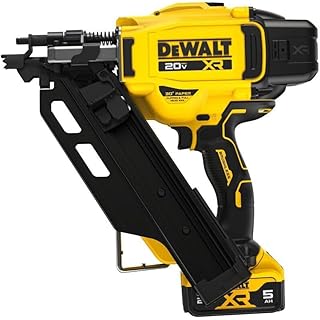


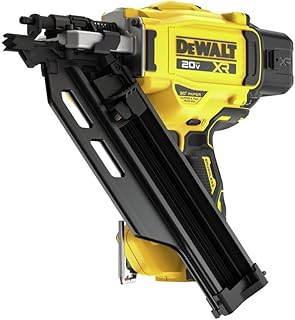


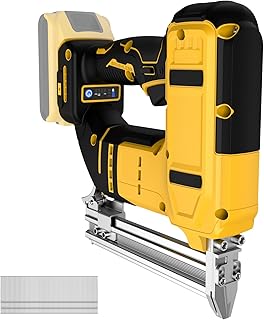


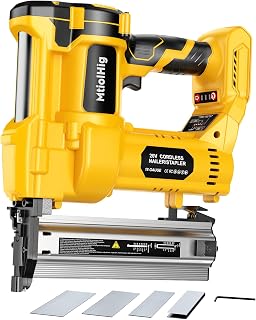
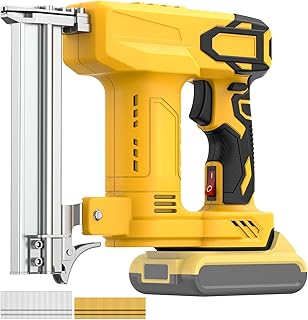
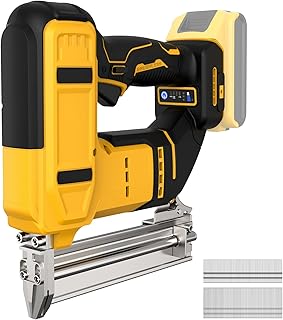
Choosing a DEWALT cordless nail gun is less about finding the most powerful model and more about matching the tool to the fastener, material, project type and expected workload. A finish nailer that is excellent for interior trim is not a substitute for a framing nailer, while a compact brad nailer is better suited to delicate woodworking than structural construction.
For Canadian buyers, the most useful comparison starts with the nailer category, nail diameter or gauge, fastener length range, magazine capacity, battery platform, tool weight and depth-of-drive adjustment. Once those fundamentals are understood, features such as tool-free adjustments, LED lighting, jam clearing and dry-fire lockout become easier to evaluate in context.
The nail or fastener specification should normally determine which cordless nail gun you buy. DEWALT produces cordless nailers for several applications, and their appearance can be deceptively similar even though their intended uses are very different.
Gauge is one of the most important specifications when comparing nail guns. In general, a lower gauge number corresponds to a thicker fastener, while a higher gauge number corresponds to a thinner fastener. This means an 18-gauge nailer and a 15-gauge nailer are not interchangeable simply because both may be described as finish or trim tools.
An 18-gauge nailer is commonly considered a versatile choice for many interior finishing tasks because its thinner nails leave relatively small entry holes. A 15-gauge finish nailer uses a thicker fastener and is better suited to situations where greater holding power is desirable. A framing nailer uses substantially larger fasteners and belongs to a different category altogether.
Before buying, check the exact fastener gauge and length range specified for the model rather than relying on the general product description. Nail length, collation angle and fastener type can also affect compatibility.
A nail gun should be selected according to the thickness and type of material being joined. Using a fastener that is too short may provide inadequate holding power, while an unsuitable or excessively long fastener can penetrate through the workpiece or create a safety and material-damage issue.
For trim work, consider the combined thickness of the moulding and the substrate before choosing a fastener length. For framing and construction work, follow the applicable project specifications, building requirements and manufacturer guidance rather than selecting nails solely by convenience.
One of the major advantages of a cordless DEWALT nail gun is the ability to work without an air compressor, pneumatic hose and associated fittings. For buyers who already use compatible DEWALT 20V MAX tools, battery-platform compatibility can be an important part of the purchasing decision.
However, battery compatibility should not be treated as the only consideration. Different batteries can vary in physical size, capacity and weight, and those differences can affect how comfortable a nailer feels during extended overhead or repetitive work.
Brushless motor technology is an important feature to compare when examining modern cordless power tools. A brushless design can support efficient electronic motor control and is commonly associated with reduced mechanical wear compared with traditional brushed motor arrangements.
For a nail gun, however, motor technology should not be considered in isolation. Driving consistency, cycle speed, depth adjustment, battery system, tool balance and the nailer's overall operating mechanism all contribute to how useful the tool is on a real project.
When comparing two DEWALT nailers, look at the complete specification rather than assuming that a brushless label automatically makes one model the better choice for every application.
Actuation mode affects how a cordless nailer behaves when firing fasteners. Sequential operation generally requires the user to engage the nose against the workpiece and activate the trigger for each fastener. This can provide deliberate placement and is useful when precision is more important than maximum firing speed.
Contact or bump-style operation, where supported by the particular model and permitted for the intended application, is designed around faster repetitive fastening. It can be useful for production-oriented work but requires greater attention to tool control and safe positioning.
Do not assume that every DEWALT cordless nailer provides the same actuation options. Check the exact model specification and operating instructions before making a purchase.
Depth control is one of the most practical features on a finish or framing nailer. Different wood species, substrate materials, fastener lengths and project conditions can produce different driving results. A suitable adjustment mechanism allows the user to tune nail depth rather than accepting a single fixed setting.
For trim work, excessive depth can leave a larger depression that requires additional filling, while insufficient depth can leave the nail head proud of the surface. A good adjustment system therefore has practical value even when two competing nailers have similar battery and fastener specifications.
Weight deserves more attention than it often receives in online comparisons. A cordless nailer can feel manageable for a few test shots but become tiring when used repeatedly throughout a full working day.
Balance is equally important. A tool with a comfortable centre of gravity can be easier to position accurately, particularly when installing crown moulding, ceiling trim, cabinets or other components that require prolonged arm elevation.
When comparing models, consider the complete working weight rather than the bare tool alone. The battery adds both mass and length, and the combination may feel significantly different from the tool-only specification.
Magazine capacity affects workflow rather than fastening quality. A larger magazine can reduce interruptions during repetitive work, while a smaller and more compact design may be preferable when working in confined spaces.
Look for clear information about fastener capacity, compatible collations and reload procedures. If a project involves frequent fastening, easy loading and predictable magazine operation can save more time than a minor difference in headline specifications.
Dry-fire protection can help prevent the tool from cycling when the magazine is nearly empty, depending on the specific DEWALT model. This can be useful for protecting the workpiece from unnecessary trigger cycles and for indicating that it is time to reload.
Jam-clearing access is another practical consideration. Fastener jams can occur because of incompatible nails, damaged fasteners, incorrect loading, material conditions or other factors. A design that provides straightforward access for clearing an obstruction can reduce downtime.
Always disconnect the battery and follow the manufacturer's instructions before attempting to clear a jam or perform maintenance.
Integrated LED lighting is a small feature that can have real practical value in darker work areas. It can help illuminate the fastening zone and make it easier to position the nose of the tool accurately.
Nevertheless, lighting should be treated as a convenience feature rather than a reason to select an otherwise unsuitable nailer. Fastener compatibility, tool category and project requirements should remain higher priorities.
One of the most common buying mistakes is choosing a nailer based on brand and battery system without first identifying the required fastener category.
A framing nailer is not simply a more powerful version of a finish nailer. The fasteners, nose design, magazine, dimensions and intended applications are different.
For trim carpentry, buyers should pay particular attention to nail gauge, fastener length, depth adjustment, nose design and tool balance. The goal is usually to achieve secure attachment while keeping visible surface damage to a practical minimum.
Models such as the DEWALT 18-gauge cordless finish nailer family are often considered when users need a balance between fastening capability and relatively small nail holes. A 15-gauge DEWALT finish nailer may be more appropriate when the project calls for a thicker finish fastener and greater holding power.
Always verify the current model number, supported fastener range and manufacturer specifications before purchasing because product configurations and model availability can change.
Framing nailers should be evaluated differently from trim nailers. Important considerations include fastener diameter, allowable nail lengths, magazine configuration, firing modes, depth adjustment, battery requirements, tool balance and the type of construction work for which the model is specified.
For framing, sheathing and similar construction applications, fastener compliance is particularly important. The nailer should accept the exact fastener type required by the project, and the fastener itself should meet the relevant project specifications.
Do not choose a framing nailer merely because it has a larger battery or higher advertised firing capability. Matching the tool and fastener system to the construction task is more important.
DEWALT cordless nailers may be encountered in tool-only configurations as well as packages that include batteries and charging equipment. The better value depends on what you already own.
When shopping through Canadian retailers, compare the complete package rather than comparing the tool-only price of one listing with the kit price of another.
DEWALT is a well-known power-tool brand, but brand reputation does not eliminate the need to select the correct nailer category. A highly capable tool can still be the wrong choice if it does not accept the required fastener.
Gauge directly affects the size and holding characteristics of the fastener. Always check the gauge before ordering compatible nails.
A nailer may support a particular gauge but only within a defined length range. Verify both specifications together.
A lower listed price may represent the bare tool while another listing includes batteries and a charger. Compare equivalent configurations before deciding which offer represents better value.
More capacity or larger fasteners are not automatically better for trim, cabinetry or delicate woodworking. Excessively large equipment can add unnecessary weight and may be unsuitable for the material.
Compatible batteries may differ in capacity, physical dimensions and weight. The battery you select can influence runtime, balance and handling.
For a meaningful comparison, create a specification checklist before looking at today's deals. This prevents a low headline price from overshadowing a critical compatibility difference.
The cheapest listing is not necessarily the best deal. A better approach is to calculate the overall cost of ownership and compare equivalent configurations.
Start by checking whether the price is for the bare tool or a complete kit. Then consider whether you already own compatible batteries, whether the required nails are readily obtainable, and whether the tool's specifications match the work you intend to perform.
Also check the retailer's current listing carefully for model number, included accessories, shipping terms, taxes and any conditions attached to the advertised price. Promotional pricing can change, so current pricing should be verified immediately before purchase.
Canadian shoppers should compare local listings rather than assuming that a product configuration available in another market is identical to the Canadian version. Packaging, included accessories, model numbers and availability can vary by market.
When purchasing from a Canadian retailer or marketplace, verify that the listing clearly identifies the exact DEWALT model. Check the manufacturer's documentation for electrical, battery and fastener specifications, and review the seller's current terms for delivery, returns and warranty handling before completing an order.
For projects governed by Canadian building requirements or professional specifications, the nailer and fasteners should be selected according to the requirements of the actual application. Product marketing language should not be treated as a substitute for project-specific construction requirements.
A cordless nailer is only useful when suitable fasteners are available. Before buying, identify the exact nail type, gauge, length and collation required by the tool.
For ongoing projects, it is also worth comparing the cost and availability of compatible fasteners. A small difference in the initial nailer price can become less significant if the required consumables are substantially more expensive or difficult to source.
DEWALT-branded fasteners may be one option, but compatibility should always be confirmed against the nailer's manufacturer specifications. Compatible fasteners from other manufacturers should not be assumed to work simply because they appear physically similar.
Routine care can help keep a cordless nailer operating reliably. The appropriate maintenance schedule depends on the model, frequency of use and working conditions, so the owner's manual should remain the primary reference.
Battery-powered tools should be stored in accordance with the battery manufacturer's recommendations. Avoid exposing batteries to conditions outside their specified operating and storage ranges.
Keep battery contacts clean and protect batteries from damage. If a battery shows visible damage or abnormal behaviour, follow the manufacturer's safety instructions rather than continuing to use it.
For occasional users, sensible storage is particularly important because a cordless nailer may spend considerably more time in storage than in active use.
Nail guns can cause serious injury when handled incorrectly. Read the specific operating instructions for the exact model before use and use appropriate personal protective equipment for the work environment.
A DEWALT cordless nailer can make particular sense for homeowners, DIY users, remodelers, trim carpenters and construction professionals who value cordless mobility and already use compatible DEWALT battery tools.
The strongest case for cordless operation is often convenience. Eliminating an air hose and compressor can simplify setup, transportation and movement around a work area. This can be especially useful for punch-list jobs, installations and locations where pneumatic equipment would be inconvenient.
Cordless technology is not automatically superior for every user. A pneumatic system can remain attractive for users who already operate a compressor setup, work in a fixed workshop environment or prioritise a particular combination of tool weight, firing characteristics and operating cost.
The decision should therefore be based on workflow rather than the assumption that newer technology is always the better solution.
When comparing DEWALT with brands such as Milwaukee, Makita, Bosch and Ryobi, the most useful comparison is often the battery ecosystem and the exact nailer category rather than brand popularity alone.
The correct comparison is model against model. Brand-level comparisons can hide major differences in fastener type, tool weight, battery system and intended application.
Customer reviews can provide useful information, but they should be interpreted alongside technical specifications. A review from someone using a brad nailer for occasional craft projects may have little relevance to a professional carpenter using a finish nailer every day.
Look for recurring comments about issues that directly affect your use case, such as balance, loading, depth adjustment, battery handling, fastener compatibility and ease of operation. Give greater weight to reviews that clearly explain the application and the exact model being discussed.
Also distinguish between reviews of the tool itself and complaints about delivery, packaging, retailer service or unrelated accessories. Those issues may not indicate anything about the nailer's technical performance.
For delicate trim and woodworking: Start by investigating an appropriate DEWALT brad nailer and confirm the required fastener length.
For general finish carpentry: Compare DEWALT finish nailers according to gauge, fastener range, depth control, balance and battery configuration.
For heavier trim applications: Consider an appropriate 15-gauge finish nailer when the project calls for the thicker fastener and verify that the substrate and application are suitable.
For framing: Compare DEWALT framing nailers according to the exact fastener specifications, firing requirements, application and working conditions.
For occasional DIY use: Prioritise versatility, ergonomics, battery availability and overall package value rather than paying for professional features you are unlikely to use.
For frequent professional work: Give greater weight to ergonomics, reliability-related design features, fastener capacity, battery strategy, serviceability and compatibility with your established tool ecosystem.
The best DEWALT cordless nail gun is the one that matches the job rather than simply the model with the highest specification or most prominent discount. Fastener compatibility should come first, followed by application, tool balance, battery requirements and the features that genuinely affect your workflow.
Before purchasing, confirm the exact model number, supported gauge and nail lengths, included accessories, battery configuration and current Canadian retailer terms. Compare equivalent packages and check today's price rather than relying on an older advertised deal.
For buyers already using DEWALT cordless equipment, battery-platform compatibility can make the decision considerably simpler. For everyone else, compare the complete cost and practical advantages of cordless operation against pneumatic alternatives before committing to a platform.
There is no single best model for every Canadian buyer. The appropriate choice depends primarily on whether you need a brad, finish, framing or specialised nailer, followed by the required fastener gauge and length, battery setup and project workload.
DEWALT offers cordless nailers designed for different professional and DIY applications. Suitability depends on the exact model and the work being performed. Always compare the manufacturer's specifications with the requirements of the job.
Generally, a nailer is designed for a specified fastener gauge or range rather than every common nail gauge. Check the exact model's approved fastener specifications before purchasing nails.
DEWALT cordless nailers are designed to operate from their compatible battery system rather than requiring an external pneumatic compressor. This is one of the primary advantages of a cordless nailer.
It depends on the particular package. Some listings may contain the bare tool while others are sold as kits with batteries and charging equipment. Check the exact listing contents before comparing prices.
Check the exact model number, nail gauge, supported fastener length, collation requirements, battery compatibility, package contents, tool weight and current Canadian retailer terms. These details are more useful than relying on a generic product title.
An 18-gauge nailer can be suitable for many trim and finish applications, depending on the material, fastener length and required holding strength. Confirm that the specific project is appropriate for the nailer before use.
Neither is universally better. A 15-gauge nailer uses a thicker fastener and can provide greater holding power, while an 18-gauge nailer generally produces a smaller entry hole. The correct choice depends on the application.
If you already own compatible DEWALT batteries and a charger, a bare tool may be more practical. If you do not have the required battery equipment, compare the total cost of a complete kit with purchasing the components separately.
Maintenance requirements vary by model and usage. Follow the maintenance schedule and procedures in the owner's manual, and inspect the tool regularly when it is used frequently or in dusty construction environments.
Do not assume that all nails are interchangeable. Fastener gauge, length, collation, angle and other specifications must match the requirements of the particular nailer. Consult the manufacturer's approved fastener specifications before use.