

♥ Wishlist
Compare 21 Cordless Metal Shears for Precise Sheet Metal Cutting products in Canada. Reviews, ratings, pros, cons and buying advice updated for October 2026.
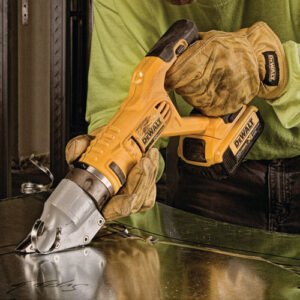
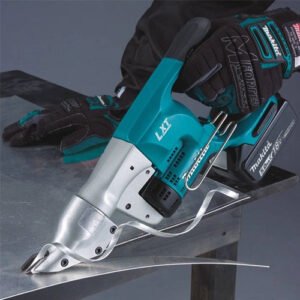
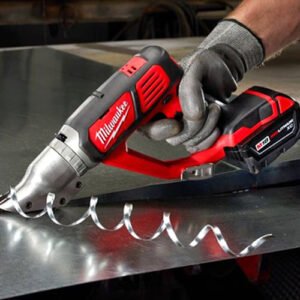


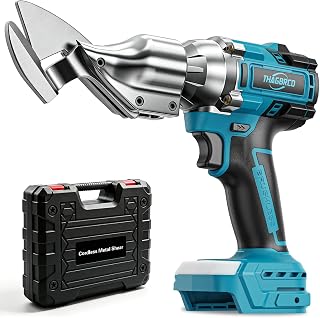


Choosing cordless metal shears is less about finding the most powerful tool and more about matching the cutting system to the metal, thickness, work pattern and battery platform you actually use. A compact cordless shear can be extremely convenient for sheet-metal installation, HVAC work, roofing, fabrication, electrical work and general metalworking, but different designs behave very differently when cutting straight lines, curves, corrugated material or heavier-gauge sheet.
For Canadian buyers, the most useful comparison starts with the specifications that affect real cutting performance: maximum material capacity, motor design, cutting speed, battery voltage, blade configuration, minimum cutting radius, ergonomics, weight and availability of replacement blades. It is also worth considering whether the tool is sold as a bare tool or as part of a kit, because a bare cordless shear can represent very different overall value depending on whether you already own compatible batteries and a charger.
Cordless metal shears are designed to make controlled cuts through sheet metal without requiring a power cord or a manual aviation-shear approach. Their portability makes them particularly useful when material is already installed, when access to electrical outlets is inconvenient, or when workers need to move repeatedly around a large job site.
They are not a universal substitute for every metal-cutting tool. Thick plate, structural steel, tubing, hardened materials and applications requiring extremely precise edges may call for a different cutting method. Always compare the actual material specification of the tool with the material you intend to cut rather than relying only on the manufacturer's headline maximum thickness.
Understanding the difference between shears, nibblers, angle grinders and metal-cutting saws can prevent an expensive mismatch. Each tool removes or separates material differently, which affects speed, edge quality, noise, sparks, waste and the shape of the cut.
Electric shears generally use opposing cutting elements to separate sheet material. They can be particularly effective when you need relatively clean continuous cuts and want to avoid the sparks and abrasive dust associated with grinding. They are often a strong choice for sheet-metal work where manoeuvrability matters.
A nibbler removes small portions of material as it advances. This design can be useful for tighter curves, intricate shapes and applications where maintaining control around corners is more important than producing a conventional shear cut. The trade-off is that the cutting process can leave small metal chips or slugs that need to be managed.
An angle grinder with an appropriate metal-cutting disc can handle a broad range of metal-cutting tasks, but it produces sparks, heat and abrasive debris. It can also be less convenient for long sheet-metal cuts where a dedicated shear is easier to guide.
Metal-cutting circular saws are better suited to many heavier stock-cutting applications, including certain profiles and thicker materials. They can offer rapid cuts but are typically larger and less convenient for detailed sheet-metal work.
Maximum cutting capacity is one of the most important specifications, but it should never be treated as a single universal number. Manufacturers may specify different capacities for different grades of steel, stainless steel and aluminium. A tool that handles one thickness of mild steel may have a different limit for stainless steel.
When comparing cordless metal shears, look for a material-by-material capacity table rather than a vague statement such as “cuts metal up to X mm.” If your work involves multiple materials, choose a model whose published specifications comfortably cover your most demanding regular application.
Cutting speed affects productivity, particularly when long runs of sheet metal are involved. A higher rated cutting speed can reduce working time, but maximum speed is not automatically the most useful characteristic. Control, blade design, motor behaviour and the operator's ability to maintain a straight path can matter just as much.
Battery voltage should be evaluated together with the entire cordless platform. Popular professional ecosystems from brands such as DeWalt, Milwaukee, Makita and Bosch offer families of cordless tools that can share batteries across compatible models. For an existing cordless-tool owner, platform compatibility can be more valuable than choosing a theoretically more powerful standalone tool.
Always confirm that the battery generation and platform are actually compatible. Brand names alone are not sufficient because manufacturers can have multiple battery systems with different interfaces and compatibility rules.
A bare tool normally excludes the battery and charger, while a kit may include one or more batteries and a charger. If you already own several batteries from the same compatible platform, the bare-tool option may be the more practical comparison. If you are starting from scratch, calculate the cost of the complete cordless system rather than comparing bare-tool prices in isolation.
For shear mechanisms that use reciprocating cutting action, stroke rate can influence how quickly the tool progresses through suitable material. Brushless motors are common in higher-end cordless equipment because they can provide efficient motor operation and reduced maintenance compared with traditional brushed designs. However, brushless construction alone does not establish that one shear will outperform every competing model.
If your work includes curves, circles or shaped openings, minimum cutting radius deserves as much attention as straight-line cutting speed. A tool designed primarily for straight cuts may feel cumbersome when navigating tight curves. Check the manufacturer's stated radius and understand whether the specification applies to the particular material you plan to cut.
Blade geometry directly influences how the tool engages with the sheet. Replacement blade availability is therefore an important long-term ownership consideration. Before purchasing, check whether replacement cutting components are listed for the specific model and whether the manufacturer provides clear instructions for replacement and adjustment.
Brushless motor technology is now common across many professional cordless power-tool ranges. A brushless design eliminates conventional carbon brushes inside the motor, potentially reducing a common wear component and allowing sophisticated electronic control.
A brushless label should not be the sole reason to choose a particular shear. A well-designed tool with suitable capacity and comfortable handling can be more useful than a feature-heavy model that does not match the work.
Battery runtime depends on much more than the battery's advertised amp-hour rating. Material thickness, cutting resistance, cutting speed, operator technique, stop-start frequency and battery condition all influence actual runtime.
For occasional household or workshop use, a smaller compatible battery may provide a useful balance between runtime and weight. For repeated professional cutting, a larger-capacity battery can reduce interruptions, although it may increase the weight of the complete tool.
When comparing models, consider whether you prefer to carry multiple smaller batteries or fewer high-capacity packs. The best arrangement depends on the rest of your cordless tools and how frequently the shear will be used.
Metal shears are often operated with one hand while the other hand supports or guides the material. That makes balance particularly important. A tool with a powerful motor can become uncomfortable if the centre of gravity causes excessive wrist strain during long cuts.
For occasional short cuts, weight may be less important. For repeated overhead, ladder or installation work, balance and fatigue resistance become much more significant purchasing criteria.
Not all sheet metal behaves the same way. Aluminium is comparatively light and can have different cutting characteristics from mild steel. Stainless steel can place substantially greater demands on the cutting mechanism depending on its grade and thickness.
Before buying, identify the materials you routinely encounter and compare the manufacturer's capacity figures for each. Do not assume that a shear rated for a particular thickness of mild steel will safely or effectively cut the same thickness of stainless steel.
Mild steel sheet is a common application for electric metal shears. Capacity varies by model and material thickness, so the published specification should be treated as the controlling reference.
Stainless steel can require a more capable cutting system. If stainless is a regular part of your work, pay particular attention to the manufacturer's stainless-steel capacity rather than using the mild-steel rating as a substitute.
Aluminium sheet can be relatively easy to manipulate but may require care to prevent distortion or an unwanted edge profile. Confirm the manufacturer's aluminium specification before using the shear on a particular alloy or thickness.
A good cordless metal shear should provide predictable cutting action without requiring excessive force from the operator. The final edge depends on the tool design, blade condition, material, thickness and cutting technique.
Dull or damaged cutting components can increase resistance and make the tool harder to control. If a shear begins producing an increasingly rough edge, requires noticeably more pressure, or struggles with material it previously handled comfortably, inspect the cutting components and follow the manufacturer's maintenance procedure.
HVAC work places particular emphasis on manoeuvrability, controlled cuts and the ability to work around installed ducting. A compact cordless shear can be useful when an installer needs to make repeated adjustments without setting up a corded tool.
Roofing applications can involve long cuts, awkward working positions and frequent movement around a work area. Cordless operation can make positioning easier because there is no power cord to manage.
For roofing and flashing, compare the shear's capacity with the actual gauge and material used on the project. Also consider whether the tool provides sufficient control for trimming around penetrations, edges and shaped sections. A model that is excellent for straight cuts may not be the most convenient choice for detailed flashing work.
Workshop users may place greater emphasis on precision, repeatability and blade availability than on maximum portability. If the tool will be used for frequent fabrication, look beyond the headline specifications and evaluate how the cutting mechanism, handle position and sightline suit the shapes you routinely produce.
For occasional fabrication, a versatile cordless platform may be more useful than purchasing a specialised tool that duplicates capabilities you already have. If you frequently produce intricate profiles, however, a nibbler or another specialised cutter may complement the shear better.
Several established power-tool manufacturers offer cordless metalworking equipment and broader battery ecosystems. When comparing products from DeWalt, Milwaukee, Makita, Bosch, Metabo and similar established manufacturers, focus on the exact model specifications rather than assuming every tool within a brand has the same capabilities.
The correct choice is model-specific. Brand reputation can help establish a shortlist, but capacity charts, battery compatibility, cutting geometry, replacement parts and ergonomics should determine the final selection.
A higher nominal battery voltage does not automatically make a shear the best choice. Cutting mechanism, gearing, motor efficiency, capacity and tool design all contribute to performance.
Buying a tool rated close to the maximum thickness you occasionally need can leave little practical margin. Compare the manufacturer's limits with the material you actually use and consider how frequently you approach those limits.
A bare tool may look inexpensive until the cost of the required battery and charger is added. Compare complete system costs when you are not already invested in the relevant platform.
Extra capacity can be valuable, but unnecessary weight can reduce comfort and control. Match the tool to the work rather than automatically selecting the largest model.
Cutting components are wear items. Confirm that replacement parts are available for the exact model before making a long-term purchase.
Steel, stainless steel and aluminium have different cutting characteristics. Always use the appropriate manufacturer capacity specification.
Metal-cutting tools can create sharp edges, metal fragments and other hazards. Read the manufacturer's instructions before operation and use protective equipment appropriate to the work environment and material.
Routine maintenance helps preserve cutting performance and makes it easier to identify problems before they become serious. Maintenance requirements vary by model, so the manufacturer's instructions should take precedence over generic advice.
Battery care is important because modern cordless systems represent a significant part of the overall tool investment. Use only batteries and chargers approved for the particular tool platform, and follow the manufacturer's storage, charging and temperature guidance.
Avoid exposing battery packs to conditions outside their specified operating or storage ranges. If a battery becomes unusually hot, damaged, swollen or otherwise abnormal, discontinue use and follow the manufacturer's safety instructions.
Online listings can make cordless metal shears difficult to compare because sellers may offer the same basic tool in several configurations. A listing may include the shear alone, a shear with one battery, a larger battery kit, or a package with a charger and accessories.
When comparing deals in Canada, check exactly what is included in the package:
Two listings with apparently different prices may become much closer in value once the included battery and charger are accounted for. Conversely, a bare tool can be an excellent value when you already own compatible batteries.
Customer reviews can reveal useful ownership details, but they should be treated as one source of evidence rather than a replacement for technical specifications. When reading reviews, look for comments that identify the material, thickness, frequency of use and battery configuration.
The lowest listed price is not necessarily the best deal. A more useful approach is to compare the complete ownership proposition: tool capability, included accessories, battery platform, replacement components and the suitability of the model for your work.
Before purchasing, compare the exact model number across reputable Canadian retailers and manufacturer documentation. Check the current listing carefully because package contents and seller-specific offers can change over time.
A smart buy is not necessarily the least expensive model or the most powerful model. It is the product whose capabilities align closely with the user's actual workload without paying for specifications that will rarely be used.
For a homeowner or occasional DIY user, compact size, ease of handling and compatibility with an existing battery system may be more valuable than maximum cutting capacity. For a professional installer, durability, runtime, replacement parts, ergonomics and consistent performance over repeated work may justify a higher-tier platform.
For workshop users, precision and versatility can take priority. Someone working primarily with thin sheet may not benefit from buying a heavy-duty shear designed around capacities they never use.
They can be an excellent choice when portability, quick setup and freedom from a power cord are important. Their value is strongest when the tool's cutting capacity matches the materials and thicknesses you regularly work with.
Some models are specifically rated for stainless steel, but the allowable thickness can differ substantially from the rating for mild steel. Always consult the manufacturer's material-specific capacity table for the exact model.
Many metal shears can cut suitable aluminium sheet, but the permissible thickness and recommended material types vary. Check the manufacturer's specifications before cutting a particular alloy or thickness.
Brushless motors offer advantages such as reduced brush wear and efficient electronic motor control, but motor type should not be considered in isolation. Capacity, ergonomics, battery compatibility, blade design and intended workload are equally important.
The cutting components are model-specific in many tools. Use only the replacement parts recommended for the particular shear and follow the manufacturer's installation and adjustment instructions.
If you already own compatible batteries and a charger, a bare tool can make sense. If you do not own the required platform, compare the complete cost of a kit with the cost of purchasing the battery and charger separately.
Suitability depends on the exact model and material. Check the manufacturer's stated capacity for the specific metal and thickness instead of assuming that a general-purpose cordless shear is suitable for heavy-gauge work.
It depends on the radius and shape. Shears can handle many curved cuts, while nibblers are often designed for greater manoeuvrability around intricate profiles. Compare the manufacturer's minimum cutting radius and intended applications for both tools.
Battery size affects both runtime and overall tool weight. Larger-capacity batteries can reduce charging interruptions but may make the tool heavier. The best choice depends on how long and how frequently you cut.
Compare the exact model, included accessories, battery configuration, material capacity, replacement-part availability and current Canadian pricing. A lower headline price is not necessarily a better value if it excludes a battery or charger you need.
Inspect and clean the tool according to the manufacturer's instructions and your usage conditions. Frequent professional use generally requires more regular inspection than occasional DIY use. Pay particular attention to cutting components, debris accumulation and signs of damage.
The best cordless metal shear for your needs is the one that combines adequate material capacity, manageable weight, dependable cutting control, suitable battery compatibility and sensible long-term ownership costs. There is no single specification that determines the right choice for every Canadian buyer.
Start with the metal and thickness you need to cut. Then narrow the options by cutting style, battery platform, ergonomics, runtime and replacement-part availability. Once those requirements are established, compare the exact model configurations and current Canadian deals. Check the manufacturer's specifications before ordering, particularly when a listing uses broad terms such as “heavy duty,” “professional” or “high performance.”
For buyers already invested in DeWalt, Milwaukee, Makita, Bosch, Metabo or another compatible cordless ecosystem, platform compatibility can simplify the decision considerably. For new cordless-tool buyers, evaluate the battery and charger as part of the total investment rather than focusing exclusively on the tool body.
Finally, use customer reviews as supporting evidence rather than as a substitute for technical documentation. The most useful reviews explain what material was cut, how frequently the tool was used and which battery configuration was involved. Combining that practical information with verified specifications provides a much stronger basis for comparing cordless metal shears and identifying the most suitable option for your particular work.