

♥ Wishlist
Compare 51 Bathroom Fans for Better Bathroom Ventilation products in Canada. Reviews, ratings, pros, cons and buying advice updated for October 2026.






Choosing a bathroom exhaust fan in Canada involves more than comparing airflow numbers or selecting the quietest model on a product page. The right fan needs to move enough humid air, operate reliably through repeated heating and cooling cycles, suit the bathroom's size, connect properly to the exterior, and work with the electrical and ventilation requirements applicable to the installation.
For shoppers comparing bathroom ventilation products in 2026, a smart buy is usually the model that provides the right combination of airflow, noise level, humidity control, energy efficiency, build quality, installation flexibility and long-term maintenance rather than simply the model with the lowest purchase price.
This guide expands the buying criteria behind a bathroom fan comparison so Canadian shoppers can evaluate models from manufacturers such as Panasonic, Broan-NuTone, Delta Breez, Air King, VENTS and S&P. Product specifications can vary considerably between models and revisions, so always compare the exact model number and current manufacturer documentation before purchasing.
Airflow is normally expressed in cubic feet per minute, or CFM. It indicates how much air a fan is designed to move under specified conditions. A higher CFM rating is not automatically better for every bathroom because excessive capacity can increase noise, energy use and drafts while an undersized fan may struggle to control moisture.
A commonly used starting point for bathrooms up to approximately 100 square feet is around 1 CFM per square foot. This is a sizing guideline rather than a substitute for Canadian building requirements or professional ventilation design. Larger bathrooms require additional consideration of the room's fixtures, ceiling height, layout and intended ventilation strategy.
A fan's advertised airflow is generally measured under defined test conditions. Actual performance can be affected by duct diameter, duct length, elbows, exterior termination, backdraft dampers, grilles and installation quality.
For that reason, two bathroom fans with similar headline CFM ratings may perform differently once installed. When comparing models, look for detailed manufacturer specifications and independently established ventilation performance information where available. Do not assume that a high nominal CFM rating guarantees high airflow through a difficult duct configuration.
Bathroom fan noise is commonly described using sones. A lower sone rating generally indicates quieter operation, making this an important consideration for bedrooms located near bathrooms, small homes, apartments and bathrooms used during nighttime or early-morning hours.
Very quiet fans can be particularly useful when the bathroom is adjacent to a living area. However, low noise should be evaluated alongside airflow rather than treated as the only quality indicator.
Humidity-sensing fans are among the most useful features to consider when looking for a smart bathroom ventilation solution. Instead of depending entirely on someone remembering to switch the fan on and off, a humidity sensor can detect increased moisture and activate or continue ventilation according to the product's control logic.
This can be especially convenient in busy households, rental properties and bathrooms used by several people throughout the day. Humidity sensing can also be useful when the fan switch is frequently forgotten after a shower.
Sensor behaviour differs between models. Some products provide adjustable humidity thresholds, while others use automatic sensing with limited user adjustment. Before buying, check exactly how the sensor operates, whether the sensitivity can be adjusted and whether the fan can also be controlled manually.
A bathroom fan with a motion sensor can automate ventilation when somebody enters the room. Timer controls provide another practical solution by keeping the fan running for a predetermined period after activation.
These features are particularly useful because effective bathroom ventilation often depends on running the exhaust fan during and after bathing rather than switching it off immediately when the shower ends.
Some products described as smart bathroom fans may include advanced electronic controls, humidity sensing, occupancy detection, integrated lighting or connectivity features. Do not assume that every product marketed as a smart fan supports Wi-Fi, smartphone control or integration with a home automation platform. Check the exact specifications.
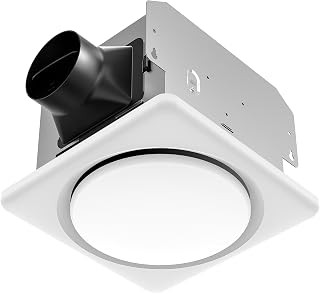
A bathroom fan with an integrated light can be an efficient choice when replacing both the ventilation system and an existing ceiling light. Combining functions in one ceiling fixture can simplify the appearance of the bathroom and may reduce the number of separate ceiling openings.
When comparing these models, evaluate the lighting specification independently from the ventilation specification. A fan can have excellent airflow while providing a light that is poorly suited to the room.
Combination bathroom units can incorporate ventilation, lighting and supplemental heat in one ceiling assembly. They can be useful in colder Canadian climates, particularly where a bathroom becomes uncomfortable during winter.
However, heater-equipped products need closer attention to electrical requirements, circuit capacity, installation instructions and control configuration. A combination unit should not be selected simply because it has more features. Compare the heating output, ventilation capacity, noise, controls and installation requirements separately.
A bathroom exhaust fan may run for many hours over its lifetime, so motor efficiency can matter even though the appliance's individual power consumption is relatively modest. Efficient electronically commutated motor designs, often abbreviated as ECM, can provide an attractive combination of energy efficiency and controllability in suitable models.
Look for clearly stated power consumption and efficiency information rather than assuming that a newer-looking fan is automatically more efficient. ENERGY STAR qualification can also be a useful comparison point where the specific model is listed and the designation applies to the product being considered.
For a Canadian household, the most energy-conscious choice is not necessarily the fan with the lowest wattage. A fan that effectively removes moisture and operates only when necessary may provide better overall ventilation performance than an inefficient or poorly controlled fan that is routinely left running.
Cold weather creates additional ventilation considerations that shoppers in warmer regions may not encounter. When warm, humid indoor air travels through poorly designed or inadequately insulated ductwork toward a cold exterior, condensation can form inside the ventilation system.
That makes duct routing, insulation, slope, exterior termination and backdraft protection important parts of the overall installation. The fan itself cannot compensate for an improperly designed exhaust pathway.
A backdraft damper helps limit outdoor air entering the bathroom through the exhaust duct when the fan is not operating. This can be particularly relevant during cold Canadian weather.
Check whether a damper is integrated into the fan or supplied as part of the installation system. The quality and suitability of the exterior termination should also be considered rather than focusing only on the fan housing.
Insulating exhaust ductwork in appropriate cold-weather installations can help reduce condensation when warm, moist air passes through cold areas such as an attic. Installation details depend on the building design and applicable requirements.
Flexible ductwork should not be allowed to sag excessively because low spots can collect condensation and increase airflow resistance. Smooth, appropriately sized ducting and a sensible route to the exterior generally make it easier for a fan to perform effectively.
The duct is part of the ventilation system, not merely an accessory. Before purchasing a replacement fan, determine the existing duct diameter and examine how the duct is routed.
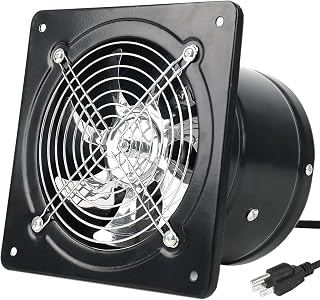
Ceiling-mounted exhaust fans are common because warm, moisture-laden air tends to rise. Wall-mounted ventilation can be useful in certain renovation situations where ceiling installation is difficult or where the building layout makes a wall installation more practical.
The appropriate design depends on the structure, existing duct path and location of the shower or bathtub. For a replacement project, measuring the existing opening and examining the duct connection before purchasing can prevent compatibility problems.
Traditional AC motor designs remain common in residential ventilation equipment. They can provide dependable operation when correctly matched to the application and maintained properly.
Electronically commutated motors can offer efficient operation and may support advanced speed control depending on the model. They are frequently found in premium ventilation products where energy efficiency and controllability are major selling points.
Motor technology should be evaluated together with airflow, noise, controls, warranty terms, replacement parts, installation requirements and the manufacturer's documentation. A particular motor type does not by itself guarantee that a complete fan is the best choice for every bathroom.
The fan housing needs to withstand humid conditions and repeated operation. Galvanized steel and engineered polymer housings are both used in residential ventilation products, with the appropriate choice depending on the product design.
Look for a rigid housing, secure mounting points, a well-designed grille and accessible components. A sturdy housing can also help reduce vibration when the unit is properly installed.
The grille is one of the most visible components of a ceiling-mounted bathroom fan. A clean, low-profile design can integrate better with modern bathrooms, but appearance should not take priority over airflow and serviceability.
Bathroom ventilation equipment is connected to the building's electrical system, so electrical installation should follow the applicable Canadian requirements and local rules. Product documentation should specify electrical ratings, wiring requirements and approved installation configurations.
Depending on the installation, the fan may require specific switching arrangements, dedicated controls or other electrical considerations. When in doubt, a qualified electrician should assess the installation rather than relying on assumptions based on a previous fan.
Also check that the exact model is appropriately certified or approved for use in Canada. Product certification information should be verified from the manufacturer's current documentation rather than inferred from photographs or retailer descriptions.
Brand reputation can help narrow a large product category, but model-level specifications are more important than the logo on the grille. Established manufacturers such as Panasonic, Broan-NuTone, Delta Breez and Air King offer different product families with different combinations of airflow, noise, controls, lighting and installation features.
Other manufacturers, including VENTS and S&P, may also be relevant when a particular ventilation configuration or control requirement makes their product range suitable.
Instead of asking which brand is universally best, compare the exact models against the same checklist:
The cheapest fan may look attractive during a renovation, but the purchase price represents only one part of the decision. A bathroom fan is expected to operate repeatedly over a long period, so noise, airflow, controls, efficiency and serviceability can have greater practical importance than a small initial saving.
A very high CFM rating does not guarantee better ventilation if the duct system is restrictive. An oversized fan can also create unnecessary noise and drafts. Select airflow according to the room and installation rather than assuming maximum capacity is always preferable.
Replacement projects often become more complicated when the new housing does not fit the existing opening. Measure the opening, housing dimensions and duct location before ordering.
Published sound ratings are useful, but installation can significantly affect perceived noise. Vibration, loose mounting, duct resonance and airflow turbulence can all change the sound of the installed system.
An exhaust fan should not simply discharge moist bathroom air into an attic or another enclosed building space. Proper exhaust routing to an appropriate exterior termination is a fundamental part of bathroom ventilation.
Wi-Fi connectivity, elaborate lighting controls, Bluetooth audio and other extras may sound appealing, but they are not essential to effective moisture removal. Spend more on features that solve a real problem in your bathroom.
Retailer listings can present specifications differently, so comparing exact numbers in a consistent format is useful. Create a simple shortlist and record the information from the manufacturer's documentation.
A standard exhaust fan generally relies on a conventional switch. A smart or automated bathroom ventilation product may add humidity detection, occupancy sensing, programmable controls or other automation.
The advantage of automation is convenience and potentially more consistent ventilation behaviour. The disadvantage is increased complexity, a higher purchase cost on some models and potentially more components that need troubleshooting.
For many Canadian bathrooms, humidity sensing and timer functionality provide more practical value than connected-home features. If smartphone control is important, verify that the exact model supports the required connectivity standard and that the functionality does not depend on an unsupported ecosystem.
Even a well-designed exhaust fan needs occasional cleaning. Dust and lint can accumulate on the grille, motor assembly and surrounding surfaces, gradually restricting airflow and increasing operating noise.
There is no single runtime that is ideal for every bathroom. The required ventilation period depends on the fan's airflow, bathroom size, shower duration, humidity level, duct configuration and household habits.
A timer or humidity-sensing control can make post-shower ventilation easier because the user does not have to estimate the required runtime every time. If the mirror, walls or ceiling remain visibly wet long after bathing, investigate both fan performance and duct installation rather than simply running the same fan for longer.
Good ventilation can help manage excess indoor moisture, which is important because persistent damp conditions can contribute to mould and material damage. However, a bathroom exhaust fan is only one part of moisture management.
Leaks, inadequate heating, cold surfaces, damaged grout or sealant, poor exterior venting and excessive indoor humidity can also contribute to moisture problems. If persistent mould or water damage is present, replacing the fan alone may not solve the underlying issue.
Start by documenting the existing installation before removing anything. Record the housing dimensions, ceiling opening, duct diameter, duct route, electrical connection and switch arrangement.
A genuine good deal is not simply the product with the largest discount percentage. Compare the total specification against the price and determine whether the lower-priced model provides the features your bathroom actually needs.
When shopping through Canadian retailers, compare the current price, model number, included components, shipping terms, return conditions and manufacturer warranty information. Retailer listings can change, so confirm the current information before purchasing.
It is also useful to compare identical model numbers across retailers rather than comparing products only by brand name or appearance. Small differences in model numbers can indicate different airflow ratings, controls, lighting packages or electrical configurations.
Paying more can make sense when the additional features address a specific problem. A premium model may be worthwhile when quiet operation is important, the bathroom experiences frequent humidity spikes, the fan will run often, integrated lighting is desired or automatic controls will prevent unnecessary runtime.
However, premium pricing should not be treated as proof of superior ventilation. Compare actual airflow, sound, efficiency, controls and installation requirements before deciding whether an upgrade provides meaningful value.
A straightforward fan can be the better choice when the bathroom is small, the ventilation route is simple and the household is comfortable using a wall switch or timer. In these situations, paying substantially more for connectivity or multiple automated functions may offer little practical benefit.
The smartest budget decision is to avoid compromising on the fundamentals: appropriate airflow, reasonable noise, reliable construction, correct ducting and safe installation.
Choose airflow based on the bathroom's size, layout, fixtures and applicable ventilation requirements. A common starting guideline for smaller bathrooms is approximately 1 CFM per square foot, but larger rooms and unusual layouts require additional evaluation.
They can be, particularly when the bathroom is near a bedroom or main living area. Compare the published sone rating alongside airflow so that quietness does not come at the expense of adequate ventilation.
It can be more convenient because it automates operation in response to increased moisture. It is particularly useful for households where the fan is frequently forgotten after showers.
No. Integrated lighting is a convenience feature. It makes sense when replacing an existing ceiling light or when a combined fixture suits the bathroom design, but ventilation performance should remain the primary consideration.
A heater can be useful in colder bathrooms, but heater-equipped models require closer attention to electrical requirements and installation instructions. If supplemental heat is not needed, a simpler ventilation-only model may provide better value.
They can be worthwhile when automation solves a real household problem. Humidity sensing, timers and occupancy detection are generally easier to justify than connected features that will rarely be used.
There is no single best brand for every bathroom. Panasonic, Broan-NuTone, Delta Breez, Air King, VENTS and S&P offer different product designs and feature combinations. Compare the exact model specifications against your room and installation requirements.
Measure the existing ceiling opening, housing dimensions, duct diameter and electrical arrangement before purchasing. The manufacturer's installation documentation should be treated as the definitive reference for fit and installation requirements.
The best smart buy bathroom fan for a Canadian home is the one that matches the ventilation requirement without adding unnecessary complexity. Start with CFM and duct compatibility, then compare noise, motor efficiency, humidity controls, timers, lighting, heating and installation requirements.
For cold Canadian climates, give additional attention to the exhaust route, exterior termination, backdraft protection and condensation management. For busy households, automatic humidity or timer controls can provide meaningful convenience. For bedrooms located close to bathrooms, low noise can be worth prioritizing. For renovation projects, physical compatibility can be just as important as the fan's headline specifications.
Before making a final purchase, compare the exact model number across reputable Canadian retailers, read current customer feedback where available, verify the manufacturer's specifications and installation documentation, and check the current price and warranty terms. Product listings and availability can change throughout 2026, so confirm the details at the time of purchase.