

♥ Wishlist
Compare 53 Baby Soap for Gentle Everyday Cleansing products in Canada. Reviews, ratings, pros, cons and buying advice updated for October 2026.


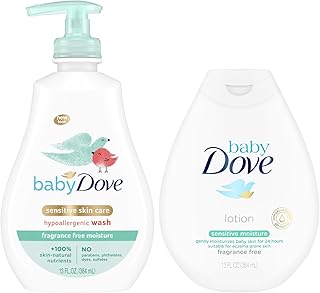


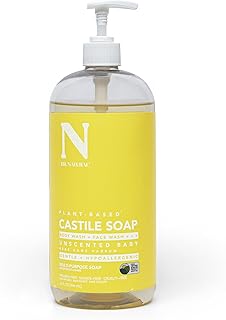


Choosing a baby soap is less about finding the product with the most features and more about matching the cleanser to a baby's skin, bathing routine, age and individual needs. Babies can have delicate skin that reacts differently to fragrance, preservatives, cleansing agents and other ingredients, so a practical comparison should look beyond ratings or promotional claims.
For Canadian families, the best buying decision also depends on where the product will be used, how frequently the baby is bathed, whether the cleanser is intended for the body or hair as well, and whether the child has particularly dry or easily irritated skin. A product that works well for one family may not be the most appropriate choice for another.
This guide focuses on the factors that matter when comparing baby soaps and gentle baby cleansers in Canada. Before purchasing, compare the current ingredient list, package size, directions, age guidance, retailer information and customer feedback rather than relying solely on a product's marketing description.
The terms baby soap, baby wash, body wash and baby cleanser are often used interchangeably, but they do not necessarily describe identical formulations. Traditional soap is produced through a chemical process involving fats or oils and an alkali, while many modern baby washes are liquid cleansers formulated with synthetic cleansing agents and skin-conditioning ingredients.
For a baby, the distinction matters because cleansing strength, pH, fragrance and the overall formulation can influence how comfortable the skin feels after bathing. A bar may be convenient and economical, while a liquid cleanser can be easier to dispense in a controlled amount and may be designed specifically for frequent bathing.
Parents comparing products should therefore examine the actual formulation rather than assuming that every item labelled "baby soap" has the same characteristics.
The ingredient list should be one of the first things to examine. A shorter ingredient list is not automatically better, and a long ingredient list is not automatically unsuitable. The more useful approach is to identify ingredients that may be relevant to your baby's skin and bathing needs.
Look for clearly stated cleansing agents, moisturising or conditioning ingredients, fragrance components and preservatives. If your child has previously reacted to a particular ingredient, compare the complete current ingredient list rather than assuming a product remains unchanged from an older review or recommendation.
Fragrance is an important consideration when choosing a cleanser for delicate skin. Some families prefer scented products because they provide a familiar bathing experience, while others prefer fragrance-free or low-fragrance formulations to minimise unnecessary exposure to fragrance ingredients.
Do not treat the words "natural fragrance" or "plant-based fragrance" as proof that a product will be suitable for every baby's skin. A baby's individual tolerance matters, and parents should consider fragrance-free alternatives if fragrance is a known concern.
A baby cleanser needs to remove everyday dirt, sweat, sunscreen residue or other substances without making the bathing routine unnecessarily harsh. Stronger cleansing is not automatically an advantage for normal baby bathing.
For everyday use, compare products according to how they are intended to be used, how much cleanser is required, whether the formula is intended for frequent bathing and how your baby's skin responds afterward.
Some baby cleansers contain ingredients intended to support a comfortable skin feel after washing. Depending on the formulation, these can include glycerin, emollient ingredients or other conditioning agents.
However, the presence of a moisturising ingredient does not turn a cleanser into a treatment for a skin condition. If a baby has persistent redness, cracking, significant itching, oozing or another concerning skin change, parents should seek appropriate medical advice rather than attempting to manage the problem solely by changing soaps.
Skin has a naturally acidic surface environment, and cleanser pH can influence how a product interacts with the skin. When comparing baby cleansers, a product that provides specific pH information can offer more useful formulation detail than vague claims such as "gentle" or "mild."
Parents should still avoid choosing a product solely because it advertises a particular pH. The complete formulation, cleansing agents, fragrance profile and individual skin response are all relevant.
"Tear-free" is a commonly used marketing term in baby bathing products. It should not be interpreted as meaning that a product cannot cause eye discomfort or that it is safe to intentionally put cleanser into a baby's eyes.
Regardless of the label, keep cleanser away from the eyes and rinse carefully according to the product directions.
Packaging becomes surprisingly important when bathing a baby. A product that is difficult to open, requires excessive pressure or dispenses too much soap can be inconvenient when a parent is handling a wet baby.
There is no universal list of "perfect" baby soap ingredients because babies have different skin types and sensitivities. Instead, compare formulations according to the specific purpose of the product.
Glycerin is commonly used in personal-care formulations as a humectant. In a cleanser, it can contribute to a more comfortable skin feel, although the overall formulation remains more important than one individual ingredient.
Some products use ingredients derived from coconut, sugar, oats or other plant sources. Plant-derived does not automatically mean hypoallergenic, and synthetic does not automatically mean harsh. Evaluate the complete formulation and your baby's response rather than treating the source of an ingredient as a quality guarantee.
Oat-derived ingredients appear in a variety of baby skincare products. They may be appealing to parents looking for a conditioning formulation, but the suitability of any specific product depends on its complete ingredient profile.
Liquid products generally require preservation to help control microbial growth. The presence of a preservative should not automatically be interpreted as a problem. Instead, parents should consider whether the product is properly packaged, stored and used according to its instructions.
Marketing terminology can make baby skincare comparisons confusing. Terms such as "gentle," "pure," "natural," "clean," "dermatologist tested," "hypoallergenic" and "for sensitive skin" can have different meanings depending on the product and its supporting information.
Several established personal-care brands offer baby soaps, washes or cleansers that Canadian shoppers may encounter when comparing options. Brand familiarity can be useful as a starting point, but it should never replace checking the specific product's current formulation.
These brands should be treated as comparison starting points rather than automatic recommendations. Product formulas, package sizes and retailer listings can change, so verify the exact product before buying.
Newborn bathing does not necessarily require a large number of specialised products. A simple routine is often easier to manage, particularly during the first weeks when parents are still establishing feeding, sleeping and bathing routines.
When comparing a cleanser for a newborn, prioritise a clearly stated intended use, straightforward directions, a formulation appropriate for the baby's skin and packaging that is easy to handle safely. If there is uncertainty about whether a particular cleanser is suitable for a newborn, follow guidance from the baby's healthcare professional and the product manufacturer.
If a baby's skin tends to become dry or irritated, the buying decision should focus on reducing unnecessary variables. A heavily fragranced product with numerous optional botanical extracts may not be the first choice for a family trying to simplify a bathing routine.
Fragrance-free options may be worth comparing when fragrance is a concern. Parents should also consider bathing frequency, water temperature and how much cleanser is being used. Overuse of cleanser can make a routine unnecessarily drying regardless of how gentle the product is marketed to be.
If irritation persists or becomes severe, changing soap repeatedly may make it harder to identify the underlying problem. Persistent or significant skin symptoms warrant advice from an appropriate healthcare professional.
Dry skin can be affected by several factors, including environmental conditions, bathing habits and the products used during bathing. Canadian winters can bring cold outdoor temperatures and dry indoor air, making a practical skincare routine particularly important for families during colder months.
When comparing cleansers for dry skin, look for formulations designed for gentle cleansing and consider whether the product is fragrance-free or otherwise suited to your baby's established skincare routine. Shorter baths with comfortably warm rather than very hot water may also be preferable to prolonged exposure to hot water.
A cleanser is only one part of a baby's skincare routine. If dryness is persistent, parents may need to discuss an appropriate moisturising routine with a healthcare professional.
For routine bathing, convenience and mild cleansing are generally more useful than an unusually complicated formulation. A product that dispenses predictably and rinses easily can make regular bathing simpler.
Older babies and toddlers may need more frequent cleaning after outdoor play, food-related messes or sunscreen use. Compare whether a cleanser is intended for regular body washing and follow the directions for the specific product.
For travel within Canada or elsewhere, packaging size and leak resistance can matter more than buying the largest available bottle. A compact bottle can be easier to pack, while a familiar product can avoid introducing an unnecessary new formulation during a trip.
When several caregivers handle bathing and skincare, simple instructions become valuable. A clearly labelled product with straightforward directions reduces the chance of using too much cleanser or confusing it with another personal-care product.
More soap does not necessarily mean a cleaner baby. Using excessive cleanser can create unnecessary residue and may make rinsing more difficult.
The correct amount depends on the specific product, its concentration and the baby's size and bathing needs. Follow the manufacturer's directions and start with the amount recommended for the product rather than estimating based on adult body wash.
For babies, cleanser is generally used selectively rather than treating every bath as an opportunity for intensive scrubbing. Pay particular attention to areas that actually need cleaning and rinse thoroughly.
Bathing frequency depends on age, activity, weather, household routine and the baby's skin. Newborns and young babies generally do not need repeated full-body cleansing throughout the day.
Parents should follow age-appropriate bathing guidance and consider whether a full bath is actually necessary each time the baby becomes slightly dirty. Frequent exposure to water and cleanser can be unnecessary for some babies, particularly when the skin is already dry.
When a baby's skin is unusually dry, irritated or persistently uncomfortable, discuss the bathing routine with a healthcare professional instead of simply increasing or decreasing cleanser use without considering the broader skincare routine.
Popularity can indicate that a product is widely purchased, but it does not prove that it is the best choice for your baby. Skin tolerance, formulation and intended use are more relevant to an individual purchasing decision.
A cheap bottle may not be the best value if it requires substantially more product per bath or is unsuitable for your baby's routine. Compare cost per use or cost per volume when the information is available.
Bulk purchasing can appear economical, but it creates unnecessary waste if your baby does not tolerate the product. For a new cleanser, a smaller package can be a sensible first purchase.
Premium positioning can reflect branding, packaging or specialised ingredients, but price alone does not establish that a cleanser is superior. Compare the actual formulation and practical features.
Older articles, social posts and retailer descriptions can become outdated. Always check the packaging or the most current manufacturer information available when an ingredient is particularly important to your decision.
Some products are designed for both hair and body, while others are intended only for particular uses. Read the directions instead of assuming that every baby soap can be used as a shampoo.
Customer reviews can be useful for identifying recurring practical issues, but they should be interpreted carefully. A review describes an individual experience and cannot establish that a product will work identically for every baby.
A high star rating can be a useful initial signal, but the number of reviews, recency and nature of the feedback matter. A product with thousands of ratings provides a different information base from one with only a handful.
Instead of asking only "What has the highest rating?", ask "Does the product's formulation and use case match my baby's needs?" That question produces a more useful buying decision.
Baby soap prices can vary considerably depending on brand, formulation, package size and retailer. Because prices and promotions change, compare the current price at the time of purchase rather than relying on an older deal claim.
For affiliate-shopping research, the most useful comparison is not necessarily the cheapest product. The better value is often the option that combines an appropriate formulation, practical packaging, reasonable usage rate and a price that fits the household budget.
Canadian shoppers should verify product information at the point of purchase because retailer listings, package sizes, prices and stock status can change. A product appearing in an older buying guide may have a different package or formulation by the time it is purchased.
When comparing products available in Canada, check the Canadian retailer listing and the manufacturer's current product information where possible. Pay attention to the exact product name, volume, package count and ingredient list so that you are comparing like-for-like products.
For imported products, also consider whether the Canadian listing provides sufficient product information and whether the packaging corresponds to the product description. Do not assume that an identically named product has identical packaging or formulation in every market.
Even a gentle baby cleanser should be treated as a personal-care product rather than something intended for ingestion or deliberate eye exposure. Keep bottles and bars away from a baby's reach and use the product only as directed.
The cleanser itself is only one part of bath-time comfort. Water that is too hot can be uncomfortable and can contribute to dryness. Test the bath water carefully before placing the baby in the bath and use an age-appropriate safe bathing routine.
Never rely solely on a baby's ability to communicate discomfort. Young babies cannot reliably tell a caregiver that water feels too hot, so adults should take responsibility for checking the bathing environment.
Neither format is universally better. The right choice depends on the baby's skin, household preferences and the product formulation.
Not every skin problem is caused by soap. Redness, persistent rash, scaling, cracking, itching or other changes can have multiple causes. Repeatedly switching cleansers may not solve the underlying issue.
If your baby has a persistent or significant skin problem, consult an appropriate healthcare professional for personalised advice. A baby cleanser should not be treated as a substitute for diagnosis or medical treatment.
Before adding a product to your shortlist, use the following checklist:
Start with five to ten products that meet your basic requirements. Eliminate products that do not match your preferred fragrance profile, age suitability, format or intended use. Then compare the remaining products by ingredients, packaging, size, current price and relevant customer feedback.
This approach is more reliable than selecting a product simply because it appears first in a search result. It also makes it easier to distinguish genuine differences between products that may initially look very similar.
Decide whether you need an everyday cleanser, a fragrance-free option, a body-and-hair product, a travel-size product or another specific format.
Exclude products that do not fit the intended age, usage requirements or ingredient preferences.
Read the current ingredient lists and compare cleansing agents, fragrance and conditioning ingredients.
Look at dispenser design, package size, storage requirements and whether the product is easy to use during a bath.
Verify the current Canadian listing, package size and price before making a purchase because online information can change.
If you choose a product, observe how your baby's skin responds during normal use. A product that looks excellent on paper is not necessarily the right long-term choice if it does not suit your baby's skin or bathing routine.
A deal is useful only when the underlying product is appropriate. Promotional pricing can encourage families to buy more than they need, especially when products are sold in bundles.
For an independent buying guide, the strongest "smart buy" is therefore not simply the product with the biggest advertised discount. It is the product that provides an appropriate combination of formulation, usability, size and current value.
There is no single baby soap that is best for every Canadian family. The right choice depends on age, skin characteristics, fragrance preference, bathing routine, formulation and budget. Compare the current ingredient list and product directions before choosing.
Newborn bathing does not necessarily require extensive use of cleansing products. Parents should follow appropriate newborn bathing guidance and use a suitable cleanser according to the baby's needs and the product directions.
Fragrance-free products can be an appealing choice for families who want to minimise fragrance ingredients, particularly when fragrance is a known concern. However, fragrance-free does not automatically mean that a product is suitable for every baby's skin.
That depends on the product and the baby's bathing routine. Follow the product directions and consider whether daily full-body cleansing is actually necessary. Babies do not generally need aggressive cleansing simply because they have been bathed.
Some products are specifically formulated for both hair and body, while others are not. Check the product label and directions rather than assuming that every baby body wash is suitable for the scalp.
Neither format is universally superior. Liquid wash can be convenient for controlled dispensing, while bar soap can be compact and simple. The formulation and suitability for your baby's skin matter more than the format alone.
Bulk buying can reduce the effective cost when you already know the product suits your baby. For a new product, buying a smaller package first can be more sensible because it reduces the risk of being left with several unused bottles or bars.
Look beyond the word "gentle." Compare the cleansing formulation, fragrance, intended use, directions and current ingredient list. Also consider how the baby's skin actually responds during normal use.
Not necessarily. Price does not by itself demonstrate that a cleanser is more effective or better suited to a particular baby. Compare formulation, package size, usage requirements and current value before paying a premium.
Any cleansing routine can affect skin comfort, particularly when products are used excessively or when bathing involves very hot water or prolonged exposure. If your baby's skin becomes persistently dry or irritated, consider discussing the bathing and skincare routine with a healthcare professional.
Compare the exact product, package size, ingredient list, current price, price per volume or unit, customer feedback and intended use. A lower headline price does not necessarily represent better overall value.
The smartest way to choose baby soap is to begin with the baby's needs rather than the product's marketing claims. Use brand reputation and customer ratings as comparison signals, but give greater weight to the current formulation, intended use, fragrance preferences, packaging and your baby's individual response.
Brands such as Johnson's Baby, Baby Dove, Aveeno Baby, Cetaphil Baby, CeraVe Baby, Mustela, Live Clean Baby, ATTITUDE Baby and Bioderma ABCDerm can provide useful starting points for a Canadian comparison, but always verify the exact product you are considering.
Before purchasing, check the current Canadian retailer listing, confirm the package size and ingredients, compare competing products on a like-for-like basis and review current customer feedback. Prices, promotions, packaging and availability can change throughout 2026, so a deal that looks attractive in an older article may not represent the best value today.
For babies with persistent, severe or unusual skin symptoms, product comparison should not replace professional medical guidance. The best cleanser is ultimately the one that fits the baby's age and routine, is used correctly and is well tolerated by the individual baby's skin.