
♥ Wishlist
Compare 56 Baby Nipples for Bottle Feeding in Canada products in Canada. Reviews, ratings, pros, cons and buying advice updated for October 2026.


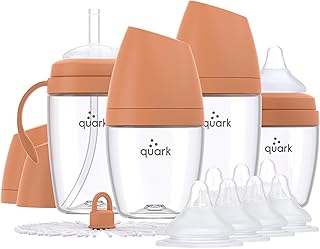


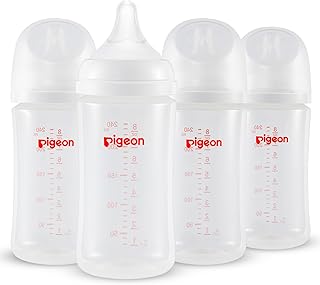
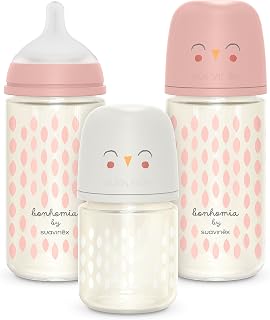


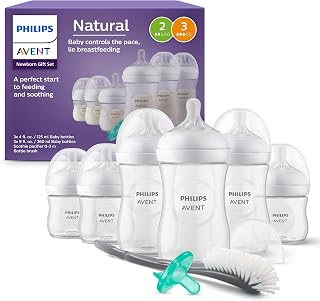
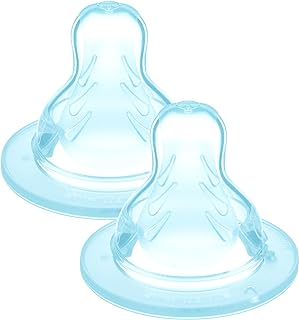


Choosing baby bottle nipples is about more than finding the lowest price. The right nipple should work with the baby's feeding style, fit the intended bottle system, provide an appropriate flow rate, and be made from materials suitable for repeated feeding use. Parents in Canada can find many options from established brands such as Philips Avent, Dr. Brown's, Tommee Tippee, MAM, NUK, Medela and Lansinoh, but the best choice depends on the baby's age, feeding behaviour and bottle compatibility.
This buying guide is designed to help Canadian shoppers compare baby nipples more carefully before purchasing. Instead of focusing only on ratings or promotional pricing, consider flow level, nipple shape, material, compatibility, cleaning requirements, replacement intervals and the individual needs of the baby.
A baby bottle nipple, sometimes called a teat, is the soft feeding component attached to a baby bottle. It controls how milk or prepared infant formula reaches the baby's mouth. Different nipples can have different shapes, openings, textures, flexibility and flow rates.
Manufacturers commonly offer several flow levels so parents can select an option intended for different stages of feeding. However, age labels are only general guidance. A baby's feeding behaviour is often a better indication of whether the current flow is working well.
Flow rate is one of the most important specifications to compare. A nipple with a slower flow generally releases liquid more gradually, while a faster-flow nipple allows milk or formula to pass through more quickly.
Manufacturers may describe flow levels differently, so the words "slow," "medium," "fast" and "newborn" should not be treated as universal standards. One brand's slow-flow nipple may perform differently from another brand's slow-flow nipple.
Slow-flow options are commonly designed for younger babies or babies who feed comfortably with a more gradual milk flow. They can also be useful when a baby becomes overwhelmed by a faster nipple.
Medium-flow nipples are generally intended for babies who have developed stronger feeding coordination. They may be appropriate when a baby appears frustrated by a slower flow but is not ready for a faster opening.
Fast-flow nipples allow liquid to pass through more quickly. They may be appropriate for some older babies, but faster is not automatically better. If the flow is too fast for a particular baby, feeding can become difficult.
Some nipples use a variable-flow design that changes the amount of liquid released depending on positioning or sucking pressure. These designs can be useful for parents who want more flexibility, although the baby may need time to adapt to the feeding mechanism.
A baby may show signs of frustration when the nipple does not provide milk at a comfortable rate. Possible signs include prolonged feeding, repeatedly pulling away from the bottle, sucking very hard, becoming impatient during feeding or falling asleep from the effort of feeding.
These signs do not automatically mean that a faster nipple is required. Feeding difficulties can have many causes, so parents should consider the overall feeding situation rather than changing flow solely because of one behaviour.
A flow that is too fast may make feeding difficult for a baby who cannot comfortably coordinate sucking, swallowing and breathing at that rate. Possible signs include coughing, gulping, leaking milk around the mouth, pulling away repeatedly or appearing overwhelmed during feeding.
If feeding consistently appears difficult, consult an appropriate healthcare professional or feeding specialist rather than assuming that changing nipple sizes will solve the problem.
Silicone is widely used for modern baby bottle nipples because it can provide a soft, flexible feeding surface while generally being easy to clean. Silicone nipples are available in different shapes and firmness levels depending on the manufacturer.
Latex has historically been used for some baby feeding products, but it is less common in many modern bottle systems. Latex can have different durability and material characteristics from silicone, and families should pay attention to manufacturer information and individual sensitivities.
Baby nipples are not all shaped the same. Some have a narrow traditional profile, while others use a wider base designed to resemble the shape of a breast during feeding. Orthodontic, symmetrical, rounded and angled designs are also available.
There is no single nipple shape that works best for every baby. A nipple that works well for one infant may be rejected by another. When comparing products, consider the baby's existing bottle system and whether the manufacturer recommends a particular nipple shape for that bottle.
Wide-neck nipples have a broader base and are common in bottle systems designed around a breast-like shape. They can be useful for parents who prefer a wider nipple profile, but compatibility must be checked carefully.
Narrower nipples fit many conventional bottle designs. They can also make replacement shopping simpler when the bottle manufacturer provides clearly labelled flow stages.
Some manufacturers produce specialised shapes intended to support particular oral positioning or feeding preferences. Parents should evaluate the manufacturer's stated design purpose alongside the baby's actual comfort and feeding response.
One of the most common buying mistakes is assuming that every baby bottle nipple will fit every bottle. Bottle neck dimensions, threading, nipple bases and venting systems can differ considerably between brands and product families.
A replacement nipple should be specifically identified as compatible with the bottle model or bottle range being used. Do not rely on appearance alone.
Several established brands offer replacement and stage-based baby bottle nipples in Canada. Philips Avent, Dr. Brown's, Tommee Tippee, MAM, NUK, Medela and Lansinoh are among the brands parents may encounter while comparing products.
Brand familiarity should not replace specification checking. Even within the same manufacturer, different bottle ranges can use different nipple designs, flow systems and compatibility requirements.
Philips Avent offers multiple bottle and nipple systems, including nipples with different flow characteristics. When considering a Philips Avent replacement, verify the specific bottle family and nipple range because compatibility can vary across product generations and designs.
Dr. Brown's is well known for bottle systems that incorporate venting components. When purchasing replacement nipples for these bottles, shoppers should confirm the appropriate nipple style and flow level for the specific bottle system.
Tommee Tippee offers several feeding products with different nipple shapes and flow stages. Parents should match replacement nipples to the correct bottle collection rather than choosing solely based on size or appearance.
MAM baby bottles use specific nipple designs and flow levels. Replacement shoppers should check the manufacturer's compatibility information and select the correct flow stage for their bottle and baby's feeding requirements.
NUK offers feeding nipples in different designs and flow options. The nipple's shape and intended use should be considered alongside the bottle model before purchasing replacement parts.
Medela is particularly familiar to families using breast pumps and combination feeding systems. Its feeding accessories include products designed around specific bottle and feeding configurations, making compatibility especially important.
Lansinoh offers baby feeding products designed with breastfeeding and bottle-feeding considerations in mind. Parents comparing Lansinoh nipples should check the intended bottle compatibility and available flow options.
Families combining breastfeeding and bottle feeding may pay particular attention to nipple shape, flexibility and flow. Some parents prefer a nipple designed to encourage a wider latch, while others find that their baby accepts a conventional bottle nipple more easily.
There is no guarantee that a specific nipple shape will prevent feeding preference changes or make switching between breast and bottle effortless. Observe how the baby feeds and choose a system that supports comfortable, coordinated feeding.
For formula-fed babies, nipple flow remains an important consideration. The correct choice should allow the baby to feed without excessive effort while avoiding an unnecessarily rapid flow.
Formula preparation should always follow the instructions provided with the infant formula. The nipple itself should not be modified to increase flow unless the manufacturer specifically provides instructions for that product.
Combination feeding can make nipple selection more complicated because the baby may use both breast and bottle. A nipple with a manageable flow and a shape the baby accepts can make bottle feeding more predictable, but individual responses vary.
If several caregivers use bottles, keeping the same nipple system and flow stage can also make routine feeding easier to manage.
Some bottle systems use vents, valves or specialised nipple structures intended to reduce the amount of air incorporated during feeding. Dr. Brown's is one example of a brand with a dedicated venting system, while other manufacturers use different approaches.
It is important to distinguish between the nipple itself and the bottle's complete venting architecture. A replacement nipple may be only one part of a larger feeding system, and changing components can affect how the system functions.
The opening in a bottle nipple determines how liquid can pass through. Different manufacturers use different opening designs, including round openings, slit-style openings and specialised variable-flow mechanisms.
The opening should never be enlarged manually to make milk flow faster. Altering the nipple can change its intended performance and may create an unpredictable feeding flow.
Baby nipples are consumable feeding components and should be inspected regularly. Replacement timing varies according to the product, cleaning routine and frequency of use, so manufacturer instructions should take priority.
Cleaning requirements vary by product, so always follow the care instructions supplied by the manufacturer. In general, nipples should be separated from other bottle components and cleaned thoroughly so milk residue does not remain inside the opening or around the nipple base.
A nipple that looks clean on the outside can still retain residue in small openings, folds or connection areas. Proper disassembly and cleaning are therefore important parts of bottle maintenance.
Whether and how often a nipple should be sterilised depends on the baby's age, feeding circumstances, local health guidance and manufacturer instructions. Different products may have specific limitations regarding boiling, steam sterilisation, microwave sterilisation or other methods.
Before using a sterilisation method, confirm that the particular nipple is designed to tolerate it. Excessive heat or an unsuitable cleaning process can accelerate material deterioration.
Safety should take priority over convenience or price when selecting feeding accessories. Parents should inspect every nipple before use and follow the manufacturer's instructions for assembly, cleaning, sterilisation and replacement.
Never use a nipple that has visible damage. Damaged silicone or other feeding materials can deteriorate further during use.
Do not enlarge nipple openings with needles, scissors or other objects. A modified opening can produce a flow rate that is not predictable from the manufacturer's specifications.
A practical comparison should begin with compatibility and flow rather than promotional claims. Once those requirements are satisfied, material, shape, cleaning convenience and pack size can help narrow the options.
Identify the exact bottle currently being used. This immediately removes incompatible products from consideration.
Check the manufacturer's flow stages and compare them with the baby's current feeding behaviour. Do not automatically move to a faster stage because of age alone.
Consider whether the baby already accepts a particular nipple profile. If replacing an existing nipple, staying within the same compatible design can make the transition simpler.
Review the listed material and verify whether the cleaning and sterilisation methods fit your normal routine.
Multipacks can be practical for households that use bottles frequently, while smaller packs may make more sense when testing whether a baby accepts a new nipple design.
Before purchasing, check the current manufacturer specifications and retailer listing. Product packaging, compatibility information and available configurations can change over time.
Age recommendations can be useful starting points, but babies develop at different rates. Feeding performance and comfort should also be considered.
This is one of the easiest ways to purchase the wrong replacement. Always verify compatibility with the specific bottle system.
A faster flow is not necessarily an upgrade. If a baby struggles with the flow, moving to an even faster nipple can make feeding less comfortable.
The base needs to fit securely with the bottle and any required collar or venting components. Check the complete assembly rather than examining only the nipple tip.
Customer ratings can provide useful purchasing context, but ratings do not replace compatibility and specification checks. A highly rated nipple may still be unsuitable for a particular bottle system or feeding requirement.
If a baby has not used a particular nipple shape before, purchasing a smaller quantity first may reduce waste if the baby does not accept the design.
A smart purchase balances suitability, safety, compatibility and overall value. The cheapest nipple is not necessarily the best value if it does not fit the bottle, is unsuitable for the baby's feeding pattern or requires replacing an entire bottle system.
When comparing deals, look beyond the headline package price. Divide the total cost by the number of usable nipples in the package to determine the approximate cost per nipple.
Also consider whether the package contains the exact flow stage required. A cheaper multipack is not a good value if some of its contents are unsuitable for your bottle system or baby's current feeding needs.
Online shopping provides access to a broad selection of replacement nipples, but product listings can sometimes contain multiple variants under a single product family. Canadian shoppers should carefully read the variant name, flow level, quantity and compatibility information before adding an item to the cart.
A product title may contain several important details in a short space. Look for the brand, bottle family, nipple stage, flow rate, material, quantity and intended feeding stage.
Do not assume that two products with similar-looking photographs are interchangeable. Product images can make different bottle systems appear more similar than they actually are.
Parents may consider a different flow level when the current nipple consistently appears too slow or too fast for the baby's feeding behaviour. A change should be based on the baby's needs and the manufacturer's flow guidance rather than simply following an automatic calendar.
If feeding becomes consistently stressful, unusually prolonged or associated with coughing, choking, significant leakage or other concerning symptoms, professional feeding advice can be more useful than repeatedly changing nipple sizes.
Families who send bottles to daycare may benefit from keeping replacement components clearly identified. Using the same bottle and nipple system across home and childcare can reduce confusion about flow stages and assembly.
Labeling bottles and following the childcare provider's feeding and storage requirements can also make daily bottle management more straightforward.
Families travelling within Canada may want to carry a small number of compatible replacement nipples, particularly when a baby depends on a specific bottle system. A spare can be useful if a nipple is misplaced or damaged while away from home.
Keep replacement components clean and protected from contamination before use, and follow the manufacturer's instructions for storage and preparation.
Baby bottle nipples and pacifiers serve different purposes and should not be treated as interchangeable products. A bottle nipple is designed to deliver milk or formula through a feeding system, while a pacifier is designed for non-nutritive sucking.
Their shapes, openings, materials and safety requirements can therefore differ substantially.
Customer reviews can be helpful when used correctly. Instead of looking only at the overall rating, search for repeated comments about the specific characteristics that matter to your purchase.
Remember that individual feeding experiences vary. Reviews can supplement product specifications, but they should not be treated as universal evidence that a particular nipple will work for every baby.
A genuine bargain should still meet the essential requirements of compatibility, condition and suitability. When comparing baby nipple deals in Canada, calculate the effective cost per nipple and then verify that the flow stage and bottle compatibility are correct.
Be cautious when a listing has an unusually low price but unclear product details. A clear description of the manufacturer, product family, quantity and flow level is more useful than an attractive discount claim without sufficient specifications.
There is no universally best nipple for every newborn. Many manufacturers offer newborn or slow-flow options, but the appropriate choice depends on the bottle system and the baby's feeding behaviour. Always check the manufacturer's flow guidance.
Replacement schedules vary by manufacturer, product, frequency of use and condition. Inspect nipples regularly and replace them sooner if they become damaged, cracked, split, sticky, misshapen or otherwise deteriorated.
Do not assume cross-brand compatibility. Bottle and nipple dimensions vary, and the manufacturer's compatibility information should be checked before using a replacement from another brand.
Silicone is a widely used material for baby bottle nipples and is available in many bottle systems. Whether a particular silicone nipple is appropriate depends on its design, flow rate, compatibility and the baby's feeding needs.
Not necessarily. Age ranges are general manufacturer guidance rather than a requirement to change flow on a specific date. If the current flow works comfortably, there may be no need to change it solely because the baby has reached a particular age.
Milk leakage can have several possible causes, including nipple flow, bottle position, latch and feeding coordination. If the issue is persistent, consider checking the nipple flow and bottle assembly and seek professional feeding guidance when appropriate.
No. Manually modifying the nipple can create an unpredictable flow and can damage the feeding component. Use a manufacturer-approved flow stage instead.
No. Price alone does not establish suitability or quality for an individual baby. Compatibility, appropriate flow, material, condition and ease of care are more useful comparison criteria.
No. Ratings can help identify common customer experiences, but the product must still fit the intended bottle and meet the baby's feeding requirements.
Some products are designed to be dishwasher safe, while others have specific cleaning instructions. Check the manufacturer's current care guidance for the exact nipple model before placing it in a dishwasher.
Check the nipple for damage, confirm that the flow has not changed unexpectedly and verify that the bottle is assembled correctly. If feeding difficulties continue, professional advice may help identify the underlying issue.
The smartest way to compare baby bottle nipples in Canada in 2026 is to start with the bottle system and the baby's feeding needs, then evaluate flow rate, shape, material, care instructions and overall value. Established brands such as Philips Avent, Dr. Brown's, Tommee Tippee, MAM, NUK, Medela and Lansinoh provide multiple options, but the best choice is the one that is correctly compatible and appropriate for the individual feeding situation.
Before purchasing, compare the exact product specifications, read current customer feedback, verify the flow stage and check the current package quantity. Prices, promotions and retailer availability can change, so confirm the latest information at the time of purchase.
For families building a practical bottle-feeding setup, keeping a small number of correctly matched replacement nipples available can also make routine feeding easier. Most importantly, inspect nipples regularly, follow manufacturer care instructions and replace any component that shows signs of damage or deterioration.